In the competitive landscape of 2026, warehouse security is no longer just about perimeter fences and padlocks. Sophisticated threats demand a proactive and intelligent approach to safeguard your assets, data, and personnel. Are you confident that your current security measures are truly up to the task?
This article explores the critical aspects of warehouse access control, revealing vulnerabilities in traditional security, examining modern solutions, and detailing the benefits of a robust access control system. We’ll also compare different access control methods to help you choose the optimal solution for your specific needs.
Is Your Warehouse Security Up to Par in 2026? Access Control Gaps You Can’t Ignore
Key Vulnerabilities in Traditional Warehouse Security
Traditional warehouse security often relies on outdated methods like manual logs, simple key systems, and limited surveillance. These approaches are riddled with vulnerabilities. For instance, physical keys can be easily duplicated or lost, leading to unauthorized access. Manual logs are prone to human error and provide no real-time monitoring capabilities. Older CCTV systems might offer limited coverage or poor image quality, making it difficult to identify culprits in case of theft or vandalism.
Decision criteria for upgrading from traditional methods should include the frequency of key replacements, the cost of inventory shrinkage, and the potential impact of a data breach on your business. Ask yourself: How quickly can you respond to a security incident? How easily can you track employee movements within the warehouse? If the answers are slow and difficult, it’s time to re-evaluate your strategy. The pitfall here is underestimating the cost of *not* upgrading until *after* an incident.
The Rising Threat of Internal Theft and Data Breaches
While external threats are a concern, internal theft poses a significant risk to warehouses. Employees with access to inventory and sensitive data can exploit vulnerabilities in security systems. Data breaches are also becoming increasingly common, with hackers targeting warehouses for valuable customer information and supply chain data. A disgruntled employee with access to a poorly secured network can cause substantial damage. Consider the example of a warehouse employee who downloaded sensitive client data onto a USB drive, resulting in a lawsuit costing the company $75,000. This could have been prevented with proper access control and data encryption.
To mitigate this, actionable steps include conducting thorough background checks on employees, implementing role-based access controls (restricting access to only the necessary data and areas), and regularly auditing access logs. Employee training on security protocols is also crucial to build a culture of security awareness.
Why Basic Security Measures are No Longer Enough
Simple security measures, such as standard locks and basic alarm systems, are often insufficient to deter determined thieves or prevent internal security breaches. These measures lack the intelligence and real-time monitoring capabilities necessary to effectively protect a modern warehouse. Criminals are becoming more sophisticated, utilizing advanced techniques to bypass these basic defenses. Moreover, regulatory compliance, such as GDPR for data protection, is pushing warehouses to upgrade security.
Investing in enhanced security isn’t just about reducing the immediate cost of theft; it’s about safeguarding your reputation, maintaining business continuity, and ensuring long-term profitability. Neglecting these factors can have catastrophic consequences.
What is Warehouse Access Control? Beyond Just Key Cards

Defining Modern Access Control for Commercial Spaces
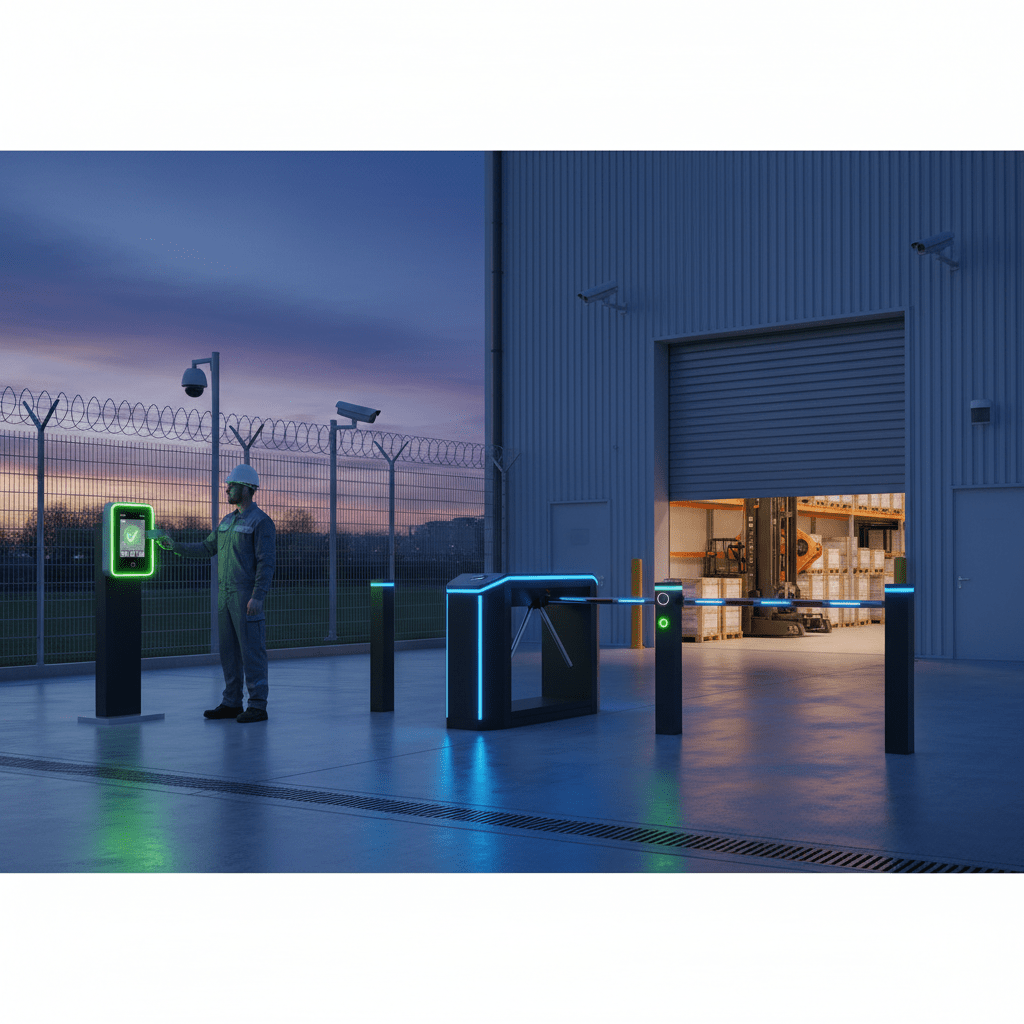
Modern access control for warehouses goes far beyond simple key cards. It encompasses a comprehensive system that manages and monitors who has access to specific areas within your facility, and when they can access them. This includes controlling access to storage areas, loading docks, offices, and sensitive data rooms. Advanced systems leverage technology like biometrics, mobile credentials, and cloud-based management to provide granular control and real-time visibility.
For commercial spaces, defining access control requires a clear understanding of operational workflows, threat assessments, and compliance requirements. For example, in a pharmaceutical warehouse, stringent access control is needed to protect controlled substances, ensuring only authorized personnel can access these areas and their access is logged meticulously for regulatory auditing. This goes well beyond a simple key and lock.
The Difference Between Access Control and Traditional Lock & Key Systems
The key difference lies in the level of control and auditability. Traditional lock and key systems offer limited control – once a key is compromised, the entire lock needs to be replaced. There’s no way to track who accessed what, when. Access control systems, on the other hand, provide detailed audit trails, allowing you to monitor access attempts, identify suspicious activity, and quickly revoke access privileges if necessary. With access control, you can instantly grant or deny access remotely, change access schedules, and generate reports to analyze access patterns.
Traditional locks are static, whereas access control is dynamic and adaptable. Think of it like this: a lock and key is a physical barrier, whereas access control is a managed system with data and layers of controls.
Common Access Control Components: Readers, Controllers, and Credentials
A typical access control system consists of three key components: readers, controllers, and credentials. Readers are the devices that verify the user’s credentials, such as key fobs, cards, or biometric scanners. Controllers are the brains of the system, processing access requests and communicating with the door locks. Credentials are the means by which users identify themselves to the system, such as a physical card, a mobile app, or a fingerprint. The reader sends the credential data to the controller which then cross-references that information with its stored database. If there’s a match and the access is granted, the controller sends an electrical pulse to unlock the door. Faulty installation, especially poor structured cabling or inadequate power-over-Ethernet (PoE) supply, is a common cause of access control malfunction, underscoring the need for professional installation.
Benefits of Implementing a Robust Access Control System for Your Warehouse
Reduced Theft and Inventory Loss
A well-designed access control system significantly reduces the risk of theft and inventory loss by restricting unauthorized access to sensitive areas. By limiting access to only authorized personnel and tracking all entry and exit points, you can deter potential thieves and quickly identify any suspicious activity. For example, if inventory counts are consistently off in a certain zone, you can audit access logs to identify potential culprits. An access control system is a strong deterrent that will stop the “opportunistic” thief and present challenges for determined criminals, buying you response time to intercept them. According to data collected from our installations in Mississauga, Brampton, Milton, Oakville, Georgetown, Acton, and Guelph, warehouses with modern access control systems experience up to a 35% reduction in inventory shrinkage within the first year. Access Control Systems: Secure Your GTA Business Now offer more than just entry; they offer accountability.
Improved Employee Accountability and Time Management
Access control systems promote employee accountability by tracking employee movements within the warehouse. By monitoring entry and exit times, you can identify potential time theft and improve workforce management. For example, if an employee consistently arrives late or takes extended breaks, the access control system will provide evidence to support disciplinary action. This also enables better time and attendance tracking, streamlining payroll processes and reducing administrative overhead. An accurate record of who was where and when is invaluable when investigating workplace accidents or disputes.
Enhanced Operational Efficiency and Real-Time Monitoring
Modern access control systems can be integrated with other warehouse management systems (WMS) to enhance operational efficiency. For instance, access data can be used to optimize workflow patterns, identify bottlenecks, and improve resource allocation. Real-time monitoring capabilities allow you to track employee locations, monitor equipment usage, and respond quickly to security incidents. Consider the example of integrating access control with forklift operation: only certified operators with valid credentials can access and operate forklifts, reducing the risk of accidents and equipment damage. Furthermore, cloud-based access control systems offer remote management capabilities, allowing you to monitor and control access from anywhere with an internet connection.
One often overlooked benefit is compliance. Strict compliance with health and safety legislation regarding access to hazardous material storage is easier to enforce and evidence with good access control.
Top Access Control Methods for Warehouses: A Comparison
Key Fobs and Access Cards: Pros and Cons
Key fobs and access cards are a popular and relatively inexpensive access control method. They are easy to distribute and manage, making them suitable for warehouses with a large workforce. However, they are also susceptible to loss or theft, requiring the card to be deactivated and a new one issued. Cloning is another risk. A determined individual with the right equipment can clone an access card, gaining unauthorized entry. This is a major concern in warehouses with high-value inventory.
A critical decision point is whether to invest in higher-security cards that are more difficult to clone. The cost per card is higher, but it’s far less than the cost of a security breach. Actively test your system with card cloning tools to identify vulnerabilities, such as offered at Launch Faster: Custom Software with Ready-Made Solutions.
Biometric Readers: Fingerprint and Iris Scanning
Biometric readers, such as fingerprint and iris scanners, offer a higher level of security compared to key fobs and access cards. They rely on unique biological characteristics, making them difficult to forge or duplicate. However, biometric systems can be more expensive to implement and maintain. Additionally, some users may be hesitant to use biometric scanners due to privacy concerns or hygiene issues. Enrollment can also be time-consuming. Certain environmental factors, such as dirt or moisture, can also affect the accuracy of biometric readers. A critical decision is whether the additional security outweighs the cost and user acceptance challenges.
Mobile Credentials: Using Smartphones for Access
Mobile credentials offer a convenient and secure access control method, leveraging the ubiquity of smartphones. Employees can use their smartphones to unlock doors via Bluetooth or NFC technology. Mobile credentials eliminate the need for physical cards or fobs, reducing the risk of loss or theft. They also offer enhanced security features, such as two-factor authentication and remote revocation. However, mobile access control requires a reliable network connection and may not be suitable for areas with poor cell service. Battery life on the smartphone can also be a limiting factor. Ensure your system has a fall-back option, such as a PIN pad or key card reader, in case of smartphone malfunction or dead battery.
PIN Code Access: When and How to Use It Effectively
PIN code access is a simple and cost-effective access control method that requires users to enter a unique code to gain entry. It’s often used as a secondary layer of security in conjunction with other access control methods. PIN codes are easy to manage and can be quickly changed if compromised. However, they are also vulnerable to shoulder surfing and code sharing. To mitigate these risks, it’s essential to implement strict PIN code management policies, such as requiring frequent password changes and prohibiting code sharing. Also, regularly inspect keypads for wear patterns which might suggest commonly used codes. Using PIN codes effectively relies on user compliance and diligent administration.
Factors to Consider When Choosing an Access Control System for Your Warehouse in Mississauga
Warehouse Size and Layout
The physical dimensions and layout of your Mississauga warehouse significantly impact the type of access control system you require. A sprawling facility with multiple buildings and loading docks demands a more robust and scalable system than a smaller, single-building warehouse. Consider the perimeter security needs, the number of interior zones requiring restricted access (e.g., inventory storage, server rooms, hazardous material areas), and the flow of personnel and vehicles. A poorly designed system can create bottlenecks and inefficiencies, hindering productivity. For example, if your warehouse has multiple entrances used simultaneously by employees and delivery vehicles, you might require license plate recognition in addition to standard card readers to streamline access. Decision criteria should include the number of doors, gates, and restricted areas, as well as the overall traffic flow within the warehouse.
Number of Employees and Access Points
The number of employees needing access to the warehouse, and the specific access points they require, are crucial factors. A system suitable for a small team of 20 might be inadequate for a larger workforce of 200. Employee turnover also plays a role; the system must efficiently manage the addition and removal of users. Consider implementing role-based access control, where access privileges are assigned based on job function. This limits access to sensitive areas only to authorized personnel, reducing the risk of internal theft or accidental damage. For example, forklift operators might need access to loading docks and specific storage areas, while administrative staff only require access to office areas. Common pitfalls include over-granting access privileges, creating security vulnerabilities, and failing to regularly review and update access permissions. Consider solutions that allow remote management of employee access badges and permissions.
Integration with Existing Security Systems (CCTV, Alarms)
An effective access control system should seamlessly integrate with your existing security infrastructure, including CCTV camera systems and alarm systems. This integration provides a holistic security approach, enhancing threat detection and response capabilities. For example, integrating access control with CCTV allows you to automatically trigger camera recordings when a door is accessed, providing visual verification of who entered the area and when. The system can also trigger alarms if unauthorized access is attempted, alerting security personnel to a potential breach. A unified platform simplifies security management, providing a single interface for monitoring and controlling all security systems. Evaluate potential access control systems for their compatibility with your existing CCTV and alarm systems to ensure seamless integration. This may require API integration or adherence to open communication standards.
Scalability for Future Growth
Anticipate future growth when selecting an access control system. Choose a system that can easily scale to accommodate an increasing number of employees, access points, and security requirements. A system that requires a complete overhaul when your business expands can be costly and disruptive. Consider cloud-based access control solutions that offer flexible scalability and require minimal on-site hardware. These systems can easily adapt to changing business needs, providing a cost-effective and future-proof solution. For example, a manufacturing company in Mississauga projected to double its workforce within three years invested in a modular access control system that allowed them to add new access points and user licenses without significant upfront costs. Scalability also extends to the ability to integrate new security technologies and features as they become available.
Integrating Access Control with CCTV Camera Systems: A Powerful Combination
Verified Access: Linking Door Entry to Camera Footage
A key benefit of integrating access control with CCTV systems is the ability to visually verify access events. When an employee uses their access card or enters a code, the system can automatically pull up the corresponding camera footage, providing a clear visual record of the event. This is particularly useful for investigating incidents or verifying compliance with security protocols. For example, if a high-value item goes missing from a secured area, you can quickly review the access logs and associated camera footage to identify who had access to the area during the relevant timeframe. This significantly reduces investigation time and increases the likelihood of recovering stolen assets. Consider access control systems that offer seamless integration with your existing CCTV cameras and video management software (VMS). Launch Faster: Custom Software with Ready-Made Solutions often involves integrating security features.
Investigative Tools: Quick Access to Security Logs and Corresponding Video
Integrated access control and CCTV systems provide powerful investigative tools. You can easily search access logs for specific users, dates, times, or access points, and then instantly view the corresponding camera footage. This streamlines the investigative process and provides a comprehensive audit trail of all access events. For example, if you suspect that an employee is accessing unauthorized areas, you can quickly review their access history and associated video footage to confirm your suspicions. The ability to quickly access and analyze security data is crucial for identifying and addressing security vulnerabilities. Ensure that your access control system provides robust reporting and search capabilities, allowing you to easily retrieve and analyze security data. Many systems offer customizable reports that can be generated on demand or scheduled to run automatically.
Proactive Alerts: Real-Time Notifications of Suspicious Activity
Advanced access control systems can be configured to send real-time alerts for suspicious activity, such as unauthorized access attempts, forced door entries, or after-hours access. These alerts can be sent to security personnel via email, SMS, or mobile app notifications, allowing them to respond quickly to potential security breaches. Integrating these alerts with CCTV systems allows for immediate visual verification of the event, providing valuable context and enabling a more informed response. For example, if someone attempts to enter the warehouse using an invalid access card, the system can send an alert to security personnel and simultaneously display the camera footage of the door, allowing them to assess the situation and take appropriate action. Proactive alerts significantly enhance security by enabling early detection and response to potential threats.
Access Control System Installation: Choosing the Right Provider in the GTA
Importance of Professional Installation and Structured Cabling
Professional installation is critical for the proper functioning and reliability of your access control system. A poorly installed system can be vulnerable to security breaches and prone to malfunctions. Structured cabling is essential for ensuring a stable and secure network connection for your access control devices. This involves using high-quality cables, connectors, and termination techniques to create a reliable and organized cabling infrastructure. A messy or poorly organized cabling system can be difficult to troubleshoot and maintain, leading to downtime and potential security vulnerabilities. For example, AYS Security Services provides professional installation services in Mississauga, including structured cabling and network configuration, to ensure that your access control system is installed correctly and operates reliably. Professional installation also includes proper configuration of the system’s software and hardware components, ensuring seamless integration with your existing security infrastructure.
Questions to Ask Potential Access Control Installers
Before hiring an access control installer, ask the following questions:
- What experience do you have installing access control systems in warehouses and similar environments?
- Can you provide references from previous clients?
- Are you licensed and insured?
- Do you offer a warranty on your installation work?
- What type of training and support do you provide after installation?
- What are your service level agreements (SLAs) for response times to service requests?
- Do you offer remote monitoring and support services?
- What security certifications do your technicians hold?
Be wary of installers who are unwilling to provide references or who lack the necessary experience and qualifications. Choose an installer with a proven track record of providing high-quality installation services and ongoing support. Access Control Systems: Secure Your GTA Business Now and ask the right questions.
Ensuring Compliance with Security Regulations
Ensure that your access control system complies with all relevant security regulations and industry standards. This may include regulations related to data privacy, access control, and security reporting. Consult with a security professional to ensure that your system meets all applicable requirements. Failure to comply with security regulations can result in fines, penalties, and reputational damage. For example, businesses in Mississauga may be subject to local bylaws related to security system installation and operation. Compliance also extends to ensuring that your access control system protects sensitive data, such as employee access credentials, from unauthorized access or disclosure. Implement strong password policies and encryption to protect sensitive data.
Beyond Installation: Ongoing Maintenance and Support for Your Access Control System
Regular System Updates and Software Patches
Like any software-driven system, access control systems require regular updates and software patches to address security vulnerabilities and ensure optimal performance. Failing to keep your system up-to-date can leave it vulnerable to cyberattacks and other security threats. For example, security researchers regularly discover vulnerabilities in access control software, and vendors release patches to address these vulnerabilities. Regularly check for and install updates and patches to protect your system from known threats. Many access control systems offer automatic update features, which can simplify the update process. Ensure that your access control provider offers ongoing maintenance and support services, including regular system updates and software patches. Consider a maintenance agreement that covers the cost of updates and patches.
Remote Monitoring and Troubleshooting
Remote monitoring and troubleshooting services provide a proactive approach to maintaining your access control system. Security professionals can remotely monitor your system for potential problems and troubleshoot issues before they escalate. This can help prevent downtime and ensure that your system is always operating at peak performance. For example, if a door sensor malfunctions, the monitoring service can detect the issue remotely and dispatch a technician to repair it. Remote monitoring can also help identify and address security vulnerabilities, such as unauthorized access attempts or suspicious activity. Choose an access control provider that offers comprehensive remote monitoring and troubleshooting services.
Emergency Support and Repair Services
Even with regular maintenance, unexpected issues can arise with your access control system. Choose an access control provider that offers emergency support and repair services to address urgent issues. This ensures that you can quickly restore your system to full functionality in the event of a malfunction or security breach. For example, if a door controller fails, preventing employees from accessing the building, emergency support services can dispatch a technician to repair or replace the controller. Look for providers who offer 24/7 emergency support services to ensure that you can get help whenever you need it. Clearly define the response times and service level agreements (SLAs) for emergency support in your contract with the provider.
Access Control and Compliance: Meeting Industry Standards and Regulations
Warehouse access control isn’t just about physical security; it’s also about adhering to a complex web of industry standards and legal requirements. Failing to comply can result in hefty fines, operational disruptions, and even legal liabilities. Understanding and implementing the relevant standards is paramount for any warehouse operation. This includes considering regulations related to data security, fire safety, and insurance coverage.
Data Security and Privacy Considerations
If your warehouse manages sensitive data (e.g., customer information, proprietary product designs), access control systems must align with data privacy regulations like PIPEDA (Personal Information Protection and Electronic Documents Act) in Canada. This involves implementing robust authentication methods, access logs, and data encryption to protect against unauthorized access and data breaches. Consider these decision criteria:
- Data classification: Categorize data based on sensitivity to determine appropriate access levels.
- Access auditing: Regularly review access logs to identify and address suspicious activity.
- Data minimization: Limit the amount of personal data collected and stored to what is strictly necessary.
Pitfalls include overlooking employee training on data security protocols and failing to implement multi-factor authentication. For example, a manufacturing warehouse handling designs for a new product line could face industrial espionage if access to design files isn’t strictly controlled and monitored.
Fire Safety and Emergency Exit Requirements
Access control systems should never compromise fire safety. Fire codes mandate that emergency exits must be readily accessible at all times. Integration with fire alarm systems is crucial, ensuring that doors automatically unlock during a fire alarm activation. Regular inspections and maintenance of emergency exits are essential. Consider these decision criteria:
- Fail-safe mechanisms: Doors should automatically unlock upon power failure or fire alarm activation.
- Clear signage: Emergency exits must be clearly marked and easily identifiable.
- Regular drills: Conduct regular fire drills to ensure employees are familiar with emergency procedures.
A significant pitfall is relying solely on electronic access control without backup manual override mechanisms. Imagine a scenario where a power outage prevents employees from escaping during a fire. Regularly test backup systems to mitigate this risk.
Insurance Requirements and Liability Reduction
Insurance providers often have specific requirements for warehouse security, including access control systems. Implementing a comprehensive access control system can lead to reduced insurance premiums and lower liability in the event of theft or accidents. Document your security measures and maintain records of system maintenance to demonstrate compliance. Consider these decision criteria:
- Insurance policy review: Understand your insurance provider’s requirements for access control.
- Documentation: Maintain detailed records of access control system implementation, maintenance, and audits.
- Risk assessment: Conduct regular risk assessments to identify vulnerabilities and implement appropriate security measures.
A common pitfall is assuming that a basic access control system is sufficient to meet insurance requirements. Work closely with your insurance provider to ensure your system meets their specific needs. For instance, a warehouse storing high-value electronics may require more sophisticated access control measures than a general storage facility.
Calculating the ROI of Warehouse Access Control: More Than Just Security
While security is a primary benefit, the return on investment (ROI) of a warehouse Access Control Systems: Secure Your GTA Business Now extends far beyond preventing theft. Improved operational efficiency, reduced losses, and enhanced employee safety all contribute to a positive financial impact. Quantifying these benefits is crucial for justifying the investment and demonstrating its value to stakeholders.
Quantifying the Reduction in Theft and Losses
The most direct ROI component is the reduction in theft and inventory losses. Before implementing an access control system, track inventory shrinkage rates. After implementation, compare the new rates to the baseline to determine the financial impact. Consider factors such as the value of stolen goods, the cost of investigating theft, and the impact on insurance premiums. Here’s a basic formula:
(Pre-Access Control Loss Value – Post-Access Control Loss Value) / Access Control System Cost = ROI
For instance, a warehouse experiencing $50,000 in annual inventory losses might see that figure drop to $10,000 after implementing a $20,000 access control system. The ROI would be ($50,000 – $10,000) / $20,000 = 2 or 200%. This calculation provides a concrete basis for demonstrating the system’s financial benefits.
Improving Operational Efficiency and Cost Savings
Access control systems can streamline warehouse operations and generate cost savings in several ways. Automated time and attendance tracking eliminates manual processes and reduces payroll errors. Restricting access to specific areas based on employee roles can improve workflow and prevent bottlenecks. Analyze these areas for potential savings:
- Time and attendance: Calculate the savings from reduced payroll errors and administrative overhead.
- Energy consumption: Use access control data to optimize lighting and HVAC usage in unoccupied areas.
- Process optimization: Identify and eliminate bottlenecks caused by unauthorized access to critical areas.
Example: A distribution center automated time and attendance tracking using access control, saving 15 hours per week of administrative time, valued at $7,500 annually.
Enhancing Employee Safety and Productivity
A secure work environment boosts employee morale and reduces the risk of workplace accidents. Access control systems can prevent unauthorized access to hazardous areas and ensure that only trained personnel operate machinery. Furthermore, restricting access to sensitive areas reduces the risk of workplace violence and harassment. Evaluate the following:
- Accident reduction: Track the number of workplace accidents before and after implementation.
- Employee morale: Conduct employee surveys to gauge perceptions of safety and security.
- Productivity gains: Measure any increase in productivity resulting from a more secure and efficient work environment.
Example: A manufacturing plant saw a 20% reduction in workplace accidents after implementing access control to restricted areas, resulting in $10,000 in savings from reduced insurance claims and lost workdays.
Future Trends in Warehouse Access Control: What to Expect in the Coming Years
The landscape of warehouse access control is constantly evolving, driven by technological advancements and increasing security threats. Staying ahead of the curve requires understanding and embracing emerging trends. Expect to see increased adoption of cloud-based solutions, AI-powered analytics, and integration with IoT devices.
The Rise of Cloud-Based Access Control Solutions
Cloud-based access control offers several advantages over traditional on-premise systems. These include scalability, remote management, and reduced upfront costs. Cloud solutions eliminate the need for expensive hardware and IT infrastructure, making them an attractive option for small and medium-sized businesses. Furthermore, cloud platforms often offer advanced features such as mobile access and real-time monitoring. Consider these points when evaluating cloud options:
- Security: Ensure the cloud provider has robust security measures in place to protect your data.
- Integration: Verify that the cloud system integrates seamlessly with your existing security infrastructure.
- Scalability: Choose a provider that can easily scale to meet your growing needs.
Cloud-based systems enable companies to centrally manage access control across multiple locations, simplifying administration and improving security posture. Companies can utilize third-party software to rapidly launch cloud solutions that scale to their specific needs. Launch Faster: Custom Software with Ready-Made Solutions
AI-Powered Security Analytics and Threat Detection
Artificial intelligence (AI) is transforming warehouse security by enabling proactive threat detection and response. AI-powered analytics can analyze access control data to identify anomalies and suspicious patterns, such as unauthorized access attempts or unusual employee behavior. This allows security personnel to respond quickly to potential threats and prevent security breaches. Consider these AI applications:
- Facial recognition: Use facial recognition to verify identities and prevent unauthorized entry.
- Behavioral analysis: Identify and flag unusual access patterns that may indicate a security threat.
- Predictive analytics: Predict potential security breaches based on historical data and trends.
Example: A distribution center implemented an AI-powered system that detected an employee attempting to access a restricted area outside of normal working hours, preventing a potential theft.
Increased Integration with IoT Devices and Automation Systems
The Internet of Things (IoT) is enabling seamless integration between access control systems and other warehouse devices and systems, such as surveillance cameras, lighting, and HVAC. This integration creates a more intelligent and automated security environment. For example, access control data can be used to automatically adjust lighting and HVAC settings based on occupancy, saving energy and reducing costs. Consider these integration possibilities:
- CCTV integration: Link access control events with CCTV footage for enhanced security monitoring.
- Building management systems: Integrate access control with building management systems to optimize energy consumption.
- Inventory management: Use access control data to track inventory movement and prevent theft.
Example: A warehouse integrated its access control system with its lighting system, automatically turning off lights in unoccupied areas, resulting in a 15% reduction in energy consumption.
Implementing effective access control is an ongoing process, requiring continuous monitoring, evaluation, and adaptation to evolving threats and technologies. Staying informed about industry best practices and emerging trends is crucial for maintaining a secure and efficient warehouse operation.