
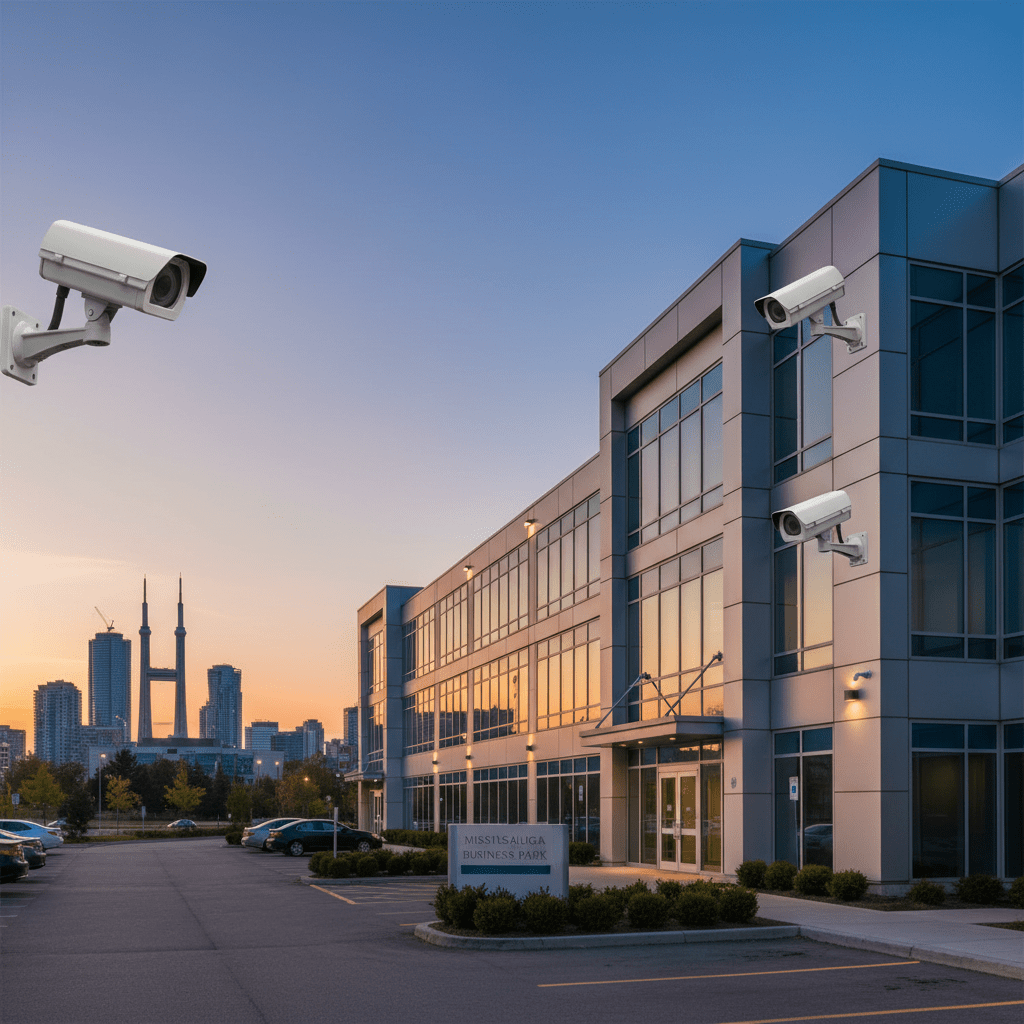
In today’s business landscape, security is more than just a precaution—it’s a strategic imperative. For businesses in Mississauga and across the GTA, a robust CCTV system is no longer a luxury, but a necessity for protecting assets, ensuring employee safety, and maintaining operational efficiency.
This guide will explore how commercial-grade CCTV can transform your business security from a potential liability into a powerful profit center. We’ll delve into the key features, strategic implementation, and ROI considerations that will help you make informed decisions about your surveillance infrastructure.
Is Your Mississauga Business Security System a Profit Center… or a Liability?
Common Security Gaps in Mississauga Businesses
Many Mississauga businesses, particularly small to medium-sized enterprises (SMEs), unknowingly operate with critical security vulnerabilities. These gaps often stem from outdated equipment, inadequate camera placement, or a lack of integration with other security systems like Access Control Systems: Streamline GTA Business Security. Common issues include low-resolution cameras that provide unusable footage, blind spots around entry points and loading docks, and a reactive, rather than proactive, security posture. Furthermore, a lack of proper maintenance can render systems unreliable when needed most. Employee theft, external vandalism, and fraudulent claims can all exploit these vulnerabilities, directly impacting your bottom line. Businesses also often overlook the deterrent effect of visible, modern CCTV systems, potentially attracting unwanted attention.
Quantifying the ROI of Upgrading Your CCTV
The return on investment (ROI) of a commercial CCTV system extends far beyond simply preventing theft. Consider the potential savings from reduced inventory shrinkage, decreased insurance premiums, and minimized liability in the event of accidents or disputes. A well-designed system can also streamline operations by providing valuable insights into employee productivity, customer traffic patterns, and potential bottlenecks in your processes. For example, a retail store could use people-counting analytics to optimize staffing levels during peak hours, leading to improved customer service and increased sales. A warehouse could leverage CCTV footage to investigate shipping errors and improve inventory management. To calculate your potential ROI, estimate the current annual cost of security incidents (theft, vandalism, false claims) and compare it to the cost of a modern CCTV system. Don’t forget to factor in the intangible benefits, such as enhanced employee morale and a safer work environment.
The Real Cost of Security System Neglect
Neglecting your security system can lead to significant financial and reputational damage. Imagine a scenario where a customer slips and falls in your store, but your outdated CCTV system provides blurry, inconclusive footage. This could result in a costly lawsuit and damage to your brand’s reputation. Similarly, if your warehouse experiences a break-in, but your cameras are malfunctioning or poorly positioned, you may be unable to identify the perpetrators or recover stolen goods. Furthermore, a lack of security can deter potential customers and employees, as people are increasingly concerned about safety and security. Beyond the immediate financial losses, consider the long-term impact of a damaged reputation on your business’s ability to attract and retain customers. Investing in a reliable and well-maintained CCTV system is an investment in your business’s future.
Why Commercial-Grade CCTV Differs from DIY Security Systems
Superior Image Quality for Evidence and Identification
Commercial-grade CCTV systems prioritize image quality for a reason: clear, detailed footage is crucial for identifying perpetrators, resolving disputes, and providing evidence to law enforcement. Unlike DIY systems that often compromise on image resolution and sensor quality, commercial systems utilize high-resolution cameras (4K and beyond) with advanced imaging technologies to capture crisp, clear video, even in low-light conditions. Features like wide dynamic range (WDR) and infrared (IR) illumination ensure that you can see details in challenging lighting environments, such as bright sunlight or complete darkness. This level of detail can be the difference between identifying a suspect and having a case dismissed due to lack of evidence. The difference can be compared to the quality from this resource: Banksy al Descubierto: ¿Genio o Vándalo del Siglo XXI? where details are everything.
Scalability and Integration with Other Security Systems
Commercial CCTV systems are designed to be scalable and adaptable to your evolving business needs. Unlike DIY systems that are often limited in terms of the number of cameras and features they can support, commercial systems can easily accommodate additional cameras, storage capacity, and advanced analytics as your business grows. Furthermore, commercial systems are designed to integrate seamlessly with other security systems, such as Access Control Systems: Secure Your GTA Business Now, alarm systems, and video management software (VMS). This integration allows you to create a comprehensive security ecosystem that provides a holistic view of your business’s security posture. For example, you can configure your CCTV system to automatically trigger an alarm when an unauthorized person attempts to access a restricted area, enhancing your overall security response.
Professional Installation and Ongoing Maintenance
Professional installation and ongoing maintenance are critical for ensuring the reliability and effectiveness of your CCTV system. A poorly installed system can be vulnerable to tampering, have blind spots, and suffer from performance issues. Professional installers have the expertise and experience to properly design and install your system, ensuring optimal camera placement, secure wiring, and seamless integration with other systems. Furthermore, ongoing maintenance is essential for keeping your system running smoothly and preventing costly downtime. Regular maintenance includes cleaning cameras, checking connections, updating software, and testing system functionality. By investing in professional installation and maintenance, you can ensure that your CCTV system is always ready to protect your business.
Key Features to Look for in a Business-Grade CCTV System in 2026
High-Resolution Cameras (4K and Beyond)
In 2026, 4K resolution should be considered the minimum standard for commercial CCTV cameras. 4K cameras provide significantly more detail than lower-resolution cameras, allowing you to zoom in on footage without losing clarity. This is crucial for identifying faces, reading license plates, and capturing other important details. Beyond 4K, consider cameras with even higher resolutions (e.g., 8K) for critical areas where maximum detail is required. When evaluating cameras, pay attention to the sensor size and lens quality, as these factors also impact image quality. Look for cameras with features like wide dynamic range (WDR) and infrared (IR) illumination to ensure optimal performance in challenging lighting conditions.
Advanced Analytics: Motion Detection, Intrusion Alerts, People Counting
Modern CCTV systems offer a range of advanced analytics that can significantly enhance your security and operational efficiency. Motion detection allows you to trigger recordings or alerts only when movement is detected, reducing storage costs and minimizing false alarms. Intrusion alerts can notify you when someone enters a restricted area, allowing you to respond quickly to potential threats. People counting analytics can provide valuable insights into customer traffic patterns, helping you optimize staffing levels and improve customer service. Other advanced analytics include facial recognition, license plate recognition, and object tracking. When selecting a CCTV system, consider which analytics features are most relevant to your business needs and choose a system that offers accurate and reliable performance.
Remote Viewing and Mobile Access for Real-Time Monitoring
Remote viewing and mobile access are essential features for any modern CCTV system. These features allow you to monitor your business from anywhere in the world, using your smartphone, tablet, or computer. Real-time monitoring allows you to respond quickly to security incidents, such as break-ins or suspicious activity. Remote access also enables you to review footage remotely, investigate incidents, and share evidence with law enforcement. When selecting a CCTV system, ensure that it offers a user-friendly mobile app and web interface that provides secure and reliable remote access to your cameras. Consider systems that offer push notifications and email alerts to keep you informed of important events.
Strategic Camera Placement: Optimizing Your Surveillance Coverage
Identifying Vulnerable Areas: Entry Points, Loading Docks, Cash Handling Areas
The first step in optimizing your surveillance coverage is to identify your business’s most vulnerable areas. These typically include entry points (doors, windows), loading docks, cash handling areas, storage rooms, and areas with valuable assets. Conduct a thorough security audit to identify potential weaknesses in your current security posture. Consider factors such as lighting, visibility, and accessibility. Pay close attention to areas that have experienced security incidents in the past, as these are likely to be targeted again in the future. Once you have identified your vulnerable areas, you can strategically position your cameras to provide maximum coverage and deter potential threats.
Minimizing Blind Spots and Maximizing Camera Angles
Blind spots are areas that are not covered by your CCTV cameras. These areas can be exploited by criminals and can make it difficult to investigate security incidents. To minimize blind spots, carefully plan the placement of your cameras, ensuring that they provide overlapping coverage. Use wide-angle lenses to maximize the field of view of each camera. Consider using multiple cameras to cover critical areas from different angles. Regularly review your camera placement to identify and eliminate any remaining blind spots. Also, be mindful of obstructions, such as trees, signs, and vehicles, that can block the view of your cameras.
Outdoor vs. Indoor Camera Considerations
Outdoor and indoor cameras have different requirements and considerations. Outdoor cameras need to be weatherproof to withstand the elements, such as rain, snow, and extreme temperatures. Look for cameras with an IP66 or IP67 rating for water and dust resistance. Outdoor cameras also need to be vandal-resistant to prevent tampering. Indoor cameras do not need to be weatherproof, but they should be discreet and aesthetically pleasing. Consider the lighting conditions in the areas where you will be placing your cameras. Low-light cameras are ideal for indoor environments with limited lighting. For outdoor environments, consider cameras with infrared (IR) illumination for nighttime visibility. Finally, consider the viewing angle and zoom capabilities of the cameras to ensure that they provide adequate coverage of the areas you want to monitor.
Access Control Integration: Strengthening Your Perimeter Security
Integrating access control with your CCTV system creates a significantly more robust security posture for your Mississauga business. This combined approach not only allows you to visually verify who is entering your premises but also grants or denies access based on pre-defined credentials and schedules. The result is enhanced protection against unauthorized entry, theft, and vandalism. Consider this integration a critical component of a proactive security strategy, rather than a reactive one.
Combining CCTV with Access Control for Enhanced Protection
When CCTV and access control work together, they create a synergistic effect. For example, your CCTV system can automatically record video when someone uses their access card to enter a restricted area. This provides a visual record of all entries and exits, supplementing the access control system’s log. If an alarm is triggered by a door being forced open, the CCTV system can immediately focus on that area, enabling security personnel to quickly assess the situation and respond appropriately. This integrated approach also provides valuable data for incident investigations and security audits. A well-integrated system also offers remote management capabilities, allowing you to monitor and control access from anywhere with an internet connection. Don’t underestimate the importance of a single, unified platform for managing both systems; fragmented solutions can create vulnerabilities and increase administrative overhead.
Types of Access Control Systems: Key Fobs, Biometrics, Mobile Credentials
Choosing the right type of access control system is crucial for effective security. Key fobs are a common and cost-effective option, ideal for businesses with a large number of employees. Biometric systems, such as fingerprint or facial recognition scanners, offer a higher level of security by verifying identity based on unique biological traits. Mobile credentials, using smartphones or other mobile devices, provide convenience and flexibility, allowing employees to use their existing devices for access. When selecting an access control system, consider the level of security required, the number of users, and the ease of administration. Also, consider integration with existing HR systems for streamlined user management. Remember that biometric systems require careful consideration of privacy implications and adherence to relevant regulations.
Audit Trails and Reporting for Access Control Events
A critical feature of any access control system is its ability to generate detailed audit trails and reports. These reports provide a record of all access events, including who entered or exited a specific area, and when. This information is invaluable for investigating security incidents, identifying patterns of unauthorized access, and ensuring compliance with security policies. Audit trails can also be used to track employee attendance and timekeeping. Regularly review access control reports to identify and address potential security vulnerabilities. Ensure that your chosen system offers customizable reporting options and the ability to export data in various formats for analysis. Furthermore, implement procedures for securely storing and backing up access control data to prevent data loss or tampering. Consider using a cloud-based access control system for enhanced data security and accessibility.
Power over Ethernet (PoE) and Structured Cabling: The Backbone of a Reliable System
Power over Ethernet (PoE) and structured cabling are the unsung heroes of a reliable CCTV system. PoE delivers both power and data over a single Ethernet cable, simplifying installation and reducing costs. Structured cabling provides a standardized and organized infrastructure for connecting all your security devices, ensuring optimal performance and scalability. Neglecting these foundational elements can lead to performance issues, downtime, and increased maintenance costs.
Why PoE is Essential for Modern CCTV Systems
PoE simplifies the installation of CCTV cameras, eliminating the need for separate power outlets and reducing the amount of cabling required. This is particularly beneficial for businesses with numerous cameras or cameras located in hard-to-reach areas. PoE also offers greater flexibility in camera placement, as cameras can be installed anywhere there is an Ethernet connection. Furthermore, PoE provides centralized power management, allowing you to remotely power cycle cameras or shut them down in the event of a security breach. Investing in PoE-enabled cameras and network switches is a smart choice for any modern CCTV system. Consider the power requirements of each camera when selecting PoE switches to ensure sufficient power is available. Remember to factor in future expansion when designing your PoE infrastructure.
The Importance of Professional Structured Cabling
Professional structured cabling provides a solid foundation for your CCTV system, ensuring reliable performance and minimizing downtime. Properly installed and organized cabling reduces the risk of signal interference, cable damage, and network bottlenecks. A well-designed structured cabling system also makes it easier to troubleshoot problems and upgrade your system in the future. Choose a reputable cabling contractor with experience in installing CCTV systems. Ensure that the cabling meets industry standards and is properly tested and certified. Skimping on cabling can lead to costly problems down the road. Consider using shielded twisted pair (STP) cabling for environments with high levels of electromagnetic interference.
Future-Proofing Your Infrastructure for Security Upgrades
When designing your CCTV infrastructure, it’s essential to consider future upgrades and expansion. Choose cabling and network equipment that can support higher bandwidth requirements as camera resolutions and storage demands increase. Implement a modular design that allows you to easily add or replace cameras and other devices. Regularly review your security infrastructure to identify potential bottlenecks and plan for future upgrades. Investing in a scalable and future-proof infrastructure will protect your investment and ensure that your CCTV system can meet your evolving security needs. Consider using fiber optic cabling for long distances or high-bandwidth applications. Remember that a well-planned infrastructure can significantly reduce the cost and disruption of future upgrades.
Compliance and Legal Considerations for CCTV Surveillance in Ontario
Operating a CCTV surveillance system in Ontario requires careful consideration of privacy laws and regulations. Businesses must comply with the *Personal Information Protection and Electronic Documents Act* (PIPEDA) and other relevant legislation to ensure that they are collecting, using, and disclosing personal information in a responsible and lawful manner. Failure to comply with these laws can result in significant fines and reputational damage. Staying informed about evolving privacy legislation is paramount.
Privacy Laws and Regulations for Video Surveillance
PIPEDA governs the collection, use, and disclosure of personal information in the course of commercial activities in Ontario. This includes video surveillance footage that captures images of individuals. Businesses must obtain consent before collecting personal information, unless an exception applies. They must also ensure that the information is used only for the purposes for which it was collected and that it is securely stored and protected from unauthorized access. Implement clear policies and procedures for handling video surveillance footage to ensure compliance with privacy laws. Consult with a legal professional to ensure that your CCTV system complies with all applicable regulations. Remember that ignorance of the law is not an excuse. You should also know that some provinces have their own privacy laws that may apply, particularly for employee-related data.
Employee Notification and Consent Requirements
When implementing CCTV surveillance in the workplace, it’s crucial to notify employees and obtain their consent, where required. Employees have a right to know that they are being recorded and to understand the purposes for which the footage will be used. Provide employees with clear and conspicuous notice of the CCTV system, including signage indicating that video surveillance is in operation. Obtain written consent from employees, especially if the surveillance covers sensitive areas such as washrooms or break rooms. Respect employee privacy and avoid using video surveillance for discriminatory purposes. Also, consider union agreements and collective bargaining obligations when implementing surveillance in unionized workplaces. Transparency and open communication are essential for building trust and maintaining a positive work environment. If cameras are installed to specifically monitor employee performance, legal advice is highly recommended.
Data Retention Policies and Best Practices
Establish clear data retention policies for video surveillance footage. Determine how long footage will be stored, how it will be securely stored and protected, and how it will be disposed of when it is no longer needed. Comply with PIPEDA’s requirements for retaining personal information only for as long as necessary to fulfill the purposes for which it was collected. Implement appropriate security measures to prevent unauthorized access, use, or disclosure of video surveillance footage. Regularly review and update your data retention policies to ensure they remain compliant with privacy laws and best practices. Securely delete footage when it is no longer required. Also, ensure compliance with any industry-specific regulations that may apply to data retention. A written policy that is consistently enforced is a critical component of responsible CCTV management.
Choosing the Right CCTV Provider in Mississauga: Questions to Ask
Selecting the right CCTV provider in Mississauga is a critical decision that can significantly impact the effectiveness and reliability of your security system. Don’t simply choose the cheapest option; focus on finding a provider with the experience, expertise, and commitment to deliver a solution that meets your specific needs and budget. A thorough vetting process is essential to protect your investment.
Experience and Expertise in Commercial Security
Choose a CCTV provider with a proven track record of success in the commercial security industry. Look for a provider with extensive experience in designing, installing, and maintaining CCTV systems for businesses similar to yours. Ask for examples of past projects and client testimonials. Verify that the provider has the necessary licenses and certifications to operate in Mississauga. Ensure that their technicians are properly trained and experienced in the latest CCTV technologies. Don’t hesitate to ask about their experience with specific camera models, software platforms, and integration with access control systems. A provider with deep industry knowledge is better equipped to understand your unique security challenges and recommend the most effective solutions. Poor installation can negate the benefits of the most advanced CCTV equipment. https://overhorizonmedia.com/ai-powered-marketing-strategies-for-startup-growth/ provides excellent marketing insight to help grow business and build leads.
Service Level Agreements (SLAs) and Maintenance Contracts
Before signing a contract with a CCTV provider, carefully review the Service Level Agreement (SLA) and maintenance contract. The SLA should clearly define the provider’s responsibilities, including response times for service calls, uptime guarantees, and penalties for failing to meet those guarantees. The maintenance contract should outline the scope of maintenance services provided, such as regular system checks, firmware updates, and hardware repairs. Understand the terms and conditions of the SLA and maintenance contract before committing to a long-term agreement. Ensure that the SLA covers critical performance metrics and provides adequate compensation for downtime. A comprehensive maintenance contract can help prevent costly repairs and ensure the long-term reliability of your CCTV system. Don’t be afraid to negotiate the terms of the SLA and maintenance contract to ensure they meet your specific needs.
Client References and Case Studies
Before making a final decision, request client references and case studies from the CCTV provider. Contact the references to inquire about their experience with the provider, including the quality of their work, their responsiveness to service requests, and their overall level of satisfaction. Review the case studies to see how the provider has helped other businesses solve similar security challenges. Look for case studies that demonstrate the provider’s ability to design and implement effective CCTV systems that meet specific business needs. Client references and case studies can provide valuable insights into the provider’s capabilities and reputation. Ask about specific challenges faced and how the provider overcame them. Pay attention to the size and complexity of the projects highlighted in the case studies to ensure they are relevant to your business. Seeking several references will give you a rounded picture of their work.
Warehouse Security Cameras: Protecting Your Inventory and Assets
Warehouses are prime targets for theft and vandalism, making robust security camera systems crucial. Effective commercial CCTV in Mississauga warehouses requires careful planning to address specific vulnerabilities. This means considering not just the perimeter, but also internal areas where inventory is stored, processed, and shipped. A well-designed system acts as a deterrent, provides crucial evidence in case of incidents, and enhances overall operational efficiency.
Addressing Specific Warehouse Security Challenges
Warehouses present unique security challenges: large perimeters, multiple access points, high inventory turnover, and potential blind spots. Common issues include internal theft, external break-ins, and cargo theft. Strategically placed security cameras can mitigate these risks. For example, cameras with license plate recognition (LPR) at loading docks can track incoming and outgoing vehicles, while cameras focused on high-value storage areas can deter internal theft. Motion detection and analytics can also be used to trigger alerts when unauthorized activity occurs in restricted areas, particularly during off-hours. Consider investing in vandal-resistant cameras, especially in areas prone to tampering. Ensure adequate lighting to optimize camera performance, particularly at night. Finally, regular maintenance is key to ensuring your system is always functioning correctly.
Optimizing Camera Placement for Inventory Monitoring
Strategic camera placement is paramount for effective inventory monitoring. Prioritize high-value storage areas, loading docks, and shipping/receiving zones. Use wide-angle lenses to cover large areas, but also consider PTZ (pan-tilt-zoom) cameras for detailed surveillance when needed. Mount cameras high enough to avoid obstruction but low enough to capture clear facial images. Consider using cameras with infrared (IR) capabilities for nighttime surveillance and cameras with weatherproof housings for outdoor use. Use analytics to create alerts when items are moved from specific zones outside of scheduled times. Remember to position cameras to capture potential theft points like doors, windows, and areas where inventory is staged for shipping. Good lighting paired with proper camera placement will produce the highest-quality footage.
Integrating CCTV with Warehouse Management Systems (WMS)
Integrating your CCTV system with your existing Warehouse Management System (WMS) enhances security and operational efficiency. For example, video footage can be linked to specific transactions or events within the WMS, providing a visual record of inventory movement. This can help identify discrepancies, track shipments, and investigate potential theft or errors. Some advanced systems can even use video analytics to automatically verify inventory counts or detect anomalies in the warehouse layout. For instance, if your WMS shows an item was moved to a certain location but the camera footage doesn’t reflect this, an alert is triggered. This level of integration allows for proactive security management and streamlined operations, improving overall business outcomes. A company specializing in customized app development, like Colsent, can create middleware to bridge older WMS systems to modern CCTV platforms.
Security System Upgrades: Maximizing ROI on Existing Investments
Upgrading your existing security system is often a more cost-effective solution than a complete overhaul, especially when budgets are tight. A strategic upgrade can significantly enhance your security posture by leveraging new technologies and integrating them with your existing infrastructure. However, careful planning is essential to ensure compatibility and avoid costly mistakes. The key is to identify the weaknesses in your current system and address them with targeted upgrades, ultimately maximizing your return on investment (ROI).
Assessing Your Current System’s Capabilities and Limitations
The first step in any security system upgrade is a thorough assessment of your current system. Evaluate the performance of your cameras, recording equipment, and monitoring capabilities. Identify any blind spots, outdated technology, or areas where the system is failing to meet your current security needs. Consider the resolution and image quality of your cameras, the storage capacity of your DVR/NVR, and the reliability of your network infrastructure. Check for outdated software or firmware that may be vulnerable to security breaches. It’s also crucial to assess your current system’s integration capabilities and compatibility with newer technologies. A professional security audit can help you identify these limitations and develop a prioritized upgrade plan. Furthermore, consider if your access control system is properly integrated. See “Access Control Systems: Streamline GTA Business Security” here to learn more.
Integrating New Technologies with Existing Infrastructure
When integrating new technologies, compatibility is key. Before purchasing any new equipment, verify that it is compatible with your existing cameras, recording devices, and network infrastructure. Consider using IP cameras with Power over Ethernet (PoE) to simplify installation and reduce cabling costs. Explore cloud-based video storage solutions for increased scalability and redundancy. If your existing cameras are analog, you may be able to upgrade to HD-over-coax technology for improved image quality without replacing your existing cabling. However, be mindful of potential bandwidth limitations and ensure your network infrastructure can support the increased data traffic. Employing a professional installer is crucial to ensure seamless integration and avoid compatibility issues.
Planning for Scalability and Future Growth
When upgrading your security system, it’s essential to plan for scalability and future growth. Choose equipment that can be easily expanded or upgraded as your business grows. Consider a modular system that allows you to add cameras or features as needed. Ensure your recording equipment has sufficient storage capacity to accommodate future video data. Select a network infrastructure that can handle increased bandwidth demands. By planning for scalability, you can avoid costly replacements or upgrades in the future and ensure your security system remains effective as your business evolves. It’s crucial to align your security strategy with long-term business goals. Think about potential expansion plans, new locations, or changes in your security requirements. This proactive approach will save time and money in the long run.
The Importance of Remote Video Monitoring for Mississauga Businesses
Remote video monitoring provides real-time surveillance of your business premises from any location with an internet connection. This allows you to keep an eye on your business, even when you’re not physically present, providing peace of mind and enhancing security. In Mississauga, where businesses operate 24/7, remote monitoring is invaluable for quick incident response and crime deterrence. It enables proactive security management and reduces reliance on traditional on-site security measures.
Real-time Incident Response and Verification
Remote video monitoring enables real-time incident response. When an alarm is triggered or suspicious activity is detected, trained security professionals can immediately access live video feeds to verify the situation. This allows them to quickly assess the threat level and dispatch appropriate authorities, such as police or fire department, ensuring a rapid response to emergencies. Remote verification also minimizes false alarms, saving time and resources. Some systems include two-way audio communication, allowing monitoring staff to communicate with individuals on-site, potentially deterring criminal activity or providing assistance in emergency situations. The ability to see what’s happening in real-time is invaluable for effective incident management.
Deterring Crime and Enhancing Security Presence
The presence of remote video monitoring serves as a strong deterrent to crime. Visible security cameras and signage indicating remote monitoring can discourage potential intruders and vandals. The knowledge that their activities are being watched in real-time can make criminals think twice before targeting your business. Furthermore, remote monitoring provides a constant security presence, even during off-hours when your business is typically unoccupied. This enhanced security presence can significantly reduce the risk of theft, vandalism, and other criminal activities. Integrating remote monitoring with “Security Trends: Commercial CCTV & Access Control” outlined solutions is the best strategy.
Cost-Effective Alternative to On-Site Security Guards
Remote video monitoring can be a cost-effective alternative to hiring on-site security guards, especially for smaller businesses with limited budgets. While security guards provide a physical presence, they can be expensive to employ 24/7. Remote monitoring offers a comparable level of security at a fraction of the cost. A single remote monitoring center can monitor multiple locations simultaneously, providing continuous surveillance without the need for multiple security guards. This can result in significant cost savings while maintaining a high level of security. In addition, remote monitoring eliminates the risks associated with human error or negligence, ensuring consistent and reliable security coverage.
Beyond CCTV: Comprehensive Security Solutions for Your Business
While CCTV is a vital component of business security, it’s only one piece of the puzzle. A comprehensive security solution encompasses multiple layers of protection, including intrusion detection systems, access control, and alarm monitoring. Integrating these systems creates a robust security framework that protects your business from a wide range of threats. This holistic approach ensures maximum security coverage and peace of mind.
Intrusion Detection Systems and Alarm Monitoring
Intrusion detection systems and alarm monitoring are essential for detecting and responding to unauthorized entry into your business premises. These systems typically consist of door and window sensors, motion detectors, and glass break detectors that trigger an alarm when a breach is detected. The alarm signal is then transmitted to a central monitoring station, where trained professionals can verify the alarm and dispatch appropriate authorities. Modern intrusion detection systems can also be integrated with CCTV cameras, allowing monitoring staff to visually verify the alarm and assess the situation in real-time. This integration significantly enhances the effectiveness of your security system and improves response times. False alarms can be reduced using sophisticated analytics that distinguish between human movement and environmental factors such as wind or animals.
Security System Integration and Automation
Security system integration and automation can streamline security operations and enhance overall effectiveness. By integrating your CCTV, access control, and intrusion detection systems, you can create a unified security platform that provides a comprehensive view of your business premises. Automation can further enhance security by automatically locking doors, activating alarms, or sending notifications based on pre-defined rules or events. For example, if an unauthorized person attempts to access a restricted area, the system can automatically lock down the area, activate an alarm, and notify security personnel. This level of automation reduces the risk of human error and ensures a rapid and coordinated response to security threats. Furthermore, consider how access control for warehouses can be streamlined, as described here.
Security Consulting and Risk Assessments
A professional security consulting and risk assessment is a valuable investment for any business. A qualified security consultant can assess your current security posture, identify vulnerabilities, and recommend tailored solutions to mitigate your specific risks. The assessment should consider factors such as your business type, location, operating hours, and potential threats. The consultant will then develop a comprehensive security plan that addresses your specific needs and provides a roadmap for improving your security. Regular risk assessments are crucial to ensure your security measures remain effective in the face of evolving threats. The consultant can also provide ongoing support and guidance to help you maintain a strong security posture.
Investing in commercial CCTV in Mississauga is a crucial step toward protecting your business. By strategically placing cameras, integrating them with other security systems, and leveraging remote monitoring, you can create a robust security framework that deters crime, enhances incident response, and provides peace of mind. Regular security assessments and system upgrades are key to maintaining an effective security posture in the face of evolving threats.