For businesses in Mississauga and the Greater Toronto Area, a robust and reliable commercial CCTV system is more than just a security measure; it’s a critical asset for protecting property, preventing theft, and enhancing operational efficiency. However, traditional CCTV setups can be plagued by issues like power outages, complex wiring, and limitations in remote management. These challenges can lead to downtime, increased costs, and compromised security.
Power over Ethernet (PoE) wiring offers a modern, streamlined solution that addresses these pain points. By delivering both power and data over a single cable, PoE simplifies installation, improves reliability, and unlocks advanced features for your commercial security system. Let’s explore how PoE can transform your business’s security posture.
Tired of CCTV Downtime? How PoE Wiring Enhances Commercial Security Reliability (Updated March 2026)
The Hidden Costs of Unreliable Security Camera Systems
An unreliable security camera system can lead to significant hidden costs for your business. Beyond the obvious expense of repairs and replacements, consider the potential impact of security breaches and downtime. For instance, a malfunctioning camera could leave your warehouse vulnerable to theft, resulting in financial losses and potential disruptions to your supply chain. Similarly, in a retail environment, blind spots due to camera failure could increase the risk of shoplifting and internal theft. These incidents can lead to increased insurance premiums and negatively impact your bottom line. It is not just about preventing crime but creating evidence for insurance claims or internal investigations.
Why Power over Ethernet (PoE) is Becoming the Business Standard
Power over Ethernet (PoE) is rapidly becoming the business standard for commercial CCTV systems due to its inherent advantages in terms of simplicity, reliability, and cost-effectiveness. Unlike traditional CCTV setups that require separate power and data cables, PoE transmits both over a single Ethernet cable. This simplifies installation, reduces cable clutter, and makes the system more resilient. Moreover, PoE systems often feature centralized power management, allowing for remote rebooting of cameras and monitoring of power consumption. This centralized control enhances system uptime and reduces the need for on-site maintenance. PoE facilitates the adoption of advanced features like remote video monitoring and analytics, helping businesses gain more comprehensive security and operational insights. It’s about integrating security with overall business operations.
This Guide Covers: Planning, Installation, and ROI
This guide provides a comprehensive overview of PoE wiring for commercial CCTV systems, covering everything from initial planning to installation and return on investment (ROI). We’ll delve into the technical aspects of PoE, including the different standards and their applications. You’ll learn how to assess your business’s specific security needs, choose the right cameras and equipment, and design a PoE network that meets your coverage and bandwidth requirements. We will also explore how to calculate the ROI of a PoE CCTV system by considering factors such as reduced installation costs, lower maintenance expenses, and improved security outcomes. Finally, you will discover how integrating your security system can provide enhanced operational visibility.
Understanding PoE for Commercial CCTV: A Simplified Explanation
What is PoE and How Does It Work?
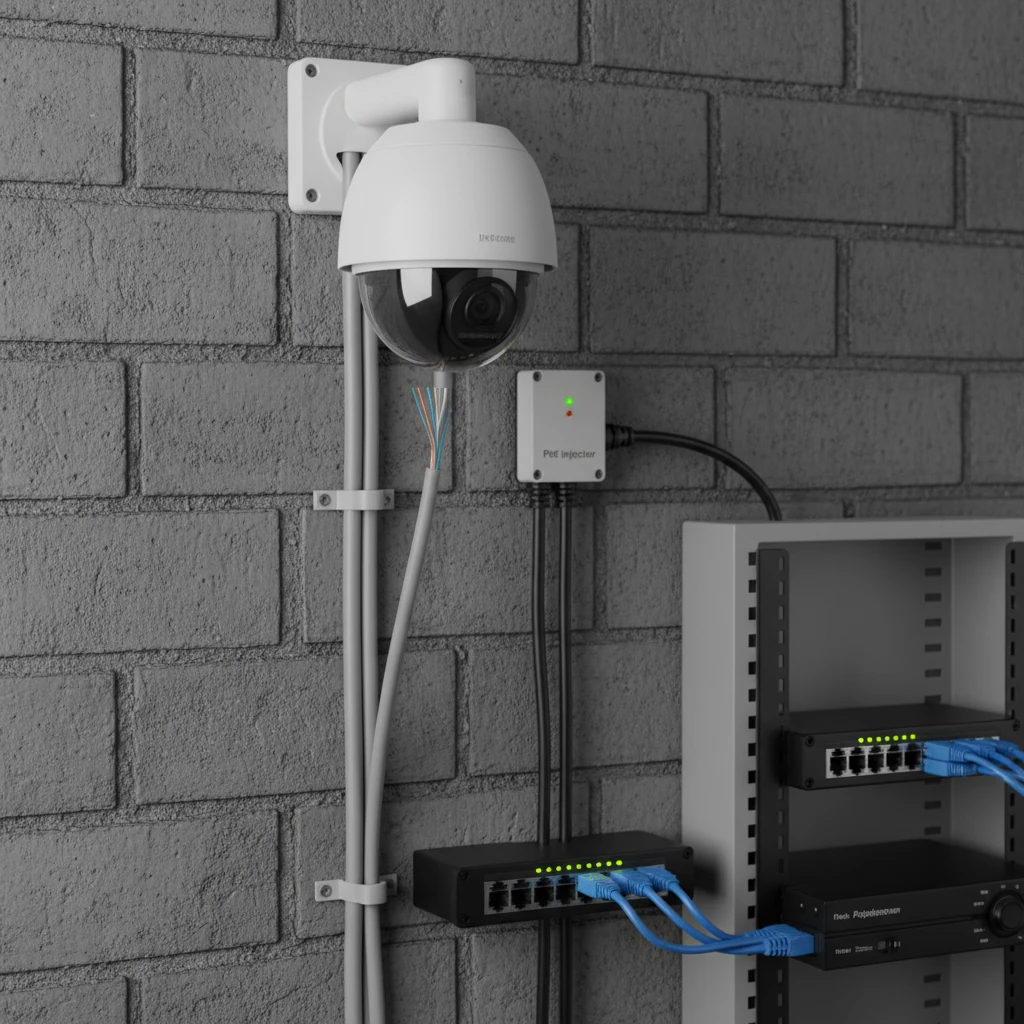
Power over Ethernet (PoE) is a technology that allows Ethernet cables to transmit both data and electrical power simultaneously. This means that devices such as IP cameras can receive the power they need to operate directly through the network cable, eliminating the need for separate power supplies and electrical outlets. At its core, PoE involves injecting power onto the Ethernet cable using a PoE switch or a PoE injector. The PoE-enabled devices (like cameras) then extract the power from the cable to operate. Several standards define the voltage and power levels available through PoE. This power delivery simplifies the installation process, as only one cable needs to be run to each device, and it improves the manageability of the system.
The Key Advantages: Power and Data Over a Single Cable
The primary advantage of PoE is the ability to transmit both power and data over a single cable. This simplifies installation, reduces cable clutter, and lowers overall costs. With PoE, you don’t need to run separate power cables to each camera location, which saves time and money on labor and materials. It also provides greater flexibility in camera placement, as you are not limited by the availability of electrical outlets. Moreover, PoE supports centralized power management, allowing you to remotely monitor and control the power supply to each camera. This can be particularly useful for troubleshooting and maintenance. For instance, you can remotely reboot a camera that is malfunctioning, without having to physically access the device.
Different PoE Standards: PoE, PoE+, PoE++ (and Which You Need)
There are several different PoE standards, each offering varying levels of power. The original PoE standard (IEEE 802.3af) provides up to 15.4 watts of power per port. PoE+ (IEEE 802.3at) increases the power to 30 watts per port, while PoE++ (IEEE 802.3bt) can deliver up to 60 or even 90 watts. The standard you need depends on the power requirements of your cameras and other PoE devices. For example, standard IP cameras with basic features typically only require PoE, while PTZ (pan-tilt-zoom) cameras or those with infrared illuminators may need PoE+ or even PoE++. It’s crucial to carefully consider the power consumption of each device when designing your PoE system. Check the specifications of your security cameras and choose the appropriate PoE standard to ensure adequate power delivery.
Benefits of PoE Wiring for Your Business’s CCTV System
Reduced Installation Costs and Complexity
One of the most significant benefits of PoE wiring is the reduction in installation costs and complexity. Traditional CCTV systems require separate power and data cables, often necessitating the involvement of both electricians and network technicians. With PoE, a single Ethernet cable handles both functions, simplifying the installation process and reducing the need for specialized labor. This can lead to significant savings on installation costs, especially for large-scale deployments. Furthermore, the simplified wiring reduces the risk of errors and potential safety hazards. The “Commercial CCTV Mississauga” market is competitive, and leveraging PoE can lead to quicker, more efficient installations, making it a selling point for your business.
Increased System Reliability and Uptime (Fewer Power Outages)
PoE wiring significantly increases system reliability and uptime by minimizing the risk of power outages. Because PoE systems often utilize a centralized power source, such as a UPS (Uninterruptible Power Supply), they can continue to operate even during a power outage. This is particularly important for commercial CCTV systems, as security breaches are more likely to occur during such events. With PoE, you can ensure that your cameras remain operational, recording critical footage and providing continuous security. Moreover, the centralized power management features of PoE allow you to remotely monitor the power status of each camera, proactively identify potential issues, and take corrective action before a failure occurs. Consider integrating your CCTV with other security systems for a holistic approach, ensuring operational visibility.
Simplified Remote Management and Troubleshooting
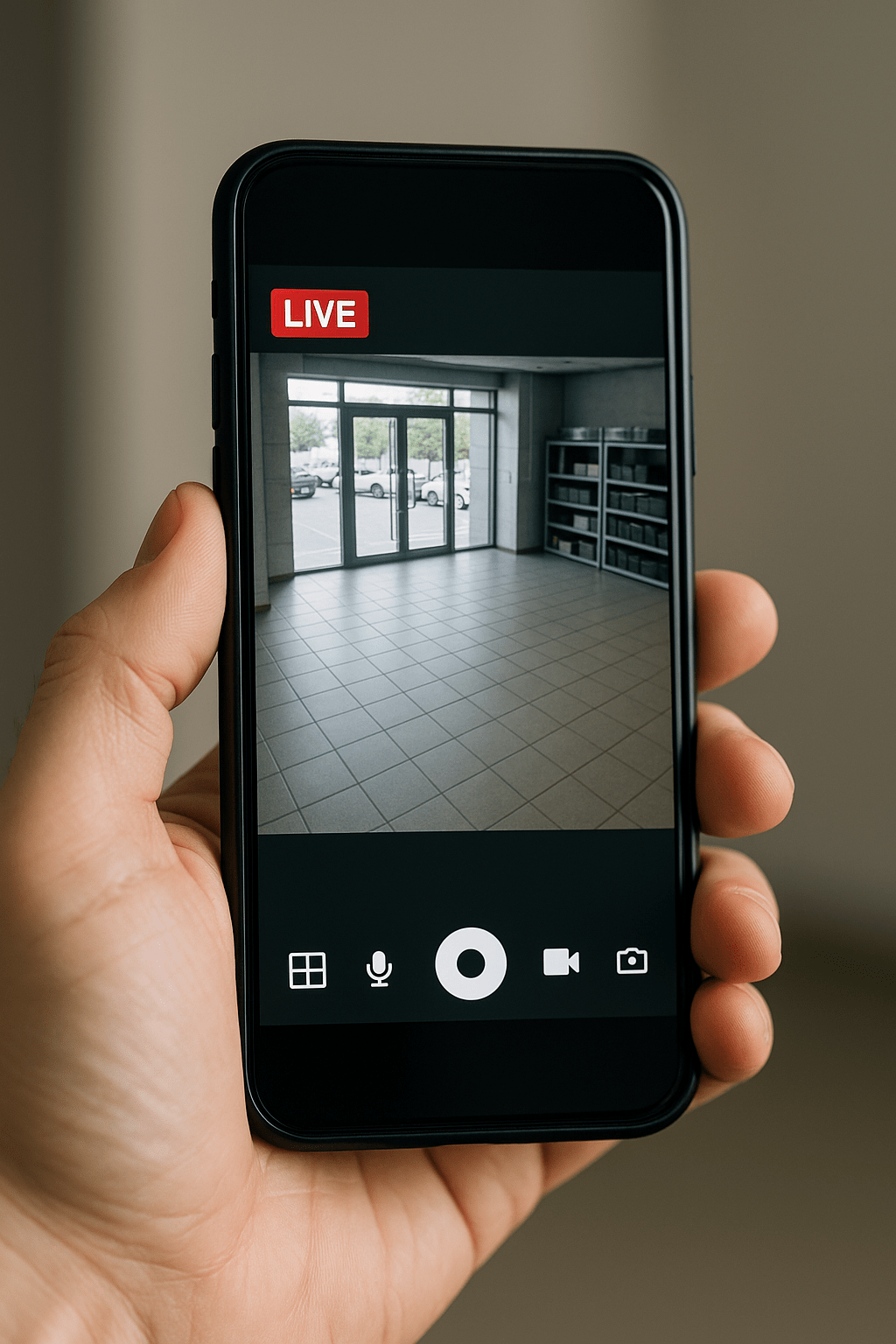
PoE wiring simplifies remote management and troubleshooting of your CCTV system. With centralized power management, you can remotely reboot cameras, monitor their power consumption, and diagnose potential issues from a central location. This reduces the need for on-site maintenance visits, saving time and money. For example, if a camera stops responding, you can simply reboot it remotely via the PoE switch’s management interface. This is particularly useful for multi-location businesses, where physical access to cameras may be difficult or time-consuming. Furthermore, PoE systems often provide detailed logs and diagnostics, making it easier to identify and resolve issues quickly. This capability ensures that your security cameras are always operating at peak performance, improving overall security.
Planning Your PoE CCTV System: Key Considerations for Businesses in Mississauga and the GTA
Camera Placement and Coverage Requirements
Careful camera placement and coverage planning are essential for an effective PoE CCTV system. Begin by identifying critical areas that require surveillance, such as entrances, exits, loading docks, and storage areas. Consider the field of view of each camera and choose appropriate lenses to ensure adequate coverage. For example, wide-angle lenses are suitable for large open areas, while telephoto lenses are better for focusing on specific details. Ensure that cameras are positioned to minimize blind spots and overlapping coverage. Conduct a site survey to identify potential obstructions, such as trees, buildings, or signage, and adjust camera placement accordingly. Proper planning can help your system reduce shrinkage in your business.
Power Budgeting: Ensuring Adequate Power for All Devices
Power budgeting is a crucial step in planning your PoE CCTV system. Calculate the power consumption of each camera and other PoE devices to ensure that your PoE switch or injector can provide adequate power. Remember to factor in the maximum power consumption of each device, as some cameras may require more power when using features like infrared illumination or PTZ functionality. Choose a PoE switch with sufficient power capacity to support all connected devices. It’s also a good idea to allocate some headroom in your power budget to accommodate future expansion or upgrades. Consult with a qualified security integrator to ensure that your power budget is accurate and that your PoE system is properly sized. You might want to consider upgrading your obsolete system to take advantage of modern PoE capabilities.
Network Bandwidth: Preventing Bottlenecks and Lag
Adequate network bandwidth is essential to prevent bottlenecks and lag in your PoE CCTV system. Each camera consumes a certain amount of bandwidth when transmitting video footage, and the total bandwidth demand can quickly add up, especially for high-resolution cameras or systems with a large number of devices. Ensure that your network infrastructure, including switches and cabling, can handle the expected bandwidth load. Consider using network switches with Gigabit Ethernet ports to provide ample bandwidth for each camera. Implement quality of service (QoS) settings to prioritize video traffic and prevent other network activities from interfering with camera performance. Monitor network performance regularly to identify and address any potential bandwidth issues. You can also explore implementing scalable security for GTA businesses to adapt to changing needs.
Choosing the Right PoE Switches and Cabling for Commercial Applications
Managed vs. Unmanaged PoE Switches: What’s Best for Your Needs?
Selecting the appropriate PoE switch is a crucial decision for any commercial CCTV deployment. The primary choice lies between managed and unmanaged PoE switches. Unmanaged switches offer simplicity and plug-and-play functionality, making them suitable for smaller businesses with basic security needs. They require no configuration and are generally more affordable. However, they lack advanced features such as VLAN support, port mirroring, and remote management capabilities. This limitation can hinder network segmentation and troubleshooting, especially in larger or more complex environments.
Managed PoE switches, on the other hand, provide granular control and advanced features essential for robust commercial security. They allow network administrators to prioritize traffic, segment camera networks for enhanced security, and remotely monitor switch performance. Features like VLAN support are invaluable for isolating camera traffic from the main network, preventing unauthorized access and improving overall network security. Consider, for example, a retail chain with multiple locations. A managed PoE switch allows IT staff to remotely reboot a malfunctioning camera at a remote site without needing to dispatch a technician, saving time and money. Choosing between managed and unmanaged depends on the scale, complexity, and security requirements of your business. A thorough assessment of your current and future needs is critical.
Importance of Cat5e/Cat6 Cabling for Data and Power Delivery
The cabling infrastructure forms the backbone of any PoE CCTV system, and the choice between Cat5e and Cat6 cabling significantly impacts performance and reliability. While Cat5e can support Gigabit Ethernet and PoE, Cat6 offers superior performance with reduced crosstalk and better signal-to-noise ratio, particularly over longer distances. This difference is especially important for high-resolution cameras requiring greater bandwidth. A business installing 4K cameras, for example, would greatly benefit from Cat6 cabling to ensure smooth, uninterrupted video streams.
Furthermore, the quality of the cabling itself is critical. Using substandard or counterfeit cables can lead to significant performance issues, including packet loss, reduced power delivery, and even equipment damage. Always opt for reputable brands and ensure the cabling is properly installed and terminated by qualified professionals. Proper cable management, including avoiding sharp bends and securing cables to prevent strain, is also essential for long-term reliability. When planning your surveillance deployment, budget adequately for high-quality cabling and professional installation to avoid costly rework and downtime later.
Considerations for Outdoor and Harsh Environments
Deploying PoE CCTV systems in outdoor or harsh environments demands careful consideration of environmental factors that can significantly impact system performance and longevity. Temperature extremes, humidity, dust, and vibration can all take a toll on both the PoE switches and the cabling infrastructure. For outdoor installations, it’s crucial to select PoE switches rated for extended temperature ranges and housed in weatherproof enclosures. These enclosures protect the switches from rain, snow, and direct sunlight, preventing corrosion and overheating.
Similarly, cabling must be designed to withstand the elements. Use UV-resistant and waterproof-rated cables to prevent degradation and maintain signal integrity. Consider using conduit to further protect the cables from physical damage and environmental exposure. In industrial environments with high levels of dust or vibration, select cabling with robust shielding and connectors designed to withstand these conditions. Regularly inspect outdoor installations for signs of damage or wear, such as cracked enclosures or frayed cables, and address any issues promptly to prevent system failures. A manufacturing facility in Mississauga, for instance, may require conduit and shielded cabling due to the presence of heavy machinery and potential for physical damage.
Professional CCTV Installation: Why DIY Can Cost You More in the Long Run
Ensuring Proper Wiring and Termination Techniques
Proper wiring and termination techniques are paramount to the reliability and performance of any PoE CCTV system. Incorrectly wired or terminated cables can lead to a host of problems, including reduced power delivery, signal degradation, and network connectivity issues. Professional installers use specialized tools and techniques to ensure that all connections are secure and meet industry standards, such as TIA/EIA-568. This includes using cable testers to verify continuity and signal quality, as well as properly crimping connectors to ensure a tight and reliable connection.
One common mistake in DIY installations is over-tightening cable ties, which can damage the delicate internal wires and impair signal transmission. Similarly, failing to properly ground the system can create electrical hazards and increase the risk of equipment damage from power surges. Professional installers have the knowledge and experience to avoid these pitfalls and ensure that the system is wired correctly and safely. The small cost savings of a DIY approach can quickly be outweighed by the cost of troubleshooting and repairing poorly installed cabling. This is particularly true for businesses that rely on their surveillance systems for security and operational visibility.
Compliance with Building Codes and Electrical Regulations
Commercial CCTV installations must comply with a variety of building codes and electrical regulations, which vary depending on the municipality and the specific type of building. These regulations are designed to ensure the safety of the installation and prevent electrical hazards. For example, some jurisdictions require that all low-voltage cabling be installed by licensed electricians and that the system be inspected and approved by a building inspector. Failing to comply with these regulations can result in fines, delays, and even the shutdown of the system.
Professional CCTV installers are familiar with local building codes and electrical regulations and can ensure that the installation meets all applicable requirements. They can also handle the permitting process and coordinate with building inspectors to ensure a smooth and compliant installation. Trying to navigate these regulations on your own can be time-consuming and confusing, especially for businesses that are not familiar with the construction industry. Partnering with a professional installer provides peace of mind and ensures that the system is installed safely and legally. Consider, for example, a new retail store in Oakville requiring adherence to specific fire safety codes regarding camera placement and wiring.
Minimizing Downtime During Installation and Upgrades
Downtime during CCTV installation or upgrades can be costly for businesses, particularly those that rely on surveillance for security and operational monitoring. Every minute that the system is offline represents a potential vulnerability and a loss of valuable data. Professional installers understand the importance of minimizing downtime and employ strategies to ensure a swift and efficient installation process. This includes careful planning, pre-configuration of equipment, and flexible scheduling to minimize disruption to normal business operations.
For example, a professional installer might pre-terminate cables off-site and schedule the final connections during off-peak hours to minimize disruption. They also have the experience and expertise to quickly troubleshoot any issues that arise during the installation process, minimizing delays and ensuring that the system is back online as soon as possible. A warehouse, for example, requires continuous surveillance; therefore, a professional installation team is adept at swiftly deploying new cameras while minimizing downtime. DIY installations, on the other hand, often result in extended downtime due to unforeseen problems and lack of experience. The lost productivity and potential security risks associated with extended downtime can easily outweigh the cost savings of a DIY approach. An example of this could be upgrading an obsolete security system for a business needing minimal disruption.
Best Practices for Maintaining a Reliable PoE CCTV System
Regular System Checks and Maintenance
Maintaining a reliable PoE CCTV system requires regular system checks and maintenance to identify and address potential issues before they escalate into major problems. These checks should include verifying camera functionality, inspecting cabling for damage, and testing network connectivity. Regularly cleaning camera lenses is also important to ensure clear image quality. A simple checklist can help ensure that all critical components are inspected on a regular basis.
In addition to visual inspections, it’s also important to monitor system logs for errors or warnings. These logs can provide valuable insights into potential problems, such as power fluctuations or network connectivity issues. Scheduling regular maintenance visits from a qualified technician can also help to identify and address issues that might be missed during routine visual inspections. A proactive maintenance approach can significantly extend the lifespan of the system and prevent costly downtime. A car dealership, for instance, might schedule monthly inspections to guarantee continual operation of surveillance across the property.
Power Management and Surge Protection
Proper power management and surge protection are crucial for protecting PoE CCTV systems from damage and ensuring reliable operation. Power surges, voltage fluctuations, and power outages can all damage sensitive electronic components, leading to system failures and costly repairs. Installing surge protectors on both the power and data lines can help to mitigate the risk of damage from power surges. It’s also important to ensure that the PoE switches are properly grounded to prevent electrical hazards.
In areas with frequent power outages, consider investing in a uninterruptible power supply (UPS) to provide backup power to the CCTV system. A UPS can keep the system running during a power outage, ensuring that critical surveillance data is not lost. It is also important to monitor the power consumption of the cameras and PoE switches to ensure that the power supply is adequate and not overloaded. Overloading the power supply can lead to voltage drops and system instability. This is especially relevant for scalable security for GTA businesses, which will require more energy as the system grows.
Firmware Updates and Security Patches
Keeping the firmware of PoE cameras and network devices up-to-date is essential for maintaining system security and stability. Firmware updates often include security patches that address known vulnerabilities, protecting the system from cyberattacks. They can also include performance improvements and bug fixes that enhance the overall reliability of the system. Regularly check the manufacturer’s website for firmware updates and install them as soon as they become available.
It’s also important to implement strong passwords and other security measures to prevent unauthorized access to the system. Change default passwords on all devices and use complex passwords that are difficult to guess. Regularly review user access privileges and revoke access for employees who no longer need it. Enable two-factor authentication where possible to add an extra layer of security. A business security cameras remote monitoring setup should be regularly updated to patch vulnerabilities. Neglecting firmware updates and security patches can leave the system vulnerable to cyberattacks and data breaches.
Troubleshooting Common PoE CCTV Problems
Power Overload and Voltage Drop Issues
Power overload and voltage drop are common problems in PoE CCTV systems, often resulting in camera malfunctions or intermittent connectivity. Power overload occurs when the total power consumption of the connected devices exceeds the capacity of the PoE switch. This can lead to the switch shutting down or providing insufficient power to the cameras. Voltage drop occurs when the voltage at the camera end of the cable is lower than the minimum required, typically due to long cable runs or poor-quality cabling. Both of these issues can be addressed by carefully calculating the power requirements of the cameras and selecting a PoE switch with sufficient capacity.
When troubleshooting power-related issues, start by measuring the voltage at the camera end of the cable to verify that it is within the acceptable range. If the voltage is too low, try using shorter cables or upgrading to higher-quality cabling with lower resistance. Also, ensure that the PoE switch is properly grounded and that the power supply is adequate. For example, you may be experiencing issues with cameras far away from the switch in a warehouse. If the problem persists, consider using a PoE extender to boost the power signal. It may also be necessary to reduce the number of cameras connected to a single PoE switch or to upgrade to a more powerful switch.
Network Connectivity Problems and Packet Loss
Network connectivity problems and packet loss can lead to intermittent video streams, dropped connections, and overall system instability. These issues can be caused by a variety of factors, including cable faults, network congestion, and malfunctioning network devices. Start by checking the physical connections to ensure that all cables are securely plugged in and that there are no damaged or frayed cables. Use a cable tester to verify the continuity and signal quality of the network cabling.
If the physical connections are good, then check the network configuration settings to ensure that the cameras and network devices are properly configured. Verify that the IP addresses, subnet masks, and gateway settings are correct. Also, check for network congestion by monitoring network traffic and identifying any bottlenecks. If network congestion is the problem, try segmenting the network using VLANs or upgrading to higher-bandwidth network devices. Finally, check the logs of the PoE switch and network devices for any error messages or warnings that might indicate a problem. Implementing remote video monitoring can allow for the early detection of connectivity issues.
Camera Malfunctions and Image Quality Issues
Camera malfunctions and image quality issues can significantly compromise the effectiveness of a CCTV system. Common problems include blurry images, distorted colors, and complete camera failure. Start by inspecting the camera lens for dirt, dust, or condensation. Clean the lens with a soft, lint-free cloth and ensure that the camera is properly focused. If the image is still blurry, check the camera’s resolution settings and adjust them as needed. Also, check the camera’s exposure settings to ensure that the image is not overexposed or underexposed.
If the colors are distorted, try recalibrating the camera’s color settings. If the camera is completely non-functional, check the power supply and network connectivity. Verify that the camera is receiving power and that it is properly connected to the network. If the camera is still not working, it may be necessary to replace it. Consider also the potential for Commercial CCTV: Reducing Shrinkage in Your Business if a camera is malfunctioning and blind spots are developing. It is also important to protect the camera from vandalism and physical damage. Consider using vandal-resistant cameras and placing them in secure locations.
Future-Proofing Your Investment: Scalable PoE CCTV Solutions for Growing Businesses
Planning for Future Camera Additions and Upgrades
One of the most significant advantages of a well-designed PoE CCTV system is its scalability. Before installing your system, meticulously plan for future expansion. This includes assessing potential camera locations you might need in the next 3-5 years. For example, a warehouse initially might only require cameras at loading docks and high-value storage areas. However, as the business grows, adding cameras to monitor internal logistics, employee workspaces, or exterior perimeter becomes crucial. Use a structured cabling approach to ensure you have spare capacity (extra cables and switch ports) to accommodate these future additions. Consider using a higher-port switch than you currently need. Over-provisioning now saves significant cost and disruption later. Remember that strategic placement is key for scalability; for instance, positioning a camera at a critical junction can provide coverage for multiple zones with minimal adjustments as your needs evolve.
Implementing a Centralized Management System
A centralized management system is critical for efficiently managing and monitoring a scalable PoE CCTV system. A robust Video Management System (VMS) allows you to view, record, and analyze footage from all cameras from a single interface. This is especially important for businesses with multiple locations or a large number of cameras. Features like user access control, remote viewing capabilities, and advanced analytics (motion detection, facial recognition) enhance security and streamline operations. Consider a VMS that offers mobile app support for convenient monitoring on the go. Integrating the system with cloud storage provides a secure backup of footage and facilitates remote access. As your business expands, make sure the VMS can handle the increasing number of cameras and users without performance degradation.
Integrating with Other Security Systems (Access Control, Alarms)
Integrating your PoE CCTV system with other security systems, such as access control and alarm systems, creates a unified security infrastructure. When an alarm is triggered, the CCTV system can automatically focus on the affected area, providing real-time visual verification of the event. This integration minimizes false alarms and enables a faster, more effective response. For example, if an unauthorized entry attempt is detected by the access control system, the nearest camera can record the event and send an alert to security personnel. Furthermore, integrated systems can share data, providing valuable insights into security trends and vulnerabilities. Consider systems that offer open APIs for seamless integration with a wide range of security devices. A comprehensive security system ensures that all aspects of your business are protected, reducing risks and improving overall security posture.
Calculating the ROI of a Professionally Installed PoE CCTV System
Reducing Theft and Vandalism Losses
One of the primary ways a PoE CCTV system delivers ROI is by reducing theft and vandalism losses. Visible security cameras act as a deterrent, discouraging potential criminals from targeting your business. High-quality video evidence assists in identifying and prosecuting offenders, leading to increased recovery of stolen goods and reduced insurance claims. For example, consider a retail store experiencing an average of $5,000 in shoplifting losses per year. Installing a professionally designed CCTV system could reduce these losses by 60-80%, resulting in annual savings of $3,000-$4,000. Furthermore, the system can monitor employee activity, reducing internal theft and improving accountability. Regular security audits and proactive monitoring are essential to maximize the effectiveness of the CCTV system in preventing crime.
Improving Employee Productivity and Safety
A PoE CCTV system can also contribute to improved employee productivity and safety. By monitoring work areas, businesses can identify inefficiencies in processes and ensure compliance with safety regulations. For example, in a manufacturing environment, cameras can monitor assembly lines to identify bottlenecks and areas where workers may need additional training or support. This leads to increased efficiency and reduced production costs. Furthermore, CCTV systems can help prevent accidents and injuries by monitoring hazardous areas and ensuring that safety protocols are followed. This can lead to reduced worker’s compensation claims and improved employee morale. Ensure that employees are aware of the CCTV system and its purpose to avoid any privacy concerns. Communicate clearly that the goal is to improve safety and productivity, not to micromanage.
Lowering Insurance Premiums
Many insurance companies offer discounts to businesses that have implemented comprehensive security systems, including PoE CCTV systems. By demonstrating a commitment to security, businesses can lower their insurance premiums. The amount of the discount will vary depending on the insurance provider and the extent of the security system. However, even a small discount can result in significant savings over time. Be sure to provide your insurance company with detailed information about your CCTV system, including the number of cameras, their placement, and the features of the VMS. Some insurers require specific features, such as remote monitoring or offsite storage of footage, to qualify for discounts. Documented ROI case studies, such as the examples found at our page detailing business security camera ROI, can further support your case for premium reductions.
Commercial CCTV Solutions in Mississauga, Brampton, and Across the GTA: How AYS Security Can Help
Customized System Design and Installation Services
AYS Security specializes in providing customized PoE CCTV system design and installation services for businesses in Mississauga, Brampton, and across the GTA. We understand that every business has unique security needs, so we take a consultative approach to design systems that meet specific requirements and budgets. Our experienced technicians conduct thorough site assessments to identify potential security vulnerabilities and recommend optimal camera placements. We use only high-quality equipment from reputable manufacturers and follow industry best practices for installation. We handle all aspects of the installation process, including structured cabling, camera mounting, and system configuration. Our goal is to provide businesses with a reliable and effective security system that provides peace of mind.
Ongoing Maintenance and Support Packages
To ensure the long-term performance and reliability of your PoE CCTV system, AYS Security offers comprehensive maintenance and support packages. Our packages include regular system checks, software updates, and hardware repairs. We provide remote support to troubleshoot issues quickly and efficiently. We also offer on-site maintenance services to address more complex problems. Our proactive approach helps prevent system failures and minimizes downtime. Choose a maintenance package that aligns with your business’s needs and budget. Regular maintenance not only extends the lifespan of your system but also ensures that it continues to provide optimal security protection.
Contact Us for a Free Security Assessment
Protecting your business starts with understanding your vulnerabilities. AYS Security offers a free security assessment to businesses in Mississauga, Brampton, and across the GTA. Our experienced security professionals will conduct a thorough evaluation of your property to identify potential security risks and recommend solutions. We will assess your current security systems, evaluate your physical security measures, and review your security protocols. Based on our assessment, we will provide you with a detailed report outlining our findings and recommendations. This assessment is a valuable tool for understanding your security needs and developing a plan to protect your business. Contact us today to schedule your free security assessment and take the first step toward a safer and more secure business environment. You can learn about proactive shrinkage-reducing strategies, too; check out our page on how commercial CCTV reduces shrinkage.
Security Camera Checklist: What every commercial business in the GTA should know about PoE Wiring in 2026.
As of March 2026, every commercial business in the GTA considering or upgrading their security camera system should prioritize Power over Ethernet (PoE) wiring. Ensure structured cabling is installed by certified professionals for optimal performance and future scalability. Select cameras with high-resolution capabilities (at least 1080p, ideally 4K) and advanced features like wide dynamic range (WDR) and low-light performance. Verify that your network switch has sufficient PoE power budget to support all connected cameras, accounting for potential future additions. Implement a robust video management system (VMS) with features like remote viewing, motion detection, and analytics. Integrate the CCTV system with other security systems, such as access control and alarms, for a unified security solution. Conduct regular system maintenance and updates to ensure optimal performance and security. Train employees on how to use and monitor the CCTV system effectively. Finally, consider consulting with a reputable security integrator like AYS Security to design and install a customized PoE CCTV system that meets your specific business needs and budget.
Additional Security Solutions Offered by AYS Security
- Access Control Systems: Control who enters your premises with advanced access control systems. From keycard entry to biometric scanners, we offer solutions to secure your entrances and sensitive areas. Learn more about our options for access control systems in Mississauga.
- Alarm Systems: Protect your property from intrusion with our reliable alarm systems. We offer a range of wired and wireless alarm systems that can be customized to your specific needs.
- Intercom Systems: Enhance communication and security with our intercom systems. We offer audio and video intercom systems for both residential and commercial properties.
- 24/7 Monitoring: Rest easy knowing that your property is being monitored around the clock. Our 24/7 monitoring services provide rapid response to alarms and emergencies.
Frequently Asked Questions (FAQ)
Here are some frequently asked questions about commercial security systems:
- How much does a commercial security system cost?
The cost of a commercial security system varies depending on the size of your property, the type of system you need, and the features you choose. Contact us for a free quote. - How do I choose the right security system for my business?
Consider your specific security needs, budget, and the size of your property. A reputable security company can help you assess your needs and recommend the right system for you. - What is the difference between wired and wireless security systems?
Wired security systems are more reliable and secure, while wireless systems are easier to install and more flexible. - Do I need 24/7 monitoring?
24/7 monitoring provides an added layer of security and peace of mind. It ensures that your property is being monitored around the clock and that authorities will be notified in the event of an emergency.
Serving Businesses Across the GTA
AYS Security is proud to serve businesses across the Greater Toronto Area, including:
- Mississauga
- Brampton
- Toronto
- Oakville
- Vaughan
- And more!
Why Choose AYS Security?
At AYS Security, we are committed to providing our clients with the highest level of security and customer service. We have years of experience in the security industry and a proven track record of success. We are also licensed and insured for your protection.
- Experience and Expertise: Benefit from our extensive knowledge and experience in the security industry.
- Customized Solutions: We tailor our security solutions to meet your specific needs and budget.
- Reliable Service: Count on us for reliable and responsive service.
- 24/7 Support: We are available 24/7 to provide support and assistance.
Get a Free Quote Today
Protect your business with a comprehensive commercial security system from AYS Security. Contact us today for a free quote and consultation. Call us or visit our website to learn more about our services and how we can help you secure your business. We look forward to hearing from you and discussing your specific security needs and how we can provide the best security solutions. You can contact us through our website or by phone.