
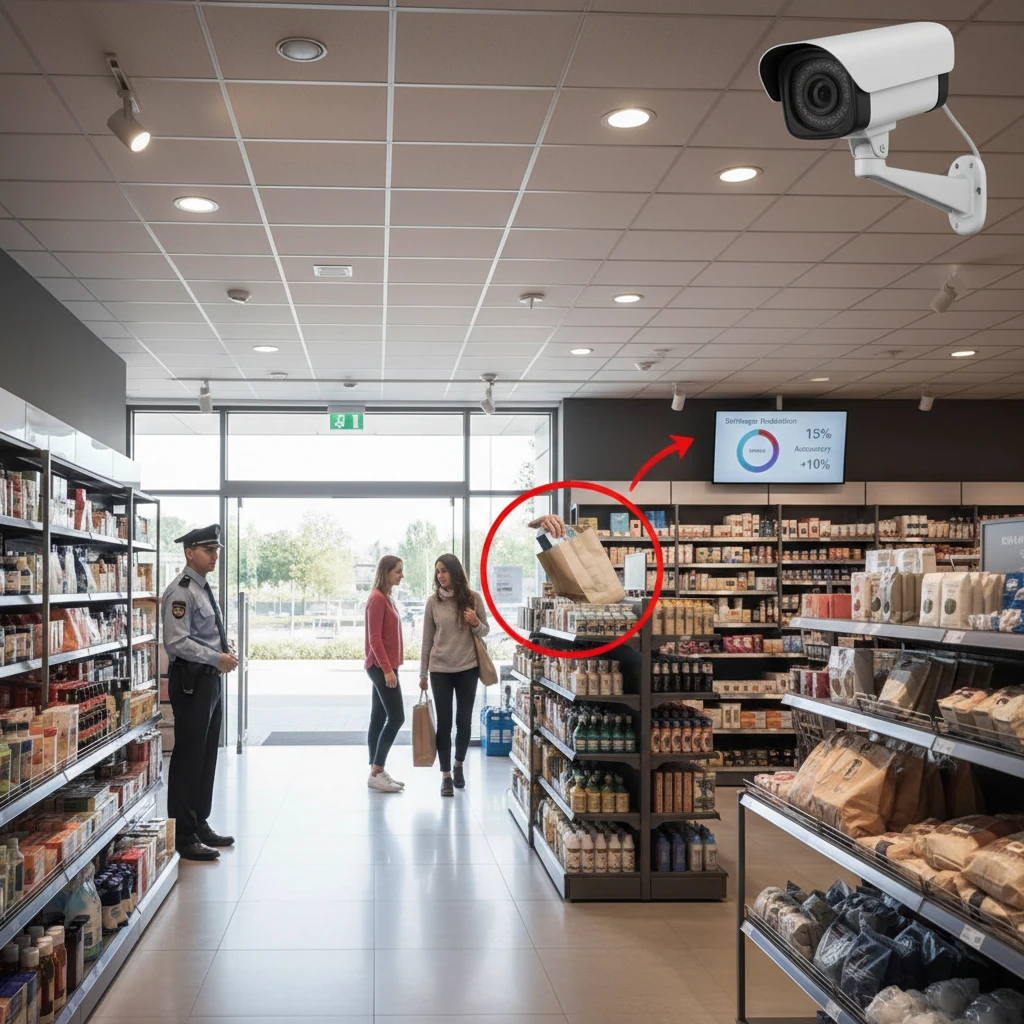
In today’s competitive business environment, profitability hinges not only on increasing sales but also on minimizing losses. One often-overlooked area of concern is shrinkage – the loss of inventory and assets due to various factors, including theft. While external threats are a valid concern, internal theft and operational inefficiencies can silently erode your bottom line.
A well-designed commercial CCTV system acts as a powerful deterrent and a vital tool for investigating and mitigating shrinkage. It’s about more than just recording video; it’s about creating a safer, more secure, and more efficient operational environment. Let’s explore how strategic implementation of commercial CCTV can significantly reduce shrinkage in your business, adding directly to your profitability. We’ll cover key system features and effective placement strategies.
Is Internal Theft Silently Draining Your Profits? The Shrinkage Problem
What is Shrinkage and Why Does It Matter?
Shrinkage, in the context of business, refers to the loss of inventory or assets. This loss can be attributed to a multitude of factors including, but not limited to, theft (both internal and external), damage, errors, and obsolescence. Shrinkage is a critical metric because it directly impacts your profitability by reducing the value of your assets. Failing to address shrinkage effectively can lead to decreased profit margins, lost revenue, and ultimately, hinder the overall growth of your business.
Common Sources of Shrinkage in Businesses (Beyond External Theft)
While external theft is a significant concern, internal theft often contributes heavily to overall shrinkage. This can include employee theft of merchandise, supplies, or even time. Operational errors, such as inaccurate inventory counts, shipping mistakes, and receiving discrepancies, can also lead to significant losses. Another often-overlooked source is vendor fraud, where suppliers may intentionally overcharge or short-ship orders. Damage to goods during handling, storage, or transportation is also a major contributor, especially in warehouse environments. Implementing proper inventory management procedures and training staff on best practices can mitigate many of these issues.
The Financial Impact of Shrinkage: Calculating Your Losses
Calculating the financial impact of shrinkage requires a comprehensive assessment of all contributing factors. Start by tracking inventory discrepancies and comparing physical counts against recorded data. Assign a monetary value to each lost or damaged item to determine the direct cost of shrinkage. Factor in the indirect costs as well, such as the time spent investigating losses, the impact on employee morale, and the potential loss of customers due to stockouts or damaged goods. Regular audits and accurate record-keeping are essential for identifying trends and quantifying the true extent of your shrinkage problem. It’s also crucial to compare your shrinkage rate against industry benchmarks to assess your performance relative to competitors. You can explore ROI case studies to see how other businesses have improved their profitability through security investments.
How Commercial CCTV Systems Combat Shrinkage: A Proactive Approach
Deterring Theft: The Psychological Impact of Visible Cameras
One of the most effective benefits of a commercial CCTV system is its deterrent effect. Clearly visible cameras act as a powerful psychological deterrent, discouraging potential thieves – both internal and external. Knowing that their actions are being recorded significantly reduces the likelihood of theft or other illicit activities. The presence of cameras sends a clear message that your business is serious about security and that any wrongdoing will be detected. Proper signage indicating the presence of video surveillance further enhances this deterrent effect. However, it’s important to comply with local laws and regulations regarding video surveillance and employee notification.
Providing Evidence: High-Resolution Footage for Investigations
In the event that theft or other incidents do occur, high-resolution CCTV footage provides invaluable evidence for investigations. Clear and detailed recordings can help identify perpetrators, reconstruct events, and provide concrete proof for law enforcement or internal disciplinary action. The ability to review footage remotely can also expedite investigations, allowing you to quickly identify the source of shrinkage and take corrective measures. Choosing a system with robust search and playback features will further streamline the investigation process. You may also want to consider integrating your CCTV system with other security measures for more robust protection.
Identifying Weaknesses: Spotting Security Gaps and Process Flaws
Beyond deterring theft and providing evidence, commercial CCTV systems can also help identify weaknesses in your security protocols and operational processes. By reviewing footage of incidents or near misses, you can pinpoint vulnerabilities in your security procedures, such as inadequate lighting, insufficient access controls, or poorly supervised areas. Analyzing footage can also reveal inefficiencies in your operational processes that contribute to shrinkage, such as improper handling of inventory or inadequate training. This information can then be used to implement corrective actions and strengthen your overall security posture. Reducing operational blind spots can significantly improve your bottom line.
Key Features of Commercial CCTV Systems for Shrinkage Reduction
High-Definition Video: Capturing Clear and Usable Footage
When choosing a commercial CCTV system for shrinkage reduction, high-definition (HD) video is paramount. HD cameras capture significantly more detail than standard-definition cameras, providing clearer and more usable footage for investigations. This enhanced clarity is essential for identifying individuals, reading license plates, and documenting incidents with precision. Consider cameras with a resolution of at least 1080p (Full HD) or higher for optimal image quality. Investing in higher resolution cameras is especially important in areas where detailed surveillance is critical, such as cash registers or entrances. The cost of upgrading to HD cameras is often easily justified by the improved evidence they provide.
Wide Dynamic Range (WDR): Ensuring Visibility in Varying Lighting Conditions
Wide Dynamic Range (WDR) is a crucial feature for commercial CCTV systems, particularly in environments with challenging lighting conditions. WDR technology balances the exposure levels in scenes with both bright and dark areas, ensuring that details are visible in both extremes. This is especially important in areas with large windows, loading docks, or entrances where the lighting can vary dramatically throughout the day. Without WDR, areas of the image may be overexposed (washed out) or underexposed (too dark), making it difficult to identify details. Ensure that the cameras you select have true WDR capabilities, not just digital WDR, for the best performance.
Night Vision Capabilities: Protecting Your Business Around the Clock
Night vision capabilities are essential for providing continuous security, even in low-light or no-light conditions. Most commercial CCTV cameras utilize infrared (IR) LEDs to illuminate the scene at night, allowing them to capture clear footage even in complete darkness. The range of the IR illumination is an important factor to consider, as it determines how far the camera can see in the dark. Choose cameras with sufficient IR range to cover the areas you need to monitor at night. It’s also important to consider the type of IR technology used, as some cameras may produce better image quality than others in low-light conditions. Upgrading your obsolete security system can include enhanced night vision technology.
Strategic Camera Placement: Maximizing Coverage and Minimizing Blind Spots
Securing Entry and Exit Points: Monitoring Ingress and Egress
Entry and exit points are critical areas to monitor with commercial CCTV systems. Placing cameras at all entrances and exits allows you to record everyone who enters and leaves your premises, providing valuable information in the event of theft or other incidents. Ensure that the cameras are positioned to capture clear facial images and other identifying details. Consider using cameras with license plate recognition (LPR) capabilities to automatically record the license plates of vehicles entering and exiting your property. This can be especially useful in parking lots or loading docks. Strategically placed cameras provide valuable evidence of who was on your premises and when.
Monitoring High-Value Areas: Protecting Inventory and Assets
Areas where high-value inventory or assets are stored should be given priority for CCTV coverage. This includes warehouses, storage rooms, cash registers, and display cases. Position cameras to provide a clear view of these areas, ensuring that all activity is recorded. Consider using cameras with motion detection capabilities to trigger alerts when movement is detected in these sensitive areas. Regular review of footage from these cameras can help identify potential theft or other security breaches. You can apply warehouse security best practices when positioning cameras to protect inventory.
Optimizing Camera Angles: Avoiding Obstructions and Maximizing Visibility
Proper camera angles are essential for maximizing the effectiveness of your commercial CCTV system. When installing cameras, carefully consider potential obstructions, such as trees, signs, or vehicles, that could block the view. Adjust the camera angles to avoid these obstructions and ensure that the area being monitored is clearly visible. Use wide-angle lenses to maximize the field of view, but be mindful of distortion that can occur with extreme wide angles. Regularly check the camera angles to ensure that they are still optimal, especially after changes to the environment, such as new construction or landscaping. Proper aiming helps increase operational visibility.
Beyond Theft: How CCTV Enhances Operational Efficiency and Reduces Errors
While loss prevention is a primary reason businesses invest in commercial CCTV systems, the benefits extend far beyond simply deterring theft. CCTV can significantly improve operational efficiency, reduce errors, and provide valuable insights into business processes. It acts as a silent supervisor, constantly monitoring and recording activities for later review. By leveraging the footage captured, businesses can identify areas for improvement and implement changes to optimize performance.
Monitoring Employee Performance: Identifying Training Needs and Boosting Productivity
CCTV systems allow you to monitor employee performance objectively. Rather than relying solely on anecdotal evidence or subjective observations, you can review footage to assess how employees are performing their tasks. This can identify areas where additional training is needed. For example, if you notice several employees struggling with a particular task, such as operating a machine or using software, you can provide targeted training to improve their skills and efficiency. This proactive approach to training not only boosts productivity but also reduces the risk of errors and accidents. Furthermore, the mere presence of CCTV can encourage employees to adhere to company policies and procedures, leading to a more disciplined and productive work environment. This contributes directly to improved operational visibility.
Improving Inventory Management: Tracking Stock Levels and Preventing Loss
Effective inventory management is crucial for profitability, and CCTV can play a vital role in this area. By strategically placing cameras in warehouses or retail spaces, businesses can track the movement of stock, monitor inventory levels, and identify potential discrepancies. For example, if a product is consistently going missing from a particular shelf, the CCTV footage can help determine if it’s due to theft, misplacement, or a faulty restocking process. This enables businesses to take corrective action promptly. CCTV footage can also be used to verify deliveries, ensuring that the correct quantity of goods is received and stored properly. Regular audits of CCTV footage against inventory records can reveal patterns of loss that might otherwise go unnoticed, leading to more effective loss prevention strategies. Consider an upgrade to your system for enhanced security.
Streamlining Processes: Identifying Bottlenecks and Optimizing Workflow
CCTV provides a visual record of your business operations, making it easier to identify bottlenecks and inefficiencies in your workflow. By reviewing footage, you can observe how products move through your facility, identify areas where delays occur, and analyze the causes of these delays. For example, you might discover that a particular workstation is consistently overloaded, leading to backups and reduced productivity. This information can be used to reallocate resources, redesign workflows, and optimize processes to improve efficiency. Furthermore, CCTV footage can be used to analyze customer behavior, such as how long customers spend in certain areas of a store or how they interact with products. This information can inform decisions about store layout, product placement, and staffing levels, ultimately leading to a better customer experience and increased sales. This can be especially useful in scenarios that demonstrate a positive ROI on CCTV investments.
Remote Video Monitoring and Mobile Viewing: Staying Connected to Your Business
Modern commercial CCTV systems offer the significant advantage of remote video monitoring. This allows business owners and managers to stay connected to their business, even when they are not physically present on the premises. This capability enhances security, improves response times, and provides peace of mind. Remote viewing capabilities are particularly beneficial for multi-location businesses, allowing centralized monitoring of all sites from a single location. The ability to access live and recorded footage from anywhere empowers informed decision-making and proactive management.
Real-Time Monitoring: Checking in on Your Business from Anywhere
With real-time monitoring, you can access live video feeds from your CCTV cameras at any time, from any location with an internet connection. This allows you to “check in” on your business to ensure that everything is running smoothly. You can monitor employee activity, customer interactions, and overall security of your premises. This is particularly useful for businesses with extended operating hours or those that require constant supervision. The ability to see what’s happening in real-time enables you to respond quickly to any issues that arise, such as a security breach, an accident, or a customer complaint. Remote monitoring also empowers managers to oversee operations from home or while traveling, ensuring consistent oversight and control. This includes monitoring warehouse security.
Mobile Alerts: Receiving Instant Notifications of Suspicious Activity
Many commercial CCTV systems offer mobile alerts that notify you instantly of any suspicious activity detected by the cameras. These alerts can be triggered by motion detection, object recognition, or other pre-defined events. For example, you can set up alerts to notify you if someone enters a restricted area, if a vehicle approaches the loading dock after hours, or if a large object is moved. These alerts are typically sent to your smartphone or tablet via a mobile app, allowing you to quickly assess the situation and take appropriate action. Instant notifications enable rapid response to potential threats, minimizing damage and loss. Consider the importance of integrating your CCTV with other security systems for a holistic approach.
Reviewing Footage Remotely: Investigating Incidents and Gathering Evidence
In the event of an incident, such as a theft, an accident, or a dispute, you can remotely review recorded footage to investigate what happened and gather evidence. This can be done from anywhere with an internet connection, eliminating the need to physically visit the business premises. Remote footage review allows you to quickly identify the cause of the incident, determine who was involved, and gather supporting documentation for insurance claims or legal proceedings. The ability to easily share footage with law enforcement or other relevant parties can expedite investigations and improve the chances of a successful resolution. The quality of the footage is critical, so consider upgrading your cameras if needed, especially when upgrading your obsolete system.
Alternatives to Commercial CCTV Systems (and When to Choose Them)
While commercial CCTV systems provide comprehensive security and operational benefits, they aren’t always the best solution for every situation. Several alternatives offer different levels of security and functionality, and the ideal choice depends on your specific needs, budget, and risk profile. Understanding these alternatives allows you to make an informed decision about the most appropriate security measures for your business. The decision isn’t always about choosing only one; often, a combination of solutions provides the strongest security posture.
Security Guards: Pros, Cons, and When They’re the Right Choice
Security guards offer a physical presence and a human element that CCTV systems cannot replicate. They can actively patrol the premises, deter crime through their visible presence, and respond immediately to incidents. Security guards are particularly valuable in situations that require human judgment, such as dealing with unruly customers, resolving disputes, or providing assistance to employees or visitors. However, security guards are also more expensive than CCTV systems, and their effectiveness can vary depending on their training, experience, and alertness. They are also subject to human error and may not be able to monitor multiple areas simultaneously. Security guards are often the right choice for businesses that require a high level of security, such as banks, jewelry stores, or high-risk facilities. They also work well in situations requiring active intervention and customer service.
Access Control Systems: Enhancing Security and Limiting Access
Access control systems restrict entry to authorized personnel only, preventing unauthorized access to sensitive areas of your business. These systems use a variety of methods to verify identity, such as key cards, PIN codes, biometric scanners, or mobile credentials. Access control systems can be integrated with CCTV systems to provide a comprehensive security solution. For example, if someone attempts to enter a restricted area without authorization, the access control system can trigger an alarm and alert security personnel, while the CCTV system records the event. Access control is ideal for businesses with valuable assets, confidential information, or areas that require a high level of security. It also helps track employee attendance and manage access permissions efficiently.
Inventory Management Software: Tracking Stock and Identifying Discrepancies
While not a direct replacement for CCTV, robust inventory management software provides detailed tracking of stock levels, movements, and transactions. This software can help identify discrepancies between expected and actual inventory levels, potentially indicating theft, damage, or errors in record-keeping. Inventory management software is particularly useful for businesses with complex supply chains or large inventories. By providing real-time visibility into inventory levels, it can help prevent stockouts, reduce waste, and optimize inventory management practices. While it cannot prevent theft like CCTV, it can help identify when and where losses are occurring, complementing the investigative capabilities of a CCTV system. Consider using this in tandem with CCTV best practices. There are even solutions specifically designed for warehouse security.
Choosing the Right Commercial CCTV System for Your Business Needs
Selecting the right commercial CCTV system is a critical decision that requires careful consideration of your specific security needs, budget, and long-term goals. A poorly chosen system can be ineffective, costly, and even create a false sense of security. A well-designed and professionally installed system, on the other hand, can provide comprehensive security, improve operational efficiency, and protect your business assets. The selection process should involve a thorough assessment of your security risks, a clear understanding of your budget constraints, and a focus on scalability to accommodate future growth.
Assessing Your Security Risks: Identifying Vulnerabilities and Priorities
Before investing in a commercial CCTV system, it’s essential to conduct a thorough assessment of your security risks. This involves identifying potential vulnerabilities in your existing security measures, evaluating the likelihood and impact of various threats, and prioritizing your security needs. Risk assessment should consider factors such as the location of your business, the type of assets you need to protect, the history of crime in the area, and any specific threats you have received. For example, a retail store might prioritize security measures to prevent shoplifting, while a warehouse might focus on preventing cargo theft and unauthorized access. By understanding your specific security risks, you can choose a CCTV system that is tailored to your needs and provides the most effective protection. Consider consulting with a security professional to conduct a comprehensive risk assessment. This process directly impacts your ROI and is a critical step for businesses in areas such as Commercial CCTV Mississauga.
Budget Considerations: Balancing Cost and Functionality
The cost of a commercial CCTV system can vary widely depending on the number of cameras, the features and capabilities of the system, and the complexity of the installation. It’s important to establish a clear budget before you start shopping for a system, and to carefully consider the long-term costs of ownership, including maintenance, repairs, and upgrades. Budget planning should also take into account the potential return on investment (ROI) of the system, such as reduced theft, improved productivity, and lower insurance premiums. While it’s tempting to opt for the cheapest system available, it’s important to balance cost with functionality. A low-cost system may lack the features and capabilities you need to effectively protect your business, ultimately costing you more in the long run. Prioritize essential features and consider scaling up later as your budget allows.
Scalability: Ensuring Your System Can Grow with Your Business
As your business grows and evolves, your security needs will likely change. It’s important to choose a commercial CCTV system that can scale to accommodate your future needs. This means selecting a system that can easily add new cameras, integrate with other security systems, and adapt to changes in your business operations. Scalable systems typically use a modular design, allowing you to add components as needed without having to replace the entire system. Cloud-based systems are particularly scalable, as they can easily accommodate changes in storage capacity and processing power. By choosing a scalable system, you can ensure that your security investment continues to provide value for years to come. Consider how this upgrade affects other integrated systems.
Compliance Considerations: Ensuring Your CCTV System Adheres to Legal and Ethical Standards
Privacy Laws: Respecting Employee and Customer Privacy
Implementing a commercial CCTV system involves navigating various privacy laws. In Canada, the Personal Information Protection and Electronic Documents Act (PIPEDA) sets the ground rules for how organizations collect, use, and disclose personal information. This applies even if you are recording video footage. Businesses must ensure their surveillance practices are compliant, particularly when cameras cover areas where employees or customers have a reasonable expectation of privacy, such as restrooms or break rooms. For instance, avoid placing cameras in sensitive areas, and limit recording to areas directly related to security concerns, such as entrances, exits, and high-value merchandise zones. It’s also crucial to conduct a Privacy Impact Assessment (PIA) to identify potential privacy risks and develop mitigation strategies.
Data Storage: Protecting Footage and Complying with Regulations
How you store your CCTV footage is just as important as where you place your cameras. Many regulations dictate data retention periods and security protocols. For example, PIPEDA requires that personal information be retained only as long as necessary. This means you must establish clear policies on how long video footage is stored and how it is securely destroyed after the retention period. Implement strong access controls to limit who can view and manage the footage. Utilizing encrypted storage solutions and regularly backing up your data are also critical. Furthermore, ensure that your vendor complies with data protection regulations when using cloud-based storage.
Signage Requirements: Informing People They Are Being Recorded
Clear and conspicuous signage is a fundamental requirement for any commercial CCTV system. Signs should be placed at all entrances and in areas under surveillance, informing individuals that they are being recorded. The signage should be easily visible and understandable, including symbols and, if necessary, multiple languages. The purpose of these signs is not only to comply with legal requirements but also to promote transparency and deter potential criminal activity. The sign should clearly state who is operating the CCTV system and how individuals can contact them with questions or concerns. Failure to provide adequate signage can result in legal penalties and erode public trust. For example, a sign reading “Premises under video surveillance for security purposes” is a simple and effective way to meet this requirement.
The Importance of Professional CCTV Installation and Maintenance in Mississauga, Brampton, and the GTA
Structured Cabling and PoE: Ensuring Reliable Performance
Professional CCTV installation goes beyond simply mounting cameras. Structured cabling is the backbone of a reliable surveillance system. It involves carefully planning and installing the necessary cables (typically Cat5e or Cat6) to connect cameras to the network video recorder (NVR) or cloud storage. This includes proper cable management, termination, and testing to ensure optimal performance and minimize interference. Power over Ethernet (PoE) is also crucial, as it allows cameras to receive both power and data through a single cable, simplifying installation and reducing costs. A poorly planned or executed cabling infrastructure can lead to signal degradation, intermittent connectivity issues, and ultimately, system failure. In areas like Mississauga and Brampton, where temperature variations and industrial activity are common, robust cabling is essential.
Ongoing Maintenance and Support: Preventing Downtime and Ensuring Optimal Functionality
A CCTV system is an investment that requires regular maintenance to ensure optimal functionality and longevity. This includes tasks such as cleaning camera lenses, checking cable connections, updating firmware, and verifying recording settings. Professional maintenance services provide proactive monitoring to identify and address potential issues before they escalate into major problems. This can significantly reduce downtime and prevent security breaches. A comprehensive maintenance plan should also include regular system health checks and performance optimization to adapt to changing security needs. Furthermore, having access to responsive technical support is crucial for resolving any unexpected issues promptly. Businesses in the GTA can benefit from local security providers who understand the specific environmental and security challenges in the region, and can offer rapid on-site support.
Why DIY CCTV Systems Are a Risk for Businesses
While DIY CCTV systems may seem appealing due to their lower upfront costs, they often pose significant risks for businesses. DIY systems typically lack the professional-grade equipment and expertise needed to provide reliable and comprehensive security. Amateurs may not install security systems with the same level of precision that a certified company can, especially concerning areas that are more vulnerable, like loading docks. This can result in blind spots, poor image quality, and system vulnerabilities that can be easily exploited by intruders. Furthermore, DIY installations often lack the necessary integration capabilities to connect with other security systems, such as access control or alarm systems, as explored on this page about integrating security systems. Perhaps most importantly, DIY systems often lack the robust warranties and ongoing support that come with professional installations, leaving businesses vulnerable to costly repairs and downtime. Choosing a professional installer ensures compliance with regulations and provides peace of mind knowing your security is in capable hands. As noted on this page, you can retrofit a security system for compliance to avoid the pitfalls of DIY solutions.
Calculating the ROI of a Commercial CCTV System: How It Pays for Itself
Reduced Shrinkage: Quantifying the Cost Savings
One of the primary ways a commercial CCTV system delivers ROI is by reducing shrinkage. Shrinkage refers to the loss of inventory or assets due to theft, damage, or errors. A well-designed CCTV system acts as a powerful deterrent to theft, both by employees and external individuals. By strategically placing cameras in high-risk areas, such as entrances, exits, and stock rooms, businesses can significantly reduce the incidence of theft. Furthermore, CCTV footage can provide valuable evidence for investigating incidents of theft or fraud, leading to the recovery of stolen assets and the prosecution of offenders. To quantify the cost savings, businesses should track the reduction in inventory losses and compare it to the cost of the CCTV system. For example, a retail store experiencing $20,000 in annual shrinkage could potentially reduce that by 50% with an effective CCTV system, resulting in a $10,000 annual savings.
Insurance Premium Reductions: Leveraging Security Measures for Lower Rates
Investing in a commercial CCTV system can also lead to significant insurance premium reductions. Insurance companies often offer lower rates to businesses that have implemented robust security measures, as these measures reduce the risk of theft, vandalism, and liability claims. By providing evidence of a professionally installed and maintained CCTV system, businesses can demonstrate their commitment to security and negotiate lower premiums. The extent of the reduction will vary depending on the insurance provider and the specific security measures in place. However, even a modest reduction can result in substantial cost savings over the lifetime of the system. Businesses should consult with their insurance provider to determine the potential savings and understand the specific requirements for qualifying for reduced rates. Moreover, strategically placed cameras and good security practices can significantly reduce false liability claims. According to this article, you may want to review ROI case studies before choosing your security system.
Increased Operational Efficiency: Measuring the Productivity Gains
Beyond security benefits, a commercial CCTV system can also contribute to increased operational efficiency. By providing real-time visibility into various aspects of the business, CCTV systems can help managers identify bottlenecks, optimize workflows, and improve employee productivity. For example, in a warehouse setting, cameras can be used to monitor loading and unloading operations, track inventory movement, and ensure that employees are following safety procedures. This can lead to faster turnaround times, reduced errors, and improved overall efficiency. Similarly, in a retail environment, cameras can be used to monitor customer traffic, identify areas of congestion, and optimize staffing levels. By measuring key performance indicators (KPIs) such as processing times, error rates, and customer satisfaction, businesses can quantify the productivity gains resulting from the CCTV system. Operational visibility solutions are discussed on this page: Business Security Cameras: Operational Visibility Solutions.
Commercial CCTV systems are an investment with multiple layers of benefits, from deterring theft and reducing insurance premiums to improving operational efficiency. Careful planning, professional installation, and ongoing maintenance are crucial to maximizing the ROI and ensuring long-term security. By addressing compliance considerations and quantifying the cost savings, businesses can make informed decisions about their security investments and protect their bottom line.
By addressing compliance considerations and quantifying the cost savings, businesses can make informed decisions about their security investments and protect their bottom line.
Choosing the Right CCTV System: Key Considerations
Selecting the appropriate commercial CCTV system requires careful consideration of several factors. A system that meets the specific needs of the business environment will maximize its ROI and provide the best protection. Some important factors to consider are:
- Camera Placement and Coverage: Determine the areas that need surveillance and strategically position cameras to maximize coverage and minimize blind spots. Consider the field of view, zoom capabilities, and resolution of the cameras when planning placement.
- Image Quality and Resolution: Higher resolution cameras provide clearer images, which can be crucial for identifying individuals or objects. Consider the lighting conditions of the areas being monitored and choose cameras with appropriate low-light capabilities.
- Storage Capacity and Retention: Determine how long footage needs to be stored and choose a system with sufficient storage capacity. Consider using cloud-based storage solutions for added security and accessibility.
- Remote Access and Monitoring: Ensure that the system allows for remote access and monitoring from various devices, such as smartphones and tablets. This allows business owners and managers to keep an eye on their property even when they are not on-site.
- Integration with Existing Security Systems: Integrate the CCTV system with other security systems, such as alarm systems and access control systems, for a more comprehensive security solution.
Installation and Maintenance: Ensuring Optimal Performance
Professional installation is essential for ensuring that the CCTV system is properly configured and functioning optimally. Experienced technicians can assess the business’s security needs, recommend the appropriate equipment, and install the system according to industry best practices. Regular maintenance is also crucial for ensuring the long-term performance of the system. This includes:
- Camera Cleaning: Clean camera lenses regularly to ensure clear images.
- System Updates: Install software updates to ensure that the system is protected against vulnerabilities and functioning properly.
- Storage Monitoring: Monitor storage capacity to ensure that there is sufficient space for recording footage.
- System Testing: Regularly test the system to ensure that all cameras are functioning properly and that the recording system is working as expected.
The Future of Commercial CCTV Systems: Trends and Innovations
The field of commercial CCTV systems is constantly evolving, with new technologies and innovations emerging all the time. Some of the key trends and innovations to watch out for include:
- Artificial Intelligence (AI): AI is being used to enhance CCTV systems in various ways, such as object detection, facial recognition, and anomaly detection. AI-powered systems can automatically identify potential threats and alert security personnel.
- Cloud-Based Solutions: Cloud-based CCTV solutions offer several advantages, such as remote access, scalable storage, and enhanced security. They also eliminate the need for on-site servers, reducing maintenance costs.
- Wireless Technology: Wireless CCTV systems are becoming increasingly popular, as they are easier to install and more flexible than traditional wired systems.
- Enhanced Analytics: Advanced analytics tools are being used to analyze CCTV footage and extract valuable insights, such as customer traffic patterns and employee productivity levels.
Cost Considerations: Balancing Security and Budget
The cost of a commercial CCTV system can vary depending on several factors, including the size of the business, the number of cameras needed, and the features and capabilities of the system. It’s essential to carefully consider the business’s security needs and budget when selecting a CCTV system. Options to consider include:
- Initial Investment: The initial cost of the CCTV system includes the purchase of cameras, recording equipment, and software.
- Installation Costs: Professional installation services can add to the overall cost of the system.
- Maintenance Costs: Regular maintenance, such as camera cleaning and system updates, can incur additional costs.
- Storage Costs: The cost of storing recorded footage can vary depending on the storage capacity and the storage method (e.g., on-site storage, cloud storage).
Conclusion: Enhancing Security and Protecting Assets
Commercial CCTV systems are an essential tool for businesses looking to enhance security, protect assets, and deter crime. By understanding the different types of systems available, factors to consider when selecting a system, and the latest trends and innovations, businesses can make informed decisions and invest in a CCTV system that meets their specific needs and budget. With proper installation and maintenance, a commercial CCTV system can provide long-term security and peace of mind.