
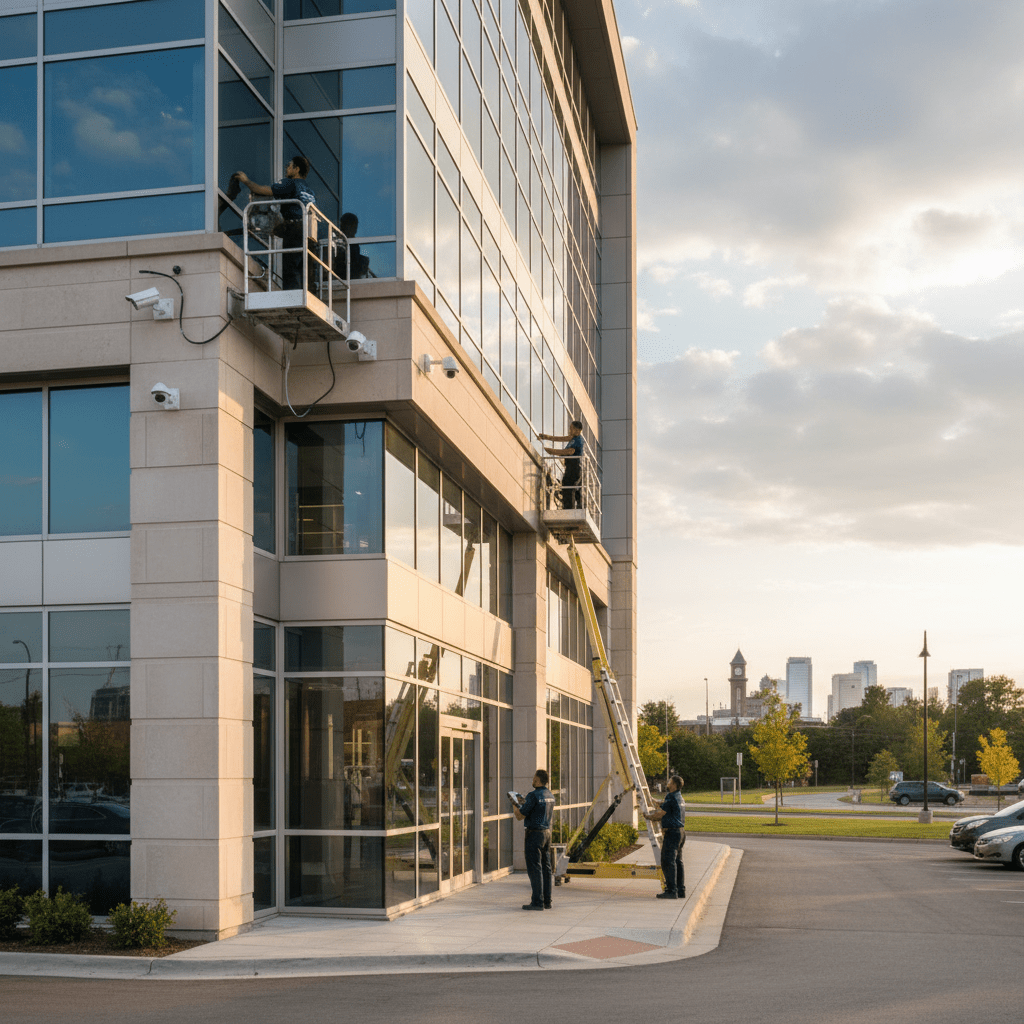
In today’s competitive business landscape, securing your Brampton-based enterprise is paramount. From deterring theft and vandalism to mitigating liability and improving operational efficiency, a robust commercial CCTV system is a vital investment. But how do you navigate the complexities of choosing the right system and installer?
This guide provides a comprehensive overview of commercial CCTV solutions for Brampton businesses, covering key considerations, camera types, and the importance of professional installation to ensure optimal security and a strong return on investment. Let’s delve into securing your business effectively.
Is Your Brampton Business Truly Secure? Unseen Risks and How CCTV Can Help
Common Security Vulnerabilities for Brampton Businesses in 2026
Brampton businesses face a range of security threats, both internal and external. External threats include break-ins, vandalism, and theft of inventory or equipment. Internally, vulnerabilities can arise from employee theft, fraudulent activities, and process inefficiencies that lead to losses. Many businesses overlook weaknesses in perimeter security, inadequate lighting, and blind spots in their existing surveillance coverage. Furthermore, failure to properly monitor employee access and track visitor activity can leave businesses exposed. Outdated or poorly maintained security systems are also a significant vulnerability. Older systems often lack the advanced features and image quality needed for effective monitoring and investigation.
The Cost of Security Breaches: Beyond Stolen Goods
The immediate cost of a security breach, such as stolen inventory or damaged property, is just the tip of the iceberg. Businesses also incur expenses related to investigation, insurance claims, legal fees, and potential increases in insurance premiums. Perhaps more significantly, security breaches can damage a company’s reputation, leading to a loss of customer trust and decreased sales. Operational disruptions caused by theft or vandalism can also result in significant downtime and lost productivity. For example, a manufacturing plant experiencing frequent equipment theft might face delays in production and increased shipping costs. Consider a Brampton retail store: an undetected shoplifter could lead to inventory shrinkage of $5,000 annually. This number doesn’t include the staff time spent reviewing incident reports and interacting with law enforcement. Implementing a well-designed CCTV system can deter such incidents and provide crucial evidence when they do occur. Investing in ROI-driven security is a proactive measure.
Proactive Security vs. Reactive Security: Why Commercial CCTV Matters
Reactive security measures, such as responding to incidents after they occur, are often costly and ineffective. Proactive security, on the other hand, focuses on preventing incidents from happening in the first place. Commercial CCTV systems play a crucial role in proactive security by deterring criminal activity, providing real-time monitoring of premises, and enabling quick responses to potential threats. The presence of visible security cameras can dissuade potential thieves and vandals, while remote monitoring capabilities allow business owners or security personnel to keep a watchful eye on their property even when they are not physically present. Furthermore, CCTV footage can provide valuable evidence for investigations and legal proceedings. This shift from reactive to proactive security not only reduces the risk of financial losses but also creates a safer and more secure environment for employees and customers. Think of a Brampton warehouse utilizing CCTV integrated with access control for warehouses; unauthorized access attempts trigger immediate alerts, preventing theft before it happens. According to research, businesses with visible security cameras experience a significant reduction in crime rates compared to those without.
Why Choose a Commercial-Grade CCTV System Over DIY Options for Your Brampton Business?
Scalability for Growing Businesses
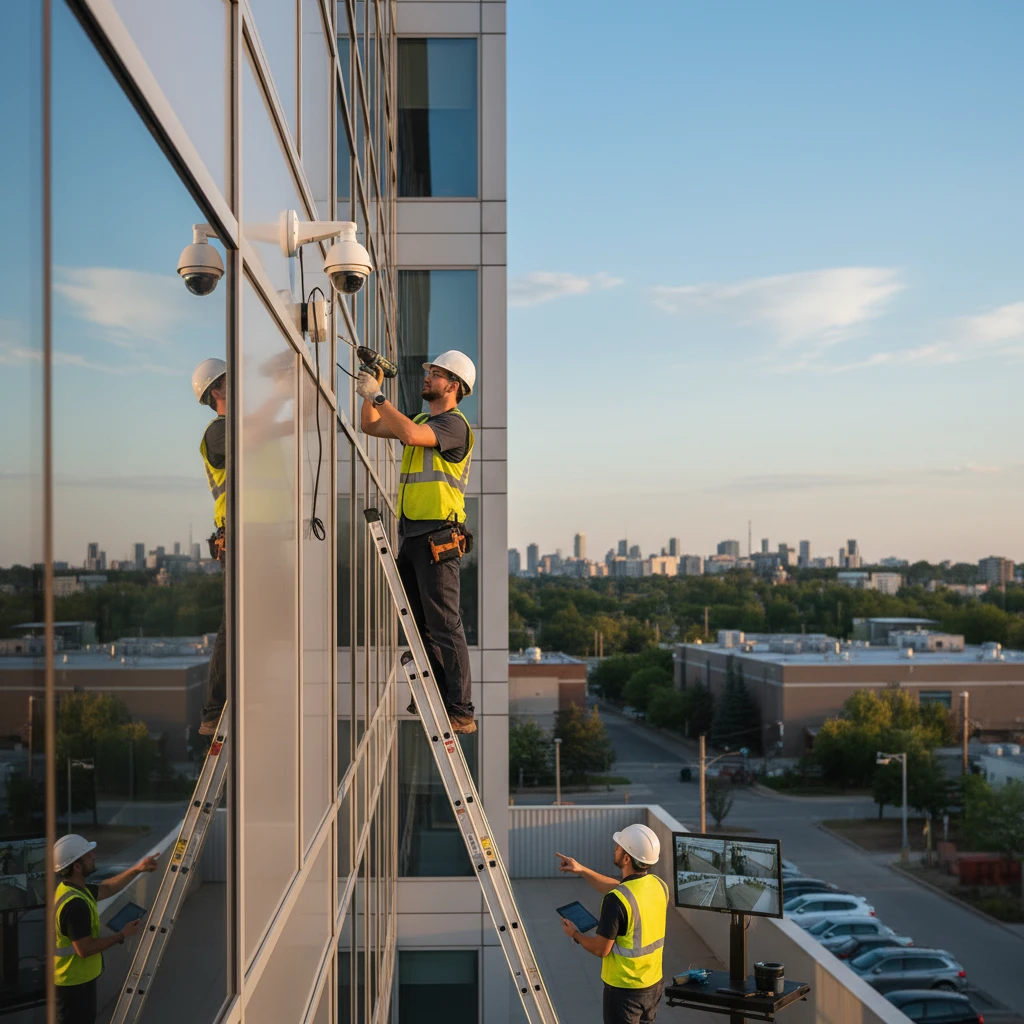
DIY CCTV systems often lack the scalability required to meet the evolving needs of a growing business. As your company expands, you may need to add more cameras, integrate new features, or extend coverage to additional locations. Commercial-grade CCTV systems are designed to be scalable, allowing you to easily add new cameras and functionalities as your business grows. These systems also offer centralized management capabilities, making it easier to monitor and manage security across multiple locations. For example, a Brampton-based dealership opening a second location in Mississauga can easily integrate the new site’s cameras into their existing security network. This ability to scale seamlessly ensures that your security infrastructure keeps pace with your business growth and prevents you from needing to replace your entire system every few years. Choose Business Security Cameras: Scalable Systems for Growth.
Advanced Features: Analytics, License Plate Recognition, and More
Commercial CCTV systems offer a range of advanced features that are not typically available in DIY options. These features include video analytics, which can automatically detect suspicious activity, such as loitering or unauthorized access. License plate recognition (LPR) technology allows businesses to automatically identify and track vehicles entering and exiting their premises. Other advanced features include facial recognition, people counting, and heat mapping, which can provide valuable insights into customer behavior and operational efficiency. For instance, a Brampton manufacturing plant might use video analytics to detect safety violations, such as employees not wearing proper protective equipment. LPR could be used to track delivery vehicles and manage parking access. These advanced features enhance security and provide valuable data that can be used to improve business operations. Professional installation ensures optimal configuration and integration of these features.
Reliability and Professional Support
Commercial CCTV systems are built to withstand the demands of continuous operation and harsh environmental conditions. They are typically equipped with high-quality components and robust software, ensuring reliable performance and minimal downtime. In contrast, DIY systems are often made with cheaper components and may be more prone to failure. Furthermore, commercial CCTV installers provide professional support and maintenance services, ensuring that your system is always operating at peak performance. This support includes regular system checks, software updates, and prompt repairs in case of any issues. A Brampton business relying on a DIY system might struggle to troubleshoot technical problems or find replacement parts quickly, leading to significant security vulnerabilities. With professional support, businesses can rest assured that their security system is always in good hands. Always consider Business Security Cameras: Expert Installation.
Key Considerations When Selecting a Commercial CCTV Installer in Brampton
Experience with Similar Business Types
When choosing a commercial CCTV installer, it is essential to select a company with experience working with businesses similar to yours. Different types of businesses have unique security needs and challenges. An installer with experience in your industry will be better equipped to design and install a system that meets your specific requirements. For example, a CCTV system designed for a retail store will differ significantly from one designed for a warehouse or manufacturing plant. An installer with experience in the retail sector will understand the importance of deterring shoplifting, monitoring customer traffic, and protecting valuable merchandise. They will also be familiar with the specific regulations and compliance requirements that apply to retail businesses. Similarly, an installer with experience in the warehousing industry will understand the need for perimeter security, access control, and monitoring of loading docks and storage areas.
Licensed and Insured Technicians
Ensure that the CCTV installer employs licensed and insured technicians. Licensing demonstrates that the technicians have met certain standards of knowledge and competence. Insurance protects you from liability in case of accidents or damages that may occur during the installation process. Request proof of licensing and insurance before hiring an installer. Confirm that the insurance coverage is adequate to cover potential risks associated with the installation. A reputable installer will be happy to provide this information and answer any questions you may have. Using unlicensed or uninsured technicians can expose your business to significant financial and legal risks. For example, if a technician is injured while working on your property and the installer does not have proper insurance, you could be held liable for medical expenses and other damages.
References and Case Studies
Before hiring a CCTV installer, ask for references from previous clients and review case studies of similar projects. Contact the references and ask about their experience with the installer. Did they provide quality workmanship? Were they responsive to their needs? Did they complete the project on time and within budget? Case studies can provide valuable insights into the installer’s capabilities and expertise. Look for case studies that demonstrate the installer’s ability to design and install effective CCTV systems for businesses similar to yours. Pay attention to the specific challenges that the installer faced and how they overcame them. For example, a case study might describe how an installer designed a CCTV system to address a specific security threat, such as a high rate of employee theft or vandalism. Reading Commercial CCTV Mississauga: Maximize Business Security information can also help.
Essential CCTV Camera Types for Brampton Businesses: Choosing the Right Fit
Dome Cameras: Discreet Surveillance for Retail and Office Spaces
Dome cameras are characterized by their dome-shaped housing, which makes it difficult to determine the camera’s viewing direction. This discreet design is ideal for retail and office spaces where you want to maintain a professional appearance while still providing effective surveillance. Dome cameras are also vandal-resistant, as the dome protects the lens from tampering and damage. They are typically mounted on ceilings or walls and offer a wide field of view, making them suitable for monitoring large areas. Some dome cameras also feature infrared (IR) illuminators for night vision capabilities. For a retail store, dome cameras can be strategically placed to monitor cash registers, entrances, and high-value merchandise displays. In an office environment, they can be used to monitor common areas, hallways, and reception areas. The unobtrusive design minimizes employee discomfort while still providing a deterrent to potential theft or misconduct. A major advantage is the aesthetic integration, blending seamlessly with the existing decor.
Bullet Cameras: Long-Range Monitoring for Warehouses and Parking Lots
Bullet cameras are known for their cylindrical shape and long-range monitoring capabilities. These cameras are typically used for outdoor surveillance and are ideal for warehouses, parking lots, and other areas where long-distance viewing is required. Bullet cameras are often equipped with varifocal lenses, allowing you to adjust the zoom and focus to suit your specific needs. They are also typically weatherproof and can withstand harsh environmental conditions. Many bullet cameras also feature infrared (IR) illuminators for night vision. Warehouses often use bullet cameras to monitor loading docks, perimeter fences, and storage areas. Parking lots benefit from bullet cameras to deter theft, vandalism, and unauthorized parking. The ability to capture clear images from a distance is crucial in these environments. Example: A Brampton warehouse reported a 30% reduction in after-hours trespassing after installing high-resolution bullet cameras along its perimeter fence.
PTZ (Pan-Tilt-Zoom) Cameras: Comprehensive Coverage with Remote Control
PTZ (Pan-Tilt-Zoom) cameras offer comprehensive coverage and remote control capabilities. These cameras can pan horizontally, tilt vertically, and zoom in on specific areas of interest. PTZ cameras are often used in conjunction with other types of cameras to provide a complete surveillance solution. They can be controlled remotely by security personnel, allowing them to respond quickly to potential threats. PTZ cameras are well-suited for large areas that require flexible monitoring, such as parking lots, shopping malls, and industrial facilities. For example, a security guard can use a PTZ camera to zoom in on a suspicious vehicle in a parking lot or track a person moving through a shopping mall. The ability to pan, tilt, and zoom provides a level of control and coverage that is not possible with fixed cameras. Implementing Business Security Cameras: Remote Viewing Benefits enhances security measures.
Structured Cabling and PoE: The Foundation of a Reliable CCTV System
A robust commercial CCTV system relies heavily on its underlying infrastructure. Structured cabling and Power over Ethernet (PoE) are not mere accessories; they are the backbone that ensures consistent performance, scalability, and ease of maintenance. Investing in quality cabling and PoE solutions upfront can save significant costs and headaches in the long run.
Benefits of Power over Ethernet (PoE)
PoE simplifies CCTV installations by transmitting both power and data over a single Ethernet cable. This eliminates the need for separate power outlets for each camera, reducing installation time and costs. PoE also offers centralized power management, allowing for remote rebooting of cameras and easier integration with uninterruptible power supplies (UPS) for backup power during outages. For multi-location businesses, PoE streamlines standardization across different sites. Modern PoE standards like PoE+ and PoE++ offer higher power budgets, accommodating even PTZ (Pan-Tilt-Zoom) cameras with demanding power requirements. Furthermore, PoE can reduce electrical wiring costs, especially beneficial for expansive warehouse or manufacturing environments.
Importance of Professional Cable Management
Beyond simply connecting cameras, professional cable management is essential for a reliable and maintainable CCTV system. Properly labeled and organized cables simplify troubleshooting and upgrades. Untidy cabling can lead to signal interference, overheating, and accidental disconnections. Consider using cable trays, conduits, and patch panels for optimal organization. During installation, certified technicians should adhere to industry standards for cable routing and termination. A well-documented cabling infrastructure allows for easier scaling of your CCTV system as your business grows. Poor cable management can lead to significant downtime and increased labor costs during maintenance. This is especially critical in environments with harsh conditions, such as factories or outdoor areas where cables are exposed to extreme temperatures or moisture.
Ensuring Future-Proofing with Structured Cabling
Choosing the right cabling infrastructure ensures that your CCTV system can adapt to future technological advancements. Cat6A cabling, for example, supports higher bandwidths and is suitable for high-resolution cameras and advanced analytics. Consider the long-term needs of your business when selecting cabling. A modular design allows for easy expansion and upgrades without requiring a complete overhaul. Future-proofing also involves planning for increased camera density and the integration of new technologies like AI-powered analytics. Investing in a scalable cabling infrastructure is a strategic decision that protects your investment and avoids costly replacements in the future. Regular cable testing and maintenance are also crucial for ensuring optimal performance over time. As an example, a warehouse initially installing a basic system might later want to integrate advanced analytics, which necessitate higher bandwidth and processing capabilities best supported by Cat6A cabling.
Integrating Your CCTV System with Existing Security Infrastructure
A commercial CCTV system is most effective when integrated with other security measures. Combining video surveillance with alarm systems, access control, and remote monitoring creates a comprehensive security ecosystem. This integrated approach allows for a coordinated response to security threats and provides a more holistic view of your business’s security posture.
Alarm Systems and Access Control
Integrating your CCTV system with alarm systems allows for immediate verification of alarm events. When an alarm is triggered, the CCTV system can automatically display the relevant camera feed, enabling security personnel to quickly assess the situation and determine the appropriate response. Integration with access control systems enhances security by linking video footage to entry and exit events. This provides a clear audit trail of who entered which areas and when. For example, if an unauthorized entry attempt is detected by the access control system, the CCTV system can record the event and send an alert to security personnel. Consider systems with open APIs to facilitate seamless integration between different security components. This combined data provides actionable insights for loss prevention and operational improvements. Ensure compatibility between the CCTV, alarm, and access control systems before making any purchases.
Remote Video Monitoring Services
Remote video monitoring provides an additional layer of security by having trained professionals monitor your CCTV feeds in real-time. These monitoring services can detect suspicious activity and dispatch security personnel or law enforcement as needed. Remote monitoring is particularly beneficial for businesses that operate outside of regular business hours or have limited on-site security staff. Some monitoring services also offer virtual guard tours, where they proactively patrol your property using the CCTV cameras. When selecting a remote monitoring provider, consider their response time, training, and the technology they use. Integration with your existing CCTV system is crucial for seamless operation. A remote monitoring contract typically includes provisions for regular system health checks and performance reports. Furthermore, remote video monitoring services can be customized to fit specific business needs, such as monitoring critical infrastructure or high-value assets.
Mobile Viewing and Real-Time Alerts
Mobile viewing and real-time alerts provide you with instant access to your CCTV system from anywhere. Modern CCTV systems offer mobile apps that allow you to view live camera feeds, review recorded footage, and receive alerts on your smartphone or tablet. Real-time alerts can be triggered by motion detection, alarm events, or other pre-defined criteria. This allows you to stay informed about potential security threats even when you are not on-site. Consider a system that offers customizable alerts and notifications to avoid being overwhelmed with unnecessary information. Mobile access should be secured with strong passwords and two-factor authentication. Being able to remotely view your cameras offers significant peace of mind and enables faster response times to incidents. For example, a warehouse manager can remotely check on operations during off-hours, ensuring equipment is running smoothly and no unauthorized access is occurring. See the benefits of Business Security Cameras: Remote Viewing Benefits for additional information.
Maximizing ROI: How Commercial CCTV Systems Improve Business Operations
A commercial CCTV system is not just an expense; it’s an investment that can deliver significant returns. By reducing theft and vandalism, improving employee productivity and safety, and enhancing customer service, a well-designed CCTV system can significantly improve your business’s bottom line. The ROI is maximized when the system is strategically designed to address specific business needs and integrated with other security and operational systems.
Reduced Theft and Vandalism
CCTV systems act as a powerful deterrent to theft and vandalism. Visible cameras discourage potential criminals from targeting your property. In the event that a crime does occur, CCTV footage provides valuable evidence for law enforcement. Consider installing cameras in strategic locations, such as entrances, exits, loading docks, and areas with high-value assets. High-resolution cameras with night vision capabilities are essential for capturing clear footage in all lighting conditions. Regularly review your CCTV footage to identify potential security vulnerabilities. By reducing theft and vandalism, a CCTV system can save your business significant amounts of money in losses and insurance costs. For instance, a retail store that experienced frequent shoplifting installed a CCTV system and saw a 75% reduction in theft within six months. Example: A dealership experiencing nightly vandalism costing $10,000/year installed a high-visibility CCTV system with lighting, reducing the cost to near zero the following year.
Improved Employee Productivity and Safety
CCTV systems can also improve employee productivity and safety. By monitoring employee activity, you can identify areas where productivity can be improved. CCTV can also help to ensure that employees are following safety protocols. For example, in a manufacturing environment, CCTV can be used to monitor employee adherence to safety procedures and identify potential hazards. This can help to reduce workplace accidents and injuries. Consider using CCTV to monitor high-risk areas and provide training to employees on safety best practices. A safe and productive work environment leads to increased employee morale and reduced turnover. For example, a warehouse installed CCTV to monitor forklift operations, resulting in a 20% reduction in accidents and a corresponding increase in productivity. Regular audits of your security protocols are important, and can be aided by ROI-driven content marketing to help measure and optimize the system’s effectiveness.
Enhanced Customer Service and Operational Efficiency
CCTV systems can enhance customer service and operational efficiency. By monitoring customer interactions, you can identify areas where customer service can be improved. CCTV can also be used to monitor operational processes and identify bottlenecks. For example, in a retail store, CCTV can be used to monitor checkout lines and identify ways to improve the customer experience. This can lead to increased customer satisfaction and loyalty. Consider using CCTV to monitor key operational metrics and identify areas for improvement. A CCTV system can also be used to resolve customer disputes and provide evidence in the event of an accident. For instance, a restaurant installed CCTV in its dining area and was able to resolve a customer dispute over a spilled drink by reviewing the footage. Example: A manufacturing facility used CCTV to monitor the production line, identifying inefficiencies that led to a 15% increase in output.
Navigating Brampton’s CCTV Laws and Regulations: Ensuring Compliance
Operating a commercial CCTV system in Brampton requires adherence to local laws and regulations. Failing to comply can result in fines and legal liabilities. Understanding and implementing the necessary privacy measures, signage requirements, and data retention policies is crucial for ensuring the responsible and legal operation of your surveillance system.
Privacy Considerations and Employee Notification
In Brampton, you must consider the privacy rights of individuals being recorded by your CCTV system. Avoid recording areas where individuals have a reasonable expectation of privacy, such as restrooms or changing rooms. Obtain written consent from employees if you intend to monitor their work areas. Clearly communicate the purpose of the CCTV system and how the data will be used. Develop a privacy policy that outlines your data collection, storage, and usage practices. Regularly review your privacy policy to ensure it complies with current laws and regulations. Train employees on privacy best practices and ensure they understand their responsibilities. Failing to protect privacy can lead to legal action and damage your business’s reputation. Consult with a legal professional to ensure your CCTV system complies with all applicable privacy laws. Employees should be formally notified of the CCTV system installation and its purpose. This notification should be documented. It’s essential to be transparent about the use of CCTV to foster trust and avoid potential legal issues.
Signage Requirements for CCTV Surveillance
Clearly visible signage is required to inform individuals that they are being recorded by a CCTV system. Signage should be placed at all entrances to the areas being monitored. The signs should be large enough to be easily read and should include a clear and concise message, such as “CCTV in Operation.” Consider using multilingual signage to accommodate diverse populations. The signage should also include contact information for the business operating the CCTV system. Regularly inspect your signage to ensure it is in good condition and properly positioned. Failing to display proper signage can result in fines and legal liabilities. Position signage in a way that does not create unnecessary alarm or intimidation. Use clear, professional signage that reflects the business’s commitment to security and transparency. The signs should not be misleading or create a false sense of security. Ensure the signage meets all municipal requirements for size, placement, and content.
Data Retention Policies
Establish a clear data retention policy that outlines how long CCTV footage will be stored. The retention period should be reasonable and based on your business’s specific needs and legal obligations. Avoid storing footage for longer than necessary. Securely store your CCTV footage to prevent unauthorized access. Implement access controls to restrict who can view and manage the footage. Regularly review your data retention policy to ensure it complies with current laws and regulations. Dispose of CCTV footage securely when it is no longer needed. Failing to properly manage CCTV footage can lead to privacy breaches and legal liabilities. The data retention policy should be documented and communicated to employees. The policy should also address how CCTV footage will be used in the event of a security incident or legal investigation. Consider using a cloud-based storage solution for secure and reliable data storage. Ensure the cloud provider complies with all applicable data privacy regulations. Regularly audit your data retention practices to ensure compliance and identify areas for improvement.
Beyond Installation: Ongoing Maintenance and Support for Your CCTV System
A commercial CCTV system is an investment, and like any investment, it requires proper care to ensure its longevity and effectiveness. AYS Security Services offers comprehensive maintenance and support packages designed to keep your surveillance system operating at peak performance. Neglecting maintenance can lead to unexpected downtime, reduced image quality, and vulnerabilities that compromise your security. Our proactive approach helps prevent these issues, providing you with peace of mind and a reliable security solution.
Regular System Health Checks
Regular health checks are crucial for identifying and addressing potential problems before they escalate. Our technicians conduct thorough inspections of your entire CCTV system, including camera functionality, recording equipment, network connectivity, and power supplies. We verify camera angles, image clarity, and recording quality to ensure optimal performance. We also check for signs of wear and tear on cables and connectors. Think of it like preventative maintenance for your car – catching small issues early avoids larger, more costly repairs down the road. These checks can also identify areas for improvement, such as adjusting camera positioning to eliminate blind spots. For example, a warehouse might benefit from repositioning cameras after a racking reconfiguration. This ensures that inventory movements are continuously monitored. Ignoring these checks can lead to significant security gaps and system failures when you need them most.
Firmware Updates and Security Patches
CCTV systems are increasingly vulnerable to cyberattacks if their firmware is outdated. Manufacturers regularly release firmware updates and security patches to address vulnerabilities and improve system performance. AYS Security Services ensures that your system is always up-to-date with the latest security measures. We monitor for new releases and proactively apply them to your system, protecting it from potential threats. This is especially critical for systems accessible remotely. Failing to update firmware can expose your network to unauthorized access and data breaches. Consider the potential liability if a security breach occurs because of outdated firmware. Our service minimizes this risk, providing a secure and reliable surveillance solution. Regular patching is a critical component of a robust Commercial CCTV Mississauga strategy.
Emergency Repair Services
Even with regular maintenance, unexpected issues can arise. AYS Security Services offers emergency repair services to address any problems promptly and efficiently. Our technicians are available to diagnose and repair system failures, camera malfunctions, and network connectivity issues. We understand that downtime can have a significant impact on your business, so we prioritize rapid response times to minimize disruption. For instance, if a camera is damaged during a forklift accident in a warehouse, our team can quickly replace it to restore full surveillance coverage. Delaying repairs can leave your business vulnerable to theft and other security risks. Our emergency repair services ensure that your system is always operational and protecting your assets. Our technicians are trained to handle various brands and systems, ensuring quick and effective solutions.
Case Study: How AYS Security Improved Security for a Brampton Warehouse with CCTV
This example demonstrates how AYS Security helped a local Brampton warehouse significantly improve its security posture and operational efficiency through a custom-designed CCTV system.
Challenges Faced by the Warehouse
A large distribution warehouse in Brampton, Ontario, was experiencing increasing issues with internal theft and unauthorized access. The existing security system was outdated and inadequate, consisting of only a few analog cameras with limited coverage and poor image quality. Blind spots throughout the warehouse made it difficult to monitor inventory and track employee movements. The warehouse management also struggled with investigating incidents due to the lack of clear video evidence. They needed a comprehensive security solution that provided real-time monitoring, high-quality video recording, and remote access capabilities to effectively deter theft and improve overall security.
Our Solution: A Custom-Designed CCTV System
AYS Security conducted a thorough assessment of the warehouse’s security needs and designed a custom CCTV system tailored to its specific requirements. The solution included the installation of 25 high-resolution IP cameras strategically positioned throughout the warehouse, including loading docks, storage areas, and entrances. We used a combination of dome cameras for general surveillance and bullet cameras for long-range monitoring. A network video recorder (NVR) was implemented to store high-quality video footage for an extended period. Remote viewing capabilities were also enabled, allowing the warehouse manager to monitor the premises from any location using a smartphone or computer. Power over Ethernet (PoE) technology was utilized to simplify installation and reduce cabling costs.
Measurable Results: Reduced Theft and Improved Efficiency
Within the first three months of implementation, the warehouse experienced a 60% reduction in reported incidents of internal theft. The high-quality video footage provided clear evidence for investigations, leading to the identification and prosecution of offenders. The improved surveillance coverage also deterred unauthorized access and reduced vandalism. Furthermore, the real-time monitoring capabilities allowed the warehouse manager to proactively address potential security threats and improve operational efficiency. For example, they could now quickly identify bottlenecks in the loading dock area and adjust staffing levels accordingly. The investment in a modern CCTV system not only enhanced security but also contributed to improved operational performance and cost savings. Prior to the upgrade, inventory shrinkage averaged $15,000 per quarter. Following installation, it dropped to $6,000 per quarter, demonstrating a significant ROI. Furthermore, integrating the CCTV with an access control system further hardened the perimeter security.
Get a Free Commercial CCTV Consultation for Your Brampton Business Today
Investing in a commercial CCTV system is a critical step in protecting your Brampton business. AYS Security Services offers expert installation, reliable maintenance, and ongoing support to ensure your system is always operating at its best. Don’t leave your security to chance. Contact us today for a free consultation and let us help you design a custom surveillance solution tailored to your specific needs and budget. We’ll assess your property, discuss your security concerns, and provide a detailed proposal outlining the best options for your business. Securing your business starts with a conversation – reach out today and discover how AYS Security can protect your assets and provide peace of mind.