
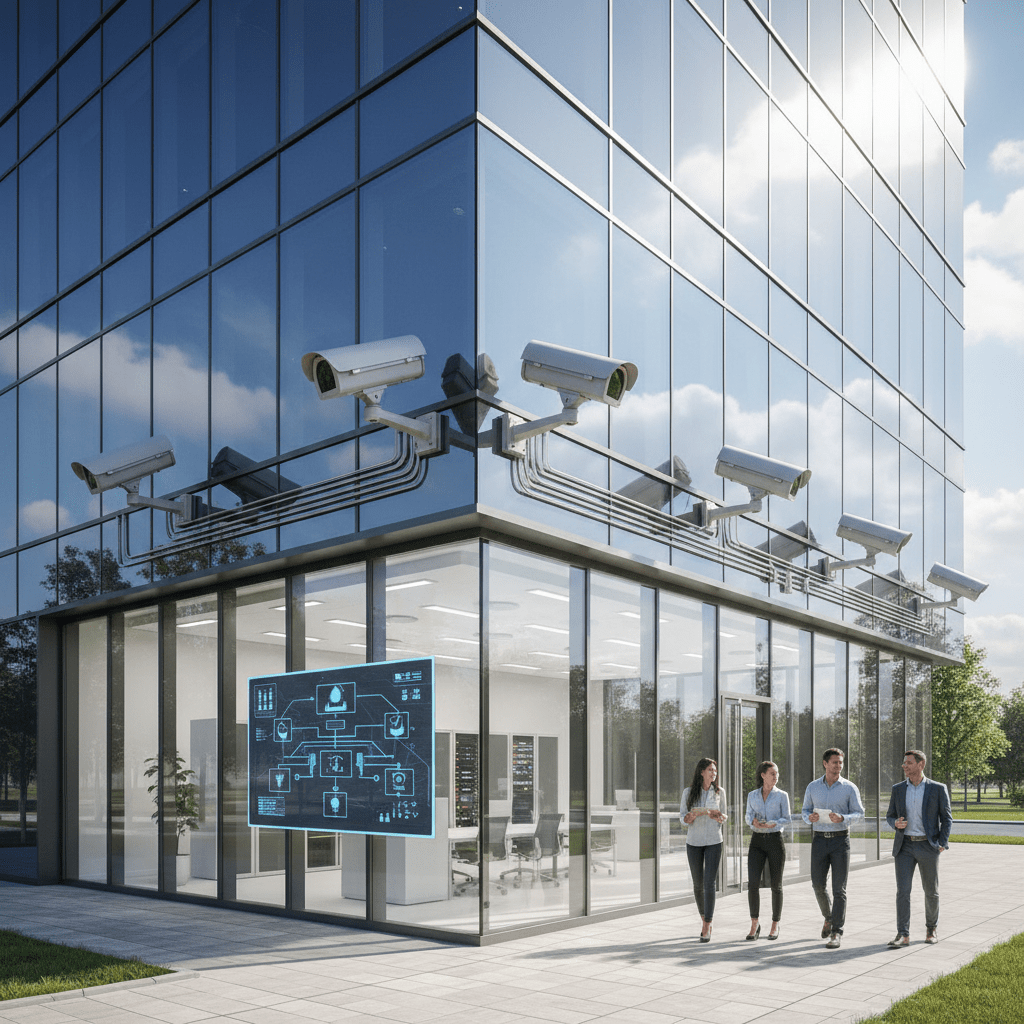
In today’s dynamic business landscape, security extends far beyond simple loss prevention. A well-designed commercial CCTV system acts as a crucial component of operational efficiency, risk mitigation, and even strategic decision-making. Understanding the nuances of CCTV design is paramount for businesses aiming to protect their assets, employees, and ultimately, their bottom line.
This guide provides a comprehensive overview of commercial CCTV system design, focusing on the key considerations for businesses in the Greater Toronto Area, including Mississauga, Brampton, and beyond. We’ll explore how a strategic approach to camera selection, placement, and features can transform your security system from a reactive measure into a proactive tool for business growth.
Beyond Basic Security: How CCTV Design Impacts Your Bottom Line in 2026
Understanding the limitations of outdated security setups
Relying on outdated or poorly designed security systems can expose your business to significant risks. Older analog systems often suffer from poor image quality, limited recording capabilities, and a lack of advanced features like remote viewing and analytics. These limitations can hinder investigations, increase response times to incidents, and leave critical blind spots in your security coverage. Furthermore, systems that are not properly maintained can be easily compromised, rendering them ineffective when you need them most.
Connecting security investment to operational efficiency and risk mitigation
Investing in a strategically designed commercial CCTV system isn’t just about deterring crime. It’s about enhancing operational efficiency and mitigating a wide range of risks. High-resolution cameras with analytics capabilities can monitor production lines, identify bottlenecks, and ensure quality control. Remote viewing capabilities, as discussed regarding Business Security Cameras: Remote Viewing Benefits, provide real-time insights into operations, allowing managers to make informed decisions and address issues promptly. Furthermore, a robust CCTV system can reduce liability by providing video evidence in case of accidents or disputes, potentially saving your business significant legal costs.
The role of strategic CCTV in modern business management
Strategic CCTV systems are no longer just about security; they are integral to modern business management. By integrating CCTV with other business systems, such as access control and point-of-sale (POS) systems, you can gain a holistic view of your operations. For example, integrating CCTV with your Access Control Systems can provide visual verification of who is entering and exiting your premises, enhancing security and accountability. Moreover, data analytics from CCTV footage can be used to optimize workflows, improve customer service, and identify potential areas for cost savings. This data-driven approach to security transforms CCTV from a reactive measure to a proactive business intelligence tool.
Step-by-Step: Assessing Your Business’s Unique Security Needs
Conducting a thorough risk assessment: Identifying vulnerabilities and threats
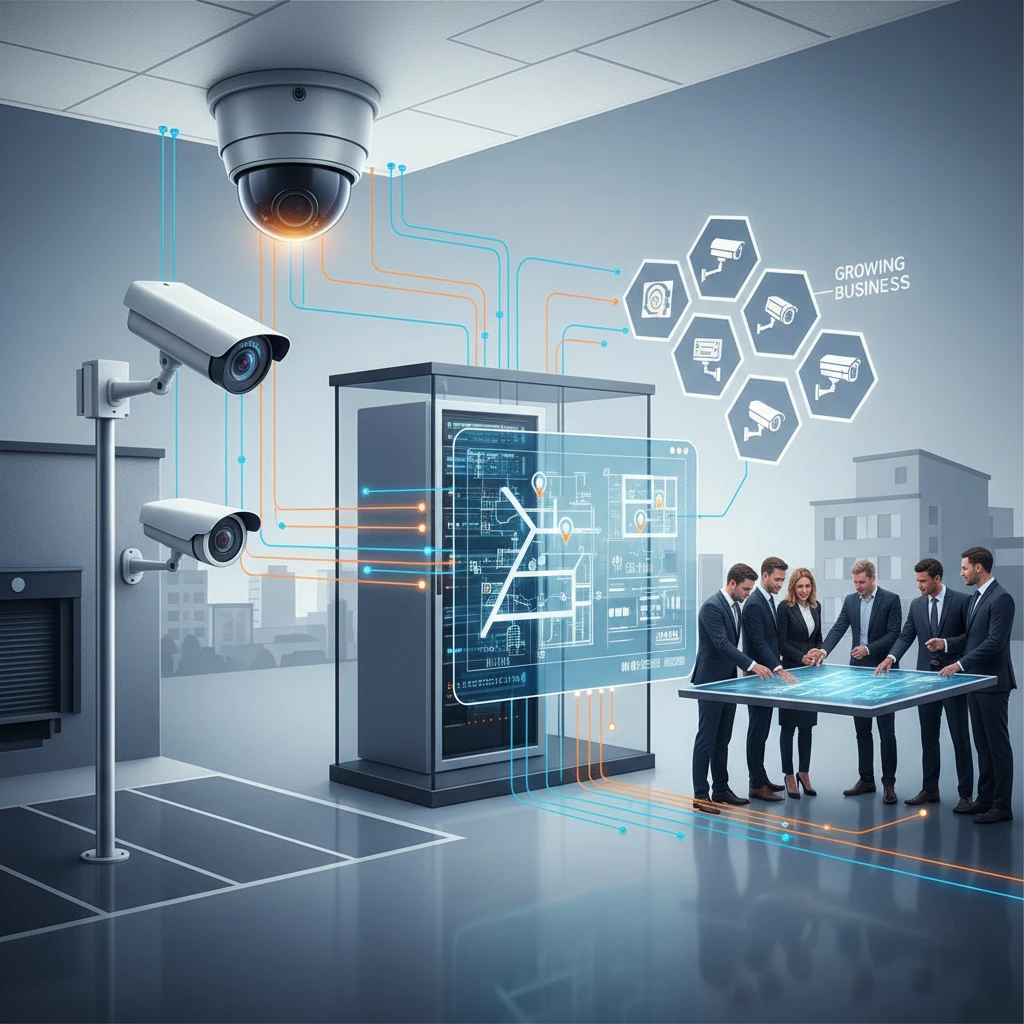
The first step in designing an effective commercial CCTV system is to conduct a thorough risk assessment. This involves identifying potential vulnerabilities and threats that your business may face. Consider factors such as your location, the nature of your business, the value of your assets, and the potential for theft, vandalism, or other security breaches. Engage with employees, managers, and even external security consultants to gather diverse perspectives and ensure a comprehensive assessment.
Defining clear security objectives: From theft prevention to compliance
Once you have identified your vulnerabilities, define clear security objectives. What are you trying to achieve with your CCTV system? Are you primarily concerned with preventing theft, deterring vandalism, monitoring employee activity, or ensuring compliance with industry regulations? Clearly defined objectives will guide your camera selection, placement, and system configuration. For instance, a retail store may prioritize theft prevention and customer safety, while a warehouse may focus on inventory control and perimeter security.
Mapping high-risk areas: Internal, external, and vulnerable points
After defining your objectives, map out the high-risk areas within and around your business. These may include entry points, loading docks, storage areas, cash registers, server rooms, and parking lots. Identify any vulnerable points where security breaches are more likely to occur. For example, poorly lit areas, unsecured windows, and blind spots in your existing security coverage should be prioritized for camera placement. Create a detailed map that visually represents these high-risk areas to guide your CCTV system design.
Critical Camera Features for Commercial CCTV Systems: What to Look For
Resolution & Image Quality: Optimizing for clarity and detail (4K vs. 1080p)
Resolution and image quality are crucial factors to consider when selecting cameras for your commercial CCTV system. Higher resolution cameras, such as 4K, provide significantly more detail than lower resolution options like 1080p. This added detail can be invaluable for identifying individuals, reading license plates, and capturing critical evidence in the event of an incident. However, higher resolution cameras also require more storage space and bandwidth. Consider your specific needs and budget to determine the optimal balance between image quality and system costs.
Lens Selection & Viewing Angles: Matching camera range to your environment
The lens you choose will determine the camera’s field of view and the distance at which it can capture clear images. Wide-angle lenses are ideal for covering large areas, such as parking lots or warehouses, while telephoto lenses are better suited for focusing on specific points of interest, such as entryways or cash registers. Consider the size and layout of your environment when selecting lenses to ensure that you are maximizing coverage and minimizing blind spots. Adjustable varifocal lenses offer flexibility, allowing you to fine-tune the viewing angle to suit your specific needs.
Night Vision & Low-Light Performance: Ensuring 24/7 visibility
Night vision and low-light performance are essential for ensuring 24/7 visibility, particularly in areas with limited lighting. Cameras with infrared (IR) illuminators can capture clear images in complete darkness, while those with advanced low-light sensors can produce usable footage in dimly lit environments. Consider the lighting conditions in your target areas when selecting cameras to ensure that you can capture clear footage regardless of the time of day. Look for cameras with features like wide dynamic range (WDR) and backlight compensation (BLC) to improve image quality in challenging lighting conditions.
Environmental Ratings (IP Ratings): Choosing weather-resistant cameras for outdoor use
For outdoor camera installations, it’s crucial to choose cameras with appropriate environmental ratings (IP ratings). IP ratings indicate the level of protection against dust and water ingress. For example, a camera with an IP66 rating is protected against dust and strong water jets, while a camera with an IP67 rating is protected against dust and immersion in water up to a certain depth. Consider the environmental conditions in your installation location when selecting cameras to ensure that they can withstand the elements and provide reliable performance. This is especially critical for businesses in Mississauga and the surrounding areas, where weather conditions can be harsh.
Strategic Camera Placement: Maximizing Coverage and Minimizing Blind Spots
Exterior perimeter security: Protecting entry points and preventing intrusions
Securing your business’s perimeter is paramount for preventing intrusions and protecting your assets. Place cameras strategically at all entry points, including doors, windows, and loading docks, to deter unauthorized access and capture evidence of any attempted breaches. Consider using cameras with motion detection capabilities to trigger alerts when suspicious activity is detected. Ensure that cameras are positioned to capture clear images of faces and license plates. Proper structured cabling and PoE implementation by professionals, as discussed regarding Business Security Cameras: Expert Installation, is crucial for reliable outdoor camera operation.
Interior surveillance: Monitoring high-traffic areas and critical assets
Interior surveillance is essential for monitoring high-traffic areas, such as lobbies, hallways, and retail floors, as well as critical assets, such as cash registers, server rooms, and storage areas. Position cameras to capture clear images of these areas, minimizing blind spots and maximizing coverage. Consider using dome cameras for discreet surveillance and vandal-resistant cameras in areas prone to tampering. Integrate cameras with your point-of-sale (POS) system to monitor transactions and prevent employee theft.
Optimizing camera angles and heights for comprehensive coverage
Optimizing camera angles and heights is crucial for achieving comprehensive coverage and minimizing blind spots. Position cameras at angles that provide clear views of target areas, avoiding obstructions such as trees, poles, or signs. Mount cameras at heights that deter tampering and provide optimal viewing angles. Consider using camera positioning tools to visualize coverage areas and identify potential blind spots. Regular adjustments and maintenance are essential for ensuring that your cameras continue to provide effective surveillance over time. For businesses with multiple locations, consider a system that allows for centralized management and remote viewing, as mentioned in our discussion of Commercial Security Cameras: Secure Multi-Location Businesses.
The Importance of a Robust Network Infrastructure: PoE and Structured Cabling
Understanding Power over Ethernet (PoE): Simplifying installation and reducing costs
Power over Ethernet (PoE) is a technology that allows network cables to carry electrical power to devices like CCTV cameras. This eliminates the need for separate power cables, simplifying installation, reducing costs, and improving flexibility. Choosing PoE-enabled cameras and network switches is crucial. This also simplifies the installation of commercial CCTV Mississauga security systems. Decision criteria should include the PoE standard supported (e.g., PoE+, PoE++) and the total power budget available on the switch. Avoid low-quality switches that may not deliver the promised power, leading to camera malfunction or instability. For example, a large warehouse might require several high-powered PTZ cameras. If the PoE switch cannot supply sufficient power, the cameras may not function correctly, defeating the purpose of the security system.
Structured cabling best practices: Ensuring reliable data transmission
Structured cabling involves designing and installing a standardized cabling system that supports various hardware uses and future needs. Properly installed and maintained structured cabling is the backbone of a reliable CCTV system. It ensures consistent data transmission and minimizes downtime. Best practices include using high-quality Cat5e or Cat6 cables, clearly labeling all cables, and maintaining proper cable management. A common pitfall is using inferior cabling or improper termination techniques, which can lead to signal degradation and intermittent camera failures. Consider the distance limitations of Ethernet cables (100 meters) and plan accordingly. For larger facilities, fiber optic cabling may be necessary to extend the network reach. For instance, imagine a multi-building car dealership needing surveillance across the entire property. A well-designed structured cabling system is essential for reliable video transmission from all cameras to the central NVR.
Bandwidth considerations: Planning for high-resolution video streaming and storage
High-resolution video streaming requires significant bandwidth. Insufficient bandwidth can result in choppy video, delayed playback, and lost recordings. Planning for adequate bandwidth is crucial, especially with the increasing popularity of 4K and higher-resolution cameras. Factors to consider include the number of cameras, the resolution and frame rate of each camera, and the compression algorithm used. Utilizing a dedicated VLAN for your CCTV network can isolate traffic and prevent bandwidth contention with other network devices. Avoid overselling your existing network infrastructure, which can negatively impact business operations. As an example, a busy retail store with multiple high-definition cameras needs sufficient bandwidth to ensure continuous recording and smooth remote viewing. Insufficient bandwidth can lead to critical blind spots in surveillance coverage.
Recording and Storage Solutions: Finding the Right Balance of Capacity and Retention
Network Video Recorders (NVRs): Centralized storage and management
Network Video Recorders (NVRs) are the central hub of a commercial CCTV system, responsible for recording, storing, and managing video footage. Selecting the right NVR is essential for ensuring reliable and efficient operation. Key considerations include the number of channels supported, the maximum storage capacity, and the recording resolution. Choosing an NVR with adequate processing power is crucial for smooth playback and video analytics. One pitfall is selecting an NVR with insufficient capacity, leading to the overwriting of important footage. Always overestimate storage needs to account for future expansion. Consider features like motion detection, event triggers, and remote access capabilities. Furthermore, ensure the NVR is compatible with your chosen camera models. For example, a large manufacturing plant needs an NVR with high channel capacity and ample storage to record footage from dozens of cameras, 24/7.
Hard drive capacity and redundancy: Ensuring data integrity and uptime
The hard drives used in an NVR are critical components that directly impact data integrity and uptime. Using surveillance-rated hard drives is essential, as they are designed for continuous recording and offer greater reliability than standard desktop drives. Implement RAID (Redundant Array of Independent Disks) configurations to provide data redundancy. RAID configurations such as RAID 5 or RAID 6 can protect against data loss in the event of a hard drive failure. A common pitfall is using consumer-grade hard drives, which are prone to failure in demanding surveillance environments. Regularly monitor the health of your hard drives and replace them proactively to prevent data loss. Regularly scheduled maintenance should include diagnostic checks to preemptively identify potential hardware issues. Imagine a financial institution relying on CCTV footage for compliance and security. Implementing RAID and using high-quality hard drives is essential to prevent data loss and ensure regulatory compliance.
Cloud-based storage options: Exploring scalability and remote access
Cloud-based storage offers several advantages over traditional on-premise storage solutions, including scalability, remote access, and disaster recovery. Cloud storage allows businesses to easily scale their storage capacity as their needs grow, without the need for additional hardware investment. It also enables remote access to video footage from anywhere with an internet connection. Consider factors like bandwidth requirements, data security, and subscription costs when evaluating cloud-based storage options. Ensure the cloud provider offers robust security measures to protect against unauthorized access and data breaches. One pitfall is overlooking the recurring costs associated with cloud storage, which can be significant over time. Hybrid solutions, combining on-premise and cloud storage, can offer a balance of cost-effectiveness and redundancy. A business with multiple locations might use cloud storage for offsite backup and remote viewing, while keeping local storage for primary recording to minimize bandwidth usage. Professional installation ensures that the system is correctly configured and secure, consider using Business Security Cameras: Expert Installation.
Remote Viewing and Mobile Access: Staying Connected to Your Business Security
Secure mobile apps: Monitoring your cameras from anywhere
Secure mobile apps provide the ability to monitor your CCTV cameras from anywhere with an internet connection. This allows business owners and managers to stay connected to their business security, even when they are away from the premises. Key features to look for include live video streaming, playback of recorded footage, and push notifications. Security is paramount when using mobile apps to access your CCTV system. Ensure the app uses strong encryption and requires multi-factor authentication. Avoid using default passwords and regularly update the app to patch security vulnerabilities. A common pitfall is using unsecured Wi-Fi networks to access the app, which can expose your system to hacking. For example, a restaurant owner can use a secure mobile app to monitor the kitchen and dining area from home, ensuring that employees are following procedures and addressing any issues promptly. Read more about Business Security Cameras: Remote Viewing Benefits.
User access controls: Granting appropriate permissions to authorized personnel
Implementing user access controls is crucial for maintaining the security and privacy of your CCTV system. User access controls allow you to grant appropriate permissions to authorized personnel, limiting access to sensitive video footage. Define different user roles with varying levels of access, such as administrators, managers, and security guards. Regularly review user permissions and revoke access for employees who no longer require it. A common pitfall is granting excessive privileges to users, which can increase the risk of unauthorized access or data breaches. Use strong passwords and enforce regular password changes. Consider implementing biometric authentication for added security. As an example, a warehouse manager might have full access to all cameras, while a security guard might only have access to cameras in the loading dock area.
Real-time alerts and notifications: Responding quickly to potential threats
Real-time alerts and notifications enable you to respond quickly to potential threats detected by your CCTV system. Configure the system to send alerts based on specific events, such as motion detection, intrusion, or alarm triggers. Choose notification methods that are most convenient for you, such as email, SMS, or push notifications. Ensure the alerts are specific and informative, providing enough detail to assess the situation quickly. A common pitfall is setting up too many alerts, which can lead to alert fatigue and reduce responsiveness. Regularly test the alert system to ensure it is functioning properly. Integrating your CCTV system with a central monitoring station can provide 24/7 monitoring and rapid response to security incidents. For instance, if a motion sensor is triggered in a restricted area of a manufacturing plant after hours, the system can send an immediate alert to the security team and the plant manager.
Integration with Existing Security Systems: Enhancing Overall Protection
Integrating CCTV with access control systems: Controlling entry and exit points
Integrating CCTV with access control systems enhances overall security by providing visual verification of individuals entering and exiting the premises. When an access card is used, the CCTV system can automatically record video footage of the person entering or exiting. This provides a valuable audit trail and can help to identify unauthorized access attempts. Choose access control systems and CCTV systems that are compatible and offer seamless integration. Configure the systems to share data and events, such as access granted or denied. Avoid systems that are proprietary and difficult to integrate with other security devices. For example, a corporate office building can integrate CCTV with the access control system to ensure that only authorized employees can enter restricted areas, and all entry and exit events are recorded for security purposes. For scalable solutions, also consider Access Control Systems: Scalable Security for GTA Businesses.
Alarm system integration: Automating responses to security breaches
Integrating your CCTV system with your alarm system enables automated responses to security breaches. When an alarm is triggered, the CCTV system can automatically start recording video footage of the affected area. This can provide valuable evidence for law enforcement and insurance purposes. Configure the systems to communicate with each other and trigger appropriate actions, such as sending alerts, locking doors, or activating sirens. A common pitfall is failing to properly integrate the systems, resulting in missed events or delayed responses. Regularly test the integration to ensure it is functioning correctly. Consider integrating the system with a central monitoring station for 24/7 professional monitoring and rapid response. Imagine a retail store where the alarm system detects a break-in after hours. The integrated CCTV system immediately starts recording video footage and sends alerts to the store owner and the monitoring station.
Point-of-Sale (POS) integration: Preventing theft and fraud
Integrating your CCTV system with your Point-of-Sale (POS) system can help prevent theft and fraud by providing a visual record of all transactions. The CCTV system can overlay transaction data onto the video footage, allowing you to easily identify suspicious activities. This can be particularly useful for detecting employee theft, customer fraud, and other types of financial crime. Choose POS systems and CCTV systems that are compatible and offer data integration capabilities. Configure the systems to record transaction details, such as the date, time, cashier ID, and items purchased. A common pitfall is failing to properly synchronize the POS data with the video footage, making it difficult to analyze the information. Regularly review the integrated data to identify potential issues. As an example, a grocery store can integrate CCTV with the POS system to identify instances of cashiers voiding transactions or providing unauthorized discounts. This helps in ROI-Driven Security.
Compliance and Legal Considerations: Ensuring Ethical and Lawful Surveillance
Privacy laws and regulations in Ontario: Understanding your obligations
Installing a commercial CCTV system in Ontario requires strict adherence to privacy laws and regulations. The Personal Information Protection and Electronic Documents Act (PIPEDA) governs how private sector organizations collect, use, and disclose personal information. In the context of CCTV, this means businesses must be transparent about surveillance activities and only collect footage for legitimate purposes, such as preventing theft or ensuring employee safety. Ignoring PIPEDA can result in significant fines and reputational damage. AYS Security helps businesses navigate these complex legal requirements, ensuring your CCTV system is compliant and ethically sound.
Signage requirements: Informing individuals of surveillance
Clear and conspicuous signage is a fundamental requirement for lawful CCTV operation in Ontario. Signs must be placed strategically to inform individuals that they are being recorded before they enter the monitored area. The signs should be easily visible and understandable, even in low-light conditions. They must clearly state the purpose of the surveillance and contact information for inquiries. For example, a sign could read: “CCTV Surveillance in Use: For security and safety purposes. Contact [Business Name] at [Phone Number] for inquiries.” Failing to display adequate signage can render collected footage inadmissible in legal proceedings and expose your business to potential lawsuits. AYS Security provides expert guidance on signage placement and design to meet legal requirements.
Data retention policies: Adhering to legal guidelines
Establishing a clear and legally sound data retention policy is crucial. The policy should outline how long CCTV footage will be stored, who has access to it, and how it will be securely disposed of after the retention period expires. Ontario’s privacy laws generally dictate that footage should only be retained for as long as necessary to fulfill the purpose for which it was collected. For example, if footage is primarily used for theft prevention, it might be reasonable to retain it for a few weeks or months, unless it’s needed for an ongoing investigation. Overly long retention periods can raise privacy concerns and increase liability. Your data retention policy should be documented and readily available. Regularly review and update your policy to ensure it remains compliant with evolving regulations. AYS Security helps businesses develop comprehensive data retention policies tailored to their specific needs and legal obligations. Proper management of your CCTV data is crucial for maintaining compliance and public trust.
Why Professional Installation Matters: Avoiding Costly Mistakes and Ensuring Optimal Performance
Ensuring proper camera placement and configuration
Professional installation guarantees optimal camera placement, maximizing coverage and minimizing blind spots. A skilled technician will assess your business premises, identifying critical areas that require surveillance, considering factors such as lighting conditions, potential obstructions, and the field of view required for each camera. Incorrect placement can render a CCTV system ineffective. For example, a camera positioned too high might capture only the tops of heads, while a camera facing a window could be rendered useless by glare. Professional configuration also involves fine-tuning camera settings, such as focus, aperture, and resolution, to ensure clear and detailed footage. Business Security Cameras: Expert Installation ensures correct camera placement and configuration from the start.
Troubleshooting network connectivity issues
CCTV systems rely on stable network connectivity to transmit and store footage. Professional installers are equipped to troubleshoot network issues that can disrupt system performance. This includes diagnosing problems with network cabling, routers, and switches, and implementing solutions to ensure reliable connectivity. A common issue is insufficient bandwidth, which can cause video lag or dropped frames. A professional can optimize network settings to allocate sufficient bandwidth to the CCTV system. Another potential problem is IP address conflicts, which can prevent cameras from connecting to the network. Experienced installers can quickly identify and resolve these issues, minimizing downtime and ensuring continuous surveillance. AYS Security provides robust network support as part of its CCTV installation services.
Providing ongoing maintenance and support
Commercial CCTV systems require ongoing maintenance to ensure optimal performance and longevity. Professional installers offer maintenance contracts that include regular inspections, cleaning of cameras, and software updates. Preventative maintenance can identify and address potential problems before they escalate into costly repairs or system failures. For example, a technician might notice a loose camera mount or a deteriorating cable during a routine inspection, allowing them to address the issue promptly. Furthermore, professional support provides access to expert assistance when problems arise. Whether it’s a malfunctioning camera, a network outage, or a software glitch, having access to reliable technical support can minimize downtime and ensure your CCTV system remains operational. AYS Security offers comprehensive maintenance and support plans to keep your CCTV system running smoothly.
Future-Proofing Your Investment: Planning for Scalability and Technological Advancements
Choosing a system that can grow with your business
Selecting a CCTV system with scalability in mind is essential for long-term value. As your business expands, your security needs will likely evolve. A scalable system allows you to easily add cameras and other security devices as needed, without requiring a complete system overhaul. Consider systems that support Power over Ethernet (PoE), which simplifies installation and reduces cabling costs, making expansion easier and more cost-effective. Also, look for systems with open architecture, which allows you to integrate cameras from different manufacturers and avoid vendor lock-in. This flexibility ensures you can adapt to changing security needs and take advantage of new technologies as they emerge. Business Security Cameras: Scalable Systems for Growth are a wise investment for the future.
Considering future integration with AI-powered analytics
AI-powered video analytics is transforming the landscape of commercial security. Consider CCTV systems that are compatible with AI analytics platforms. These platforms can automatically detect suspicious activity, such as loitering, unauthorized entry, or unusual patterns of behavior. For example, an AI system could be programmed to alert security personnel if someone enters a restricted area or if a vehicle remains parked in a no-parking zone for an extended period. AI analytics can also improve operational efficiency by providing insights into customer traffic patterns, employee productivity, and other key business metrics. Choosing a system that can integrate with AI analytics ensures you can leverage these powerful capabilities in the future. It is useful to monitor Security Trends: Commercial CCTV & Access Control.
Staying informed about emerging security technologies
The security industry is constantly evolving, with new technologies emerging regularly. Stay informed about these advancements to ensure your CCTV system remains effective and cutting-edge. This includes exploring cloud-based video storage, advanced video compression techniques, and improved cybersecurity measures. Cloud storage offers increased scalability and accessibility, while advanced compression reduces storage costs and bandwidth consumption. Strong cybersecurity is essential to protect your CCTV system from hacking and unauthorized access. Regularly consult with your security provider to discuss emerging technologies and assess whether they are relevant to your business needs. Furthermore, consider attending industry trade shows and conferences to stay abreast of the latest trends and innovations. Proactive awareness of new technologies will help future-proof your security investment.
Investing in Commercial CCTV: Calculating the Return on Investment for Your Mississauga, Brampton, or GTA Business
Quantifying the benefits: Reduced theft, improved safety, and enhanced operational efficiency
A well-designed commercial CCTV system offers quantifiable benefits that contribute to a positive return on investment (ROI). Reduced theft is a primary benefit, as visible cameras deter potential thieves and provide crucial evidence for prosecution. Improved safety for employees and customers is another significant advantage, creating a more secure and comfortable environment. Enhanced operational efficiency can be achieved through video analytics, which provide insights into customer traffic patterns, employee productivity, and other key business metrics. By tracking these benefits, businesses can accurately assess the ROI of their CCTV investment. For example, a retail store might track the number of shoplifting incidents before and after installing CCTV to quantify the reduction in theft.
Calculating the cost of potential security breaches
To fully understand the ROI of a CCTV system, it’s essential to calculate the potential costs of security breaches. This includes the direct costs of theft and vandalism, as well as the indirect costs of lost productivity, damaged reputation, and legal liabilities. For example, a warehouse might estimate the cost of a single theft incident based on the value of the stolen goods, the cost of investigating the incident, and the potential disruption to operations. Similarly, a business could estimate the cost of a slip-and-fall accident based on potential medical expenses, legal fees, and insurance premiums. By quantifying these potential costs, businesses can better appreciate the value of a CCTV system in preventing security breaches and mitigating their financial impact. Remember that Commercial CCTV Mississauga: ROI-Driven Security is designed to protect your assets.
Working with AYS Security to design a tailored CCTV solution
Partnering with AYS Security ensures you receive a tailored CCTV solution that meets your specific business needs and maximizes your return on investment. Our experienced team will conduct a thorough assessment of your premises, identifying potential security vulnerabilities and recommending the optimal camera placement and configuration. We will also work with you to develop a comprehensive security plan that integrates CCTV with other security measures, such as access control and alarm systems. Our professional installation services ensure your CCTV system is installed correctly and operates reliably. Furthermore, our ongoing maintenance and support services provide peace of mind, knowing your system is always functioning at its best. With AYS Security, you can be confident that your CCTV investment will deliver a significant and measurable ROI.
Investing in a commercial CCTV system requires careful consideration of compliance, installation quality, scalability, and potential return on investment. By addressing these factors thoughtfully, businesses across Mississauga, Brampton, and the GTA can create safer, more secure, and more efficient environments.
Compliance and Legal Considerations: Ensuring Ethical and Lawful Surveillance
Implementing a CCTV system involves navigating various compliance and legal considerations to ensure ethical and lawful surveillance practices. Businesses must adhere to privacy laws, signage requirements, and data retention policies to protect individuals’ rights and avoid legal repercussions. Understanding and complying with these regulations is crucial for maintaining a responsible and trustworthy security system.
Privacy laws and regulations in Ontario: Understanding your obligations
Ontario has specific privacy laws and regulations that govern the use of CCTV systems. These laws, such as the Personal Information Protection and Electronic Documents Act (PIPEDA) and the Municipal Freedom of Information and Protection of Privacy Act (MFIPPA), outline the requirements for collecting, using, and disclosing personal information, including video footage. Businesses must understand their obligations under these laws, including obtaining consent where necessary, implementing appropriate security measures to protect personal information, and providing individuals with access to their personal information upon request. Seeking legal counsel to ensure compliance with privacy laws is highly recommended.
Signage requirements: Informing individuals of surveillance
Clear and conspicuous signage is essential for informing individuals that they are being recorded by a CCTV system. Signs should be placed at the entrances to the premises and in areas where cameras are located. The signs should clearly state that CCTV surveillance is in operation, the purpose of the surveillance, and the contact information of the organization responsible for the system. Compliance with signage requirements demonstrates transparency and respect for individuals’ privacy rights. It also helps to deter potential wrongdoers and promote a sense of security.
Data retention policies: Adhering to legal guidelines
Establishing clear data retention policies is crucial for managing the storage and disposal of CCTV footage. Businesses should define the length of time that footage will be stored, based on legal requirements and business needs. They should also have procedures in place for securely deleting footage once it is no longer needed. Adhering to data retention policies ensures compliance with privacy laws and minimizes the risk of unauthorized access or disclosure of personal information. Regularly reviewing and updating data retention policies is essential to stay abreast of changing legal requirements and best practices.
Why Professional Installation Matters: Avoiding Costly Mistakes and Ensuring Optimal Performance
While it might be tempting to cut costs by attempting a DIY CCTV installation, professional installation is crucial for ensuring optimal performance and avoiding costly mistakes. Experienced installers have the expertise to properly design, install, and configure a CCTV system to meet your specific needs. They can also provide ongoing maintenance and support to keep your system running smoothly.
Ensuring proper camera placement and configuration
Proper camera placement and configuration are essential for maximizing the effectiveness of a CCTV system. Professional installers can assess your premises and determine the optimal locations for cameras to provide comprehensive coverage and minimize blind spots. They can also configure camera settings, such as resolution, frame rate, and recording schedules, to ensure that the system captures high-quality footage and meets your specific requirements. Incorrect camera placement or configuration can result in poor image quality, missed events, and reduced security effectiveness.
Troubleshooting network connectivity issues
Network connectivity issues can disrupt CCTV system performance and compromise security. Professional installers have the expertise to troubleshoot and resolve network connectivity problems, ensuring that cameras are properly connected to the network and that footage is being recorded and transmitted reliably. They can also configure network settings, such as IP addresses and port forwarding, to optimize network performance. Addressing network connectivity issues promptly is crucial for maintaining the integrity of your CCTV system.
Providing ongoing maintenance and support
CCTV systems require regular maintenance and support to ensure optimal performance and longevity. Professional installers can provide ongoing maintenance services, such as camera cleaning, firmware updates, and system diagnostics. They can also provide technical support to address any issues that may arise. Regular maintenance and support can help to prevent system failures, extend the life of your CCTV system, and ensure that it continues to provide effective security.
Future-Proofing Your Investment: Planning for Scalability and Technological Advancements
Investing in a CCTV system is a long-term commitment, so it’s important to plan for scalability and technological advancements. Choosing a system that can grow with your business and adapt to emerging security technologies will ensure that your investment remains valuable for years to come.
Choosing a system that can grow with your business
As your business grows, your security needs may change. Choosing a CCTV system that can be easily scaled to accommodate additional cameras and storage capacity is essential. Look for systems that support a wide range of camera types and resolutions, and that can be expanded to cover new areas or departments. Scalable systems provide flexibility and ensure that your security infrastructure can adapt to your evolving business needs.
Considering future integration with AI-powered analytics
Artificial intelligence (AI) is transforming the security industry, with AI-powered analytics offering advanced capabilities such as facial recognition, object detection, and anomaly detection. When selecting a CCTV system, consider whether it can be integrated with AI-powered analytics in the future. This will allow you to leverage the power of AI to enhance your security capabilities and gain valuable insights from your video footage.
Staying informed about emerging security technologies
The security industry is constantly evolving, with new technologies and innovations emerging regularly. Staying informed about these advancements will help you make informed decisions about your CCTV system and ensure that you are taking advantage of the latest security features. Subscribe to industry publications, attend trade shows, and consult with security experts to stay up-to-date on emerging security technologies.
Investing in Commercial CCTV: Calculating the Return on Investment for Your Mississauga, Brampton, or GTA Business
Commercial CCTV systems offer a robust security solution for businesses throughout Mississauga, Brampton, and the Greater Toronto Area. Understanding the factors to consider when investing in such a system is crucial for maximizing its effectiveness and return on investment. Let’s recap the core principles.
Quantifying the benefits: Reduced theft, improved safety, and enhanced operational efficiency
Quantifying the benefits of a CCTV system is essential for demonstrating its value and justifying the investment. Reduced theft, improved safety, and enhanced operational efficiency are just a few of the potential benefits that can be measured and tracked. By quantifying these benefits, businesses can accurately assess the ROI of their CCTV investment.
Calculating the cost of potential security breaches
Calculating the potential costs of security breaches is crucial for understanding the value of a CCTV system in preventing and mitigating these incidents. This includes the direct costs of theft, vandalism, and fraud, as well as the indirect costs of lost productivity, damaged reputation, and legal liabilities.
Working with AYS Security to design a tailored CCTV solution
Partnering with AYS Security ensures you receive a tailored CCTV solution that meets your specific business needs and maximizes your return on investment. Our experienced team will conduct a thorough assessment of your premises, identifying potential security vulnerabilities and recommending the optimal camera placement and configuration. With AYS Security, you can be confident that your CCTV investment will deliver a significant and measurable ROI.
Compliance and Legal Considerations: Ensuring Ethical and Lawful Surveillance
Operating a CCTV system requires adherence to privacy laws and regulations. Ensuring ethical and lawful surveillance is paramount to protecting individuals’ rights and maintaining public trust.
Privacy laws and regulations in Ontario: Understanding your obligations
Ontario has specific privacy laws and regulations that govern the use of CCTV systems, including the Personal Information Protection and Electronic Documents Act (PIPEDA) and the Freedom of Information and Protection of Privacy Act (FIPPA). Businesses must understand these laws and ensure that their CCTV systems comply with all applicable requirements.
Signage requirements: Informing individuals of surveillance
Clear and conspicuous signage must be posted to inform individuals that they are being recorded by a CCTV system. These signs should be placed in areas where cameras are installed and should be easily visible to anyone entering the premises. Informing individuals of surveillance is not only a legal obligation but also a matter of ethical practice.
Data retention policies: Adhering to legal guidelines
Businesses must establish data retention policies that comply with legal guidelines and industry best practices. These policies should specify how long CCTV footage will be stored, how it will be secured, and when it will be destroyed. Adhering to these policies helps ensure that personal information is handled responsibly and in accordance with privacy laws.
Why Professional Installation Matters: Avoiding Costly Mistakes and Ensuring Optimal Performance
Professional installation is essential for ensuring optimal performance and avoiding costly mistakes. Expert technicians possess the knowledge and experience necessary to properly install and configure CCTV systems, ensuring that they function reliably and effectively.
Ensuring proper camera placement and configuration
Proper camera placement and configuration are crucial for maximizing the effectiveness of a CCTV system. Professional installers can assess the premises and determine the optimal locations for camera placement, ensuring that all critical areas are covered. They can also configure the cameras to capture high-quality video and optimize performance based on the specific environment.
Troubleshooting network connectivity issues
Network connectivity issues can disrupt the operation of a CCTV system and compromise security. Professional installers have the expertise to troubleshoot these issues and ensure that the system is properly connected to the network. They can also configure network settings to optimize bandwidth and minimize latency.
Providing ongoing maintenance and support
Ongoing maintenance and support are essential for ensuring the long-term reliability and effectiveness of a CCTV system. Professional installers can provide regular maintenance services, such as cleaning lenses, checking connections, and updating software. They can also provide technical support to address any issues that may arise.
Future-Proofing Your Investment: Planning for Scalability and Technological Advancements
Future-proofing your investment in a commercial CCTV system involves planning for scalability and technological advancements. This ensures that your system can adapt to changing security needs and remain effective over time.
Choosing a system that can grow with your business
Selecting a CCTV system that can grow with your business is essential for future-proofing your investment. This includes choosing a system that can accommodate additional cameras and storage capacity as your business expands. It also involves selecting a system that is compatible with future technologies and integrations.
Considering future integration with AI-powered analytics
Integrating with AI-powered analytics will significantly enhance the capabilities of your CCTV system. This can include features such as facial recognition, object detection, and behavior analysis. By considering future integration with AI, businesses can ensure that their CCTV systems remain at the forefront of security technology.
Staying informed about emerging security technologies
Keeping up-to-date with emerging security technologies is crucial for future-proofing your CCTV investment. This includes monitoring industry trends, attending trade shows, and consulting with security experts. By staying informed, businesses can proactively identify and adopt new technologies that can enhance their security capabilities.