
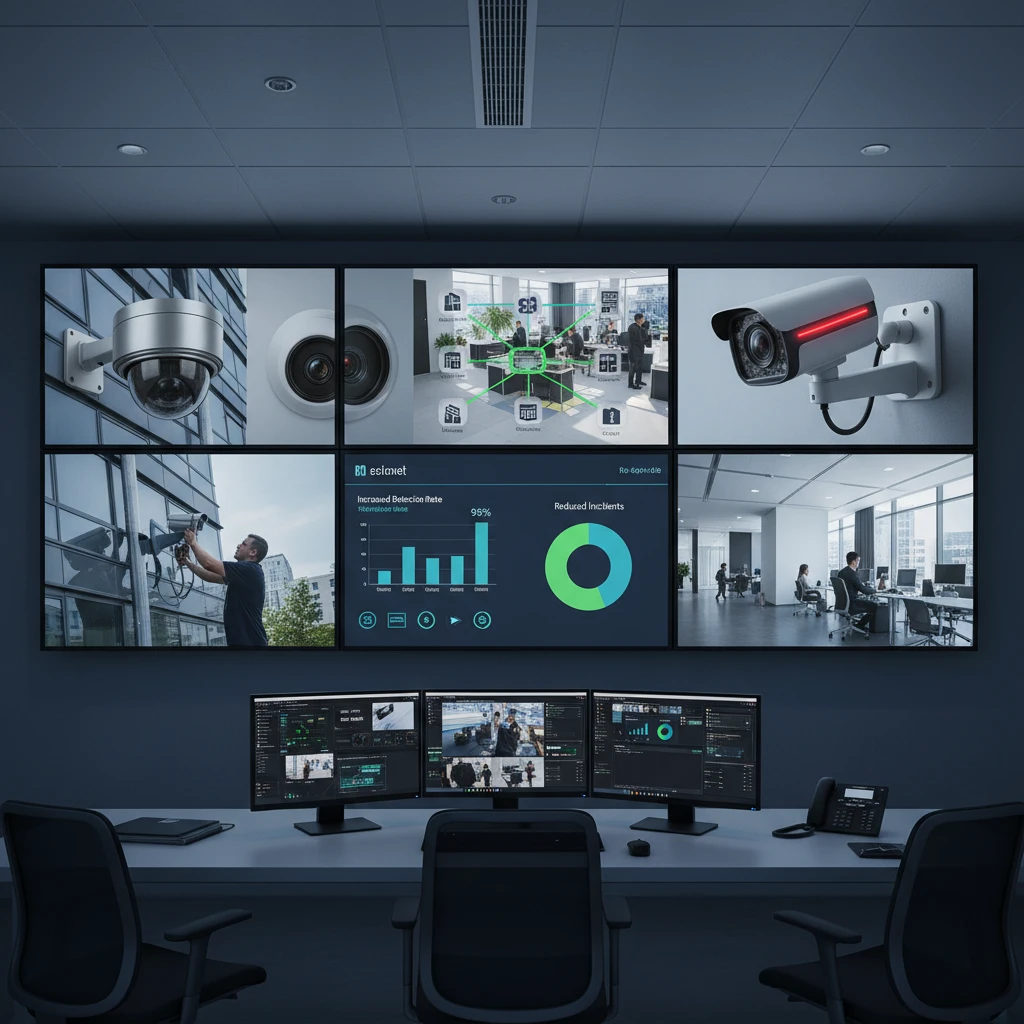
In today’s dynamic business environment, maintaining robust security is no longer a passive measure but a strategic imperative. As threats evolve and technological advancements offer new layers of protection, businesses that fail to adapt risk falling behind. An upgrade to your commercial CCTV system isn’t just about replacing old equipment; it’s about investing in a more resilient, informed, and secure future for your operations.
The landscape of security threats is constantly shifting, demanding a proactive approach rather than a reactive one. Understanding these evolving challenges is the first step in securing your business effectively. From sophisticated cyber intrusions to physical security breaches, staying ahead requires a comprehensive and technologically advanced surveillance strategy.
The Evolving Landscape of Business Security in 2026: Why an Upgrade is Essential
The business security landscape in 2026 is defined by increasing complexity and interconnectedness. Threats are no longer confined to simple intrusions; they encompass sophisticated cyber-physical attacks, internal risks, and increasingly clever methods of circumventing traditional security measures. Businesses that rely on outdated CCTV systems are finding themselves at a significant disadvantage, unable to detect, deter, or respond effectively to these modern challenges. The rapid pace of technological innovation means that what was considered cutting-edge even a few years ago is now potentially obsolete, leaving critical vulnerabilities exposed. A strategic upgrade ensures that your business is equipped with the latest tools to safeguard its assets, personnel, and reputation.
Understanding Today’s Threats: Beyond Basic Surveillance
Today’s threats extend far beyond the scope of basic surveillance. While external theft and vandalism remain concerns, businesses must also contend with sophisticated insider threats, organized retail crime, and the potential for sabotage. Furthermore, the integration of digital systems means that physical security breaches can be precursors to larger cyberattacks, or vice versa. For instance, a compromised access point could grant unauthorized individuals the ability to tamper with network-attached storage (NAS) devices holding sensitive video footage, thereby erasing crucial evidence. Understanding these multifaceted risks necessitates a move towards intelligent, integrated security solutions that offer more than just passive recording. This includes recognizing the potential for social engineering attacks that exploit human vulnerabilities, often captured on camera, and the increasing use of drones for surveillance or reconnaissance by potential adversaries.
The Cost of Outdated Security: Missed Opportunities and Increased Risks
The financial and operational costs associated with outdated security systems are substantial and often underestimated. Poor image quality from older cameras can render surveillance footage unusable for identifying perpetrators or providing concrete evidence, leading to failed investigations and allowing criminals to go unpunished. This directly impacts the recovery of stolen goods and can increase insurance premiums. Beyond direct losses, businesses suffer from decreased operational efficiency due to disruptions caused by security incidents. Furthermore, the reputational damage from a significant security breach can be long-lasting, eroding customer trust and impacting market share. An outdated system also represents missed opportunities for improving business processes through analytics. For example, analyzing foot traffic patterns can optimize staffing and layout in retail environments, but this is impossible without high-quality, modern camera data.
Leveraging Technology for Proactive Business Protection
Modern CCTV technology offers powerful tools for shifting from reactive security to proactive protection. By integrating advanced analytics, businesses can gain predictive insights and receive real-time alerts for potential threats before they materialize. Features like advanced motion detection, facial recognition, and anomaly detection can flag suspicious activity, allowing security teams to intervene swiftly. For example, a smart system can identify individuals loitering in restricted areas for an extended period, or detect unusual crowd behavior, prompting immediate investigation. This proactive stance not only prevents losses but also enhances operational efficiency by minimizing unnecessary security responses. Investing in these technologies is a crucial step in building a resilient business model that anticipates and neutralizes risks effectively.
Identifying the Pain Points: When Your Current Camera System Falls Short
Many businesses operate under the misconception that any camera system is better than none, but an outdated or inadequate system can create a false sense of security while actively undermining your safety protocols. Recognizing the specific shortcomings of your current setup is the critical first step toward identifying a viable upgrade path. Pain points often manifest in frustratingly familiar ways, impacting everything from incident investigation to daily operational oversight. These are not mere inconveniences; they represent tangible vulnerabilities that can lead to financial losses, reputational damage, and increased liability. By pinpointing these weaknesses, you can clearly articulate the necessity for a modern CCTV solution that addresses these shortcomings effectively.
Poor Image Quality and Low-Resolution Footage: Undermining Investigations
One of the most significant pain points with older CCTV systems is the abysmal image quality. Pixelated, grainy, or low-resolution footage is often insufficient for identifying individuals, reading license plates, or clearly documenting events. This directly cripples the effectiveness of any investigation, whether it’s a theft, vandalism, or workplace incident. Imagine trying to identify a suspect from a blurry image that looks like a collection of abstract shapes – it’s practically impossible. This lack of clarity can lead to wrongful accusations, the release of guilty parties due to lack of evidence, and ultimately, significant financial losses. Modern cameras, offering high definition (HD) and even 4K resolution, capture crisp, clear images that provide the detail needed for accurate identification and irrefutable evidence. This is particularly crucial for businesses operating in areas prone to crime or those handling valuable assets.
Limited Coverage and Blind Spots: Leaving Your Assets Vulnerable
A common failing of older camera installations is inadequate coverage, leading to critical blind spots within your premises. Cameras might be poorly positioned, have a narrow field of view, or simply not enough units deployed to cover all entry points, storage areas, or high-traffic zones. These blind spots create prime opportunities for unauthorized access, theft, or vandalism to go undetected. For instance, a warehouse manager might be unaware of activity in a poorly lit corner of the loading dock, which becomes an easy target for inventory theft. Comprehensive site surveys and the strategic placement of modern, wide-angle cameras are essential to eliminate these vulnerabilities and ensure that every area of your business is under surveillance, leaving no room for opportunistic crime.
Inability to Record or Access Footage Effectively
Beyond image quality, the functionality of older systems often falls short. Many legacy systems struggle with reliable recording capabilities, leading to lost footage due to hardware failures, insufficient storage, or complex management processes. Furthermore, accessing recorded footage can be a cumbersome and time-consuming ordeal, often requiring on-site access and manual retrieval of data. This delay can be critical in time-sensitive situations, such as responding to an active incident or providing evidence to law enforcement. Modern systems, however, offer robust, often cloud-based or networked video recording (NVR) solutions, ensuring that footage is securely stored and readily accessible, often with intuitive search and playback features, which is a cornerstone of effective business security.
Lack of Remote Access and Real-time Monitoring Capabilities
In today’s fast-paced business world, the ability to monitor your premises remotely and in real-time is no longer a luxury but a necessity. Older CCTV systems often lack the infrastructure or software to provide this crucial functionality. This means business owners or security managers are tethered to the physical location to view live feeds or review past events. Such limitations hinder timely decision-making, prevent prompt responses to alarms, and make it impossible to supervise operations from afar, which is essential for multi-location businesses. Modern IP-based camera systems, coupled with mobile applications and cloud platforms, provide secure, on-demand access to live video streams and recorded footage from virtually any internet-connected device, offering unparalleled flexibility and control over your business security.
Key Benefits of Upgrading to Modern Commercial CCTV Systems
Upgrading your commercial CCTV system is a strategic investment that yields tangible benefits across multiple facets of your business operations. Beyond the primary goal of enhanced security, modern systems offer improved efficiency, reduced losses, and better risk management. These advantages translate directly into a stronger bottom line and a more secure operational environment. Embracing contemporary surveillance technology is not just about staying current; it’s about equipping your business with the tools needed to thrive in a competitive and sometimes unpredictable market.
Enhanced Deterrence and Evidence Collection
Visible, modern CCTV cameras act as a powerful deterrent against potential criminals, signaling that your business is protected and actively monitored. This visible presence alone can significantly reduce the likelihood of theft, vandalism, and unauthorized access. In the event that an incident does occur, the high-resolution, clear footage captured by contemporary systems provides invaluable evidence. This evidence is crucial for identifying perpetrators, reconstructing events, and aiding law enforcement in their investigations, thereby increasing the probability of apprehension and successful prosecution. This ability to gather irrefutable proof is a cornerstone of effective business security.
Improved Operational Visibility and Efficiency
Modern CCTV systems extend beyond mere security monitoring, offering significant benefits for operational oversight and efficiency. Real-time video feeds allow managers to observe workflow, monitor productivity, and ensure compliance with procedures across various departments, from manufacturing floors to retail spaces. For instance, a business owner can remotely monitor customer traffic in a retail store to optimize staffing levels during peak hours, or a warehouse manager can track the efficiency of loading and unloading processes. This enhanced visibility can identify bottlenecks, streamline operations, and ultimately contribute to improved overall business performance and productivity. This aspect of modern CCTV aligns directly with achieving a strong operational ROI.
Reduced Theft and Vandalism Losses
One of the most direct and impactful benefits of upgrading your CCTV system is the significant reduction in losses due to theft and vandalism. High-definition cameras with wide-angle views and advanced analytics can detect suspicious behaviour, unauthorized entry, and overt acts of damage more effectively than older systems. Early detection allows for prompt intervention, preventing potential losses before they occur. Furthermore, the certainty of being recorded and identified discourages would-be offenders. Businesses that have implemented modern surveillance solutions often report a noticeable decrease in inventory shrinkage and property damage, directly contributing to increased profitability and a more secure physical environment.
Mitigation of Liability and Insurance Claims
Implementing a robust, modern CCTV system is a critical step in mitigating business liability and streamlining insurance claims. Clear video evidence can disprove false accusations of workplace misconduct, prevent slip-and-fall claims by documenting the condition of premises, and provide objective accounts of incidents. This ability to accurately document events is invaluable in defending against unsubstantiated claims and reducing potential legal costs. Moreover, insurance providers often offer lower premiums to businesses that demonstrate a commitment to advanced security measures. Effectively managing and documenting incidents through reliable video surveillance significantly strengthens your position during any claim process, ensuring fairer outcomes and protecting your business from unwarranted financial burdens. This proactive approach to risk management is a key element of effective commercial security.
Choosing the Right CCTV Camera Technology for Your Business Needs (2026)
Selecting the appropriate CCTV camera technology in 2026 requires a nuanced understanding of evolving capabilities and how they align with specific business requirements. The market offers a diverse range of options, each with unique features designed to address various surveillance challenges. Moving beyond basic video recording, modern systems integrate advanced imaging, intelligent analytics, and robust connectivity. Making an informed decision involves evaluating not only the visual fidelity of the cameras but also their performance in different environmental conditions, their data processing capabilities, and their potential for integration into a broader security ecosystem. Consulting with security professionals can ensure that the chosen technology provides optimal coverage, reliability, and future-proofing for your specific commercial needs.
Resolution and Clarity: From HD to 4K and Beyond
The resolution of a CCTV camera directly dictates the level of detail it can capture, which is paramount for effective surveillance and evidence collection. While High Definition (HD) resolutions like 1080p have become standard, the market now widely offers 4K (8MP) cameras, providing four times the detail of 1080p. This enhanced clarity is crucial for identifying individuals, reading distant text, or capturing fine details in large areas, significantly improving the usability of footage for investigations. For businesses with extensive premises or high-value assets, such as large warehouses or expansive retail floors, opting for 4K cameras ensures that crucial details are not lost. As technology advances, higher resolutions continue to emerge, offering unprecedented clarity for comprehensive security coverage.
Low-Light and Night Vision Capabilities: Continuous Surveillance
Criminal activity often occurs under the cover of darkness, making a camera’s ability to capture clear images in low-light or complete darkness a critical feature. Modern CCTV cameras employ advanced sensors and infrared (IR) illuminators to achieve effective night vision. Infrared technology emits light invisible to the human eye, illuminating the scene for the camera without alerting potential intruders. Technologies like Starlight or DarkFighter sensors enhance image sensitivity, producing usable color footage even in extremely dim conditions, far beyond what older analog cameras could achieve. For businesses that operate 24/7 or are concerned about after-hours security, ensuring robust low-light performance is essential for continuous, uninterrupted surveillance and protection.
Wide Dynamic Range (WDR) for Challenging Lighting Conditions
Challenging lighting conditions, such as entrances with bright sunlight streaming in or dimly lit interiors facing a bright exterior, can overwhelm standard camera sensors, resulting in washed-out highlights or dark, obscured shadows. Wide Dynamic Range (WDR) technology addresses this by capturing multiple exposures of a scene simultaneously and blending them to create a balanced, clear image. This means details in both the brightest and darkest areas are preserved, providing a more accurate and comprehensive view of the environment. For businesses with significant glass facades, large doorways, or interiors with varying light sources, WDR is indispensable for ensuring that footage remains usable and informative regardless of fluctuating ambient light. This feature is vital for comprehensive system design.
Smart Analytics: Motion Detection, Object Recognition, and More
The true power of modern CCTV systems lies in their integrated smart analytics capabilities, transforming cameras from passive recorders into intelligent security tools. Beyond basic motion detection, which can trigger alerts for any movement, advanced analytics include features like object recognition (identifying people, vehicles, or specific items), facial recognition, line crossing detection (alerting when an invisible line is breached), and intrusion detection (marking specific zones as prohibited). These intelligent features enable proactive threat identification, reduce false alarms, and allow security personnel to focus on genuine security events. For example, a retail business might use facial recognition to identify known shoplifters or motion analytics in a warehouse to detect unauthorized access to restricted areas, significantly enhancing both security and operational efficiency.
Essential Features for Scalable and Future-Proof Business Surveillance
Upgrading your business’s CCTV system involves more than just swapping out old cameras. To ensure your investment provides long-term value and robust protection, focus on essential features that support scalability and future-proofing. This means selecting equipment and infrastructure that can adapt to your evolving business needs and technological advancements. Key considerations include the ability to expand your camera network, integrate new technologies, and maintain high performance without requiring a complete overhaul. A truly future-proof system will seamlessly incorporate advancements in video analytics, artificial intelligence, and cybersecurity protocols. Prioritizing these elements from the outset prevents costly upgrades down the line and ensures your surveillance remains effective against emerging threats.
Power over Ethernet (PoE) for Simplified Installation and Maintenance
Power over Ethernet (PoE) technology is a significant upgrade that streamlines the installation and maintenance of your business security cameras. Instead of requiring separate power cables for each camera, PoE enables data and power to be transmitted over a single Ethernet cable. This drastically reduces wiring complexity, installation time, and associated costs, especially for larger deployments. For businesses in the GTA, this translates to quicker setup and less disruption. Furthermore, PoE simplifies maintenance; if a camera needs to be repositioned or replaced, only one cable needs to be managed. It also allows for centralized power management and backup solutions, meaning that if one camera experiences a power issue, it doesn’t necessarily affect others. This inherent reliability is crucial for continuous surveillance operations and is a cornerstone of an efficient, modern security infrastructure. Explore how structured cabling plays a vital role in leveraging PoE effectively for maximum system resilience.
Network Video Recorders (NVRs) vs. Digital Video Recorders (DVRs): Which is Right for You?
Choosing between a Network Video Recorder (NVR) and a Digital Video Recorder (DVR) is a critical decision for your upgraded surveillance system. DVR systems typically use older analog cameras that connect directly to the DVR unit via coaxial cables. They are generally less expensive initially but offer lower video resolution and limited scalability. NVR systems, on the other hand, are designed for IP (Internet Protocol) cameras, which connect directly to the network. This offers significant advantages in terms of video quality, flexibility, and scalability. IP cameras can be placed further away from the recorder, utilize PoE for simpler wiring, and often provide higher resolutions like 4K. While NVR systems might have a higher upfront cost, their superior image clarity, advanced features like video analytics, and ease of expansion make them the preferred choice for most modern businesses seeking robust and future-proof surveillance. For businesses looking to upgrade from older systems, understanding the transition from DVR to NVR is essential for a successful retrofit.
Cloud Storage and Hybrid Solutions for Redundancy and Accessibility
Integrating cloud storage or hybrid storage solutions significantly enhances the resilience and accessibility of your business surveillance footage. Traditional on-premise NVRs or DVRs store footage locally, making it vulnerable to physical damage, theft, or hardware failure. Cloud storage offers a secure off-site backup, ensuring your critical video evidence remains intact even if your physical location is compromised. Hybrid solutions combine the benefits of both, offering local storage for quick access and continuous recording, with automatic cloud synchronization for backup and disaster recovery. This redundancy is paramount for businesses that cannot afford any gaps in their surveillance records. Furthermore, cloud-based storage allows for easier remote access to footage, enabling authorized personnel to review events from any internet-connected device, which is vital for proactive security management and rapid incident response.
Integration with Other Security Systems (Access Control, Alarms)
The true power of a modern surveillance upgrade lies in its ability to integrate seamlessly with other security systems. By connecting your CCTV cameras with access control systems, alarm panels, and even building management systems, you create a unified and intelligent security ecosystem. For instance, when an access control system detects an unauthorized entry attempt, it can trigger cameras in that zone to record at a higher frame rate or send an immediate alert with associated video to security personnel. Similarly, an alarm activation can automatically display live feeds from relevant cameras on a central monitoring screen. This multi-layered approach not only enhances threat detection but also provides richer context for incident investigation. Such integrated solutions are crucial for maintaining comprehensive business security and operational awareness across all facilities, minimizing risk and improving response times effectively.
The Importance of Professional Installation for Commercial Security Cameras
While DIY solutions might seem appealing for some aspects of business operations, the installation of commercial security camera systems demands professional expertise. A properly installed system ensures optimal performance, reliability, and longevity, directly impacting its effectiveness in deterring crime, improving safety, and providing valuable operational insights. Professional installers possess the knowledge to navigate complex network configurations, understand optimal camera placement for maximum coverage, and ensure compliance with relevant regulations. They also have the tools and experience to troubleshoot potential issues before they escalate, saving your business valuable time and money. Investing in professional installation is not merely an expense; it’s a strategic decision that safeguards your business assets and personnel by establishing a robust and dependable surveillance foundation. For businesses in the Greater Toronto Area, seeking out local experts can ensure tailored solutions.
Strategic Camera Placement for Optimal Coverage
Effective strategic camera placement is fundamental to maximizing the value of your business security camera system. It’s not enough to simply install cameras; they must be positioned to eliminate blind spots and capture critical areas comprehensively. This involves a thorough site assessment to identify vulnerable entry and exit points, high-traffic zones, valuable asset storage areas, and operational workspaces. Factors such as lighting conditions, potential for vandalism, and the angle of view are also crucial considerations. For example, cameras covering parking lots need to be angled to capture license plates, while interior cameras might focus on employee activity or customer interactions. A professional installer will conduct a meticulous survey to determine the optimal number and placement of cameras, ensuring that every angle is covered effectively to provide clear, actionable footage for both security and operational oversight.
Proper Structured Cabling and Network Configuration
The backbone of any reliable commercial CCTV system is proper structured cabling and network configuration. This involves running high-quality Ethernet cables from each camera location back to a central network switch or NVR, ensuring clean, organized, and robust connections. Poorly installed or inadequate cabling can lead to signal degradation, intermittent connectivity, and ultimately, lost footage – compromising the entire surveillance system. Furthermore, correct network configuration, including IP address assignment, subnet masks, and firewall rules, is essential for secure and efficient data flow. This ensures that your cameras communicate effectively with the recording device and that remote access is secure. A well-designed cabling infrastructure, often utilizing Power over Ethernet (PoE), reduces future maintenance issues and allows for easier expansion, forming the bedrock of a dependable surveillance network. Businesses looking for reliable solutions should consider professional commercial CCTV structured cabling.
Ensuring System Reliability and Longevity
Beyond the initial installation, ensuring the reliability and longevity of your commercial security camera system requires ongoing attention and professional maintenance. This involves regular system checks, firmware updates for cameras and recorders, and cleaning of camera lenses. Professional maintenance plans often include remote diagnostics and scheduled on-site visits to proactively identify and address potential issues before they lead to system failure. For instance, detecting signs of wear on cables, ensuring NVR hard drives are functioning optimally, and verifying that all cameras are recording consistently are critical tasks. Such proactive care minimizes the risk of unexpected downtime, ensuring your business remains protected and that your investment in surveillance technology continues to yield returns over many years. Exploring scalable security system maintenance can offer tailored plans.
Minimizing Downtime During the Upgrade Process
Upgrading your business’s surveillance system can be a significant undertaking, and minimizing downtime is crucial to avoid disruptions to your operations and security coverage. Professional installers employ strategies to achieve this, such as phased installations where sections of the premises are upgraded sequentially, ensuring continuous surveillance in other areas. Pre-installation planning is key, involving thorough site surveys, pre-configuration of new equipment, and careful scheduling during off-peak hours or weekends whenever possible. In some cases, temporary camera solutions can be deployed to bridge gaps during the transition. The goal is to transition smoothly from the old system to the new one with minimal interruption, maintaining a consistent security posture throughout the entire upgrade process. This methodical approach ensures that your business’s protection is never compromised.
Maximizing ROI: How Modern CCTV Drives Business Value Beyond Security
While the primary purpose of CCTV cameras is to enhance security, modern systems offer significant opportunities to drive business value far beyond mere theft prevention. By leveraging advanced features such as high-resolution video, intelligent analytics, and seamless integration capabilities, businesses can gain deeper insights into their operations, improve efficiency, and enhance customer experiences. This extends the return on investment (ROI) of your surveillance system, transforming it from a cost center into a strategic asset. Understanding these multifaceted benefits allows businesses to justify the investment and utilize their surveillance infrastructure more effectively to achieve broader organizational goals. From optimizing store layouts to monitoring employee performance, the applications are diverse and impactful.
Monitoring Employee Productivity and Workflow
Modern CCTV systems equipped with intelligent analytics can offer valuable insights into employee productivity and workflow, helping businesses optimize operations. Beyond simply deterring time theft, these systems can monitor task completion times, identify bottlenecks in production lines, and track the movement of goods or personnel within a facility. For instance, in a warehouse environment, cameras can help visualize the efficiency of picking and packing processes or identify areas where workers might be experiencing delays. This data, when used ethically and in compliance with privacy regulations, allows managers to make informed decisions about staffing, training, and process improvements. Such insights contribute directly to increased operational efficiency and reduced labor costs, making the surveillance system a tool for operational enhancement rather than just security oversight. Business security cameras can indeed serve an operational ROI.
Analyzing Customer Traffic and Behaviour (Retail/Dealerships)
For retail businesses and dealerships, CCTV cameras offer powerful tools for analyzing customer traffic and behaviour, leading to improved sales and customer satisfaction. Advanced video analytics can track customer flow through a store, identify dwell times in specific areas, and even monitor queue lengths at checkout counters. This data helps retailers optimize store layouts, product placement, and staffing levels to better serve customers and maximize sales opportunities. For dealerships, cameras can monitor customer interactions with sales staff, track vehicle interest, and provide insights into the sales funnel. By understanding how customers navigate and interact with the business environment, owners can make data-driven decisions to enhance the overall customer experience and boost profitability. This proactive approach turns surveillance into a driver of commercial success.
Ensuring Compliance with Industry Regulations
In many industries, maintaining robust surveillance is not just a best practice but a mandatory requirement for regulatory compliance. For example, sectors like finance, healthcare, and certain manufacturing environments have strict guidelines regarding data retention, security protocols, and audit trails. Modern CCTV systems can be configured to meet these stringent requirements, ensuring that video footage is captured, stored, and accessed in a manner that adheres to industry-specific laws and regulations. This includes features like secure, encrypted storage, detailed access logs, and defined retention periods. By utilizing compliant surveillance solutions, businesses can mitigate the risk of hefty fines, legal liabilities, and reputational damage associated with non-compliance, further underscoring the strategic value of a well-implemented CCTV system. Understanding business security liability reduction with CCTV is paramount.
Remote Management for Multi-Location Businesses
For businesses operating across multiple locations, a centralized and remote management capability for CCTV systems is indispensable. Modern solutions allow security managers or authorized personnel to monitor all facilities from a single interface, regardless of their physical location. This means that a manager in Mississauga can view live feeds, review recorded footage, and manage settings for cameras in Brampton, Oakville, or even further afield, all through a web browser or mobile application. This capability significantly enhances operational efficiency and response times, as security events at any location can be addressed promptly. It also allows for consistent security policy enforcement across all branches and streamlines the process of investigating incidents that may span multiple sites. This is a critical feature for any growing enterprise seeking to maintain control and visibility over its entire footprint.
Leveraging Remote Viewing and Mobile Access for On-the-Go Security
The evolution of CCTV technology has transformed surveillance from a static, on-site monitoring task into a dynamic, accessible function. Modern business security camera systems now offer robust remote viewing and mobile access capabilities, empowering business owners and managers with unprecedented control and awareness. This means that critical security information is no longer confined to a security office or server room. Instead, it can be accessed securely from anywhere, at any time, via smartphones, tablets, or laptops. This immediate connectivity ensures that decision-makers are always informed and can respond swiftly to events, enhancing operational agility and providing peace of mind, whether they are across town or across the country. This accessibility is a cornerstone of modern business resilience.
Real-time Monitoring from Anywhere, Anytime
One of the most significant advantages of contemporary CCTV upgrades is the ability for real-time monitoring from virtually any location. Through dedicated mobile applications or secure web portals, authorized users can access live video feeds from all installed cameras. This constant stream of information allows for immediate situational awareness, enabling managers to observe ongoing operations, monitor employee activity, or check on premises security in real-time. Whether a business owner is traveling, working from home, or attending a meeting, they can stay connected to their facilities. This persistent oversight is invaluable for identifying and addressing issues as they arise, rather than discovering them after the fact. It provides an unparalleled level of control and operational visibility, transforming how businesses manage their security.
Instant Alerts and Notifications for Critical Events
To further enhance proactive security, modern CCTV systems can be configured to send instant alerts and notifications for critical events directly to designated personnel. Using intelligent video analytics, the system can detect specific occurrences such as motion in restricted areas outside of business hours, the opening of unauthorized doors, or unusual activity patterns. Upon detection, these systems can trigger immediate alerts via email, SMS, or push notifications to mobile devices. This capability ensures that security teams or management are promptly informed of potential threats or unusual circumstances, allowing for rapid investigation and response. Such timely alerts are crucial for mitigating risks, preventing losses, and maintaining a secure environment, especially for businesses with extensive properties or multiple locations.
Streamlined Incident Review and Reporting
When security incidents do occur, the ability to streamline incident review and reporting is crucial for effective resolution and future prevention. Modern CCTV systems facilitate this through user-friendly interfaces that allow for quick searching and playback of recorded footage. Features such as event timelines, motion-based search filters, and the ability to easily export video clips simplify the process of gathering evidence. This makes it faster and easier for management and security personnel to analyze what happened, identify responsible parties, and compile comprehensive reports for internal records, insurance claims, or law enforcement. Efficient review processes reduce the time and resources spent on investigations, allowing businesses to return to normal operations more quickly and learn from past events.
Empowering Managers with Decision-Making Data
Beyond immediate security responses, the data captured by advanced CCTV systems empowers managers with valuable decision-making data that drives operational improvements. By analyzing trends in customer traffic, employee workflow, or potential security vulnerabilities identified through video analytics, businesses can make more informed strategic choices. For example, data on customer dwell times can influence marketing displays or staffing schedules, while workflow analysis might highlight areas for process optimization in manufacturing or logistics. This transformation of raw video footage into actionable business intelligence allows managers to enhance efficiency, improve customer satisfaction, and allocate resources more effectively. Ultimately, a modern CCTV system becomes an integral tool for strategic planning and continuous business improvement.
A Practical Checklist for Planning Your CCTV System Upgrade
Upgrading your business’s CCTV system requires careful planning to ensure the new setup effectively meets your security objectives without introducing unforeseen complications. A methodical approach will help you maximize your investment and achieve a more robust surveillance solution. This checklist provides a framework for evaluating your current situation, defining your needs, and making informed decisions throughout the upgrade process. Consider this a roadmap to a successful security enhancement, ensuring every critical factor is addressed before installation begins.
Assessing Your Business’s Unique Security Requirements
The first and most crucial step in planning any CCTV upgrade is a thorough assessment of your business’s specific security needs. What are the primary threats you face? Are you concerned about internal theft, external vandalism, employee safety, operational oversight, or a combination of these? Different business environments have distinct vulnerabilities. For instance, a retail store might prioritize customer traffic monitoring and point-of-sale (POS) transaction verification, while a warehouse needs to focus on perimeter security and inventory tracking. A manufacturing plant may require detailed process monitoring and safety compliance checks. Documenting these specific risks allows you to tailor your camera selection, placement, and features accordingly. Consider conducting a site-wide security audit to identify blind spots and high-risk areas. Think about compliance mandates relevant to your industry as well; some sectors have specific requirements for video surveillance evidence. Understanding these nuanced needs will guide your choice of camera types (e.g., dome, bullet, PTZ), resolution, field of view, and low-light capabilities, ensuring the system provides actionable intelligence rather than just passive recording. This detailed requirement gathering is the bedrock of an effective commercial security camera system.
Determining Budgetary Constraints and Potential Funding
Establishing a realistic budget is paramount for any successful technology upgrade. Your CCTV system budget should encompass not only the hardware (cameras, recorders, monitors) but also installation costs, potential network upgrades, software licenses, and ongoing maintenance or support. Be realistic about the total cost of ownership, not just the upfront purchase price. Explore different tiers of equipment; while premium solutions offer advanced features, mid-range options might suffice for less critical areas. If budget is a significant constraint, consider a phased upgrade approach, prioritizing the most vulnerable areas first. Investigate potential funding sources or financing options available for business security investments. Remember that a higher upfront investment in quality equipment and professional installation can lead to significant long-term savings by preventing losses, reducing insurance premiums, and minimizing downtime. The goal is to find a balance between cost and comprehensive security coverage. A well-budgeted plan ensures you can afford a system that genuinely enhances your security posture.
Evaluating Your Existing Infrastructure (Networking, Power)
Before investing in new cameras, a critical evaluation of your current IT infrastructure is essential. This includes assessing your existing network’s capacity and cabling. Modern IP camera systems, especially those offering high resolutions, require substantial bandwidth. Ensure your network switches, routers, and internet connection can handle the increased data flow, particularly if you plan to stream video remotely or use advanced analytics. Power over Ethernet (PoE) capabilities are a significant consideration for IP cameras, simplifying installation by delivering both data and power through a single Ethernet cable. If your existing cabling doesn’t support PoE or is outdated, you’ll need to factor in the cost and disruption of a structured cabling upgrade, which is crucial for system reliability. For businesses in the GTA, seeking professional expertise in commercial CCTV structured cabling can prevent future connectivity issues and ensure optimal performance of your new cameras. Also, consider the physical placement of your network infrastructure; are your servers and recording devices in a secure, climate-controlled environment?
Considering Future Growth and Expansion Needs
When upgrading your CCTV system, it’s wise to anticipate your business’s future trajectory. Will your company expand its physical footprint, add new locations, or increase its workforce in the coming years? Designing a system with scalability in mind from the outset will save significant costs and hassle down the line. Choose a system that allows for easy addition of new cameras, increased storage capacity, and integration with other security or business systems as needed. Modular and flexible solutions are key to future-proofing your investment. For example, selecting an NVR (Network Video Recorder) or VMS (Video Management System) that supports a higher channel count than you currently need, or offers cloud expansion capabilities, will accommodate growth without requiring a complete system overhaul. A system designed for scalability ensures that as your business evolves, your security measures can adapt seamlessly, providing continuous protection and operational insight. This forward-thinking approach is a hallmark of effective CCTV system retrofits.
Avoiding Common Pitfalls During a Security Camera System Overhaul
While the prospect of a modernized CCTV system is exciting, numerous common pitfalls can derail even the best-laid plans, leading to wasted resources, inadequate security, and significant frustration. Understanding these potential traps and proactively planning to avoid them is as important as selecting the right hardware. Often, businesses rush into upgrades without fully appreciating the technical demands, cost implications, or operational integration required. This section highlights prevalent mistakes and offers strategies to sidestep them, ensuring your CCTV upgrade is a success that genuinely enhances your business’s safety and efficiency. Avoiding these issues means your new system will deliver the intended benefits of improved visibility, deterrence, and evidence collection.
Underestimating Storage and Bandwidth Requirements
A frequent oversight during CCTV upgrades is failing to accurately estimate the storage and bandwidth necessary for the new system. High-definition cameras, essential for capturing clear, actionable footage, generate significantly more data than older analog systems. If you plan to record at higher resolutions (e.g., 4K), use wide dynamic range (WDR) features, or retain footage for extended periods (e.g., 30, 60, or 90 days for compliance), your storage needs will escalate dramatically. Insufficient storage capacity can lead to the overwriting of critical footage before it can be reviewed or used as evidence, rendering the system partially ineffective. Similarly, if your network bandwidth is inadequate, you may experience lagging video feeds, dropped connections, or inability to access live streams remotely, especially for businesses with multiple locations or high user traffic. A comprehensive assessment should involve calculating the daily data generation per camera based on resolution, frame rate, and compression settings, then factoring in your desired retention period to determine total storage requirements. For businesses in areas like Brampton, understanding the nuances of commercial CCTV Brampton smart system design involves meticulous planning for these crucial elements.
Ignoring Cybersecurity Threats to Your Surveillance Network
In an increasingly interconnected world, your CCTV system can become a potential entry point for cyber threats if not adequately secured. Many modern cameras and Network Video Recorders (NVRs) connect to your business network, making them vulnerable to hacking attempts. Attackers could potentially access live feeds, steal recorded data, disrupt system operation, or even use the cameras as a pivot point to access other sensitive parts of your network. Implementing robust cybersecurity measures is non-negotiable. This includes changing default passwords on all devices, keeping firmware updated to patch vulnerabilities, segmenting your surveillance network from your primary business network where possible, and employing strong encryption for data transmission. Consider using firewalls and intrusion detection systems specifically for your surveillance infrastructure. For businesses looking to boost operational ROI with business security cameras, ensuring the system is secure is paramount to protecting both assets and sensitive information.
Choosing ‘Cheap’ Solutions Over Reliable, Professional Systems
The allure of low-cost security equipment can be strong, especially for budget-conscious businesses. However, opting for the cheapest available options often leads to significant problems down the line. Inexpensive cameras may offer poor image quality, unreliable performance, limited features, and a shorter lifespan. Furthermore, unsupported or obscure brands might lack essential security updates, rendering them vulnerable to hacking. Prioritizing reliability and professional support over initial cost is a more prudent long-term strategy. Professional-grade systems are built to withstand commercial environments, offer superior image clarity, and are backed by manufacturers that provide ongoing support and firmware updates. Investing in a system designed for commercial use, even if it has a higher upfront cost, will likely result in fewer technical issues, reduced maintenance expenses, and more effective security coverage. This often involves working with reputable security providers who understand the critical differences between consumer-grade and enterprise solutions.
Failing to Train Staff on System Usage and Maintenance
Even the most advanced CCTV system is only as effective as the people who use and maintain it. A common pitfall is neglecting to provide adequate training to your staff on how to operate the new surveillance equipment. This includes understanding how to access footage, export evidence, manage user permissions, and respond to system alerts. Without proper training, employees may struggle to utilize the system’s full capabilities, potentially missing critical security events or misinterpreting information. Comprehensive training programs should cover both the operational aspects for end-users and basic maintenance procedures for IT or facilities personnel. This ensures that the system is used efficiently for security monitoring, operational analysis, and liability reduction. Proper training empowers your team to leverage the technology effectively, enhancing overall business security and operational efficiency. For businesses in the GTA, professional installation services often include this vital training component as part of a complete GTA business security pro camera install.
Proper planning and execution are vital for a successful CCTV system upgrade. By diligently assessing your unique needs, establishing realistic budgets, evaluating your infrastructure, and considering future growth, you lay the groundwork for a robust and effective surveillance solution. Avoiding common pitfalls such as underestimating storage needs, ignoring cybersecurity, opting for cheap equipment, and neglecting staff training will ensure your investment delivers maximum value.
For businesses seeking to enhance their security posture through professional camera system design, installation, and maintenance, AYS Security Services offers expert guidance and solutions tailored for commercial environments across the GTA. You can explore resources and services at www.ayssecurity.ca to help mitigate risks and improve operational visibility.