
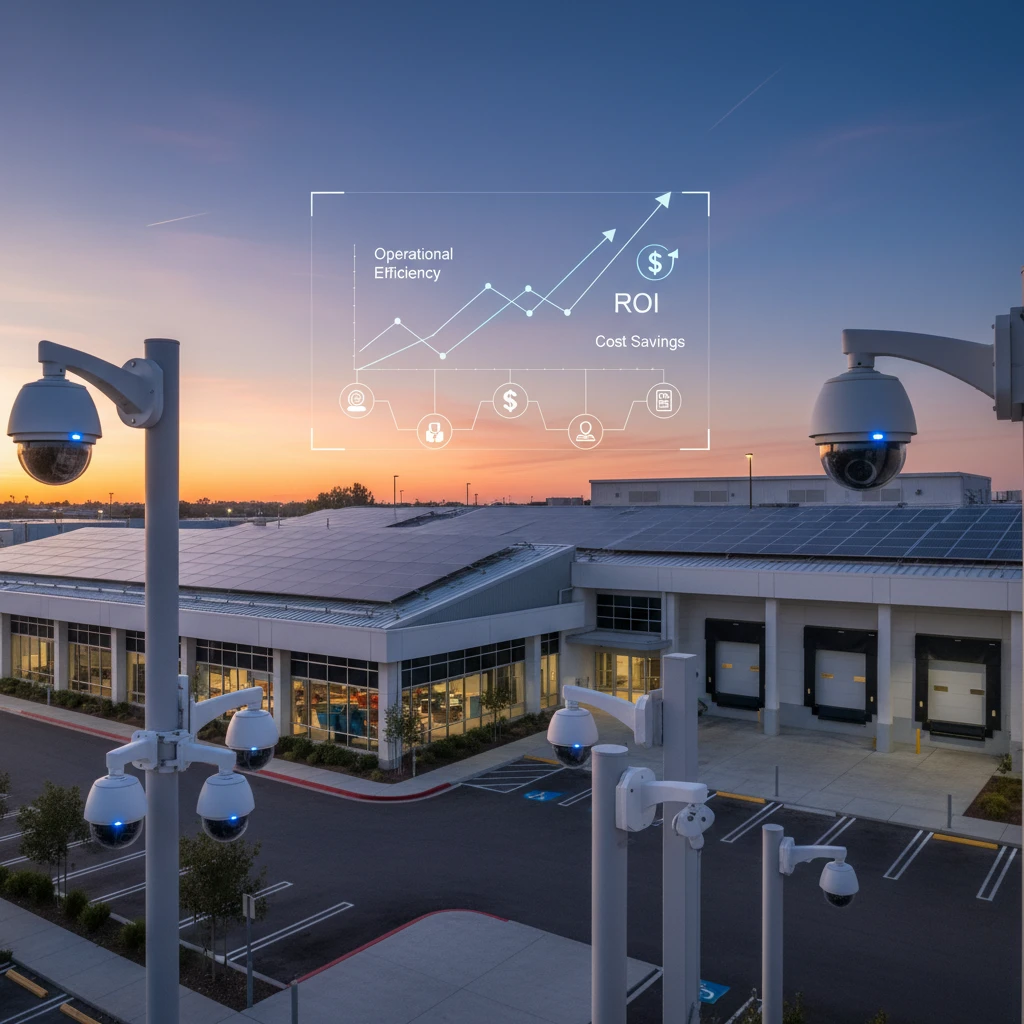
As technology advances and business needs evolve, so too must our approach to security. The focus is shifting from a reactive, cost-center mindset to a proactive, investment-driven strategy that leverages security infrastructure for a multitude of business advantages. This evolution necessitates a deeper understanding of how modern surveillance solutions directly contribute to financial health, operational efficiency, and risk mitigation.
Beyond Deterrence: Quantifying the Financial Impact of Business Security Cameras in 2026
The Evolving Business Security Landscape
The security landscape in 2026 is characterized by increasing sophistication in both threats and defensive technologies. Businesses face a dynamic array of challenges, from organized retail crime and sophisticated cyber-physical attacks to internal malfeasance and complex liability claims. Gone are the days when simple visible cameras were sufficient; today’s effective security solutions involve intelligent analytics, seamless integration with other business systems, and robust network infrastructure, such as PoE wiring for reliable security. The imperative for businesses is to deploy systems that not only deter crime but actively contribute to operational insights and risk reduction. This requires a forward-thinking approach to security planning, moving beyond basic camera installation to encompass comprehensive, intelligent surveillance strategies tailored to specific industry needs, whether in manufacturing or retail.
Shifting from Cost to Investment: A New Perspective
Traditionally viewed as a necessary operational cost, business security cameras are now rightfully seen as a strategic investment with a clear return. The evolving capabilities of modern systems allow them to contribute directly to revenue generation and cost savings in ways previously unimaginable. By providing detailed analytics, improving process efficiency, and mitigating significant financial risks, surveillance technology is transforming from a passive security tool into an active contributor to business growth and stability. This shift in perspective is crucial for decision-makers who need to justify security expenditures and maximize their value. Effective system design and integration, as highlighted in resources like Commercial CCTV Brampton: Smart System Design, are paramount to unlocking this investment potential.
Reducing Shrinkage and Theft: A Direct Impact on Your Bottom Line
Quantifying Losses from Internal and External Theft
Shrinkage, encompassing losses due to theft, administrative errors, and fraud, represents a significant drain on business profitability. External theft, such as shoplifting, can lead to substantial inventory depletion, while internal theft by employees, though often less visible, can be equally damaging. Accurately quantifying these losses is the first step towards effective mitigation. For many retail and warehouse operations, these losses can amount to several percentage points of annual revenue, directly impacting net profit. Implementing comprehensive surveillance is a critical component in not only deterring these activities but also in providing the evidence necessary to recover losses and prosecute offenders, directly protecting your commercial CCTV business.
How High-Definition Surveillance Identifies and Deterrent Criminal Activity
Modern high-definition security cameras offer unparalleled clarity, providing detailed visuals that are crucial for identifying suspects and capturing irrefutable evidence of theft or criminal activity. Features like advanced zoom capabilities, low-light performance, and wide dynamic range (WDR) ensure clear footage even in challenging environments. The mere presence of visible, high-quality cameras acts as a significant deterrent. When incidents do occur, the sharp, detailed video evidence generated by these systems is invaluable for law enforcement investigations, internal disciplinary actions, and potential legal proceedings. This capability directly contributes to recovering stolen assets and preventing future occurrences by demonstrating a strong security presence.
Case Study Snippet: Retailer Recovers X% of Inventory Losses
Example: A mid-sized electronics retailer in Mississauga implemented a new system of 4K resolution security cameras across its store and back-office areas. Within six months, they reported a 15% reduction in overall inventory shrinkage. More importantly, detailed video evidence from the new system enabled them to identify three organized shoplifting rings and one internal employee involved in theft. Recovered assets and successful prosecutions directly offset an estimated 80% of the previously unaccounted-for losses attributed to theft during that period, demonstrating a clear and substantial ROI on their surveillance investment. This underscores the financial efficacy of advanced surveillance in protecting your business.
Enhancing Operational Efficiency Through Real-Time Visibility
Monitoring Workflows and Identifying Bottlenecks
Beyond security, advanced surveillance systems provide invaluable real-time visibility into daily operations, enabling businesses to optimize workflows and identify inefficiencies. By observing processes in areas like production lines, loading docks, or customer service points, managers can pinpoint bottlenecks that slow down productivity or increase operational costs. For instance, a manufacturing facility might use cameras to track material flow and identify delays, leading to process improvements. This direct line of sight into operational activities allows for proactive problem-solving, ensuring smoother operations and better resource allocation, ultimately improving overall business performance.
Improving Staff Productivity and Accountability
The presence of surveillance systems can significantly contribute to improved staff productivity and accountability. When employees know their activities are being monitored, they are more likely to adhere to company policies, focus on their tasks, and engage in productive work. This is particularly true in roles where productivity can be easily measured or where adherence to safety protocols is paramount. High-definition footage can also be used for objective performance reviews and to resolve disputes, ensuring fair and transparent management practices. This increased accountability helps foster a more professional and efficient work environment, directly benefiting the business.
Remote Access for Multi-Location Businesses: Streamlining Oversight
For businesses operating multiple locations, remote access to live and recorded video feeds is a game-changer for operational oversight and management. Decision-makers can monitor activity across all sites from a single dashboard, ensuring brand consistency, adherence to operational standards, and timely responses to incidents, regardless of their physical location. This capability is especially crucial for franchise operations or companies with geographically dispersed facilities. Investing in a scalable security system that supports remote viewing and management is essential for modern, multi-location businesses seeking efficient oversight.
Mitigating Liability and Insurance Costs
Documenting Workplace Incidents and Slip-and-Fall Claims
One of the most significant financial benefits of business security cameras is their ability to mitigate liability risks, particularly concerning workplace incidents and customer slip-and-fall claims. Clear video evidence can definitively document the circumstances surrounding an accident, proving whether an incident was preventable or if negligence was involved. This objective record is crucial for defending against fraudulent claims and for accurately assessing responsibility in legitimate accidents. Robust surveillance systems serve as an invaluable tool for business security and liability reduction.
Verifying Delivery and Service Completion
In various industries, disputes can arise regarding the completion of deliveries, services, or work performed. Security cameras can provide irrefutable proof of service or delivery, thereby preventing disputes and potential financial losses. For example, a warehouse can use cameras to record the exact time and condition of outgoing shipments, while a service company can document the completion of tasks at a client’s site. This verification process helps ensure that both parties fulfill their obligations and reduces the likelihood of costly disagreements or chargebacks, contributing to operational integrity.
Potential for Reduced Insurance Premiums with Robust Surveillance
Many insurance providers recognize the risk-reduction benefits offered by comprehensive security camera systems. Businesses that demonstrate a strong commitment to security through the installation of high-quality, professionally managed surveillance solutions may qualify for reduced insurance premiums. Insurers view such systems as a proactive measure that significantly lowers the probability of costly claims related to theft, vandalism, and accidents. Demonstrating a robust security posture, potentially supported by modernized security and CCTV system retrofits, can lead to tangible savings on your annual insurance costs.
The ROI of Proactive Monitoring: Preventing Disputes and Ensuring Compliance
Investing in business security cameras transcends mere theft deterrence; it becomes a strategic tool for safeguarding operations and mitigating liabilities. The tangible financial benefits of proactive monitoring are often underestimated, but clear, high-resolution footage can be invaluable in resolving disputes quickly and cost-effectively. When disagreements arise with customers, vendors, or even employees, having irrefutable visual evidence can prevent protracted legal battles or costly settlements. For instance, a dispute over damaged goods during delivery can be definitively settled by reviewing footage from exterior cameras, protecting your business from unwarranted claims. Similarly, disagreements about service delivery or contract fulfillment can be settled by observing interactions captured by strategically placed interior cameras. This ability to provide objective evidence reduces operational friction and protects your bottom line by minimizing exposure to fraudulent claims and improving accountability across all business interactions. This proactive approach also plays a crucial role in reducing overall business liability.
Ensuring workplace safety and compliance with industry regulations is another significant operational ROI driver for businesses employing comprehensive CCTV systems. In environments where safety protocols are paramount, such as manufacturing plants or construction sites, cameras can monitor adherence to safety procedures, identify potential hazards before accidents occur, and provide crucial evidence in the event of an incident. This is particularly important for industries with strict compliance requirements, like healthcare or food processing, where maintaining hygiene and safety standards is non-negotiable. The presence of cameras can also deter unsafe practices and encourage employees to follow established guidelines, thereby reducing the risk of accidents and associated costs like workers’ compensation claims and potential fines. Furthermore, clear documentation of site activities, including the handling of sensitive materials or equipment, can be essential for regulatory audits and demonstrating due diligence. Organizations can leverage these systems to mitigate liabilities, ensuring that operations meet all necessary legal and safety standards.
Beyond dispute resolution and compliance, security camera footage offers a powerful, often overlooked, resource for process improvement and employee training. Analyzing recorded interactions and operational workflows can reveal inefficiencies, bottlenecks, or areas where standard operating procedures are not being followed effectively. For example, a retail business could review checkout footage to identify customer service training opportunities or to optimize store layout for better traffic flow. In a warehouse setting, footage can highlight inefficient material handling processes, leading to adjustments that increase productivity and reduce the risk of damage or loss. This data-driven insight allows for targeted training programs that address specific weaknesses, rather than generalized approaches. By observing real-time scenarios, managers can create more effective training modules and ensure employees are equipped with the knowledge and skills to perform their duties safely and efficiently, ultimately contributing to a more productive and streamlined business operation. This analytical capability turns security systems into proactive management tools.
Calculating Your Security Camera Investment: Key Metrics to Consider
Determining the true return on investment for a commercial CCTV system requires a careful analysis of both upfront expenditures and long-term financial benefits. While the initial hardware and installation costs represent a significant portion of the investment, it’s crucial to view these as capital for preventing future losses rather than just an expense. Factors like camera quality, storage capacity, and the complexity of the installation all influence the initial price. However, businesses that focus solely on the purchase price often miss the broader financial picture. For instance, a slightly higher initial investment in high-definition cameras might prevent numerous minor thefts or enable quicker resolution of disputes, ultimately saving far more money than a cheaper, lower-quality system. Understanding these trade-offs is vital for making an informed decision that aligns with your business’s specific security needs and financial goals. This initial assessment sets the stage for understanding the system’s overall financial impact.
To accurately gauge the profitability of a surveillance system, businesses must look beyond the initial purchase price and consider the Total Cost of Ownership (TCO). This comprehensive metric includes not only the hardware and installation but also ongoing expenses such as maintenance, software licensing fees, data storage, potential upgrades, and the cost of monitoring services. For example, a system that requires frequent professional maintenance or has high recurring software fees will have a higher TCO than a more robust, perhaps initially more expensive, system with lower ongoing costs. Analyzing the TCO helps businesses avoid hidden expenses and make a more accurate long-term financial projection. Understanding all associated costs ensures that the perceived savings from cheaper initial options don’t lead to higher overall expenses over the system’s lifespan. Many businesses find that exploring options like shrinkage reduction through CCTV is a key component of this TCO calculation.
Calculating the payback period is a critical step in demonstrating the financial viability of a security camera investment. This metric indicates how long it will take for the cumulative savings and benefits generated by the system to equal the initial investment. To calculate this, you need to quantify the financial gains, such as reduced theft, decreased insurance premiums, savings from resolved disputes, and improved operational efficiency. For example, if a system costs $10,000 and is projected to save the business $3,000 per year through theft deterrence and dispute resolution, the payback period would be approximately 3.3 years. A shorter payback period generally indicates a more attractive investment. Businesses can often find detailed examples and case studies that help illustrate these financial outcomes. Exploring documented ROI case studies can provide valuable benchmarks and insights for this calculation.
Scalable CCTV Solutions: Future-Proofing Your Business Security Investment
Designing a security camera system with scalability in mind is crucial for businesses that anticipate growth or changes in their operational landscape. A truly future-proof system should allow for the seamless addition of more cameras, increased storage capacity, and integration with new technologies without requiring a complete overhaul. This flexibility ensures that your security infrastructure can adapt to expanding facilities, new operational areas, or evolving security threats. For instance, a business that plans to open additional locations or expand its existing warehouse might require a system that can easily accommodate dozens of new cameras and terabytes of additional storage. Opting for scalable solutions from the outset avoids costly rip-and-replace scenarios down the line and ensures continuous protection as your business grows. This adaptable approach is a cornerstone of intelligent security planning, supporting long-term operational continuity. Such planning aligns with designing smart commercial CCTV systems.
The adoption of Power over Ethernet (PoE) technology significantly simplifies the infrastructure required for scalable CCTV systems. PoE allows network cables to carry both data and electrical power to devices, eliminating the need for separate power outlets at each camera location. This not only reduces installation complexity and cost but also makes it significantly easier to add new cameras in the future. When expanding your surveillance network, new PoE-enabled cameras can be connected to existing network infrastructure with a single cable, drastically cutting down on wiring labor and material expenses. Furthermore, PoE offers a more organized and aesthetically pleasing installation, reducing cable clutter and potential points of failure. This streamlined approach to connectivity is fundamental for businesses looking to expand their surveillance footprint efficiently and maintain a reliable network. Businesses often benefit from exploring PoE wiring for reliable security.
Choosing CCTV systems that are designed for integration with future technologies is a strategic imperative for maintaining a competitive edge and ensuring long-term security effectiveness. Modern surveillance systems are increasingly incorporating advanced features like artificial intelligence (AI) for advanced analytics (e.g., object recognition, facial recognition, anomaly detection), cloud-based storage and management, and integration with other business systems such as access control or alarm panels. Selecting a platform that supports open architecture and standard protocols allows for easier incorporation of these innovations as they become available and relevant to your business needs. For example, a system that can integrate with future AI analytics could provide proactive threat detection rather than just reactive recording. This forward-thinking approach ensures that your investment remains relevant and capable of leveraging new advancements in security technology, providing ongoing value and enhanced protection. You can learn more about this by looking into integrating security systems.
The Critical Role of Professional Installation in Maximizing ROI
Professional installation is not merely a service; it is a fundamental component in maximizing the return on investment for your business security camera system. Expert technicians possess the knowledge and experience to ensure strategic camera placement, which is paramount for achieving optimal coverage and eliminating blind spots. This involves understanding sightlines, potential criminal behaviors, and the specific layout of your premises to position cameras effectively. Incorrect placement can render even the most advanced equipment useless, leading to missed incidents and a false sense of security. A professional installer will conduct a thorough site assessment, identifying critical areas that require surveillance and recommending the most suitable camera types and locations to cover them comprehensively. This meticulous planning phase is essential for ensuring the system captures the evidence needed and deters potential threats. Businesses often see significant improvements by exploring commercial CCTV design services.
Ensuring network reliability and robust data security is another critical aspect where professional installation proves indispensable. CCTV systems generate and transmit significant amounts of data, making them potential targets for cyber threats if not properly secured. Professional installers understand the importance of configuring networks securely, implementing strong passwords, segmenting networks where appropriate, and ensuring data encryption. They also ensure that the network infrastructure supporting the cameras is robust enough to handle the video streams without lag or data loss, which is essential for continuous monitoring and evidence integrity. A poorly configured network can lead to system downtime, corrupt footage, or data breaches, negating the security benefits and potentially exposing sensitive business information. This attention to detail is vital for protecting both your physical assets and your digital information, supporting commercial CCTV structured cabling for optimal performance.
Engaging professional installers significantly helps in the avoidance of common pitfalls that can compromise the effectiveness and longevity of a security camera system. These pitfalls include overlooking critical areas that result in blind spots, failing to secure cameras against vandalism or environmental damage, and improper configuration that leads to poor image quality or system malfunctions. For example, placing cameras too low can make them vulnerable to tampering or vandalism, while insufficient lighting in certain areas might require specialized cameras. Professionals are trained to identify these risks during the site assessment and implement solutions, such as protective housings, strategic mounting heights, and appropriate camera selection for various conditions. By mitigating these common issues upfront, businesses can ensure their surveillance system operates reliably, captures high-quality footage, and provides consistent protection, thereby maximizing the overall ROI. This proactive approach is essential for building a resilient security infrastructure that stands the test of time.
Leveraging Remote Viewing and Mobile Alerts for Enhanced Control
Modern business security camera systems extend far beyond mere recording devices; they are now sophisticated tools for real-time operational oversight. The ability to view live feeds and receive instant alerts from any internet-connected device fundamentally shifts how businesses manage security and operations. This enhanced control provides a proactive stance, allowing managers to respond to incidents before they escalate and to gain immediate insights into site activity. By integrating remote viewing and mobile alerts into daily workflows, organizations can significantly improve their responsiveness and decision-making capabilities, directly impacting efficiency and risk mitigation. This level of accessibility democratizes oversight, empowering key personnel to stay informed regardless of their physical location.
Instant Notifications for Critical Events
A cornerstone of modern surveillance is the capacity for instantaneous alerts triggered by specific events. Instead of continuously monitoring feeds, businesses can configure their systems to notify designated personnel immediately when predefined conditions are met. This could include motion detection in restricted areas after hours, the opening of a loading dock door outside of operational times, or even unusual crowd gathering detected at an entrance. Such timely notifications are critical for preventing theft, unauthorized access, or responding swiftly to workplace emergencies. For instance, a retail business might receive an alert if a door is opened during non-business hours, enabling security teams to investigate immediately, potentially deterring a break-in and minimizing potential losses. These proactive alerts transform security from a reactive measure to a preventative one, crucial for safeguarding assets and personnel.
On-Demand Access to Live and Recorded Footage from Anywhere
The capability to access live and recorded video footage from anywhere at any time offers unparalleled operational flexibility. Whether a manager is at home, traveling for business, or at another company location, they can log into the surveillance system via a secure mobile app or web portal. This on-demand access is invaluable for verifying operational status, checking on staff activity, or reviewing incidents as they unfold. For multi-location businesses, this feature provides a unified view across all sites, simplifying oversight and management. For example, a warehouse manager could remotely check inventory levels by viewing live camera feeds of stockroom areas, or review footage of a recent delivery to confirm package counts and condition, all without needing to be physically present. This accessibility streamlines operations and enhances accountability across the entire organization.
Empowering Management with Decision-Making Information in Real-Time
Beyond security, advanced business security camera systems provide rich data that can inform strategic decisions. By analyzing video footage, managers can gain insights into customer traffic patterns, employee productivity, workflow bottlenecks, and adherence to safety protocols. This data-driven approach allows for continuous improvement of business processes. For instance, a dealership could analyze foot traffic patterns to optimize staffing levels in different showroom areas. A manufacturing facility might use camera footage to identify inefficiencies in a production line, leading to process adjustments that boost output. The ability to access and review this information in real-time, often integrated with other business systems, ensures that management decisions are based on current realities, not outdated reports. This integration of security data into broader operational analytics is key to maximizing the return on investment for surveillance technology.
Choosing the Right Technology: Features That Drive Operational Value
Selecting a business security camera system involves more than just choosing a brand; it requires understanding the specific technologies and features that will deliver tangible operational value. The right system should not only deter threats but also contribute to efficiency, productivity, and informed decision-making. Key considerations include the clarity of the imagery captured, the intelligence of the system’s analytical capabilities, and its ability to withstand the rigors of the business environment. Investing in a system that aligns with these operational needs ensures that the security solution serves a dual purpose: protecting assets and supporting the overall business objectives. For businesses looking to upgrade their existing infrastructure, exploring options for CCTV system retrofits is a strategic step towards leveraging these advanced technologies.
High-Resolution Imaging for Clear Identification
The clarity of video footage is paramount for effective surveillance and incident resolution. High-resolution imaging, often measured in megapixels (MP), ensures that crucial details, such as faces, license plates, and small identifying marks, are captured with exceptional clarity. This is vital not only for identifying perpetrators of crimes but also for verifying legitimate activities and resolving disputes. For example, in a retail environment, clear footage can help identify shoplifters or confirm customer interactions. In manufacturing settings, high-resolution cameras can monitor the precision of assembly lines or identify defects in products. A system offering at least 1080p (Full HD) resolution is a minimum standard, with 4K (Ultra HD) providing even greater detail, which is particularly beneficial for large areas or when zooming in on distant objects. This enhanced visual fidelity directly contributes to improved evidence quality and faster investigations.
Advanced Analytics: Motion Detection, Object Tracking, and More
Modern security cameras are equipped with increasingly sophisticated analytics that move beyond simple recording to offer intelligent insights and automated responses. Features like advanced motion detection can differentiate between genuine threats and common environmental disturbances (like swaying trees), reducing false alarms. Object tracking can follow a specific person or vehicle through the camera’s field of view, providing continuous monitoring. Other analytics include people counting for traffic analysis, facial recognition for access control, and anomaly detection that flags unusual behavior. For businesses in the manufacturing sector, these analytics can be crucial for safety monitoring and process optimization; for instance, detecting if an unauthorized person enters a hazardous zone. Implementing such intelligent features transforms the camera system from a passive recorder into an active operational tool. For comprehensive system design, understanding the benefits of smart system design is essential.
Durability and Environmental Considerations for Specific Business Settings (e.g., Warehouses, Manufacturing)
The operational environment dictates the requirements for camera durability and resilience. In demanding settings like warehouses, manufacturing floors, or outdoor storage yards, cameras must be built to withstand challenging conditions. This includes resistance to dust, moisture, extreme temperatures, and physical impact. Look for cameras with high IP (Ingress Protection) ratings for dust and water resistance, and IK ratings for vandal resistance. For instance, a camera installed on a busy production line needs to be robust enough to handle vibrations and potential impacts, while a camera at a loading dock might require protection against rain and dust. Specialized cameras are also available for low-light conditions or areas prone to glare. Ensuring that the chosen cameras are suited for their intended environment prevents premature failure and maintains consistent performance, thereby safeguarding your investment and ensuring continuous security coverage. Proper installation, often involving robust structured cabling, further enhances system longevity and reliability.
Integration with Existing Infrastructure and Systems
The effectiveness of a new security camera system is significantly amplified when it can seamlessly integrate with your existing technological infrastructure. This means ensuring compatibility with your current network, storage solutions, and potentially other security or operational software. For instance, integrating cameras with a building’s access control system can automatically trigger recordings when a specific door is accessed or alert security personnel to unauthorized entry attempts. Likewise, linking camera feeds to alarm systems can provide visual verification of an incident, enabling faster and more appropriate responses. Many modern systems utilize open APIs or standardized protocols, making integration easier. This interconnectedness not only enhances security operations but also streamlines data management and provides a more unified overview of your business’s safety and operational status. Planning for robust remote monitoring often requires thoughtful integration strategies.
Scalability and Future-Proofing
As your business grows and evolves, your security needs will likely change. Therefore, selecting a camera system that offers scalability is crucial. This means the ability to easily add more cameras, expand storage capacity, or upgrade features as required without necessitating a complete system overhaul. Future-proofing also involves considering the technology’s lifecycle. Opting for systems that support current and emerging standards (like higher resolution imaging, advanced compression codecs for efficient storage, or AI-driven analytics) ensures your investment remains relevant for years to come. A scalable system allows you to adapt to new threats, regulatory changes, or operational expansions, ensuring your security infrastructure remains effective and efficient over the long term. For example, a retail business might start with a few cameras and expand to cover more aisles and entrances as their store footprint increases. This foresight is key to maintaining a comprehensive and effective security posture.
Choosing the Right Type of Security Camera
The market offers a wide variety of security camera types, each suited for different applications and environments. Understanding these differences is key to making an informed decision. Dome cameras are discreet and tamper-resistant, often used indoors in areas like offices, retail spaces, or hallways. Their unobtrusive design makes them less intimidating to staff and customers. Bullet cameras are more visible and often used outdoors for deterring potential intruders. They are typically mounted on walls or poles and can be easily aimed at specific areas. PTZ (Pan-Tilt-Zoom) cameras offer greater flexibility, allowing operators to remotely control their direction and zoom level. These are ideal for monitoring large areas or tracking moving subjects. For situations requiring detailed identification, such as at entry points or cash registers, high-resolution cameras or specialized license plate recognition (LPR) cameras are essential. When dealing with low-light conditions or complete darkness, cameras with built-in infrared (IR) illumination or starlight technology are necessary to capture clear footage. Thermal cameras are also available for detecting heat signatures in challenging environments or for perimeter security.
Factors to Consider When Selecting Cameras
Beyond the camera type, several technical specifications should guide your selection. Resolution, measured in pixels (e.g., 1080p, 4K), directly impacts image clarity and detail. Higher resolution allows for better identification of individuals or objects from a distance. Field of View (FoV) determines how wide an area the camera can capture; a wider FoV covers more ground but may offer less detail per unit area. Low-light performance is critical for continuous surveillance, with ratings like lux indicating sensitivity to light. Durability is also a concern, particularly for outdoor installations. Look for cameras with high IP ratings (e.g., IP66, IP67) for protection against dust and water. For outdoor use, consider weatherproof housings and operating temperature ranges. Power over Ethernet (PoE) capability simplifies installation by allowing data and power to be transmitted over a single Ethernet cable, reducing the need for separate power outlets. Finally, consider whether you need built-in analytics such as motion detection, line crossing, or object recognition, which can enhance the system’s proactive capabilities.