
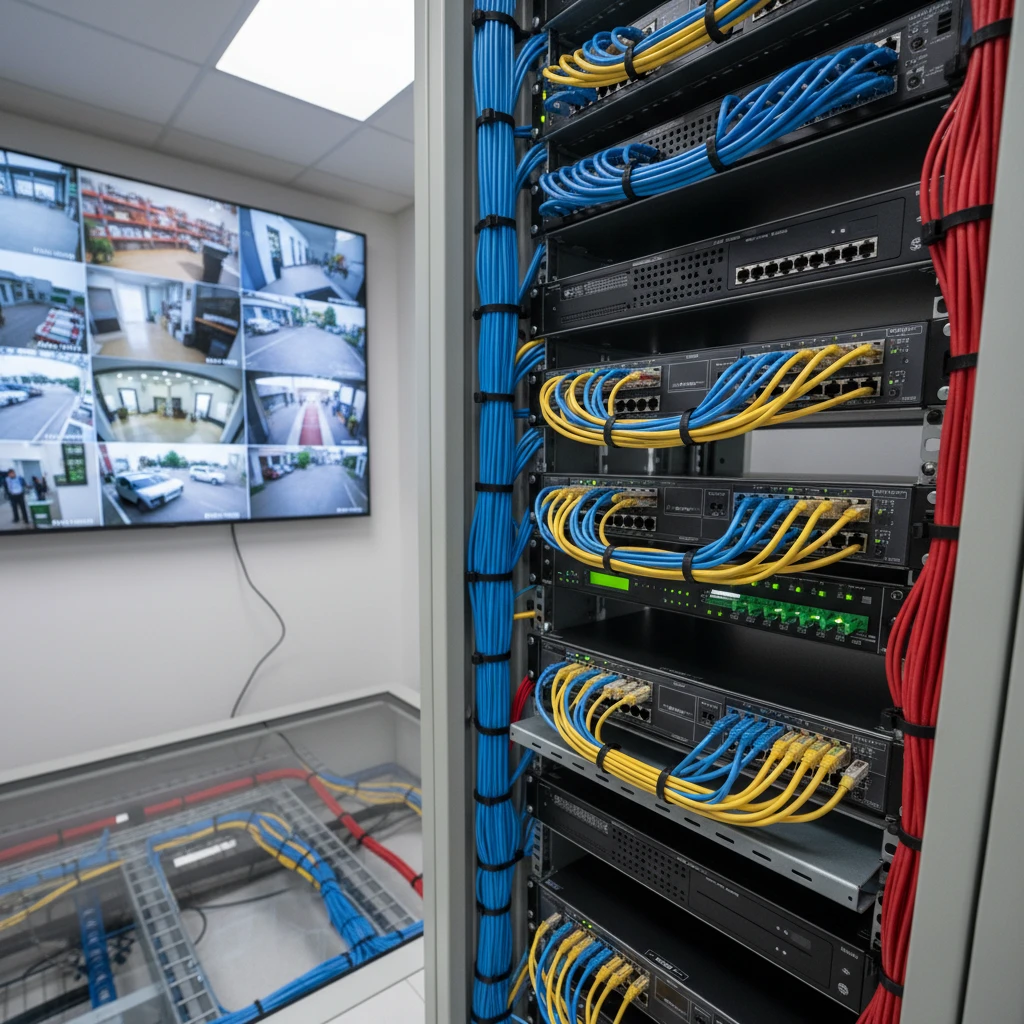
In today’s fast-paced business environment, a reliable commercial CCTV system is no longer a luxury, but a necessity. It provides security and helps mitigate liability. The backbone of any effective CCTV solution is the often-overlooked cabling infrastructure. Poorly planned or executed cabling can lead to system failures, degraded video quality, and increased maintenance costs. This article dives into the critical role of structured cabling in ensuring the reliability and longevity of your commercial CCTV system.
We’ll explore the importance of choosing the right cable types, the benefits of professional installation, and the long-term advantages of investing in a well-designed structured cabling system. In 2026, with higher resolution cameras and increasingly complex security needs, getting the cabling right from the start is more important than ever to secure your business.
Why Reliable Cabling is the Foundation of a Robust Commercial CCTV System in 2026
The Hidden Costs of Skimping on Cabling Infrastructure
Cutting corners on cabling may seem like a way to save money upfront, but it can lead to significant expenses down the road. The hidden costs of substandard cabling include increased downtime due to system failures, frequent repairs and troubleshooting, and the need for complete system replacements sooner than expected. A seemingly minor issue, like a loose connection or damaged cable, can cause intermittent signal loss, resulting in missed recordings and potential security breaches. Beyond the direct financial implications, unreliable cabling can also negatively impact operational efficiency and increase liability. Ensuring business security through CCTV requires a holistic approach.
In addition, using inadequate cabling can void manufacturer warranties on your cameras and recording equipment. Many manufacturers specify minimum cabling requirements for their products, and failing to meet these requirements can invalidate your warranty coverage. Poor cabling infrastructure may also make it difficult to upgrade your system in the future, limiting your ability to adapt to evolving security needs. Before considering the upfront investment, it’s crucial to weigh the long-term risks and expenses associated with unreliable cabling. Choosing the right business security cameras is only half the battle; the infrastructure supporting them is equally crucial.
Power over Ethernet (PoE) Demands: Meeting the Bandwidth and Power Requirements of Modern CCTV Cameras
Many modern CCTV cameras utilize Power over Ethernet (PoE), which allows both data and power to be transmitted over a single cable. However, PoE places additional demands on the cabling infrastructure. If the cables are not of sufficient quality, they may not be able to deliver the required power, resulting in camera malfunctions or even damage. Furthermore, inadequate cabling can lead to voltage drops, which can affect camera performance, especially at longer distances. Ensure your commercial CCTV PoE wiring is properly installed by professionals.
To meet the bandwidth and power requirements of modern PoE-enabled CCTV cameras, it’s essential to use high-quality cables that meet or exceed industry standards. Cat6 or Cat6a cables are generally recommended for PoE applications, as they offer better performance and can handle higher power levels than older cable types like Cat5e. It’s also important to consider the distance limitations of PoE, as the power delivered to the camera decreases with distance. For longer distances, PoE extenders or fiber optic cabling may be necessary. Consulting with a qualified CCTV installer is crucial to ensure that your cabling infrastructure can reliably support your PoE-enabled cameras. As highlighted in a related article, selecting the right surveillance solution plays a vital role in business security.
Understanding Structured Cabling: The Backbone of Your Business’s Security
What is Structured Cabling and Why is it Important?
Structured cabling is a standardized approach to cabling infrastructure design and installation. Unlike point-to-point cabling, which involves running individual cables between devices, structured cabling uses a hierarchical system of cables, patch panels, and switches to create a flexible and organized network. This approach simplifies installation, maintenance, and troubleshooting, making it easier to manage and scale your CCTV system. A structured cabling system provides a dedicated pathway for each camera, ensuring consistent performance and minimizing interference.
The importance of structured cabling stems from its ability to provide a reliable and scalable foundation for your CCTV system. With a structured cabling system, you can easily add or remove cameras without disrupting the rest of the network. This is especially important for businesses that are growing or anticipate future expansion. Structured cabling also improves network performance by reducing cable clutter and improving airflow, which can help to prevent overheating and equipment failures. A well-designed structured cabling system can also simplify troubleshooting, making it easier to identify and resolve cabling issues quickly. Structured cabling improves business security with CCTV by making the system more reliable.
Key Components of a Structured Cabling System for CCTV (Cables, Patch Panels, Switches)
A structured cabling system for CCTV comprises several key components, each playing a critical role in the overall performance and reliability of the system. The cables themselves form the physical pathways for data and power transmission. Patch panels provide a central point for connecting and managing cables, allowing for easy reconfiguring and troubleshooting. Switches act as traffic controllers, directing data to the appropriate destinations. Choosing the right components is crucial for ensuring optimal performance and scalability.
For CCTV applications, Cat6 or Cat6a cables are generally recommended for their superior bandwidth and power-handling capabilities. Patch panels should be chosen based on the number of cameras in the system and the desired level of flexibility. Switches should be selected based on their port density, PoE capabilities, and network management features. The quality of these components is paramount; investing in high-quality cables, patch panels, and switches will ensure that your CCTV system operates reliably and efficiently for years to come. For businesses operating across multiple locations, scalable security is vital, and structured cabling is an integral part of that.
Benefits of a Well-Designed Structured Cabling System (Scalability, Reliability, Maintainability)
A well-designed structured cabling system offers numerous benefits for commercial CCTV installations. Scalability is a key advantage, allowing businesses to easily add or remove cameras as their security needs evolve. This is particularly important for growing businesses that may need to expand their surveillance coverage over time. Reliability is another significant benefit, as structured cabling minimizes the risk of cable faults and signal degradation, ensuring consistent performance. The best security camera systems are useless without reliable infrastructure.
Maintainability is also greatly enhanced with structured cabling. The organized layout of cables and patch panels makes it easier to identify and resolve cabling issues, reducing downtime and minimizing disruption to business operations. A structured approach also simplifies upgrades and modifications, making it easier to integrate new technologies and features into the system. Investing in a professionally installed and well-designed structured cabling system is a smart investment that will pay dividends in the form of improved security, reduced maintenance costs, and increased operational efficiency. The longevity of any Commercial CCTV depends on the quality of its installation.
Choosing the Right Cable for Your Commercial CCTV System: Copper vs. Fiber Optic
Cat5e, Cat6, and Cat6a: Understanding Cable Categories and Performance
When selecting copper cables for your commercial CCTV system, understanding the differences between Cat5e, Cat6, and Cat6a is crucial. Cat5e is the oldest of these standards and is suitable for basic CCTV applications with relatively short cable runs. However, its bandwidth limitations can become a bottleneck as camera resolutions and data demands increase. Cat6 offers improved performance over Cat5e, with higher bandwidth and better resistance to interference. This makes it a good choice for many standard CCTV installations.
Cat6a provides the highest performance of the three, with even greater bandwidth and improved shielding against interference. It is the recommended choice for demanding CCTV applications, such as those involving high-resolution cameras, PoE, or long cable runs. While Cat6a cables are more expensive than Cat5e or Cat6, the improved performance and reliability can justify the cost, especially in critical security environments. It’s also important to note that the overall performance of a cabling system is only as good as its weakest link, so it’s essential to use high-quality connectors and installation practices to maximize the benefits of Cat6a cabling. Businesses looking for ways to reduce shrinkage through improved CCTV should consider the benefits of a well-specified cabling system.
When to Consider Fiber Optic Cabling for Long Distances or High Bandwidth
While copper cables are suitable for many CCTV applications, fiber optic cabling offers significant advantages in certain situations. Fiber optic cables can transmit data over much longer distances than copper cables without signal degradation. This makes them ideal for large properties or multi-building complexes where cameras are located far from the recording equipment. Furthermore, fiber optic cables offer much higher bandwidth than copper cables, making them well-suited for applications involving high-resolution cameras or large numbers of cameras.
Another advantage of fiber optic cabling is its immunity to electromagnetic interference (EMI). This makes it a good choice for environments where there is a lot of electrical noise, such as industrial facilities or areas with heavy machinery. While fiber optic cabling is more expensive than copper cabling, the improved performance and reliability can be worth the investment in demanding applications. Choosing fiber is a strategic way to plan for a commercial CCTV system upgrade in the future. Consider a consultation with a professional to assess the specific needs of your commercial CCTV system and determine whether fiber optic cabling is the right choice.
Environmental Factors: Choosing Cables Resistant to Weather, UV, and Chemical Exposure
The environment in which your CCTV cables are installed can significantly impact their performance and lifespan. Outdoor cables are exposed to weather, UV radiation, and temperature extremes, which can degrade the cable jacket and insulation over time. Industrial environments may expose cables to chemicals, oils, and solvents, which can also damage the cable materials. Choosing cables that are specifically designed to withstand these environmental factors is essential for ensuring the long-term reliability of your CCTV system.
For outdoor applications, look for cables with UV-resistant jackets and waterproof connectors. Cables buried underground should be designed for direct burial and resistant to moisture and soil chemicals. In industrial environments, choose cables with chemical-resistant jackets that can withstand exposure to the specific chemicals present in the facility. Investing in high-quality, environmentally resistant cables will protect your CCTV system from premature failure and minimize the need for costly repairs or replacements. You might need to choose cabling resistant to specific environmental conditions, as you update your obsolete security system.
The Importance of Professional CCTV Cable Installation: Minimizing Risks and Maximizing Performance
Common Cabling Mistakes That Can Compromise Your Security System
Numerous cabling mistakes can compromise the performance and reliability of your commercial CCTV system. These mistakes can range from using the wrong type of cable to improper termination techniques and poor cable management. One common mistake is using substandard cables that do not meet industry standards. These cables may not be able to handle the bandwidth or power requirements of modern CCTV cameras, leading to signal degradation and system failures. Improper termination, such as not properly crimping connectors or stripping the cable jacket too far back, can also cause connectivity issues and reduce signal quality.
Another frequent mistake is running cables too close to sources of electromagnetic interference (EMI), such as power lines or fluorescent lights. EMI can disrupt the video signal, resulting in blurry or distorted images. Poor cable management, such as leaving cables tangled or unsupported, can also lead to damage and premature cable failure. Failing to properly ground the system can create ground loops, which can introduce noise and interference into the video signal. Avoiding these common cabling mistakes requires expertise and attention to detail. One way to reduce your commercial security liability is to ensure proper installation of cabling and cameras.
Why DIY CCTV Cabling is a Bad Idea for Businesses (Warranty, Liability, Expertise)
While DIY CCTV cabling may seem like a cost-effective option, it’s generally a bad idea for businesses. DIY installations often lack the expertise and equipment necessary to ensure proper cable selection, termination, and routing. This can lead to a variety of problems, including poor video quality, unreliable performance, and increased maintenance costs. Furthermore, DIY installations may void the manufacturer’s warranty on your cameras and recording equipment.
DIY installations also expose businesses to significant liability risks. If a security breach occurs due to a poorly installed CCTV system, the business may be held liable for damages. Professional CCTV installers are licensed and insured, providing businesses with protection against liability claims. Moreover, professional installers have the knowledge and experience to design and install a cabling system that meets all applicable industry standards and local regulations. Professional installation guarantees adherence to compliance. Given the potential risks and liabilities, investing in professional CCTV cabling is a wise decision for any business.
Our Certified Technicians Ensure Compliance with Industry Standards and Local Regulations
At AYS Security Services, our certified technicians possess the expertise and experience to ensure that your CCTV cabling is installed correctly and in compliance with all applicable industry standards and local regulations. We use only high-quality cables and connectors, and we follow industry best practices for cable routing, termination, and management. Our technicians are trained to identify and avoid common cabling mistakes that can compromise the performance and reliability of your CCTV system.
We also provide comprehensive testing and certification services to ensure that your cabling system meets or exceeds all performance requirements. By entrusting your CCTV cabling to our certified technicians, you can rest assured that your security system will operate reliably and effectively for years to come. Compliance with industry standards is crucial for ensuring the integrity and security of your business. We are dedicated to delivering superior CCTV solutions that prioritize your peace of mind. Reach out today to discuss your commercial security needs and get a comprehensive quote tailored to your business requirements.
Importance of Regular CCTV Maintenance
Regular CCTV maintenance is essential for ensuring the continued performance and reliability of your security system. Over time, cables can become damaged or corroded, connectors can loosen, and cameras can become dirty or obstructed. These issues can lead to a decline in video quality, unreliable performance, and even system failure. Routine maintenance can prevent these problems and extend the lifespan of your CCTV system.
Benefits of Professional CCTV Maintenance Services
Professional CCTV maintenance services offer a number of benefits, including:
- Improved system performance and reliability
- Extended equipment lifespan
- Reduced risk of system failure
- Enhanced video quality
- Proactive identification and resolution of potential problems
Our Comprehensive CCTV Maintenance Services
At AYS Security Services, we offer comprehensive CCTV maintenance services tailored to your specific needs. Our services include:
- Cable inspection and testing
- Connector tightening and replacement
- Camera cleaning and adjustment
- System testing and optimization
- Software updates
- Preventative maintenance recommendations
Our experienced technicians will thoroughly inspect your CCTV system, identify any potential problems, and perform the necessary repairs and maintenance to keep your system operating at peak performance. With our proactive approach to CCTV maintenance, you can minimize the risk of downtime and ensure that your security system is always ready to protect your business. For more information about our maintenance plans, please visit our CCTV Maintenance page.
Troubleshooting Common CCTV Cabling Issues
Even with proper installation and maintenance, CCTV cabling can sometimes experience problems. Here are some common issues and how to troubleshoot them:
- Video Signal Loss: Check cable connections, power supply, and camera settings. Ensure the cable isn’t damaged or kinked. Use a cable tester to verify signal integrity.
- Poor Image Quality: Clean the camera lens. Inspect the cable for damage or interference. Check the camera’s resolution and settings. Consider upgrading to a higher-quality cable.
- Interference: Keep CCTV cables away from power cables or sources of electromagnetic interference. Use shielded cables to minimize interference. Ground the CCTV system properly.
- Cable Damage: Visually inspect cables for cuts, fraying, or corrosion. Replace damaged cables immediately. Protect cables from physical damage by using conduit or cable trays.
- Power Issues: Check the power supply voltage and amperage. Ensure the power cable is securely connected. Consider using a UPS (Uninterruptible Power Supply) to protect against power outages.
When to Consider Upgrading Your CCTV Cabling
While regular maintenance can extend the lifespan of your CCTV cabling, there comes a time when upgrading is necessary. Here are some signs that it’s time to consider a cabling upgrade:
- Frequent Problems: If you’re experiencing frequent video signal loss, poor image quality, or other cabling-related issues, it may be more cost-effective to upgrade than to continue repairing the old cables.
- Technological Advancements: Newer CCTV technologies, such as IP cameras and high-resolution recording systems, may require higher-bandwidth cabling to function properly.
- System Expansion: If you’re expanding your CCTV system by adding more cameras or other devices, you may need to upgrade your cabling to support the increased bandwidth and power requirements.
- Aging Infrastructure: Over time, cables can degrade and become less reliable. If your cabling is more than 10-15 years old, it may be time to consider an upgrade.
Upgrading your CCTV cabling can improve system performance, enhance video quality, and provide a more reliable security solution. We can help you assess your cabling needs and recommend the best upgrade options for your business. Contact us today for a free consultation.
Power over Ethernet (PoE): Simplifying CCTV Installation and Power Management
How PoE Works and its Advantages for IP Cameras
Power over Ethernet (PoE) has revolutionized commercial CCTV installations, streamlining the process and offering significant advantages over traditional cabling methods. PoE technology allows both data and electrical power to be transmitted simultaneously over a single Ethernet cable. This eliminates the need for separate power cables for each IP camera, reducing installation time and costs. A PoE-enabled network consists of two primary components: PoE switches or injectors that supply power, and PoE-compatible IP cameras that receive both data and power. PoE significantly simplifies installations in difficult-to-reach areas, as electrical outlets are not required at the camera’s location. This can be a major benefit in warehouses, manufacturing facilities, and outdoor environments. One key advantage to consider is the flexibility PoE offers; cameras can be easily relocated or reconfigured within the network without requiring new electrical wiring. This is especially useful for businesses anticipating future expansion or changes to their surveillance needs. Moreover, PoE provides a centralized power source, enabling easier monitoring and management of power consumption across the entire CCTV system. For more insights on improving your business security with CCTV, consider reviewing this guide on liability reduction with CCTV.
Selecting the Right PoE Switch for Your CCTV Camera Network
Choosing the right PoE switch is critical for ensuring the reliable operation of your CCTV system. Consider the following factors when selecting a PoE switch: the number of ports, the power budget, the PoE standard (802.3af, 802.3at, or 802.3bt), and the network bandwidth requirements. The number of ports should accommodate your current camera count and any potential future expansion. The power budget refers to the total amount of power the switch can supply to all connected devices. Each camera has a specific power consumption requirement, so ensure the switch’s power budget exceeds the total power needed by all cameras. The PoE standard determines the amount of power delivered per port. 802.3af (PoE) provides up to 15.4W per port, 802.3at (PoE+) provides up to 30W per port, and 802.3bt (PoE++) can deliver up to 90W per port. Higher wattage is typically needed for PTZ (Pan-Tilt-Zoom) cameras or cameras with infrared illuminators. Also, the switch should have sufficient bandwidth to handle the data traffic from all cameras, preventing bottlenecks and ensuring smooth video streaming. Managed PoE switches offer advanced features such as VLAN support, QoS (Quality of Service), and remote monitoring capabilities, enhancing network security and performance.
PoE Budgeting: Ensuring Sufficient Power for All Cameras
PoE budgeting is a crucial step in planning your CCTV system. Failing to properly budget for power can lead to camera malfunctions, network instability, and even system failure. Start by identifying the maximum power consumption of each camera. This information is usually available in the camera’s specifications. Add up the power requirements of all cameras to determine the total power needed for the CCTV system. Select a PoE switch with a power budget that exceeds this total by at least 20% to account for power fluctuations and potential future additions. For example, if you have ten cameras that each require 10W, the total power requirement is 100W. Choose a switch with a power budget of at least 120W. It’s also important to consider the cable length when budgeting for PoE. As the cable length increases, the voltage drops, reducing the power available at the camera end. For long cable runs (close to the 100-meter limit), use higher-gauge cables to minimize voltage drop. Periodically monitor the power consumption of your cameras to ensure they are operating within their specified ranges. If a camera is consistently drawing more power than expected, investigate the cause, such as a faulty camera or a problem with the network cable.
Future-Proofing Your Commercial CCTV System with Scalable Cabling Solutions
Planning for Expansion: Designing a Cabling System That Can Accommodate Future Camera Additions
A well-planned CCTV cabling infrastructure not only meets your current security needs but also provides the flexibility to accommodate future expansion. When designing your system, anticipate potential growth in camera count and coverage area. Install more cables than immediately necessary to avoid the need for extensive rewiring later. Consider using a star topology, where each camera is connected directly to the central switch. This makes it easier to add or remove cameras without disrupting the entire network. Choose a cabling infrastructure that supports higher bandwidth standards, such as Cat6a or even fiber optic cables, even if your current cameras don’t require it. This ensures your system can handle higher resolution cameras and more demanding video analytics in the future. Also, ensure your scalable security system can easily adapt as your business grows. Document your cabling infrastructure thoroughly, including cable routes, termination points, and switch port assignments. This will greatly simplify future maintenance and upgrades. An organized and well-documented cabling system is an investment in the long-term reliability and scalability of your CCTV system.
Upgrading Your CCTV System Without Replacing Your Entire Cabling Infrastructure
Upgrading your CCTV system doesn’t always require a complete overhaul of your cabling infrastructure. In many cases, you can leverage your existing cabling to support newer, more advanced cameras. Before upgrading, assess the capabilities of your current cabling. If you’re using Cat5e cables, they may be sufficient for supporting standard IP cameras. However, if you’re upgrading to higher resolution cameras or using PoE+ or PoE++ devices, you may need to upgrade to Cat6 or Cat6a cables. Consider using PoE extenders to increase the distance limitations of Ethernet cables. These devices can extend the range of PoE signals beyond the standard 100-meter limit. Evaluate your existing switches and network infrastructure to ensure they can handle the increased bandwidth and power demands of the new cameras. If necessary, upgrade your switches to models with higher port density, higher power budgets, and more advanced features. When upgrading cameras, prioritize locations where the existing cabling is easily accessible and in good condition. This will minimize the disruption and cost of the upgrade. For advice on upgrading your existing cameras, learn about how to upgrade an obsolete system to maximize ROI.
The Benefits of Working with a Security Provider That Offers Ongoing Support and Maintenance
Partnering with a security provider that offers ongoing support and maintenance is essential for ensuring the long-term reliability and performance of your commercial CCTV system. A reputable provider can offer a range of services, including routine inspections, proactive maintenance, and rapid response to system failures. Regular inspections can identify potential problems before they escalate, such as loose connections, damaged cables, or failing hardware. Proactive maintenance, such as cleaning cameras and updating firmware, can improve image quality and prevent system downtime. A security provider can also offer remote monitoring services, providing real-time alerts and notifications of security breaches or system malfunctions. They can also provide assistance with troubleshooting and resolving cabling issues, ensuring that your system is always operating at peak performance. Moreover, a reliable provider will offer training and support to your staff, enabling them to effectively use and manage the CCTV system. For more information on keeping your system running smoothly, read about scalable security system maintenance. By entrusting your CCTV system to a trusted provider, you can focus on your core business operations while ensuring the safety and security of your premises.
CCTV Cable Management Best Practices: Ensuring a Clean, Organized, and Maintainable System
Labeling and Documentation: Essential for Troubleshooting and Maintenance
Effective labeling and documentation are fundamental to maintaining a well-organized and easily manageable CCTV cabling system. Clearly label both ends of each cable with a unique identifier that corresponds to a detailed record in your documentation. This identifier should include information such as the camera location, the switch port it’s connected to, and the cable type. Use a durable labeling system that can withstand environmental conditions and resist fading or peeling. Create a comprehensive documentation system that includes a detailed network diagram, cable routing maps, and a record of all cable terminations. This documentation should be readily accessible to authorized personnel and regularly updated to reflect any changes to the cabling infrastructure. A well-documented system drastically reduces troubleshooting time by allowing technicians to quickly identify and locate specific cables and connections. Moreover, it simplifies future upgrades and expansions by providing a clear overview of the existing cabling infrastructure. Consider using cable management software to streamline the documentation process and maintain an accurate record of your cabling system.
Cable Trays and Management Systems: Keeping Cables Organized and Protected
Implementing a proper cable management system is crucial for maintaining a clean, organized, and protected CCTV cabling infrastructure. Cable trays, conduits, and raceways provide a structured pathway for cables, preventing tangling, reducing stress on cables, and improving airflow. Choose cable trays and conduits that are appropriately sized for the number of cables they will hold, ensuring adequate space for future expansion. Secure cables within the trays using cable ties, straps, or clips to prevent them from moving or becoming dislodged. Avoid over-tightening cable ties, as this can damage the cables. Route cables in a manner that minimizes bends and stress points. Sharp bends can damage the cable and reduce signal quality. Use cable management accessories such as bend radius control fittings to ensure proper cable routing. Also, using a professional installer will result in a system that is not only cleaner but will function more reliably. Separating power cables from data cables can minimize interference and improve signal integrity.
Preventing Cable Damage: Protecting Cables from Physical Stress and Environmental Hazards
Protecting your CCTV cables from physical stress and environmental hazards is essential for ensuring the long-term reliability of your system. Use appropriate cable types for the environment in which they will be installed. For outdoor installations, use UV-resistant and weatherproof cables to protect against sunlight, moisture, and extreme temperatures. Protect cables from physical damage by routing them through conduits or cable trays. Avoid running cables in areas where they are likely to be stepped on, pinched, or cut. Secure cables properly to prevent them from sagging or dangling, which can cause stress and damage. Protect cables from rodents and other pests by using rodent-resistant cabling or by enclosing cables in protective conduits. Regularly inspect cables for signs of damage, such as cracks, cuts, or abrasions. Replace damaged cables immediately to prevent signal degradation or system failure. Implement surge protection devices to protect your CCTV system from power surges caused by lightning strikes or other electrical disturbances. Consider environmental factors like temperature and humidity when selecting your cable; extreme temperatures can degrade cable insulation over time, and high humidity can lead to corrosion.
Troubleshooting Common CCTV Cabling Issues: Identifying and Resolving Connectivity Problems
Signal Degradation: Identifying and Addressing Cable Length Limitations
Signal degradation is a common issue in CCTV systems, particularly in installations with long cable runs. As signals travel through Ethernet cables, they gradually weaken due to attenuation. This can result in poor image quality, dropped video frames, and unreliable connectivity. The maximum recommended cable length for Ethernet cables is 100 meters (328 feet). Exceeding this limit can lead to significant signal degradation. To mitigate signal degradation, use high-quality cables that meet or exceed industry standards. Cat6 or Cat6a cables offer better performance than Cat5e cables, especially over longer distances. Consider using PoE extenders or repeaters to amplify the signal and extend the range of your Ethernet cables. These devices can be installed inline to boost the signal strength and maintain connectivity over longer distances. Fiber optic cables offer superior performance and bandwidth compared to copper cables, and they are less susceptible to signal degradation over long distances. If you need to transmit video signals over distances exceeding 100 meters, consider using fiber optic cables. Test your cables regularly using a cable analyzer to verify their performance and identify any signal degradation issues.
Interference and Noise: Minimizing External Interference to Improve Image Quality
Interference and noise can significantly degrade the image quality of your CCTV system. Common sources of interference include electromagnetic interference (EMI) from nearby electrical equipment, radio frequency interference (RFI) from wireless devices, and ground loops. To minimize interference, use shielded cables (STP) to protect against EMI and RFI. Shielded cables have a layer of foil or braided metal that blocks external interference. Keep CCTV cables away from sources of EMI and RFI, such as power lines, transformers, and fluorescent lights. Run CCTV cables in separate conduits from power cables to prevent interference. Install a proper grounding system to minimize ground loops, which can cause noise and distortion in the video signal. Use surge protectors to protect your CCTV system from power surges and voltage spikes, which can introduce noise into the system. Test your cables for interference using a cable analyzer. A cable analyzer can identify sources of interference and help you determine the best way to mitigate them. Proper planning during install with a security provider can greatly reduce these issues.
Testing and Certification: Verifying Cable Performance and Compliance
Testing and certification are essential for verifying the performance and compliance of your CCTV cabling infrastructure. After installing or upgrading your cabling system, it’s important to test each cable to ensure it meets the required performance standards. Use a cable analyzer to test the continuity, signal strength, and bandwidth of each cable. A cable analyzer can also identify any faults or defects in the cabling. Certify your cabling system to ensure it complies with industry standards, such as TIA/EIA-568. Certification provides assurance that your cabling system will support the required bandwidth and performance levels. Maintain records of all testing and certification results for future reference. This documentation can be valuable for troubleshooting problems and verifying the integrity of your cabling system. Consider working with a certified cabling installer to ensure your CCTV system is installed and tested to the highest standards. Certified installers have the expertise and equipment to ensure your cabling system meets all applicable requirements.
The ROI of Investing in High-Quality CCTV Cabling: A Long-Term Security Strategy
Reducing Downtime and Maintenance Costs
Investing in high-quality cabling for your commercial CCTV system delivers a substantial return on investment through reduced downtime and lower maintenance costs. Inferior cabling is prone to damage, signal degradation, and ultimately, system failures. These failures lead to costly repairs, emergency service calls, and periods where your property is vulnerable. By opting for structured cabling solutions using industry-standard Cat5e or Cat6 cables, you ensure a robust and reliable network infrastructure. This reduces the likelihood of cable-related issues that disrupt surveillance. A properly installed and maintained cabling system minimizes the need for frequent troubleshooting and cable replacements, freeing up your IT staff (or outsourced support) to focus on other critical tasks. This proactive approach to cabling also helps to demonstrate the ROI of your overall security investment.
Improving System Reliability and Performance
Reliable cabling directly translates to improved CCTV system performance. When cabling is subpar, it can introduce interference, reduce bandwidth, and cause packet loss, leading to blurry images, delayed video feeds, and even complete system outages. High-quality cabling, combined with professional installation techniques, minimizes these issues. Using Power over Ethernet (PoE) technology with structured cabling, as discussed on our page dedicated to PoE wiring for reliable security, ensures a stable and consistent power supply to your cameras, preventing voltage drops and power-related malfunctions. This increased reliability ensures that your CCTV system is always operational, providing critical security coverage when you need it most. Consider how mission-critical this is for facilities that operate 24/7; the cost of even a brief outage can be considerable.
Protecting Your Investment in Security Technology
Your investment in CCTV cameras, network video recorders (NVRs), and other security equipment is only as good as the cabling infrastructure that supports it. Skimping on cabling can negate the benefits of even the most advanced security technologies. A robust, well-designed cabling system ensures that your cameras can transmit high-resolution video data without interruption, enabling you to capture clear and detailed footage. This is particularly important for facial recognition, license plate recognition, and other advanced analytics. Moreover, future-proofing your cabling infrastructure prepares you for system upgrades and expansions. Investing in high-quality cabling now eliminates the need for costly rework later when you want to add more cameras or adopt new security technologies, securing the future of your CCTV investment.
Choosing a Commercial CCTV Provider in Mississauga That Understands Structured Cabling
Questions to Ask Your Potential CCTV Installer About Cabling Expertise
Selecting the right CCTV provider is crucial. When evaluating potential installers, don’t hesitate to ask specific questions about their cabling expertise. For example: “What type of cabling do you recommend for my business, and why?” A knowledgeable provider should be able to explain the benefits of different cable types (e.g., Cat5e, Cat6, fiber optic) and recommend the best option for your specific needs and budget. Ask about their experience with structured cabling design and installation. Inquire about their testing procedures to ensure the cabling meets industry standards and performance requirements. Do they offer certification or warranties on their cabling work? A reputable provider will stand behind their work and provide documentation to prove it. Finally, determine if they understand surge protection and grounding best practices for all cables (power, video, and data). These considerations ensure that you are making an informed decision and that your CCTV cabling system will be reliable and effective.
Why AYS Security Services is the Right Choice for Your Business’s Security Needs
AYS Security Services stands out as a premier provider of commercial CCTV solutions in Mississauga and the surrounding areas because we understand that structured cabling is fundamental to a reliable security system. Our team of experienced technicians are experts in designing and installing cabling infrastructure that meets the unique needs of each client. We use only high-quality cabling materials and follow industry best practices to ensure optimal performance and longevity. Moreover, we consider the entire security ecosystem when designing and installing cabling, because security systems benefit from integrating with access control and other technologies. We provide comprehensive documentation and ongoing support to ensure that your cabling system remains in top condition. AYS Security Services is committed to delivering superior security solutions that provide peace of mind and protect your business.
Serving Mississauga, Brampton, Milton, Oakville, Georgetown, Acton, and Guelph
AYS Security Services proudly serves businesses throughout the Greater Toronto Area (GTA), including Mississauga, Brampton, Milton, Oakville, Georgetown, Acton, and Guelph. We have a deep understanding of the unique security challenges faced by businesses in these communities, and we are committed to providing tailored solutions that meet their specific needs. Whether you’re looking to upgrade your existing CCTV system or install a completely new one, our team of experts will work closely with you to design and implement a solution that provides comprehensive security coverage. We are committed to providing exceptional customer service and support, and we are always available to answer your questions and address your concerns. Our scalable systems allow us to support businesses with single or multiple locations. We focus on building lasting partnerships with our clients.
Case Study: How AYS Security Solved a Cabling Nightmare for a [Type of Business e.g., Manufacturing] Facility
The Client’s Challenge: Outdated Cabling and Frequent System Outages
A large manufacturing facility in Brampton was experiencing constant issues with its aging CCTV system. The existing cabling infrastructure was outdated, poorly installed, and unable to support the bandwidth requirements of their newer, high-resolution cameras. This resulted in frequent system outages, blurry video footage, and gaps in security coverage. The facility’s security manager estimated that they were losing approximately 10 production hours per month due to security-related downtime, costing the company thousands of dollars. They also had compliance concerns; their insurance provider warned them about potential liability exposure if they did not upgrade their system. The constant troubleshooting and repairs were also a significant drain on the company’s IT resources. The facility needed a reliable solution that would improve system performance, reduce downtime, and enhance overall security. They were particularly concerned about the fact that they had not used structured cabling in the past, and now understood the need for high-quality cabling infrastructure.
AYS Security’s Solution: A Complete Structured Cabling Upgrade
AYS Security Services conducted a thorough assessment of the manufacturing facility’s existing cabling infrastructure and identified the root causes of the system’s problems. We recommended a complete structured cabling upgrade using Cat6 cabling, which provides ample bandwidth for high-resolution video transmission and future expansion. Our team meticulously removed the old, damaged cabling and installed new Cat6 cables, ensuring proper termination, labeling, and organization. We also installed new patch panels and network switches to improve network connectivity and manageability. All cabling was installed according to industry standards and rigorously tested to ensure optimal performance. The solution also included the implementation of a centralized management system for monitoring cable performance and identifying potential issues before they caused system outages. The physical cable runs were carefully planned to avoid sources of electromagnetic interference, a critical aspect of cabling in a manufacturing environment.
The Results: Improved Reliability, Enhanced Security, and Reduced Downtime
The structured cabling upgrade implemented by AYS Security Services dramatically improved the reliability and performance of the manufacturing facility’s CCTV system. System outages were virtually eliminated, and the quality of the video footage significantly improved. The security manager reported a 90% reduction in security-related downtime, saving the company thousands of dollars per month. The improved video quality also enabled them to identify and address security threats more effectively. The facility now has a robust and reliable cabling infrastructure that supports its current and future security needs. This example illustrates that investing in quality structured cabling is about more than just wiring; it’s an investment in business continuity and reduced liability.
Investing in a properly designed and installed structured cabling system for your commercial CCTV infrastructure is a strategic move that provides long-term benefits, including reduced costs, improved performance, and enhanced security. Contact AYS Security Services today to learn how we can help you design and implement a cabling solution that meets your specific needs and budget.
The Importance of Professional Installation and Maintenance
While choosing high-quality cabling and components is crucial, proper installation and maintenance are equally important for ensuring the longevity and reliability of your structured cabling system. A poorly installed cabling system can negate the benefits of even the best components, leading to performance issues, increased downtime, and costly repairs. AYS Security Services employs experienced and certified technicians who follow industry best practices for cable installation, termination, and testing. We also offer comprehensive maintenance plans to ensure that your cabling system remains in optimal condition, minimizing the risk of future problems. These plans include regular inspections, performance testing, and proactive repairs to address potential issues before they cause disruptions. Proper documentation is also key, ensuring that all cables are clearly labeled and that accurate records are kept of cable runs and terminations. This documentation facilitates efficient troubleshooting and future upgrades.
Future-Proofing Your Cabling Infrastructure
As technology continues to evolve, your cabling infrastructure must be able to support future bandwidth demands. A well-designed structured cabling system should be scalable and adaptable to accommodate new technologies and applications. AYS Security Services can help you design a cabling system that meets your current needs while also providing the flexibility to adapt to future requirements. This may involve using higher-bandwidth cabling such as Cat6A or fiber optic cables, which can support faster data rates and greater distances. It also involves planning for future expansion by installing additional cable pathways and termination points. By investing in a future-proof cabling infrastructure, you can avoid costly and disruptive upgrades down the road.
Conclusion
In conclusion, a well-designed and professionally installed structured cabling system is an essential component of any modern commercial CCTV infrastructure. It provides the foundation for reliable video transmission, enhanced security, and future scalability. By partnering with a reputable provider like AYS Security Services, you can ensure that your cabling system is optimized for performance, longevity, and adaptability. Don’t underestimate the importance of this critical infrastructure element – invest in a structured cabling solution that meets your current and future needs and protects your business from potential security threats and operational disruptions. Contact us today for a consultation and let us help you build a robust and future-proof cabling infrastructure for your commercial CCTV system.