
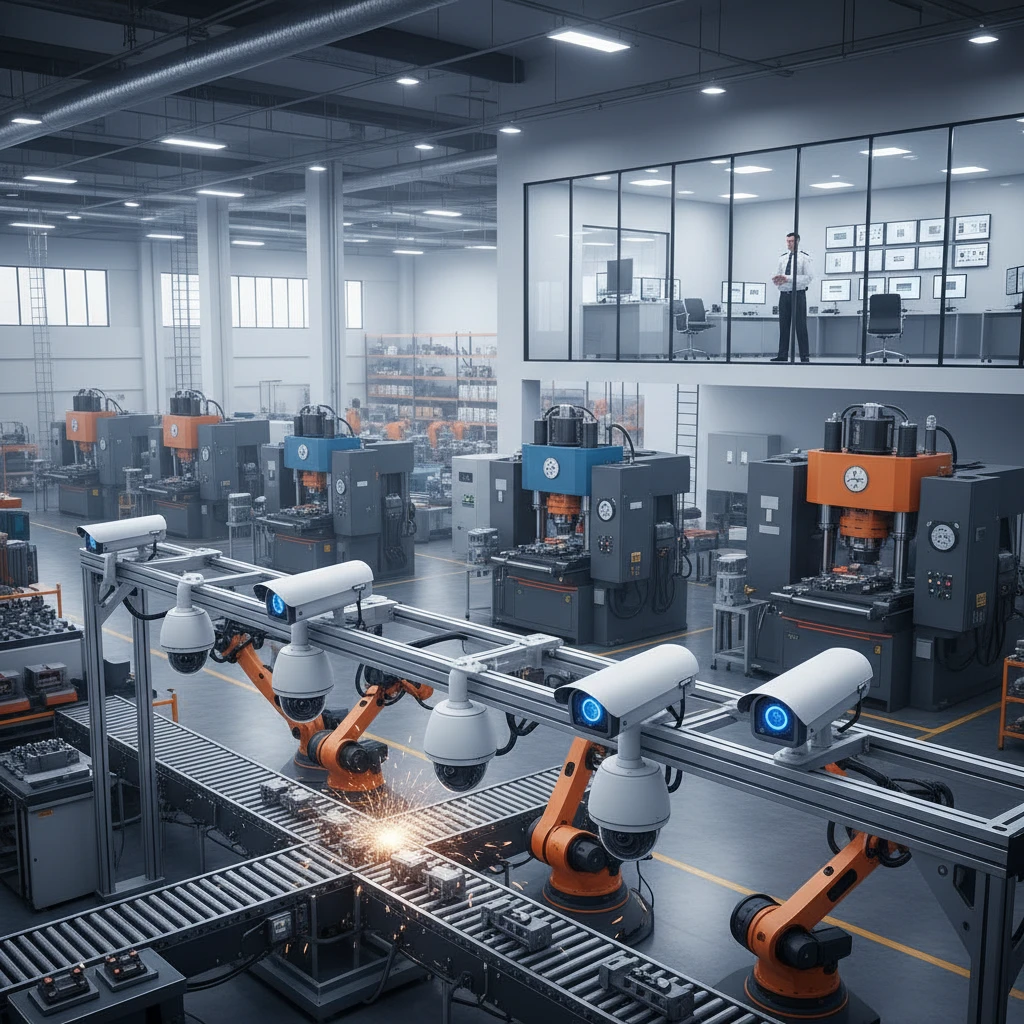
In today’s rapidly evolving industrial landscape, the need for robust and intelligent security measures has never been more critical for manufacturing facilities. As operations become more complex and interconnected, the risks associated with security breaches escalate, demanding a proactive and sophisticated approach. Traditional security methods often fall short, leaving businesses vulnerable to significant losses and operational disruptions. This is where advanced CCTV solutions emerge as an indispensable tool.
Implementing a comprehensive CCTV system goes beyond mere observation; it’s a strategic investment in protecting assets, ensuring personnel safety, optimizing processes, and maintaining operational continuity. Understanding the current threat landscape and leveraging the power of modern surveillance technology are the first steps toward building a resilient manufacturing environment. This section delves into the challenges and highlights the extensive benefits that strategic CCTV deployment offers.
The Evolving Threat Landscape for Manufacturing Facilities in 2026
Manufacturing environments in 2026 face a complex web of threats that extend beyond simple physical intrusion. The digital transformation across the sector has introduced new vulnerabilities alongside existing risks. Industrial espionage remains a significant concern, with competitors or malicious actors seeking to acquire trade secrets, proprietary designs, or sensitive production data. This theft can occur through sophisticated cyber means or even through physical breaches aimed at accessing restricted areas. Furthermore, supply chain disruptions, whether caused by external forces or internal sabotage, can cripple production lines and lead to substantial financial losses. Protecting intellectual property is paramount, as the loss of unique manufacturing processes or formulas can erode a company’s competitive edge. Understanding these multifaceted risks is the foundational step in developing effective security strategies.
The surge in automation and the Industrial Internet of Things (IIoT), while driving efficiency, concurrently expands the attack surface for potential security breaches. Connected machinery, smart sensors, and automated control systems, if not adequately secured, can become entry points for cyber threats. Malware or unauthorized access targeting these systems could lead to production downtime, data manipulation, or even physical damage. The interconnected nature means a single compromised device could cascade into a facility-wide security incident. Moreover, the increasing reliance on remote access for system management and monitoring introduces further vulnerabilities if not implemented with stringent security protocols. These technological advancements necessitate a corresponding evolution in security measures, moving beyond perimeter defense to comprehensive network and system integrity.
In this dynamic environment, relying on reactive security measures is no longer a viable strategy for modern manufacturing operations. Waiting for an incident to occur before taking action often results in irreversible damage, significant financial loss, and reputational harm. A reactive approach means responding to theft, vandalism, or breaches after they have happened, incurring costs for repairs, lost inventory, and potential legal liabilities. The speed at which modern threats can materialize and escalate means that traditional security responses are often too slow to be effective. Businesses need to shift towards a proactive and predictive security posture, leveraging technology to identify and mitigate threats before they impact operations. This foresight is crucial for maintaining uninterrupted production and safeguarding critical assets.
Beyond Basic Surveillance: Strategic CCTV Benefits for Manufacturing
Implementing a sophisticated CCTV system offers far more than just a recording of events; it acts as a powerful deterrent and a crucial operational tool. The visible presence of high-quality surveillance cameras significantly discourages unauthorized access, theft of materials, and vandalism of expensive machinery and finished goods. This deterrence factor alone can lead to a measurable reduction in inventory shrinkage and damage costs. Beyond physical security, CCTV systems enhance operational oversight. For example, monitoring loading docks and inventory areas can prevent internal theft by employees or external actors. A robust system can help identify and address weak points in physical security, such as poorly lit areas or unsecured entry points, thereby reducing operational losses. Such preventative measures are key to maintaining profitability and operational efficiency.
Beyond asset protection, CCTV plays a vital role in safeguarding personnel and fostering a culture of accountability. By monitoring high-risk areas such as production floors, heavy machinery zones, and material handling points, managers can ensure that safety protocols are being followed. This visual oversight helps in enhancing employee safety by identifying unsafe practices or potential hazards in real-time, allowing for immediate intervention. In the unfortunate event of an accident, CCTV footage provides objective evidence of what transpired, facilitating accurate incident investigation and preventing disputes. This accountability extends to all personnel, promoting adherence to company policies and safety standards, and ultimately contributing to a safer working environment. Mitigating liability for workplace incidents is a significant benefit.
In a manufacturing setting, CCTV systems are invaluable for improving quality control and process monitoring. Cameras strategically placed along production lines can provide detailed visual inspection of products, identifying defects or deviations from quality standards early in the manufacturing process. This allows for immediate corrective action, reducing scrap rates and ensuring that only high-quality products reach customers. Furthermore, by observing the workflow and machinery operations, managers can identify bottlenecks, inefficiencies, or potential equipment malfunctions before they lead to significant downtime or product spoilage. This granular visibility into production processes enables data-driven improvements and optimizes overall operational output. For instance, reviewing footage can reveal why a specific machine is underperforming or if a particular process step is causing delays.
When incidents do occur, whether they are security breaches, safety violations, or operational mishaps, CCTV systems become indispensable for swift and accurate incident investigation and evidence gathering. High-resolution footage provides a clear, irrefutable record of events, allowing security and management teams to quickly understand the sequence of occurrences, identify perpetrators, and assess the full impact. This evidence is crucial not only for internal investigations but also for potential legal proceedings, insurance claims, or law enforcement inquiries. Having readily accessible and reliable video evidence can significantly expedite the resolution of incidents, minimize downtime, and reduce associated costs. This capability is essential for maintaining business continuity and demonstrating due diligence in security matters.
Essential CCTV Camera Types for Manufacturing Environments
The selection of appropriate CCTV camera hardware is fundamental to building an effective surveillance system for manufacturing facilities. For general surveillance across larger areas, parking lots, entry points, and common spaces, robust dome cameras and bullet cameras are primary choices. Dome cameras, often discreet and vandal-resistant, offer a wide field of view and are suitable for indoor and outdoor applications. Bullet cameras, known for their directional capabilities and often featuring infrared (IR) illumination for low-light conditions, are excellent for monitoring specific entry points or perimeter sections. Their sturdy casings are designed to withstand harsh industrial environments, ensuring durability and reliable performance even in challenging conditions. These cameras provide the foundational layer of visual security.
For dynamic environments requiring flexible and extensive coverage, PTZ (Pan-Tilt-Zoom) cameras are indispensable. These cameras allow operators to remotely control their movement, enabling them to pan across wide areas, tilt to cover different vertical angles, and zoom in for detailed inspection of specific subjects or events. This capability is particularly useful for monitoring large factory floors, expansive yards, or areas with unpredictable activity. PTZ cameras can be programmed with pre-set tours to automatically patrol specific zones, ensuring comprehensive site coverage without constant manual intervention. Their advanced functionality makes them ideal for tracking moving vehicles, monitoring complex assembly lines, or quickly responding to alerts. The ability to dynamically cover your site offers significant operational advantages.
Manufacturing facilities often operate in environments with unique conditions that necessitate the use of specialty cameras. Thermal cameras are crucial for detecting heat signatures, making them effective for monitoring in complete darkness, identifying overheating machinery, or detecting unauthorized personnel based on body heat. Low-light cameras are designed to provide clear images in dimly lit environments, such as warehouses or outdoor areas after sunset, without relying solely on IR illumination. For areas with potentially explosive atmospheres, such as chemical plants or areas handling flammable materials, explosion-proof cameras are a mandatory safety requirement. These cameras are certified to prevent ignition in hazardous environments, ensuring safety and regulatory compliance.
To maximize the effectiveness of CCTV hardware, integrating AI analytics is becoming a critical advancement. Artificial intelligence can process video feeds in real-time to identify specific events or anomalies that might be missed by human operators or traditional motion detection. This includes features like people counting, loitering detection, object recognition (e.g., identifying unauthorized vehicles or personnel), facial recognition for access control, and even anomaly detection in machinery operation. AI analytics can trigger immediate alerts to security personnel, enabling a faster and more targeted response. By transforming passive surveillance into an active threat detection system, AI enhances proactive security and optimizes operational oversight, providing actionable insights beyond simple recording. Integrating security systems with AI capabilities is key.
Designing a Scalable CCTV System for Your Manufacturing Facility
Developing an effective CCTV system begins with a thorough assessment of your facility’s unique surveillance needs. This involves identifying critical assets, high-risk areas (e.g., loading docks, inventory storage, server rooms, entrances/exits), and potential blind spots. Consider the operational workflow, the types of activities that take place, and the specific security challenges your facility faces. Are you primarily concerned with theft, vandalism, safety compliance, or production monitoring? Understanding these priorities will inform the type, number, and placement of cameras required. A comprehensive needs assessment ensures that the system is tailored to your specific environment and objectives, avoiding overspending on unnecessary features or underspending in critical areas. This foundational step is crucial for long-term effectiveness and ROI, as detailed in guides on choosing the right system.
Once needs are identified, determining optimal camera placement and field of view is paramount. Each camera’s position should be strategically chosen to maximize its effectiveness, ensuring it covers the intended area without significant overlap or gaps. Consider factors such as lighting conditions, potential obstructions (e.g., machinery, shelving), and the required level of detail. For instance, cameras monitoring entry points need a clear view of faces, while cameras on production lines might require close-ups of specific operations. Understanding the field of view (FOV) of different lens types (wide-angle for general coverage, telephoto for distant subjects) is essential. Proper placement ensures that the system provides comprehensive situational awareness and supports effective incident response, contributing to overall site security.
A forward-thinking approach to CCTV system design must include planning for future expansion and technology upgrades. Manufacturing operations evolve, and security needs can change. A scalable system allows for the addition of more cameras, integration with other security or operational systems, or the adoption of new technologies without requiring a complete overhaul. This flexibility ensures that your investment remains relevant and effective over time. Consider systems that offer ample bandwidth, processing power, and storage capacity to accommodate growth. Furthermore, explore options for upgrading camera resolution, analytical capabilities, or video management software as advancements emerge. Designing for scalability ensures your system can adapt to changing threats and operational requirements, offering long-term value and resilience.
The reliability of any CCTV system hinges on its underlying infrastructure, making structured cabling and PoE (Power over Ethernet) critically important. Structured cabling provides a robust and organized network for transmitting data, ensuring consistent video quality and minimizing signal interference. PoE technology simplifies installation by allowing a single Ethernet cable to provide both power and data connectivity to cameras, eliminating the need for separate power outlets near each device. This not only streamlines the installation process but also reduces maintenance complexity and enhances system reliability by centralizing power management. A well-designed cabling infrastructure, including proper structured cabling and reliable PoE wiring, is fundamental for ensuring continuous operation and high-performance surveillance in demanding manufacturing environments.
Leveraging Video Management Systems (VMS) for Operational Insight
A robust Video Management System (VMS) is the brain of any modern CCTV network, transforming raw footage into actionable intelligence. Beyond simple recording, a sophisticated VMS offers centralized monitoring and control, allowing businesses to oversee multiple facilities from a single interface. This is invaluable for organizations with dispersed operations, providing a unified view of security postures across different sites, such as a manufacturing plant and its associated distribution centers. Decision criteria for selecting a VMS should focus on scalability, ease of use, and the breadth of integration capabilities it offers. Pitfalls to avoid include underestimating the processing power required for high-resolution feeds and failing to plan for future expansion.
Centralized monitoring and control for multiple locations.
For businesses operating across several sites, whether it’s a chain of retail stores or multiple manufacturing plants, a centralized VMS is a game-changer. It consolidates feeds from all cameras into a singular dashboard, enabling security teams to monitor activity remotely and respond efficiently to incidents, regardless of their physical location. This capability significantly enhances oversight and reduces the need for dedicated on-site security personnel at every single location. When evaluating VMS solutions, look for features that support multi-site management, allowing for distinct access levels and group policies for different premises. This ensures that while oversight is centralized, control remains granular and appropriate for each specific site’s needs.
Advanced search and playback capabilities.
The true power of a VMS lies in its ability to quickly and accurately retrieve crucial footage. Advanced search functions allow users to locate specific events based on time, date, camera, motion detection, or even object recognition (in more sophisticated systems). This dramatically reduces the time spent sifting through hours of video, which is critical for investigations, incident review, and compliance. When considering a VMS, prioritize systems that offer forensic search capabilities, enabling you to pinpoint exact moments of interest with precision. Understanding these features is key to leveraging your CCTV investment beyond mere surveillance.
Integration with access control and alarm systems.
A truly integrated security solution synchronizes video surveillance with other critical systems, such as access control and alarm systems. When an access door is forced or an alarm is triggered, the VMS can automatically bring up live video from the relevant cameras, providing immediate visual context for the event. This synergy allows for faster, more informed responses. When assessing VMS platforms, inquire about their API capabilities and compatibility with your existing or planned security infrastructure. Solutions that offer seamless integration with access control and alarm monitoring systems create a more proactive and efficient security posture.
Customizable alerts and event notifications.
Proactive security means being alerted to potential issues before they escalate. Modern VMS platforms offer customizable alerts based on predefined rules and triggers. This could include detecting loitering in restricted areas, unauthorized vehicle movement, or exceeding predefined speed limits in a loading bay. Businesses can tailor these alerts to their specific operational risks and security concerns. Decision criteria should include the flexibility and range of configurable event types. Implementing customizable alerts transforms surveillance from a reactive measure to a preventative tool, significantly reducing the likelihood of costly incidents.
Remote Access and Mobile Viewing: Security On-the-Go
The ability to access security feeds remotely has revolutionized business oversight, offering unprecedented flexibility and responsiveness. Modern VMS platforms are designed to provide secure, real-time viewing from any internet-enabled device, be it a smartphone, tablet, or laptop. This means operations managers, security personnel, or even C-suite executives can monitor their facilities from anywhere in the world. When implementing such solutions, it’s crucial to consider the underlying network infrastructure and the security protocols protecting the data stream. A well-configured remote access system ensures uninterrupted operational visibility, empowering swift decision-making even when away from the premises.
Real-time monitoring from any internet-enabled device.
The convenience of real-time monitoring via mobile devices or laptops cannot be overstated. Whether you’re a business owner attending an off-site meeting or a facility manager on a business trip, having live video feeds at your fingertips provides peace of mind and immediate situational awareness. This capability ensures that critical operations are continuously observed, regardless of your physical presence. When choosing a CCTV system, verify its mobile app functionality and cross-platform compatibility to ensure seamless remote access. The ease of use and responsiveness of the mobile interface are key factors in its practical effectiveness.
Empowering managers to respond to incidents swiftly.
Swift incident response is paramount in minimizing damage and loss. Remote access capabilities empower managers and security teams to see what’s happening in real-time, allowing them to assess situations and dispatch appropriate resources immediately, often before issues escalate. This could mean directing on-site personnel, contacting authorities, or initiating lockdown procedures. The ability to view live feeds also helps in making informed decisions remotely, such as identifying whether an alarm is a false positive or a genuine threat. This empowerment of managers through accessible video evidence is a core benefit of modern surveillance solutions.
Ensuring continuity of oversight across dispersed operations.
For businesses with multiple locations spread across a city or even different regions, maintaining consistent oversight can be challenging. Remote viewing capabilities bridge these geographical gaps, providing a unified and continuous view of all operational sites. This ensures that security protocols are being followed, operational efficiency is maintained, and any emergent issues at one location are immediately apparent to central management. This aspect is particularly crucial for businesses looking to implement standardized security measures across their entire portfolio. Achieving continuity of oversight is vital for maintaining brand reputation and operational integrity.
Data security and access controls for remote viewing.
While remote access offers immense benefits, it also introduces potential security vulnerabilities if not properly secured. Robust VMS solutions employ strong encryption protocols (like SSL/TLS) and multi-factor authentication to protect data transmitted over networks. Furthermore, granular access controls ensure that only authorized personnel can view specific camera feeds or access historical footage. It is imperative to choose a system that prioritizes data security and access controls. Understanding how the system encrypts data and manages user permissions is critical to prevent unauthorized viewing and protect sensitive operational information.
The Crucial Role of Professional Installation and Maintenance
While the allure of DIY solutions might seem cost-effective initially, industrial and commercial environments demand a level of expertise that only professional installation and ongoing maintenance can provide. Improperly installed cameras can lead to blind spots, poor image quality, and system failures, negating the intended security benefits. Professional installers understand the nuances of structured cabling, optimal camera placement for specific industrial settings, and the intricacies of network integration. They ensure that your surveillance system is robust, reliable, and capable of delivering high-quality footage when it matters most. This expertise is vital for maximizing system performance and ensuring long-term operational integrity.
Why DIY solutions fall short for industrial settings.
Industrial and commercial facilities present unique challenges that typical DIY setups are ill-equipped to handle. Factors such as large areas, varied lighting conditions, potential for extreme temperatures, and the need for robust, tamper-resistant hardware require specialized knowledge. DIY installations often result in suboptimal camera angles, inadequate network bandwidth leading to dropped feeds, and exposed wiring that can be easily damaged or tampered with. A professional installation team understands how to address these complexities, ensuring that coverage is comprehensive and the system is resilient against environmental and operational challenges. This avoids common pitfalls that plague amateur setups.
Ensuring optimal camera performance and system longevity.
Professional installation goes beyond simply mounting cameras. It involves careful consideration of camera types, lens selection, optimal focal distances, and proper power delivery (e.g., PoE wiring) to ensure each camera functions at its peak. Technicians also configure image settings for specific lighting and environmental conditions, ensuring clear and usable footage. Moreover, professional installation establishes a foundation for system longevity by correctly terminating connections, managing cables to prevent damage, and ensuring all components are securely fitted. This meticulous approach minimizes the risk of premature hardware failure and costly repairs down the line.
Minimizing downtime and disruptive troubleshooting.
Downtime in a manufacturing or commercial setting can be incredibly costly. A professional installation team works efficiently to deploy the system with minimal disruption to ongoing operations. Furthermore, when issues do arise, their expertise allows for swift and accurate troubleshooting. They can quickly diagnose problems, whether they stem from hardware, software, or network configuration, and implement effective solutions. This proactive approach to maintenance and rapid response to issues ensures that your surveillance system remains operational and effective, safeguarding your business assets and operations without unnecessary interruptions.
Ongoing support and system updates from AYS Security Services.
The security landscape is constantly evolving, and so are the technologies used to protect businesses. Professional service providers like AYS Security Services offer ongoing support and maintenance plans to keep your CCTV system up-to-date and performing optimally. This includes regular system checks, firmware updates, and performance tuning. Engaging with a service provider ensures you benefit from the latest security advancements and that your system remains compliant with any evolving regulations. This commitment to ongoing support and updates ensures your investment continues to provide maximum value and protection for your business operations.
Maximizing ROI: The Financial Advantages of Modern CCTV
Implementing a modern CCTV system is not merely an expense; it’s a strategic investment that delivers tangible financial returns. Beyond the obvious security benefits, advanced surveillance solutions contribute significantly to a business’s bottom line through loss prevention, insurance premium reductions, and operational efficiencies. Quantifying these advantages is crucial for justifying the investment and understanding the full scope of benefits. A well-designed and professionally maintained system acts as a powerful deterrent to theft, vandalism, and employee misconduct, thereby directly contributing to enhanced profitability. Exploring these financial incentives can transform a security upgrade into a revenue-generating initiative.
Quantifying the cost savings from loss prevention.
Shrinkage, whether from external theft, internal fraud, or operational errors, can significantly erode profit margins. Modern CCTV systems play a critical role in mitigating these losses. By providing clear, irrefutable video evidence, they deter potential thieves and help identify perpetrators of theft and fraud, leading to successful prosecutions and recovery of stolen goods. Furthermore, enhanced oversight can reduce operational errors that lead to product damage or waste. Businesses can quantify these savings by tracking a reduction in reported incidents of theft, inventory discrepancies, and losses due to operational inefficiencies. This directly translates into increased net profit.
Reducing insurance premiums through enhanced security.
Insurance providers recognize the significant risk reduction offered by robust security measures. A professionally installed and monitored CCTV system demonstrates a commitment to protecting assets and mitigating liability, which can lead to substantial discounts on commercial insurance premiums. Insurers view businesses with advanced surveillance as lower-risk clients, as the presence of cameras acts as a deterrent and provides crucial evidence in case of an incident, thus reducing the likelihood and cost of claims. The investment in a CCTV system can thus yield direct savings through reduced insurance costs, often offsetting a significant portion of the system’s initial outlay.
Improving operational efficiency and reducing waste.
The benefits of CCTV extend beyond crime prevention into the realm of operational improvement. By monitoring workflows, identifying bottlenecks, and observing employee productivity, managers can pinpoint areas for improvement. For example, in a manufacturing environment, cameras can reveal inefficiencies in assembly lines, improper material handling, or excessive downtime. In retail, they can help optimize staffing levels during peak hours or analyze customer traffic patterns. This continuous observation fosters a culture of accountability and allows for data-driven adjustments that reduce waste, streamline processes, and enhance overall productivity, leading to significant cost savings.
The long-term value of a well-designed surveillance infrastructure.
Investing in a scalable and well-designed CCTV infrastructure provides enduring value far beyond its initial purchase price. Unlike ad-hoc solutions, a professionally planned system anticipates future needs, allowing for easy expansion and integration with emerging technologies. This prevents costly replacements and ensures that your security posture remains effective as your business grows. A robust surveillance system enhances property value, improves employee morale by ensuring a safe working environment, and provides peace of mind. The long-term value of such an infrastructure lies in its ability to continuously protect assets, mitigate risks, and support operational excellence for years to come, making it a cornerstone of modern business security strategy.
Compliance and Legal Considerations for Manufacturing Surveillance
Navigating privacy regulations and employee monitoring guidelines.
Implementing CCTV in a manufacturing environment requires a careful balance between security needs and legal obligations, particularly concerning employee privacy. Regulations like PIPEDA (Personal Information Protection and Electronic Documents Act) in Canada govern how personal information, including video footage of employees, can be collected, used, and disclosed. Businesses must ensure that surveillance is proportionate to the stated security objectives and not overly intrusive. Clear signage informing employees and visitors about the presence of CCTV is a fundamental requirement. Furthermore, internal policies should detail the purpose of monitoring, who has access to the footage, and how long it will be retained. Consulting with legal counsel experienced in privacy law is crucial to developing a compliant surveillance policy that respects employee rights while effectively safeguarding your facility.
Storing and managing video evidence effectively.
The effective storage and management of video evidence are critical for both security operations and legal admissibility. Decisions regarding storage duration, access controls, and backup procedures must align with legal requirements and internal policies. For instance, footage may need to be retained for extended periods to comply with industry regulations or to act as evidence in potential legal disputes. Implementing a secure, centralized digital storage solution, such as Network Video Recorders (NVRs) or cloud-based storage, is recommended. Robust access control mechanisms ensure that only authorized personnel can view or retrieve footage, protecting sensitive information. Regular system audits and maintenance are vital to ensure data integrity and prevent loss. Understanding the nuances of digital evidence management can significantly bolster your overall security posture and reduce liability.
Ensuring your system meets industry-specific compliance standards.
Different manufacturing sectors may have unique compliance mandates that CCTV systems must adhere to. For example, facilities handling sensitive materials, pharmaceuticals, or food products might face stringent regulations regarding traceability, quality control, and contamination prevention. These regulations can dictate the required resolution of cameras, the frequency of recording, and the retention period for footage. Compliance frameworks like ISO standards or specific governmental oversight bodies often provide guidelines for surveillance technology. To ensure your system is compliant, thoroughly research the regulations pertinent to your specific industry. A qualified security integrator can help design and implement a CCTV solution that not only meets your security objectives but also satisfies all relevant compliance obligations, avoiding potential fines and operational disruptions.
The role of CCTV in fulfilling duty of care obligations.
Beyond preventing theft and vandalism, CCTV surveillance plays a significant role in a manufacturer’s overarching duty of care to employees and visitors. By monitoring workspaces, it can help identify and mitigate potential safety hazards, ensuring a safer working environment. For instance, footage can be reviewed to understand the cause of accidents, leading to improved safety protocols and training. In the event of an incident, such as a workplace injury or security breach, video evidence provides an objective record of events, aiding in investigations and potential insurance claims. Demonstrating a proactive approach to safety and security through comprehensive CCTV systems can significantly reduce liability exposure for the business. It shows a commitment to maintaining a secure and responsible operational environment.
Implementing a Future-Proof Security Strategy with AYS Security Services
Our approach to tailored CCTV solutions for Mississauga and surrounding areas.
At AYS Security Services, we understand that each manufacturing facility has unique security challenges and operational workflows. Our approach is centered on developing customized CCTV solutions designed to meet the specific needs of businesses in Mississauga and surrounding areas like Brampton, Milton, and Oakville. We go beyond a one-size-fits-all model, conducting in-depth site assessments to identify critical areas, potential vulnerabilities, and operational requirements. Whether you need to monitor production lines for quality control, secure large warehouse storage areas, or gain visibility into loading docks, our expert technicians design systems that offer optimal coverage and deterrence. We focus on integrating the latest surveillance technology, including high-definition cameras, intelligent analytics, and robust remote access capabilities, ensuring your security investment provides tangible business benefits.
The benefits of partnering with a local, experienced provider.
Choosing a local, experienced security provider like AYS Security Services offers distinct advantages for manufacturing businesses in the GTA. Our deep understanding of the local business landscape, combined with our extensive experience in designing and installing commercial CCTV systems, ensures that your security solution is both effective and efficient. As a local partner, we offer prompt on-site support, faster response times for maintenance and emergencies, and a commitment to building long-term relationships. We are familiar with the specific security concerns prevalent in our service areas and can offer insights that a national provider might overlook. This local expertise translates into reliable, high-performance security systems that are tailored to your operational environment and backed by dedicated, accessible customer service.
Steps to take for a security system assessment and consultation.
Initiating a comprehensive security upgrade begins with a thorough assessment and consultation. The first step is to contact AYS Security Services to schedule an appointment with one of our security specialists. During this consultation, we will discuss your current security measures, identify potential risks and vulnerabilities, and understand your specific business objectives – whether it’s reducing shrinkage, improving operational oversight, or enhancing employee safety. We will then conduct a detailed site survey of your manufacturing facility, evaluating factors such as building layout, existing infrastructure, and high-traffic areas. Following this assessment, we will provide a personalized security plan outlining recommended CCTV solutions, including camera types, placement strategies, and system integration possibilities. This consultative approach ensures that the proposed system effectively addresses your needs and delivers a strong return on investment.