
In the competitive automotive industry, dealerships face a unique set of security challenges. From managing high-value inventory to ensuring customer safety and operational efficiency, a comprehensive CCTV system is essential. This guide explores how to design and implement an expert commercial CCTV system tailored for dealerships, addressing specific risks and optimizing for maximum ROI.
Implementing a well-designed CCTV solution is a strategic investment that can significantly improve security, reduce losses, and streamline operations for dealerships in Mississauga, Brampton, and throughout the GTA. Let’s delve into the key considerations for creating a robust and effective system.
Securing Your Dealership: Why CCTV is No Longer Optional in 2026
In 2026, commercial CCTV systems are no longer a luxury but a necessity for automotive dealerships. Increased security threats, rising insurance premiums, and the need for enhanced operational oversight all contribute to this imperative. Dealerships are particularly vulnerable to theft, vandalism, and liability claims, making robust surveillance a critical component of risk management. The ability to remotely monitor operations and access recorded footage provides invaluable insights for improving efficiency and resolving disputes. Ignoring these benefits can leave dealerships exposed to significant financial and reputational risks.
The Rising Cost of Untracked Inventory and Theft
Untracked inventory and theft can significantly impact a dealership’s bottom line. Vehicles, parts, and accessories are all potential targets. A well-placed CCTV system acts as a powerful deterrent, discouraging criminal activity. Furthermore, in the event of a theft, recorded footage can provide crucial evidence for law enforcement, increasing the chances of recovery and prosecution. Consider the cost of a single stolen vehicle or a recurring pattern of parts theft – a CCTV system can quickly pay for itself by preventing these losses. For example, a dealership experiencing an average loss of $10,000 per year due to theft could see a significant ROI by investing in a comprehensive security camera system. Inventory shrinkage is a serious problem, and the proactive approach of Commercial CCTV Mississauga can help prevent it.
Liability Protection in the Event of Customer Disputes
Customer disputes are an unfortunate reality for dealerships. Whether it’s a disagreement over service work, a misunderstanding during a sales transaction, or a claim of property damage, CCTV footage can provide objective evidence to resolve conflicts fairly and efficiently. Having video recordings of customer interactions can protect the dealership from fraudulent claims and potentially costly litigation. The cost of defending against a single frivolous lawsuit can easily exceed the cost of a comprehensive CCTV system. For example, consider a scenario where a customer claims their vehicle was damaged while on the dealership’s property. Video evidence can either substantiate or refute the claim, saving the dealership time, money, and reputation. You can review more information about liability mitigation by installing Business Security Cameras.
Improved Operational Efficiency Through Remote Monitoring
Beyond security, CCTV systems can enhance operational efficiency. Remote monitoring allows managers to observe employee performance, identify bottlenecks in processes, and ensure compliance with company policies. This can lead to improved productivity, reduced waste, and better customer service. The ability to access live video feeds from anywhere with an internet connection provides real-time visibility into all aspects of the dealership’s operations. For instance, a manager can use remote viewing to ensure that service bays are operating efficiently or to monitor customer flow during peak hours. This proactive approach can help dealerships optimize their resources and improve overall performance. Learn more about the benefits of Business Security Cameras with remote viewing.
Understanding Dealership-Specific CCTV Challenges & Requirements
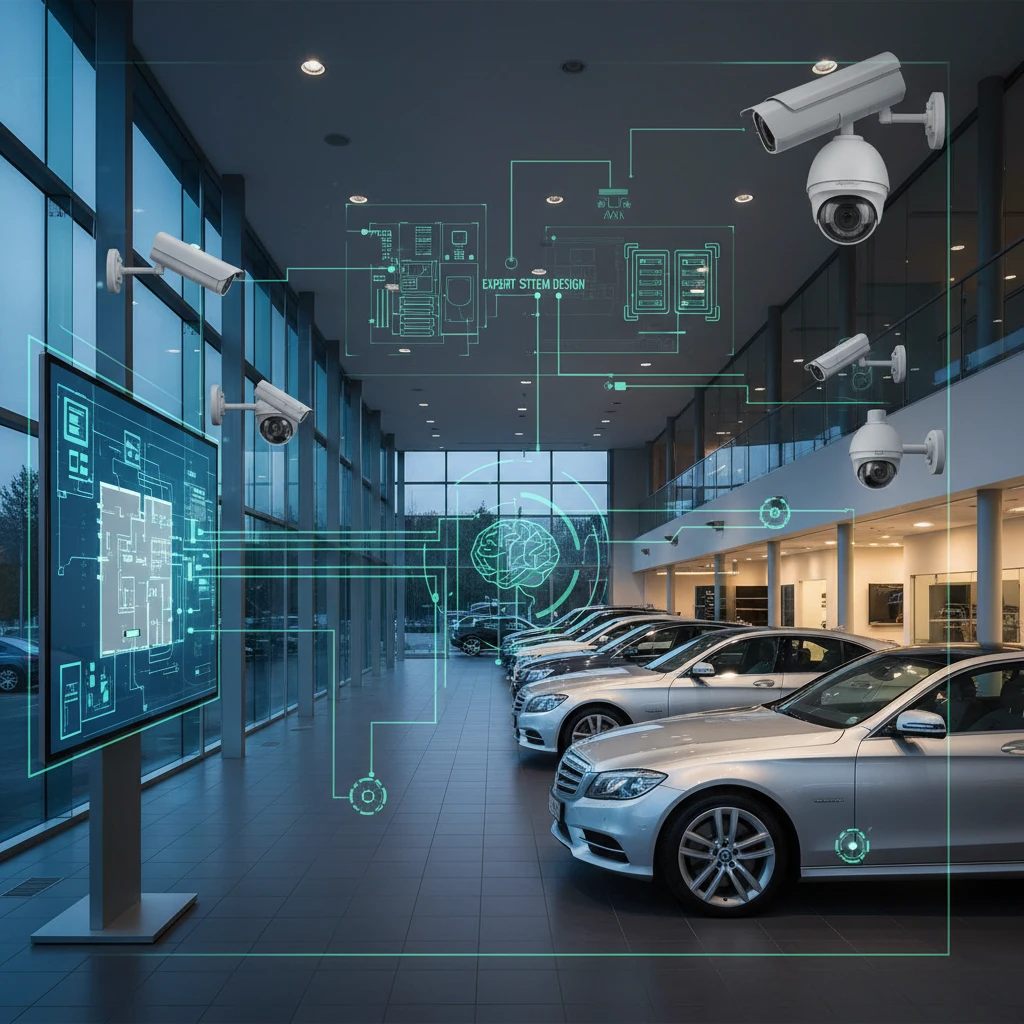
Dealerships present unique challenges for CCTV system design. The large outdoor areas, high-value assets, and frequent customer interactions require careful consideration when selecting and deploying security cameras. Understanding these specific needs is crucial for creating an effective and reliable surveillance solution. Factors such as weather resistance, camera placement, and storage capacity must be carefully evaluated to ensure optimal performance and coverage.
Large Outdoor Areas and Perimeter Security
Covering expansive car lots and perimeter fencing requires cameras with long-range capabilities and wide fields of view. Pan-Tilt-Zoom (PTZ) cameras are particularly useful for monitoring large areas, allowing operators to remotely adjust the camera’s position and zoom in on specific areas of interest. Effective perimeter security also involves strategically placing cameras along fence lines and at entry/exit points to detect and deter unauthorized access. Motion detection capabilities can trigger alerts, notifying security personnel of potential threats in real-time. It’s crucial to select cameras that can withstand the elements, including rain, snow, and extreme temperatures. Consider using infrared (IR) illuminators to enhance visibility in low-light conditions. Aim to achieve complete coverage of the vehicle display area, minimizing blind spots where theft or vandalism could occur undetected.
High-Value Asset Protection (Vehicles, Parts, Tools)
Protecting vehicles, parts, and tools from theft requires high-resolution cameras capable of capturing clear images, even at a distance. Strategically position cameras to monitor inventory storage areas, service bays, and parts departments. Consider using cameras with license plate recognition (LPR) technology to automatically identify vehicles entering and exiting the premises. This can be particularly useful for tracking inventory and identifying potential theft. Install cameras in service bays to monitor technician activity and prevent unauthorized removal of tools or parts. Regularly review footage to identify potential security vulnerabilities and address them proactively. Integrating the CCTV system with an access control system can further enhance security by restricting access to sensitive areas.
Monitoring Customer Interactions and Sales Processes
Monitoring customer interactions can provide valuable insights into sales processes and customer service. Place cameras strategically in showrooms, waiting areas, and sales offices to record interactions between staff and customers. This footage can be used for training purposes, identifying areas for improvement, and resolving customer disputes. Ensure that customers are aware that they are being recorded, and comply with all applicable privacy laws. Video recordings can help to ensure that sales staff are following ethical practices and providing accurate information to customers. For example, footage can be reviewed to verify that customers are being offered fair prices and that all terms and conditions are clearly explained. By monitoring sales processes, dealerships can identify opportunities to improve customer satisfaction and increase sales conversions.
Weather Resistance and Extreme Temperature Considerations
Dealerships in the GTA experience a wide range of weather conditions, from scorching summers to freezing winters. Selecting cameras that are specifically designed to withstand these extremes is essential for ensuring reliable performance. Look for cameras with an IP66 or IP67 rating, indicating that they are protected from dust and water ingress. Consider using cameras with built-in heaters or coolers to maintain optimal operating temperatures. Ensure that all cabling and connectors are also weather-resistant. Regular maintenance is crucial for preventing damage from the elements. Schedule routine inspections to check for signs of wear and tear, and promptly repair any issues. A robust and weather-resistant CCTV system will provide reliable security year-round, regardless of the weather conditions.
Key Components of a Commercial CCTV System for Dealerships
A commercial CCTV system is more than just cameras. It’s a comprehensive network of interconnected components working together to provide reliable surveillance and security. Key elements include the cameras themselves, a network video recorder (NVR) for storing footage, structured cabling for connecting the components, and remote viewing software for accessing the system from anywhere.
Camera Types: PTZ, Dome, Bullet, and License Plate Recognition (LPR)
Different camera types serve different purposes. PTZ (Pan-Tilt-Zoom) cameras offer flexibility in monitoring large areas, allowing remote control of the camera’s direction and zoom. Dome cameras are discreet and vandal-resistant, making them suitable for indoor and outdoor use. Bullet cameras are rugged and weatherproof, ideal for perimeter security. LPR (License Plate Recognition) cameras automatically capture and identify license plates, enhancing security and tracking vehicles entering and exiting the dealership. When selecting cameras, consider the specific needs of each location. For example, a PTZ camera might be ideal for monitoring the main car lot, while dome cameras could be used in the showroom and waiting areas. LPR cameras should be strategically placed at entry and exit points to capture license plate information. Selecting the right camera types is crucial for maximizing the effectiveness of the CCTV system.
Network Video Recorder (NVR) Capacity and Redundancy
The NVR is the central storage and management hub of the CCTV system. It records video footage from all cameras and provides a user interface for viewing and managing recordings. Choosing an NVR with sufficient storage capacity is essential to ensure that footage is retained for an adequate period. Consider the number of cameras, the resolution of the recordings, and the desired retention period when determining storage capacity. Redundancy is also an important consideration. Look for NVRs with RAID (Redundant Array of Independent Disks) technology, which provides protection against data loss in the event of a hard drive failure. Regular backups are also recommended to ensure that critical footage is protected. A robust and reliable NVR is the backbone of a commercial CCTV system.
Structured Cabling and Power over Ethernet (PoE) Infrastructure
Structured cabling provides the foundation for a reliable and scalable CCTV system. It involves installing a standardized cabling infrastructure that supports the transmission of data and power to all cameras and other network devices. Power over Ethernet (PoE) technology allows cameras to receive both power and data over a single cable, simplifying installation and reducing costs. When designing the cabling infrastructure, consider the distance between cameras and the NVR, the bandwidth requirements of the cameras, and the potential for future expansion. Use high-quality cables and connectors to ensure reliable performance. Proper cable management is also important to prevent damage and ensure easy maintenance. A well-designed structured cabling infrastructure is essential for a robust and scalable CCTV system. For professional Commercial CCTV Brampton installation, it’s crucial to have the right cabling.
Remote Viewing Software and Mobile Accessibility
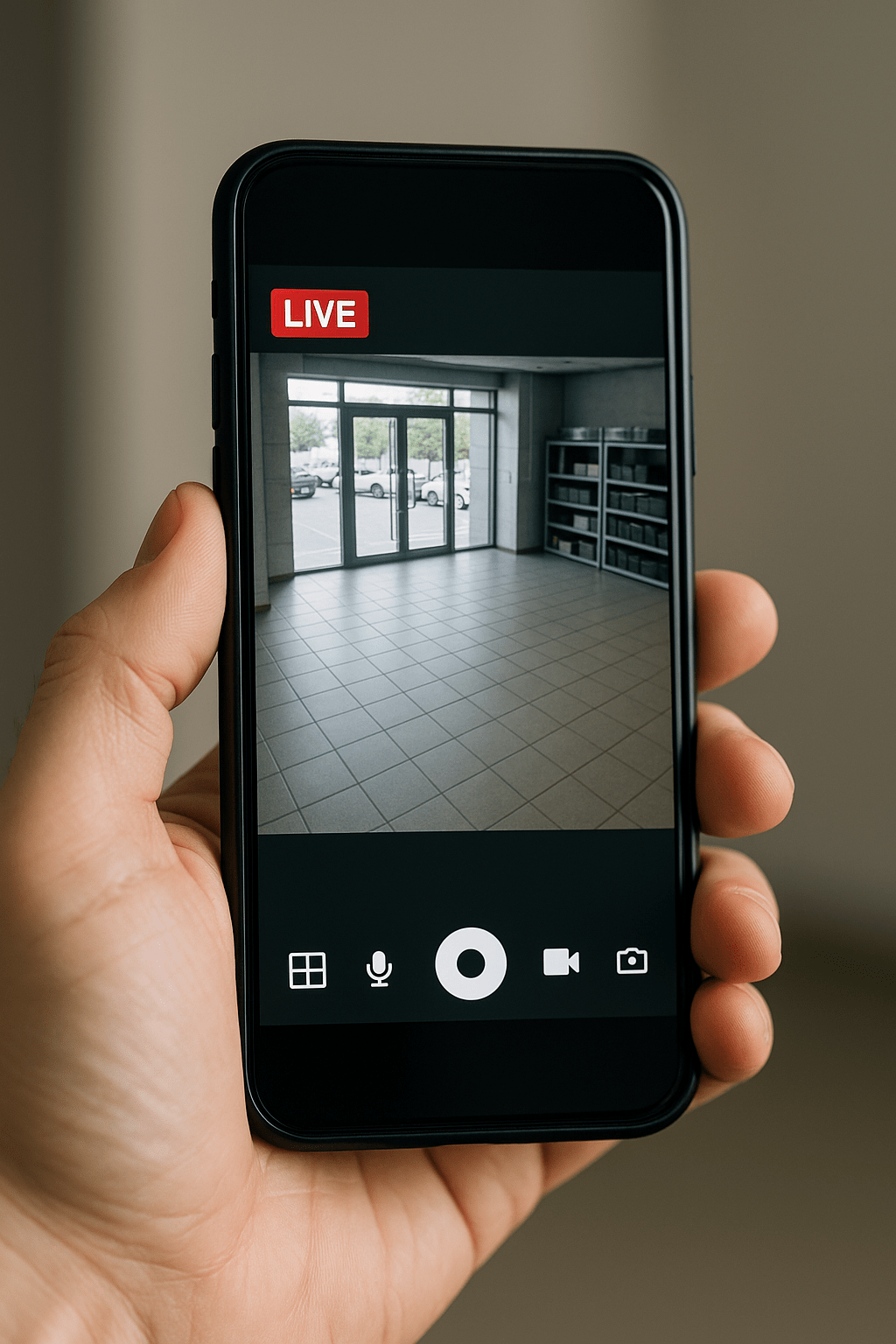
Remote viewing software allows authorized personnel to access live and recorded video footage from anywhere with an internet connection. Mobile accessibility is particularly important, allowing managers and security staff to monitor the dealership from their smartphones or tablets. The software should be user-friendly and provide a range of features, such as pan-tilt-zoom control, motion detection alerts, and the ability to search and playback recordings. Ensure that the software is compatible with the NVR and cameras, and that it is regularly updated to address security vulnerabilities and improve performance. Remote viewing software and mobile accessibility provide invaluable flexibility and control over the CCTV system.
Strategic Camera Placement: Maximizing Coverage and Minimizing Blind Spots
The effectiveness of a CCTV system hinges on strategic camera placement. Careful consideration must be given to identifying key areas that require surveillance and positioning cameras to maximize coverage while minimizing blind spots. A thorough site survey is essential to identify potential security vulnerabilities and determine the optimal placement for each camera.
Entrance and Exit Points: Vehicle and Pedestrian Traffic
Entrance and exit points are critical areas for surveillance. Place cameras to capture clear images of all vehicles and pedestrians entering and exiting the dealership. Consider using LPR cameras to automatically identify vehicles and track their movements. Position cameras to capture facial images of pedestrians entering the premises. Ensure that cameras are positioned to avoid glare from headlights or sunlight. Monitor all delivery areas to prevent unauthorized access and theft. Implement alerts to notify security when vehicles or people enter restricted areas. Proper monitoring of entrance and exit points is essential for controlling access and preventing security breaches.
High-Value Areas: Service Bays, Parts Storage, Cash Registers
Service bays, parts storage areas, and cash registers are high-risk areas that require close surveillance. Install cameras in service bays to monitor technician activity and prevent unauthorized removal of tools or parts. Place cameras in parts storage areas to deter theft and track inventory. Position cameras at cash registers to monitor transactions and prevent employee theft or fraud. Consider using cameras with audio recording capabilities (where permitted by law) to capture conversations between employees and customers. Regularly review footage from these areas to identify potential security vulnerabilities and address them proactively. Protecting these high-value areas is crucial for minimizing losses and ensuring the financial health of the dealership.
Perimeter Fencing and Lot Overviews
Securing the perimeter of the dealership is essential for preventing unauthorized access and deterring criminal activity. Install cameras along the perimeter fence line to monitor for breaches and detect intruders. Consider using thermal cameras to detect movement in low-light conditions. Place cameras to provide an overview of the entire car lot, allowing security personnel to monitor vehicle inventory and identify potential theft or vandalism. Use motion detection technology to trigger alerts when suspicious activity is detected. Regularly inspect the perimeter fence line and cameras to ensure that they are in good working order. A strong perimeter security system is the first line of defense against criminal activity.
Office Areas and Customer Waiting Rooms
While often overlooked, office areas and customer waiting rooms also require surveillance. Install cameras in office areas to deter employee theft and monitor access to sensitive information. Place cameras in customer waiting rooms to ensure customer safety and provide a record of interactions between staff and customers. Ensure that customers are aware that they are being recorded, and comply with all applicable privacy laws. Video recordings can help to resolve disputes and protect the dealership from liability claims. Consider using cameras with audio recording capabilities (where permitted by law) to capture conversations between employees and customers. Proper surveillance of office areas and customer waiting rooms can help to create a safe and secure environment for employees and customers alike. If you are ready to upgrade your business security, consider CCTV System Upgrades.
Securing Your Dealership: Why CCTV is No Longer Optional in 2026
In today’s business climate, robust security measures are essential for protecting assets, ensuring safety, and maintaining profitability. For car dealerships in 2026, CCTV systems are no longer a luxury, but a necessity. The increasing sophistication of criminal activity, coupled with the rising costs of theft, vandalism, and liability claims, make CCTV a critical investment for any dealership looking to thrive in a competitive market.
The Rising Cost of Untracked Inventory and Theft
Dealerships are prime targets for theft, with vehicles, parts, and tools being highly sought-after commodities. The cost of stolen inventory can quickly add up, impacting profitability and potentially leading to increased insurance premiums. A well-designed CCTV system can deter theft, provide valuable evidence in the event of a crime, and help to recover stolen assets.
Liability Protection in the Event of Customer Disputes
Customer disputes are an unfortunate reality in the automotive industry. Whether it’s a disagreement over repair work, a claim of damage to a vehicle, or a misunderstanding during the sales process, CCTV footage can provide an objective record of events, helping to resolve disputes fairly and efficiently. This can save time, money, and reputational damage.
Improved Operational Efficiency Through Remote Monitoring
CCTV systems can also be used to improve operational efficiency. Remote monitoring capabilities allow managers to keep an eye on dealership activities from anywhere, ensuring that employees are following procedures, customers are being served promptly, and potential problems are identified and addressed quickly. This can lead to improved productivity, better customer service, and increased profitability.
Understanding Dealership-Specific CCTV Challenges & Requirements
Car dealerships present unique security challenges that require a tailored CCTV solution. These challenges include large outdoor areas, high-value assets, customer interactions, and extreme weather conditions. A successful CCTV implementation must address these specific requirements to provide comprehensive security coverage.
Large Outdoor Areas and Perimeter Security
Dealerships typically have large outdoor areas, including car lots, service areas, and parking facilities. Securing these areas requires cameras with wide-angle lenses, long-range capabilities, and the ability to perform well in low-light conditions. Perimeter security is also crucial to prevent unauthorized access and deter criminal activity.
High-Value Asset Protection (Vehicles, Parts, Tools)
Vehicles, parts, and tools represent a significant investment for dealerships. Protecting these assets from theft and vandalism requires strategic camera placement in areas such as service bays, parts storage rooms, and car lots. High-resolution cameras and license plate recognition (LPR) technology can help to identify and track vehicles and individuals.
Monitoring Customer Interactions and Sales Processes
Monitoring customer interactions is essential for ensuring customer satisfaction and protecting the dealership from liability claims. Cameras placed in sales offices, waiting rooms, and service areas can provide valuable insights into customer experiences and help to resolve disputes fairly and efficiently.
Weather Resistance and Extreme Temperature Considerations
CCTV cameras installed outdoors must be able to withstand extreme weather conditions, including rain, snow, heat, and cold. Weatherproof cameras with rugged enclosures and built-in heaters or coolers are essential for ensuring reliable performance year-round.
Key Components of a Commercial CCTV System for Dealerships
A commercial CCTV system for dealerships typically consists of several key components, including cameras, network video recorders (NVRs), structured cabling, and remote viewing software. Each component plays a crucial role in providing comprehensive security coverage.
Camera Types: PTZ, Dome, Bullet, and License Plate Recognition (LPR)
Different camera types are suited for different applications. PTZ (pan-tilt-zoom) cameras offer flexibility and control, allowing operators to remotely adjust the camera’s field of view. Dome cameras are discreet and vandal-resistant, making them ideal for indoor use. Bullet cameras are rugged and weatherproof, suitable for outdoor applications. LPR cameras can automatically capture and record license plate numbers, providing valuable information for law enforcement.
Network Video Recorder (NVR) Capacity and Redundancy
The NVR is the central recording and storage device for the CCTV system. It’s crucial to choose an NVR with sufficient storage capacity to accommodate the number of cameras and the desired retention period. Redundant NVRs or cloud-based storage solutions can provide additional protection against data loss.
Structured Cabling and Power over Ethernet (PoE) Infrastructure
Structured cabling provides the physical infrastructure for transmitting video and data signals from the cameras to the NVR. Power over Ethernet (PoE) technology allows cameras to be powered over the same cable used for data transmission, simplifying installation and reducing costs.
Remote Viewing Software and Mobile Accessibility
Remote viewing software allows authorized users to access live and recorded video footage from anywhere with an internet connection. Mobile accessibility enables users to monitor the dealership from their smartphones or tablets, providing real-time situational awareness.
Strategic Camera Placement: Maximizing Coverage and Minimizing Blind Spots
Strategic camera placement is essential for maximizing coverage and minimizing blind spots. A well-planned camera layout can provide comprehensive security coverage while minimizing the number of cameras required. Consider the following factors when planning camera placement:
Entrance and Exit Points: Vehicle and Pedestrian Traffic
Install cameras at all entrance and exit points to monitor vehicle and pedestrian traffic. These cameras can help to identify unauthorized access and track vehicles entering and leaving the property.
High-Value Areas: Service Bays, Parts Storage, Cash Registers
Install cameras in service bays to monitor technician activity and prevent unauthorized removal of tools or parts. Place cameras in parts storage areas to deter theft and track inventory. Position cameras at cash registers to monitor transactions and prevent employee theft or fraud.
Perimeter Fencing and Lot Overviews
Install cameras along the perimeter fence line to monitor for breaches and detect intruders. Consider using thermal cameras to detect movement in low-light conditions. Place cameras to provide an overview of the entire car lot, allowing security personnel to monitor vehicle inventory and identify potential theft or vandalism.
Office Areas and Customer Waiting Rooms
Install cameras in office areas to deter employee theft and monitor access to sensitive information. Place cameras in customer waiting rooms to ensure customer safety and provide a record of interactions between staff and customers.
Securing Your Dealership: Why CCTV is No Longer Optional in 2026
In the increasingly competitive automotive market, security is no longer just a preventative measure, but a critical component of business operations. The risks of theft, vandalism, and liability claims are constantly evolving, making a robust CCTV system an indispensable investment for dealerships in 2026.
The Rising Cost of Untracked Inventory and Theft
The automotive industry is particularly vulnerable to theft, with vehicles, parts, and tools being prime targets. Untracked inventory and theft can lead to significant financial losses, decreased profitability, and increased insurance premiums. A well-designed CCTV system acts as a powerful deterrent, reducing the risk of theft and providing valuable evidence in the event of a crime. Implementing security measures is crucial for loss prevention.
Liability Protection in the Event of Customer Disputes
Customer disputes and liability claims can be costly and time-consuming. CCTV footage can provide irrefutable evidence to support or refute claims, protecting the dealership from fraudulent lawsuits and preserving its reputation. A documented record of interactions and incidents can be invaluable in resolving disputes fairly and efficiently. Dealerships can protect themselves from potential liabilities by investing in high-quality surveillance systems.
Improved Operational Efficiency Through Remote Monitoring
Beyond security, CCTV systems can also enhance operational efficiency. Remote monitoring allows managers to oversee dealership operations from anywhere, ensuring compliance with company policies and identifying areas for improvement. Real-time insights into customer traffic, employee performance, and inventory management can help dealerships optimize their processes and improve profitability. Utilizing remote monitoring tools can optimize business operations.
Understanding Dealership-Specific CCTV Challenges & Requirements
Dealerships present unique security challenges that require a tailored CCTV solution. The vast outdoor areas, high-value assets, and customer-facing interactions necessitate a comprehensive approach to surveillance. Understanding these specific requirements is crucial for designing an effective security system.
Large Outdoor Areas and Perimeter Security
Dealerships typically have large outdoor areas with multiple access points, making perimeter security a primary concern. A robust CCTV system must provide comprehensive coverage of the entire perimeter, including fencing, gates, and parking lots. Long-range cameras, thermal imaging, and motion detection can help to identify potential intruders and prevent unauthorized access. A good perimeter security strategy is crucial for protecting a car dealership.
High-Value Asset Protection (Vehicles, Parts, Tools)
Vehicles, parts, and tools represent significant financial investments for dealerships. These assets are vulnerable to theft, vandalism, and damage. A well-designed CCTV system can deter potential criminals and provide valuable evidence in the event of a loss. High-resolution cameras, license plate recognition (LPR) technology, and strategically placed cameras can help to protect these high-value assets. Protecting these assets requires a dedicated CCTV system design.
Monitoring Customer Interactions and Sales Processes
Monitoring customer interactions and sales processes can help to improve customer service, prevent disputes, and ensure compliance with sales regulations. CCTV cameras can provide a record of all interactions between staff and customers, protecting the dealership from false claims and providing valuable insights into sales performance. Audio recording capabilities (where legally permissible) can further enhance the accuracy of these records. Dealerships can improve customer relations with effective CCTV surveillance.
Weather Resistance and Extreme Temperature Considerations
CCTV cameras installed in outdoor environments must be able to withstand extreme weather conditions, including rain, snow, heat, and cold. Weather-resistant cameras with IP66 or IP67 ratings are essential for ensuring reliable performance in all climates. Additionally, cameras should be able to operate within a wide temperature range to avoid malfunctions or damage. Ensuring your cameras are weather-resistant is vital for long-term reliability.
Key Components of a Commercial CCTV System for Dealerships
A comprehensive CCTV system for dealerships consists of several key components, including cameras, network video recorders (NVRs), cabling, and software. Each component plays a critical role in the overall performance and effectiveness of the system.
Camera Types: PTZ, Dome, Bullet, and License Plate Recognition (LPR)
Different camera types offer unique capabilities that can be leveraged to meet specific security needs. PTZ (Pan-Tilt-Zoom) cameras provide flexible coverage with the ability to remotely control the camera’s viewing angle and zoom level. Dome cameras are discreet and vandal-resistant, making them ideal for indoor and outdoor use. Bullet cameras are rugged and weatherproof, suitable for perimeter security. LPR cameras are specifically designed to capture license plate numbers, enabling vehicle tracking and identification. Choosing the right camera type is critical to effective surveillance.
Network Video Recorder (NVR) Capacity and Redundancy
The Network Video Recorder (NVR) is the central hub of the CCTV system, responsible for recording, storing, and managing video footage. The NVR should have sufficient storage capacity to accommodate the required retention period. Redundant NVRs or cloud-based storage solutions can provide additional protection against data loss.
Structured Cabling and Power over Ethernet (PoE) Infrastructure
Structured cabling provides the physical infrastructure for transmitting video and data signals from the cameras to the NVR. Power over Ethernet (PoE) technology allows cameras to be powered over the same cable used for data transmission, simplifying installation and reducing costs.
Remote Viewing Software and Mobile Accessibility
Remote viewing software allows authorized users to access live and recorded video footage from anywhere with an internet connection. Mobile accessibility enables users to monitor the dealership from their smartphones or tablets, providing real-time situational awareness.
Strategic Camera Placement: Maximizing Coverage and Minimizing Blind Spots
Strategic camera placement is essential for maximizing coverage and minimizing blind spots. A well-planned camera layout can provide comprehensive security coverage while minimizing the number of cameras required. Consider the following factors when planning camera placement:
Entrance and Exit Points: Vehicle and Pedestrian Traffic
Install cameras at all entrance and exit points to monitor vehicle and pedestrian traffic. These cameras can help to identify unauthorized access and track vehicles entering and leaving the property.
High-Value Areas: Service Bays, Parts Storage, Cash Registers
Install cameras in service bays to monitor technician activity and prevent unauthorized removal of tools or parts. Place cameras in parts storage areas to deter theft and track inventory. Position cameras at cash registers to monitor transactions and prevent employee theft or fraud.
Perimeter Fencing and Lot Overviews
Install cameras along the perimeter fence line to monitor for breaches and detect intruders. Consider using thermal cameras to detect movement in low-light conditions. Place cameras to provide an overview of the entire car lot, allowing security personnel to monitor vehicle inventory and identify potential theft or vandalism.
Office Areas and Customer Waiting Rooms
Install cameras in office areas to deter employee theft and monitor access to sensitive information. Place cameras in customer waiting rooms to ensure customer safety and provide a record of interactions between staff and customers.
Securing Your Dealership: Why CCTV is No Longer Optional in 2026
In 2026, a comprehensive CCTV system is no longer a luxury but a necessity for car dealerships. The escalating costs associated with theft, vandalism, and liability claims make CCTV an indispensable tool for protecting assets, ensuring safety, and improving operational efficiency.
The Rising Cost of Untracked Inventory and Theft
Vehicle theft, both on and off the lot, represents a significant financial burden for dealerships. A robust CCTV system acts as a strong deterrent, capturing crucial evidence and aiding in recovery efforts, thereby mitigating financial losses due to theft.
Liability Protection in the Event of Customer Disputes
Disputes with customers can be costly and damaging to a dealership’s reputation. CCTV footage provides an objective record of interactions, helping to resolve conflicts fairly and protect the dealership from fraudulent claims, ensuring liability protection.
Improved Operational Efficiency Through Remote Monitoring
Beyond security, CCTV systems enable remote monitoring of dealership operations. Managers can remotely observe staff performance, identify bottlenecks in processes, and ensure compliance with safety protocols, leading to improved operational efficiency and streamlined workflows.
Understanding Dealership-Specific CCTV Challenges & Requirements
Car dealerships present unique challenges for CCTV system design and implementation. The vast outdoor areas, high-value assets, and customer-facing environments require careful consideration to ensure optimal security and operational benefits.
Large Outdoor Areas and Perimeter Security
Covering expansive car lots requires cameras with wide fields of view, long-range capabilities, and excellent low-light performance. Perimeter security is crucial to prevent unauthorized access and requires cameras capable of detecting intruders in all weather conditions.
High-Value Asset Protection (Vehicles, Parts, Tools)
Dealerships must protect high-value assets such as vehicles, parts, and specialized tools. CCTV systems should focus on these areas, using high-resolution cameras and advanced analytics to detect and prevent theft or damage.
Monitoring Customer Interactions and Sales Processes
Monitoring customer interactions in sales areas and service bays is important for ensuring customer satisfaction and identifying opportunities for improvement. Cameras can help track customer flow, observe sales techniques, and ensure fair treatment of customers.
Weather Resistance and Extreme Temperature Considerations
Outdoor cameras in car dealerships are exposed to harsh weather conditions, including extreme temperatures, rain, snow, and direct sunlight. Cameras must be weather-resistant and capable of operating reliably in these challenging environments. Look for cameras rated to withstand extreme temperatures and ingress of moisture.
Key Components of a Commercial CCTV System for Dealerships
A comprehensive CCTV system for a car dealership comprises several key components that work together to provide optimal security and surveillance coverage. These include camera types, network video recorders (NVRs), cabling infrastructure, and remote viewing software.
Camera Types: PTZ, Dome, Bullet, and License Plate Recognition (LPR)
Different camera types serve specific purposes in a dealership environment. PTZ (Pan-Tilt-Zoom) cameras offer flexible coverage and remote control, while dome cameras provide discreet surveillance. Bullet cameras are suitable for long-range monitoring, and License Plate Recognition (LPR) cameras capture license plate numbers for vehicle tracking and identification. Choosing the right mix of camera types is crucial for effective surveillance.
Network Video Recorder (NVR) Capacity and Redundancy
The Network Video Recorder (NVR) is the central storage and management unit for the CCTV system. It’s essential to choose an NVR with sufficient storage capacity to accommodate video footage from all cameras for the required retention period. Redundancy features, such as RAID configurations, ensure data protection in case of hardware failure, preventing data loss.
Structured Cabling and Power over Ethernet (PoE) Infrastructure
Structured cabling provides the backbone for transmitting video and data signals throughout the CCTV system. Power over Ethernet (PoE) simplifies installation by providing both power and data connectivity over a single cable, reducing cabling costs and installation time. A well-designed cabling infrastructure is crucial for reliable system performance.
Remote Viewing Software and Mobile Accessibility
Remote viewing software enables authorized personnel to access live and recorded video footage from anywhere with an internet connection. Mobile accessibility allows managers to monitor the dealership from their smartphones or tablets, providing real-time situational awareness and enabling quick response to security incidents.
Strategic Camera Placement: Maximizing Coverage and Minimizing Blind Spots
Effective camera placement is critical for maximizing coverage and minimizing blind spots in a car dealership. Strategic placement ensures that all key areas are monitored, providing comprehensive security coverage.
Entrance and Exit Points: Vehicle and Pedestrian Traffic
Cameras should be strategically placed at entrance and exit points to monitor vehicle and pedestrian traffic. This helps track vehicles entering and leaving the premises and provides visual evidence of any unauthorized access or suspicious activity.
High-Value Areas: Service Bays, Parts Storage, Cash Registers
Focus camera placement on high-value areas such as service bays, parts storage, and cash registers. High-resolution cameras in these areas can deter theft, document transactions, and provide evidence in case of incidents.
Perimeter Fencing and Lot Overviews
Install cameras along the perimeter fencing to provide an overview of the car lot and detect any attempts at unauthorized access. Wide-angle cameras can monitor large areas, while zoom cameras can focus on specific points of interest.
Office Areas and Customer Waiting Rooms
Place cameras in office areas and customer waiting rooms to monitor employee activity and ensure customer safety and satisfaction. These cameras can also help resolve disputes and provide evidence in case of accidents or incidents.
Leveraging Advanced CCTV Features for Enhanced Dealership Security
Motion Detection and Intrusion Alerts
Motion detection is a fundamental feature, but its effectiveness hinges on proper configuration. For dealerships, this means segmenting zones within the camera’s field of view and tailoring sensitivity levels. For example, the perimeter fence line should have a higher sensitivity than an area with regular employee foot traffic during business hours. Consider using AI-powered motion detection that can differentiate between people, vehicles, and animals, minimizing false alarms. This is crucial to avoid alert fatigue and ensure that security personnel respond promptly to genuine threats. Real-time alerts can be sent to mobile devices or a central monitoring station, enabling immediate action such as dispatching security or notifying law enforcement. Without correct setup, your commercial CCTV Mississauga system can become noisy and ineffective.
License Plate Recognition (LPR) for Vehicle Tracking
License Plate Recognition (LPR) technology offers significant benefits for dealerships, including tracking vehicles entering and exiting the premises, identifying suspicious vehicles, and automating gate access. The system captures license plate data, compares it to a pre-defined watchlist (e.g., stolen vehicles, blacklisted customers), and triggers alerts when a match is found. Ensure that the LPR cameras are positioned correctly to capture clear images of license plates, even in varying lighting conditions. Consider integrating LPR data with your dealership’s CRM system to automatically identify returning customers and provide personalized service. LPR systems are especially useful in managing inventory and investigating potential theft or fraud. The cameras can be programmed to only capture data outside of business hours.
Facial Recognition (Ensure Compliance with Privacy Laws)
Facial recognition technology can enhance security by identifying known offenders or flagging unauthorized individuals attempting to access restricted areas. However, its use must be approached with extreme caution due to privacy concerns and legal regulations. Before implementing facial recognition, conduct a thorough privacy impact assessment and consult with legal counsel to ensure compliance with all applicable laws, including PIPEDA and other relevant data protection regulations. Obtain explicit consent from individuals before enrolling their faces in the system’s database. Clearly communicate the purpose of facial recognition to employees and customers and provide them with the option to opt out where possible. It’s crucial that you know about Business Security Cameras: Mitigate Liability Risks.
Analytics for Customer Flow and Staff Performance (Ethical Considerations)
Beyond security, CCTV systems can provide valuable analytics on customer behavior and staff performance. By analyzing video footage, you can gain insights into customer traffic patterns, popular areas within the dealership, and the effectiveness of marketing displays. This data can inform decisions about store layout, staffing levels, and marketing strategies. For staff performance, analytics can help identify areas where employees may need additional training or support. However, it’s essential to use these analytics ethically and transparently. Inform employees that CCTV footage is being used for performance monitoring and provide them with access to the data where appropriate. Avoid using analytics in a way that could be perceived as discriminatory or intrusive. You should install Commercial CCTV Mississauga to protect your business.
Integration with Existing Security Systems and Access Control
Alarm System Integration: Immediate Response to Breaches
Integrating your CCTV system with your existing alarm system creates a more robust and responsive security infrastructure. When an alarm is triggered (e.g., door sensor activation, glass break detection), the CCTV system can automatically focus on the affected area, providing real-time video verification of the event. This allows security personnel or monitoring staff to quickly assess the situation and determine the appropriate response, whether it’s dispatching security, notifying law enforcement, or simply dismissing a false alarm. Proper integration also requires ensuring that the systems are compatible and that the communication protocols are properly configured. Consider engaging a professional security integrator to handle the integration process and ensure seamless operation. Keep in mind that proper configuration is key. To learn about Business Security Cameras: Expert Installation.
Access Control Systems: Managing Employee and Visitor Access
Integrating CCTV with access control systems provides a comprehensive approach to security. Access control systems manage who can enter specific areas of the dealership, while CCTV provides video surveillance to verify identities and deter unauthorized access. For example, when an employee uses their access card to enter a restricted area, the CCTV system can capture an image of the individual and store it alongside the access control log. This creates an audit trail that can be used to investigate security breaches or track employee movements. Integrating the systems also allows for remote monitoring and control, enabling security personnel to lock or unlock doors remotely and view live video footage of access points. See our page dedicated to Access Control Systems.
Centralized Monitoring: Efficient Security Management
Centralized monitoring allows you to manage all your security systems, including CCTV, alarms, and access control, from a single platform. This provides a holistic view of your security posture and enables you to respond more effectively to incidents. A centralized monitoring system typically includes a user-friendly interface that displays live video feeds, alarm notifications, and access control logs. It also allows you to remotely control cameras, lock doors, and arm/disarm alarms. Centralized monitoring can be performed in-house by your own security staff or outsourced to a professional monitoring company. Outsourcing can provide 24/7 monitoring and response capabilities, ensuring that your dealership is protected even when you’re not on site. Consider a solution that offers remote viewing capabilities, allowing you to monitor your dealership from anywhere using a smartphone or tablet. We help businesses with security across multiple locations, so read about Commercial Security Cameras: Secure Multi-Location Businesses.
The Importance of Professional CCTV Installation and Structured Cabling
Avoiding Common Installation Mistakes That Compromise Security
Improper installation is a common pitfall that can severely compromise the effectiveness of your CCTV system. One frequent mistake is incorrect camera placement, resulting in blind spots or obstructed views. Another is using inadequate cabling that can cause signal degradation or power loss. Failing to properly configure camera settings, such as resolution, frame rate, and recording schedules, can also impact video quality and storage capacity. To avoid these mistakes, it’s essential to engage a professional CCTV installer who has experience designing and installing systems for dealerships. A professional installer will conduct a thorough site survey to identify optimal camera locations, select appropriate cabling, and configure the system to meet your specific security needs.
Ensuring Proper Cable Management and Weatherproofing
Proper cable management is crucial for ensuring the reliability and longevity of your CCTV system. Messy or exposed cables can be easily damaged, leading to signal loss or system failure. Use cable trays, conduits, or other cable management solutions to keep cables organized and protected. Weatherproofing is also essential, especially for outdoor cameras. Ensure that all outdoor cameras and connections are properly sealed to protect them from rain, snow, and extreme temperatures. Use weatherproof enclosures and connectors to prevent water damage and corrosion. Regularly inspect cables and connections for signs of wear and tear and replace them as needed. Structured cabling, using a central patch panel, is critical for ease of maintenance and expansion.
Scalability and Future Expansion Considerations
As your dealership grows, your security needs will likely evolve. It’s important to choose a CCTV system that can be easily scaled to accommodate future expansion. This means selecting a system that supports additional cameras, storage capacity, and advanced features. Consider a network-based (IP) CCTV system, which offers greater flexibility and scalability compared to traditional analog systems. With an IP system, you can easily add new cameras to the network without having to run new cables to a central recording device (assuming you planned for PoE and adequate network switches). Ensure that your network infrastructure is robust enough to handle the increased bandwidth demands of additional cameras. Regular CCTV System Upgrades become essential. Read more about CCTV System Upgrades: Future-Proof Your Business Security.
Compliance and Data Security: Protecting Sensitive Information
Adhering to Privacy Laws and Regulations (PIPEDA, GDPR)
Dealerships that collect and store CCTV footage must comply with all applicable privacy laws and regulations, including the Personal Information Protection and Electronic Documents Act (PIPEDA) in Canada and the General Data Protection Regulation (GDPR) if processing data of EU citizens. These laws govern the collection, use, and disclosure of personal information, including video footage. Key requirements include obtaining consent, providing transparency about data collection practices, implementing appropriate security measures to protect data, and providing individuals with the right to access and correct their personal information. Failure to comply with privacy laws can result in significant fines and reputational damage.
Secure Data Storage and Encryption
Protecting CCTV footage from unauthorized access and cyber threats is paramount. Implement robust security measures to safeguard your data, including strong passwords, access controls, and encryption. Encrypt all stored video footage to prevent unauthorized viewing in case of a security breach. Use a secure network to transmit video data and implement firewalls and intrusion detection systems to protect against cyberattacks. Regularly update your CCTV system’s firmware and software to patch security vulnerabilities. Consider storing video footage in a secure cloud-based storage solution that offers data encryption and redundancy. Review your WordPress Security.
Employee Training on CCTV Usage and Data Handling
Employees who have access to CCTV footage must be properly trained on the system’s usage and data handling procedures. This training should cover topics such as privacy laws, data security best practices, and the proper use of CCTV analytics. Employees should be instructed on how to access and view footage, how to download and share footage (if permitted), and how to report any security incidents or privacy breaches. Regularly refresh employee training to ensure that they are up to date on the latest security threats and privacy regulations. Establish clear policies and procedures for CCTV usage and data handling and enforce them consistently. You should also review your Business Security Cameras: Remote Viewing Benefits.
Choosing the Right CCTV Partner: Experience, Expertise, and Support
Selecting the appropriate commercial CCTV partner is crucial for dealerships. It’s not merely about purchasing cameras; it’s about establishing a long-term security relationship built on trust and proven capabilities. You need a provider with a deep understanding of the unique challenges faced by dealerships, from inventory protection to customer safety and liability mitigation.
Local Expertise in the GTA (Mississauga, Brampton, etc.)
A security partner with local expertise in the Greater Toronto Area (GTA), particularly in areas like Mississauga and Brampton, possesses a significant advantage. They understand local crime trends, municipal regulations, and the specific security concerns impacting dealerships in the region. This familiarity allows them to design more effective and tailored security solutions. When evaluating potential partners, inquire about their experience working with other dealerships in the GTA. Request references and case studies that demonstrate their understanding of the industry’s specific needs. For example, ask them how they’ve addressed issues like catalytic converter theft or after-hours vandalism in similar locations. Be wary of national providers who lack a nuanced understanding of the local security landscape.
Comprehensive Security Assessments and Custom System Design
The cornerstone of any effective CCTV system is a thorough security assessment. Your chosen partner should conduct a comprehensive site survey to identify vulnerabilities, blind spots, and potential security risks specific to your dealership’s layout and operations. This assessment should inform a custom-designed CCTV system that addresses your unique needs. Avoid generic, one-size-fits-all solutions. The system design should consider factors such as camera placement (taking into account lighting conditions and viewing angles), camera types (fixed vs. PTZ, dome vs. bullet), recording resolution, and storage capacity. For instance, a high-traffic service bay might require multiple high-resolution cameras with wide dynamic range (WDR) to capture clear images in varying lighting conditions, while a remote storage area might benefit from fewer, more strategically placed cameras with infrared capabilities for nighttime surveillance. A scalable design, as discussed in the context of business security cameras, is key to adapting to future growth.
Ongoing Maintenance and Technical Support
A CCTV system is an investment that requires ongoing maintenance and support to ensure optimal performance. Choose a partner who offers comprehensive maintenance plans, including regular system checks, software updates, and hardware repairs. Prompt technical support is essential to address any issues that may arise, such as camera malfunctions, recording errors, or network connectivity problems. Verify that the provider has a responsive support team available during your dealership’s operating hours and offers emergency support for critical issues. A robust service level agreement (SLA) should outline response times and resolution guarantees. Don’t underestimate the value of reliable support; a malfunctioning camera during a critical incident can have significant consequences. Many systems can now be accessed through remote video monitoring, allowing the provider to troubleshoot some issues quickly.
Calculating the ROI of a Commercial CCTV System for Your Dealership
Investing in a commercial CCTV system is a significant financial decision. Understanding the return on investment (ROI) is critical for justifying the expenditure and demonstrating its value to your dealership. ROI extends beyond simply preventing theft; it encompasses a range of benefits that can improve operational efficiency, reduce liability, and enhance customer satisfaction. A detailed ROI calculation should consider both the direct and indirect benefits of the system. Focus on tangible metrics whenever possible.
Quantifying Loss Prevention and Theft Reduction
The most obvious benefit of a CCTV system is its ability to deter and prevent theft. This includes vehicle theft, parts theft (catalytic converters are a frequent target), and internal theft by employees or contractors. To quantify the ROI in this area, track the value of assets lost before and after the installation of the CCTV system. Compare these figures over a similar period (e.g., quarterly or annually). For instance, if your dealership experienced an average of $50,000 in theft losses per year prior to CCTV installation and this figure drops to $10,000 per year after installation, the system has directly contributed to a $40,000 reduction in losses. Also, consider the cost of investigating theft incidents, which can be reduced with clear video evidence.
Minimizing Liability and Legal Costs
Dealerships face various liability risks, including slip-and-fall accidents, property damage claims, and disputes with customers. CCTV footage can provide valuable evidence to defend against fraudulent claims and mitigate legal costs. For example, if a customer claims they were injured on your property, CCTV footage can verify the circumstances of the incident and determine liability. Similarly, footage can resolve disputes over vehicle damage or service issues. Estimate the potential cost of defending against such claims and the likelihood of a favorable outcome with and without video evidence. Consult with your insurance provider to understand how a CCTV system can potentially reduce your premiums. As highlighted on our page discussing how business security cameras mitigate liability risks, proactive security is vital.
Improving Operational Efficiency and Customer Satisfaction
CCTV systems can also improve operational efficiency and enhance customer satisfaction. By monitoring employee performance, you can identify areas for improvement and ensure that staff are adhering to company policies and procedures. For example, you can use CCTV footage to track the time it takes to service vehicles, identify bottlenecks in the workflow, and optimize staffing levels. Additionally, CCTV systems can enhance customer safety and security, creating a more positive and trustworthy experience. Visible cameras can deter criminal activity and provide customers with peace of mind, particularly in service areas and waiting rooms. Consider surveying customers to gauge their perception of security and safety after the installation of the CCTV system.
Future-Proofing Your Dealership’s Security: Emerging CCTV Trends
The field of CCTV technology is constantly evolving, with new innovations emerging regularly. To ensure your dealership’s security system remains effective and relevant, it’s essential to future-proof your investment by considering emerging trends and technologies. This involves staying informed about the latest advancements in AI-powered analytics, cloud-based solutions, and cybersecurity measures.
AI-Powered Analytics and Predictive Security
Artificial intelligence (AI) is transforming the capabilities of CCTV systems. AI-powered analytics can automatically detect and analyze events in real-time, such as suspicious activity, unusual traffic patterns, and unauthorized access. For instance, AI algorithms can be trained to identify individuals loitering near vehicles after hours or to detect the sound of breaking glass. These systems can send alerts to security personnel or law enforcement, enabling a faster and more effective response. Predictive security analytics can also identify potential security risks based on historical data and patterns, allowing you to proactively address vulnerabilities before they are exploited. Implementing these analytics can greatly improve the effectiveness of your surveillance operations, turning passive recording into active threat detection. AI video analytics enhances proactive security.
Cloud-Based Video Surveillance as a Service (VSaaS)
Cloud-based Video Surveillance as a Service (VSaaS) offers numerous advantages over traditional on-premise systems. VSaaS eliminates the need for costly on-site servers and storage devices, reducing upfront capital expenditures and ongoing maintenance costs. Video footage is securely stored in the cloud, providing offsite backup and protection against data loss or damage. VSaaS also offers greater scalability and flexibility, allowing you to easily add or remove cameras as your needs change. Furthermore, cloud-based platforms often provide advanced features such as remote access, mobile viewing, and integrated analytics. However, ensure your provider has robust data encryption and security measures to protect your sensitive video data. Choosing the right commercial security solution requires considering future needs. Learn more about CCTV system upgrades.
Enhanced Cybersecurity Measures for CCTV Systems
As CCTV systems become increasingly connected to the internet, they also become more vulnerable to cyberattacks. Hackers can potentially gain access to your video feeds, compromise your network, and steal sensitive information. It’s crucial to implement robust cybersecurity measures to protect your CCTV system from these threats. This includes using strong passwords, regularly updating firmware, segmenting your network, and implementing firewalls. Ensure that your CCTV provider has a strong security track record and adheres to industry best practices for cybersecurity. Conduct regular security audits and penetration tests to identify and address any vulnerabilities. A multi-layered approach to security is essential to protect your dealership from cyber threats. Partnering with a security provider who understands cybersecurity best practices is vital.
By choosing the right CCTV partner, calculating the ROI of your system, and future-proofing your security with emerging technologies, you can create a comprehensive and effective security solution that protects your dealership from theft, liability, and operational inefficiencies. This proactive approach ensures a safer environment for your employees and customers, while also maximizing your business’s profitability and long-term success.