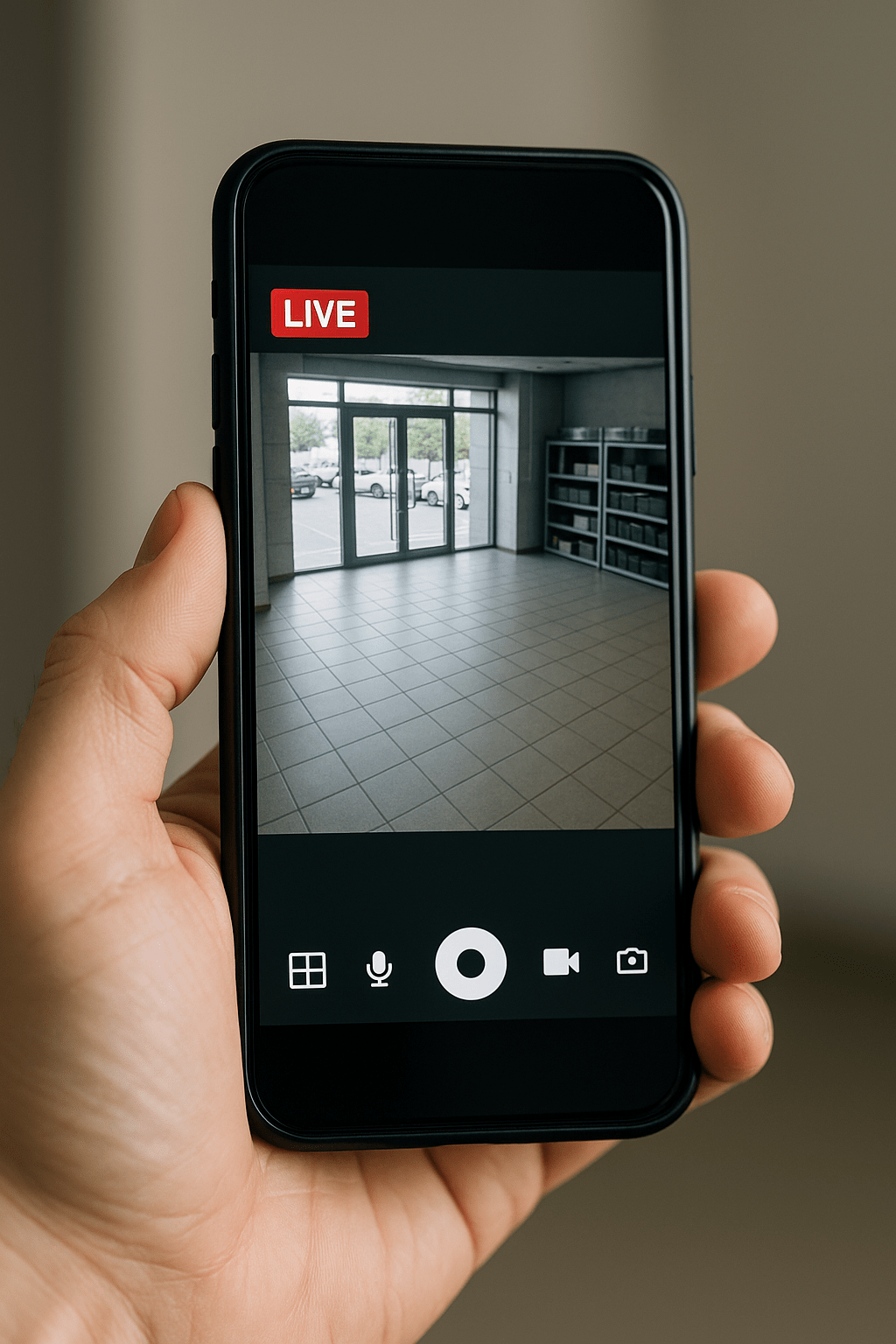

For multi-location businesses across Mississauga, Brampton, and the broader GTA, a commercial CCTV system isn’t just about security cameras; it’s about building a robust, interconnected surveillance network that protects your assets, employees, and bottom line. Effective security reduces liability, improves operations and maximizes efficiency. Designing such a system demands a strategic, holistic approach that considers the unique challenges of managing security across multiple sites.
This guide will walk you through the essential steps of planning and implementing a multi-location CCTV system, ensuring comprehensive coverage, centralized management, and optimal performance. Let’s delve into how to protect your business empire with advanced surveillance strategies.
Securing Your Business Empire: Why Multi-Location CCTV Demands a Strategic Approach
The limitations of a single-site security mindset.
Treating each location as a standalone entity with its own independent security system can lead to several critical shortcomings. Firstly, it creates silos of information, making it difficult to correlate security events across different locations. For example, if a pattern of suspicious activity emerges, identifying it becomes much harder without a centralized view. Secondly, managing multiple disparate systems requires more time and resources, increasing administrative overhead. Each location may have different equipment, software, and security protocols, leading to inconsistencies and inefficiencies. Finally, independent systems offer less opportunity for economies of scale in terms of purchasing power, maintenance, and support. A piecemeal approach ultimately diminishes overall security effectiveness.
Understanding the complexities of coordinating security across different locations.
Coordinating security across multiple locations involves navigating a complex web of factors, including varying physical layouts, security needs, and local regulations. Each site may have unique vulnerabilities and risk profiles that necessitate tailored camera placement and configurations. Furthermore, security protocols and response procedures must be standardized to ensure consistency and effectiveness across all locations. Communication and coordination are essential for incident response, requiring clear lines of communication and well-defined escalation procedures. The key is to create a unified security framework that addresses the specific needs of each location while maintaining overall coherence.
How a centralized CCTV system streamlines management and response.
A centralized CCTV system offers significant advantages for multi-location businesses by providing a single pane of glass for monitoring and managing security across all sites. This allows security personnel to quickly assess situations, track events, and coordinate responses from a central location. Centralized recording and storage simplifies data management and retrieval, making it easier to investigate incidents and comply with regulatory requirements. Remote access capabilities enable authorized personnel to view live and recorded footage from anywhere with an internet connection, improving situational awareness and responsiveness. A centralized system also facilitates proactive security monitoring through advanced video analytics and automated alerts. The benefits of streamlined management and response make a centralized CCTV system a powerful asset for multi-location businesses. If you’re operating in Mississauga, consider exploring Commercial CCTV Mississauga: Expert System Design for assistance in achieving this.
Key Considerations Before Designing Your Multi-Location CCTV System

Standardizing camera types and features across locations (e.g., resolution, night vision, weatherproofing).
Standardizing camera types and features across all locations offers numerous benefits in terms of manageability, maintenance, and cost-effectiveness. This does *not* necessarily mean using the exact same camera model everywhere, but rather establishing minimum performance standards for key features such as resolution (e.g., 4MP or higher), night vision range (e.g., at least 50 feet), and weatherproofing (e.g., IP66 or higher). Standardizing also simplifies training for security personnel, as they only need to learn one set of camera interfaces and functionalities. Furthermore, it streamlines procurement and inventory management, making it easier to order replacement parts and maintain consistent stock levels. Ensure that standardized camera types meet the specific requirements of each location, such as high-resolution cameras for areas with high foot traffic or vandal-resistant cameras for exposed locations. This standardization will help to promote Business Security Best Practices. Consider a Commercial CCTV: Security System Retrofit if you need to upgrade existing disparate cameras for better standardization.
Network infrastructure compatibility and bandwidth requirements.
Before deploying a multi-location CCTV system, it’s crucial to assess the existing network infrastructure and bandwidth capabilities at each location. IP-based camera systems transmit video data over the network, requiring sufficient bandwidth to ensure smooth streaming and recording. Insufficient bandwidth can lead to video lag, buffering, and even system outages. Consider factors such as the number of cameras per location, the resolution and frame rate of the video streams, and the available upload bandwidth at each site. A dedicated network segment or VLAN can help to isolate camera traffic from other network activities, improving performance and security. It’s also important to consider structured cabling for the CCTV system, as detailed on our page about Structured Cabling for Business Security Camera Systems. A network assessment should be conducted by a qualified IT professional to identify any potential bottlenecks or limitations. Cloud-based recording solutions can alleviate bandwidth constraints by storing video data offsite, but they also introduce latency and security considerations.
Regulatory compliance variations across different municipalities within the GTA.
When deploying a multi-location CCTV system in the GTA, it’s essential to be aware of the varying regulatory compliance requirements across different municipalities. Each city may have its own bylaws and ordinances governing the use of surveillance cameras, including restrictions on camera placement, signage requirements, and data retention policies. For example, some municipalities may require businesses to obtain permits before installing security cameras in public areas. Others may have specific guidelines for recording audio or capturing images of neighboring properties. Failure to comply with these regulations can result in fines, legal penalties, and even the removal of the CCTV system. Consult with a legal professional or security consultant to ensure that your CCTV system complies with all applicable regulations in each municipality where your business operates. Ignoring these variations can expose your business to significant legal and financial risks.
Step-by-Step Guide to Planning Your Commercial CCTV Deployment
Conducting thorough site surveys at each location: identifying vulnerabilities and camera placement opportunities.
A comprehensive site survey is the foundation of any successful CCTV deployment. At each location, meticulously assess the layout, potential entry points, and areas of vulnerability. Identify high-risk areas such as loading docks, cash registers, and storage rooms. Consider factors such as lighting conditions, traffic patterns, and potential obstructions that could impact camera visibility. Document all findings in a detailed site survey report, including photographs and diagrams. This report will serve as a roadmap for camera placement, ensuring optimal coverage and minimizing blind spots. Pay close attention to exterior perimeters, parking lots, and access points to identify potential intrusion pathways. The goal is to create a layered security approach that deters intruders and captures critical evidence in the event of a security breach. Consider potential areas for camera placement for optimal security and minimal operational blindspots – a topic covered in further detail on our page about Commercial CCTV: System Design to Minimize Operational Blindspots.
Defining clear security objectives and priorities (e.g., loss prevention, employee safety, operational monitoring).
Before installing any cameras, clearly define your security objectives and priorities. What are you trying to achieve with your CCTV system? Are you primarily focused on loss prevention, employee safety, operational monitoring, or a combination of these goals? Prioritize your objectives based on the specific needs and risks of your business. For example, a retail store may prioritize loss prevention, while a manufacturing facility may focus on employee safety and operational efficiency. Clearly defined objectives will guide camera placement, system configuration, and security protocols. They will also provide a benchmark for measuring the effectiveness of your CCTV system. Regularly review and update your security objectives to ensure they remain aligned with your business needs.
Creating a detailed system design blueprint: camera layout, recording infrastructure, network topology.
Once you’ve conducted site surveys and defined your security objectives, it’s time to create a detailed system design blueprint. This blueprint should include a comprehensive camera layout, specifying the exact location and field of view for each camera. It should also outline the recording infrastructure, including the type of recorder (NVR or DVR), storage capacity, and backup procedures. The network topology should detail how the cameras will be connected to the network, including cabling routes, network switches, and IP addressing schemes. This blueprint will serve as a guide for the installation team, ensuring that the CCTV system is installed correctly and efficiently. A well-designed system blueprint will also facilitate future upgrades and maintenance, providing a clear roadmap for system expansion and troubleshooting. Ensure that the system design is scalable to accommodate future growth and changing security needs. For warehouses and manufacturing, consider exploring options for Business Security Cameras: Reduce Operational Blind Spots for design ideas.
Choosing the Right CCTV Camera Technology for Your Business Needs
IP cameras vs. analog cameras: a comparison of features, scalability, and cost.
The choice between IP cameras and analog cameras is a fundamental decision in designing a CCTV system. IP cameras transmit video data over a network, offering superior image quality, advanced features, and greater scalability compared to analog cameras. Analog cameras, on the other hand, transmit video signals over coaxial cables, offering lower cost and simpler installation. IP cameras support higher resolutions, video analytics, and remote access capabilities. They are also easier to integrate with other security systems, such as access control and alarm systems. Analog cameras, while less expensive, lack the advanced features and scalability of IP cameras. They are also more susceptible to signal degradation and interference. In most commercial applications, IP cameras are the preferred choice due to their superior performance and future-proof technology. While initial costs may be higher, the long-term benefits of IP cameras outweigh the cost savings of analog cameras.
Understanding different camera types: dome, bullet, PTZ (pan-tilt-zoom), and their ideal applications.
Different camera types are designed for specific applications and environments. Dome cameras are enclosed in a dome-shaped housing, making them tamper-resistant and discreet. They are ideal for indoor environments such as retail stores, offices, and lobbies. Bullet cameras are cylindrical in shape and offer a longer range of view. They are ideal for outdoor applications such as parking lots, loading docks, and building perimeters. PTZ (pan-tilt-zoom) cameras can be remotely controlled to pan, tilt, and zoom, providing a wide range of coverage. They are ideal for monitoring large areas or tracking moving objects. Choose camera types based on the specific needs of each location and the desired level of coverage and functionality. A combination of different camera types may be necessary to achieve optimal security coverage.
The importance of video analytics for proactive security monitoring (e.g., facial recognition, license plate recognition).
Video analytics can significantly enhance the effectiveness of a CCTV system by providing proactive security monitoring and automating security tasks. Video analytics algorithms can detect specific events or patterns, such as intrusion detection, facial recognition, and license plate recognition. These algorithms can trigger alarms, send notifications, or initiate automated responses, enabling security personnel to respond quickly and effectively to potential threats. Facial recognition can be used to identify known offenders or unauthorized individuals, while license plate recognition can be used to track vehicles entering or leaving a property. Video analytics can also be used to improve operational efficiency, such as monitoring traffic flow, detecting bottlenecks, and optimizing resource allocation. By automating security tasks and providing real-time alerts, video analytics can free up security personnel to focus on more critical tasks and improve overall security effectiveness. Many modern CCTV systems also offer Business Security Cameras: Remote Monitoring for Efficiency.
Securing Your Business Empire: Why Multi-Location CCTV Demands a Strategic Approach
The limitations of a single-site security mindset.
Treating each business location’s security as an isolated entity can lead to inefficiencies and vulnerabilities. A fragmented approach means duplicated effort, inconsistent security protocols, and a lack of centralized oversight. Security gaps in one location can potentially impact the entire organization, making a unified strategy crucial. A single-site mindset fails to leverage the potential benefits of shared resources, centralized monitoring, and standardized security practices across all locations.
Understanding the complexities of coordinating security across different locations.
Managing security across multiple locations introduces logistical and operational challenges. Coordinating camera installations, maintenance schedules, and security personnel can become complex and time-consuming. Ensuring consistent security protocols, such as access control procedures and emergency response plans, across different sites requires careful planning and coordination. Real-time monitoring and incident response become more challenging when dealing with disparate systems and communication channels. Successfully navigating these complexities requires a centralized and integrated approach to multi-location CCTV management.
How a centralized CCTV system streamlines management and response.
A centralized CCTV system offers a streamlined approach to managing security across multiple locations. Centralized monitoring allows security personnel to view live video feeds from all locations in a single interface, enabling quick identification of potential threats. Remote access to camera controls, such as pan, tilt, and zoom, allows security personnel to investigate incidents remotely. Centralized recording and storage simplify data management and retrieval for investigations or audits. A centralized system also enables consistent security protocols and standardized training for security personnel across all locations. Centralized alerting allows for quick response to potential incidents.
Key Considerations Before Designing Your Multi-Location CCTV System
Standardizing camera types and features across locations (e.g., resolution, night vision, weatherproofing).
Standardizing camera types and features across locations simplifies maintenance, reduces training costs, and ensures consistent video quality. Select camera models with similar resolution, night vision capabilities, and weatherproofing features to ensure uniform performance in different environments. Standardized camera configurations also simplify system management and troubleshooting. Consistency facilitates easier upgrades and replacements across all sites. A unified approach enables efficient resource allocation and streamlined security operations.
Network infrastructure compatibility and bandwidth requirements.
Ensure that the network infrastructure at each location can support the bandwidth requirements of the CCTV system. Consider the number of cameras, video resolution, and frame rate when calculating bandwidth needs. Evaluate the existing network infrastructure’s capacity and upgrade if necessary. Ensure that the network infrastructure is compatible with the chosen CCTV system and supports remote access for monitoring and management. Insufficient bandwidth can lead to video lag, reduced video quality, and system instability, impacting the effectiveness of the security system. Consider implementing a Virtual Private Network (VPN) for secure data transmission between locations and the central monitoring station.
Regulatory compliance variations across different municipalities within the GTA.
Different municipalities within the Greater Toronto Area (GTA) may have varying regulations regarding CCTV camera placement, signage requirements, and data privacy. Ensure that the CCTV system complies with all applicable regulations in each location. Consult with local authorities to understand specific requirements and obtain any necessary permits. Failure to comply with regulations can result in fines, legal liabilities, and the removal of cameras. Pay close attention to rules governing the placement of cameras that might capture images of public spaces. Always maintain clear records of compliance efforts for each location.
Step-by-Step Guide to Planning Your Commercial CCTV Deployment
Conducting thorough site surveys at each location: identifying vulnerabilities and camera placement opportunities.
A thorough site survey is crucial for identifying vulnerabilities and determining optimal camera placement. Walk through each location with a security expert to assess potential entry points, blind spots, and areas of high risk. Identify areas that require enhanced surveillance, such as cash registers, loading docks, and storage areas. Document existing security measures and identify any weaknesses. Consider environmental factors, such as lighting conditions and weather exposure, when determining camera placement. The survey should also identify optimal locations for recording equipment and network infrastructure. A detailed site survey ensures that the CCTV system is tailored to the specific needs of each location.
Defining clear security objectives and priorities (e.g., loss prevention, employee safety, operational monitoring).
Clearly define the security objectives and priorities for the CCTV system to ensure that it meets the specific needs of the business. Determine whether the primary focus is loss prevention, employee safety, operational monitoring, or a combination of these. Prioritize areas that require the most attention and allocate resources accordingly. Establish clear metrics for measuring the success of the CCTV system, such as reduction in theft or improved response times to incidents. Clearly defined objectives and priorities guide the design and implementation of the CCTV system and ensure that it effectively addresses the most critical security concerns.
Creating a detailed system design blueprint: camera layout, recording infrastructure, network topology.
Develop a detailed system design blueprint that outlines the camera layout, recording infrastructure, and network topology. The blueprint should specify the type and placement of each camera, including its field of view and resolution. It should also detail the location and configuration of recording devices, such as Network Video Recorders (NVRs), and the storage capacity required. The network topology should illustrate how the cameras and recording devices are connected to the network and the internet, including IP addresses and network security measures. A well-defined system design blueprint ensures that the CCTV system is installed correctly and functions optimally.
Choosing the Right CCTV Camera Technology for Your Business Needs
IP cameras vs. analog cameras: a comparison of features, scalability, and cost.
IP cameras offer superior image quality, scalability, and advanced features compared to analog cameras. IP cameras transmit digital video signals over a network, enabling higher resolution, remote access, and video analytics. Analog cameras transmit analog video signals over coaxial cables, resulting in lower resolution and limited functionality. IP cameras are more scalable, allowing for easy expansion and integration with other security systems. Analog cameras are typically less expensive upfront, but IP cameras offer better long-term value due to their advanced features and scalability. The best choice depends on budget, specific security needs, and future expansion plans. For modern commercial applications, IP cameras are generally recommended due to their superior performance and future-proof technology.
Understanding different camera types: dome, bullet, PTZ (pan-tilt-zoom), and their ideal applications.
Different camera types are designed for specific applications and environments. Dome cameras are enclosed in a dome-shaped housing, making them tamper-resistant and discreet. They are ideal for indoor environments such as retail stores, offices, and lobbies. Bullet cameras are cylindrical in shape and offer a longer range of view. They are ideal for outdoor applications such as parking lots, loading docks, and building perimeters. PTZ (pan-tilt-zoom) cameras can be remotely controlled to pan, tilt, and zoom, providing a wide range of coverage. They are ideal for monitoring large areas or tracking moving objects. Choose camera types based on the specific needs of each location and the desired level of coverage and functionality. A combination of different camera types may be necessary to achieve optimal security coverage.
The importance of video analytics for proactive security monitoring (e.g., facial recognition, license plate recognition).
Video analytics can significantly enhance the effectiveness of a CCTV system by providing proactive security monitoring and automating security tasks. Video analytics algorithms can detect specific events or patterns, such as intrusion detection, facial recognition, and license plate recognition. These algorithms can trigger alarms, send notifications, or initiate automated responses, enabling security personnel to respond quickly and effectively to potential threats. Facial recognition can be used to identify known offenders or unauthorized individuals, while license plate recognition can be used to track vehicles entering or leaving a property. Video analytics can also be used to improve operational efficiency, such as monitoring traffic flow, detecting bottlenecks, and optimizing resource allocation. By automating security tasks and providing real-time alerts, video analytics can free up security personnel to focus on more critical tasks and improve overall security effectiveness. Many modern CCTV systems also offer Business Security Cameras: Remote Monitoring for Efficiency.
Securing Your Business Empire: Why Multi-Location CCTV Demands a Strategic Approach
The limitations of a single-site security mindset.
Adopting a single-site security mindset for multi-location businesses leaves significant gaps in overall security coverage. Each location faces unique threats and vulnerabilities, necessitating a tailored approach. A uniform security strategy may overlook specific risks, such as varying crime rates, different building layouts, and diverse operational procedures. Failing to address these individual needs can result in inadequate protection, increased losses, and compromised safety across the entire organization.
Understanding the complexities of coordinating security across different locations.
Coordinating security across multiple locations presents numerous complexities, including disparate security systems, inconsistent security protocols, and fragmented incident response procedures. Managing multiple security vendors, maintaining up-to-date security policies, and ensuring consistent training across different locations can be challenging. Without a centralized approach, it’s difficult to gain a holistic view of security posture, identify emerging threats, and respond effectively to incidents that span multiple locations.
How a centralized CCTV system streamlines management and response.
A centralized CCTV system streamlines management and response by providing a unified platform for monitoring, recording, and analyzing video footage from all locations. Centralized management simplifies system administration, reduces maintenance costs, and ensures consistent security policies and procedures. Real-time monitoring allows security personnel to quickly identify and respond to incidents, regardless of location. Centralized incident response procedures enable coordinated action across multiple sites, minimizing disruption and mitigating potential losses. Centralized reporting and analytics provide valuable insights into security trends and vulnerabilities, enabling proactive security improvements.
Key Considerations Before Designing Your Multi-Location CCTV System
Standardizing camera types and features across locations (e.g., resolution, night vision, weatherproofing).
Standardizing camera types and features across locations simplifies management, reduces training requirements, and ensures consistent video quality. Consider factors such as resolution, night vision, weatherproofing, and viewing angles when selecting camera models. Choose cameras with similar features and capabilities to ensure consistent performance and ease of use across all locations. Standardizing camera types also simplifies inventory management and reduces the need for specialized technical expertise at each location. Properly research Commercial Camera Installation in Toronto to find the best installation options for your locations.
Network infrastructure compatibility and bandwidth requirements.
Ensure that your existing network infrastructure is compatible with the proposed CCTV system and that sufficient bandwidth is available to support video streaming from all locations. Assess the network capacity at each location and identify any potential bottlenecks. Consider using compression techniques to reduce bandwidth consumption without compromising video quality. A dedicated network or virtual private network (VPN) may be necessary to ensure secure and reliable video transmission. It is also important to consider the cost of installing network cabling, as described by Toronto Data Cabling Professionals.
Regulatory compliance variations across different municipalities within the GTA.
Be aware of regulatory compliance variations across different municipalities within the GTA, including privacy laws, licensing requirements, and building codes. Consult with legal counsel to ensure that your CCTV system complies with all applicable regulations in each jurisdiction. Understand the rules regarding video recording in public areas, employee notification requirements, and data retention policies. Failure to comply with local regulations can result in fines, penalties, or legal action.
Step-by-Step Guide to Planning Your Commercial CCTV Deployment
Conducting thorough site surveys at each location: identifying vulnerabilities and camera placement opportunities.
Conducting thorough site surveys at each location is crucial for identifying vulnerabilities and determining optimal camera placement. Assess each location’s unique characteristics, including building layout, lighting conditions, access points, and potential blind spots. Identify areas prone to theft, vandalism, or unauthorized access. Determine the best camera angles and fields of view to maximize coverage and minimize obstructions. Document all findings and create detailed site plans to guide camera installation.
Defining clear security objectives and priorities (e.g., loss prevention, employee safety, operational monitoring).
Defining clear security objectives and priorities is essential for designing an effective CCTV system. Determine the specific goals you want to achieve, such as loss prevention, employee safety, operational monitoring, or regulatory compliance. Prioritize areas of concern based on risk assessments and business needs. Align camera placement, recording settings, and video analytics features with your defined objectives. Clearly defined objectives will ensure that your CCTV system provides the greatest value and return on investment.
Creating a detailed system design blueprint: camera layout, recording infrastructure, network topology.
Creating a detailed system design blueprint is essential for ensuring a successful CCTV deployment. The blueprint should include a detailed camera layout showing the location and coverage area of each camera. It should also specify the recording infrastructure, including network video recorders (NVRs), storage capacity, and backup systems. The network topology should illustrate the connections between cameras, NVRs, and the network infrastructure. The blueprint should also include details on power supply, cabling, and mounting hardware. A well-defined blueprint will ensure that the CCTV system is installed correctly and operates efficiently.
Choosing the Right CCTV Camera Technology for Your Business Needs
IP cameras vs. analog cameras: a comparison of features, scalability, and cost.
IP cameras and analog cameras represent distinct technologies with varying features, scalability, and costs. Analog cameras transmit video signals over coaxial cables to a digital video recorder (DVR). They are generally less expensive upfront but offer limited features and scalability. IP cameras, on the other hand, transmit video signals over a network using internet protocol (IP). They offer superior image quality, advanced features such as remote viewing and video analytics, and greater scalability. While IP cameras typically have a higher upfront cost, their long-term value and advanced capabilities often justify the investment.
Understanding different camera types: dome, bullet, PTZ (pan-tilt-zoom), and their ideal applications.
Different camera types are designed for specific applications and environments. Dome cameras are enclosed in a dome-shaped housing, making them tamper-resistant and discreet. They are ideal for indoor environments such as retail stores, offices, and lobbies. Bullet cameras are cylindrical in shape and offer a longer range of view. They are ideal for outdoor applications such as parking lots, loading docks, and building perimeters. PTZ (pan-tilt-zoom) cameras can be remotely controlled to pan, tilt, and zoom, providing a wide range of coverage. They are ideal for monitoring large areas or tracking moving objects. Choose camera types based on the specific needs of each location and the desired level of coverage and functionality. A combination of different camera types may be necessary to achieve optimal security coverage.
The importance of video analytics for proactive security monitoring (e.g., facial recognition, license plate recognition).
Video analytics can significantly enhance the effectiveness of a CCTV system by providing proactive security monitoring and automating security tasks. Video analytics algorithms can detect specific events or patterns, such as intrusion detection, facial recognition, and license plate recognition. These algorithms can trigger alarms, send notifications, or initiate automated responses, enabling security personnel to respond quickly and effectively to potential threats. Facial recognition can be used to identify known offenders or unauthorized individuals, while license plate recognition can be used to track vehicles entering or leaving a property. Video analytics can also be used to improve operational efficiency, such as monitoring traffic flow, detecting bottlenecks, and optimizing resource allocation. By automating security tasks and providing real-time alerts, video analytics can free up security personnel to focus on more critical tasks and improve overall security effectiveness. Many modern CCTV systems also offer Business Security Cameras: Remote Monitoring for Efficiency.
Securing Your Business Empire: Why Multi-Location CCTV Demands a Strategic Approach
The limitations of a single-site security mindset.
Applying a single-site security mindset to a multi-location business can lead to significant vulnerabilities. Each location may have unique security risks and challenges, requiring tailored solutions. A cookie-cutter approach fails to address these specific needs, potentially leaving some locations exposed to increased risk. Moreover, a disconnected system makes it difficult to maintain a comprehensive overview of security across the entire organization, hindering effective response to incidents.
Understanding the complexities of coordinating security across different locations.
Coordinating security across multiple locations involves managing diverse environments, varying levels of risk, and potentially disparate security protocols. It requires a centralized approach to ensure consistency and efficiency. Communication and collaboration are critical to effectively respond to incidents and maintain a unified security posture. Without a coordinated strategy, businesses risk creating silos of security, leading to duplicated efforts, missed threats, and increased operational costs.
How a centralized CCTV system streamlines management and response.
A centralized CCTV system offers a streamlined approach to managing security across multiple locations. It allows for remote monitoring, centralized data storage, and unified control over all cameras and security devices. This centralized platform enables security personnel to quickly assess situations, respond to incidents, and coordinate security efforts across different locations. By providing a comprehensive overview of security activities, a centralized CCTV system enhances situational awareness and improves overall security effectiveness. Modern systems may offer features like 24/7 Security Surveillance and Monitoring: Protect Your Assets.
Key Considerations Before Designing Your Multi-Location CCTV System
Standardizing camera types and features across locations (e.g., resolution, night vision, weatherproofing).
Standardizing camera types and features across locations simplifies management, maintenance, and training. This standardization ensures consistent image quality, functionality, and performance across the entire CCTV system. Consider factors such as resolution, night vision capabilities, weatherproofing, and lens type when selecting cameras. Standardizing these features ensures that all locations are equipped with the necessary capabilities to address their specific security needs. It also simplifies future upgrades and expansions by ensuring compatibility across the system.
Network infrastructure compatibility and bandwidth requirements.
Before deploying a multi-location CCTV system, it’s essential to assess network infrastructure compatibility and bandwidth requirements. Each location must have sufficient network capacity to support the transmission of video data from the cameras. Consider the number of cameras, resolution, frame rate, and compression method when calculating bandwidth requirements. Insufficient bandwidth can lead to video lag, poor image quality, and unreliable recording. A thorough network assessment will identify potential bottlenecks and ensure that the network can handle the demands of the CCTV system. Cloud based solutions such as Cloud Security Cameras For Businesses: Why They Make Sense might be a good option.
Regulatory compliance variations across different municipalities within the GTA.
Regulatory compliance can vary significantly across different municipalities within the Greater Toronto Area (GTA). Businesses must be aware of local regulations regarding camera placement, signage requirements, and data privacy. Failure to comply with these regulations can result in fines, penalties, and legal liabilities. Conduct thorough research to understand the specific regulations in each municipality where the business operates. Consulting with a security professional or legal expert can help ensure compliance and minimize risks.
Step-by-Step Guide to Planning Your Commercial CCTV Deployment
Conducting thorough site surveys at each location: identifying vulnerabilities and camera placement opportunities.
A thorough site survey is a critical first step in planning a commercial CCTV deployment. This involves a detailed assessment of each location to identify vulnerabilities, assess security risks, and determine optimal camera placement. Consider factors such as lighting conditions, potential blind spots, entry and exit points, and high-value assets. The site survey should also identify any existing security measures and assess their effectiveness. This information will inform the design of the CCTV system and ensure that it effectively addresses the specific security needs of each location. A professional company such as CCTV Camera Installation Toronto can provide these site surveys.
Defining clear security objectives and priorities (e.g., loss prevention, employee safety, operational monitoring).
Before deploying a CCTV system, it’s essential to define clear security objectives and priorities. What are the specific goals of the CCTV system? Is it primarily for loss prevention, employee safety, operational monitoring, or a combination of these? Clearly defined objectives will guide the design and implementation of the CCTV system, ensuring that it effectively addresses the business’s specific needs. Prioritize security objectives based on the level of risk and potential impact on the business.
Creating a detailed system design blueprint: camera layout, recording infrastructure, network topology.
A detailed system design blueprint is essential for a successful CCTV deployment. This blueprint should include a detailed camera layout, specifying the location and type of each camera. It should also outline the recording infrastructure, including the type of recorder, storage capacity, and backup procedures. The blueprint should also detail the network topology, including the network configuration, bandwidth allocation, and security measures. A well-designed blueprint ensures that the CCTV system is properly installed, configured, and maintained. The design should also account for future scalability and expansion.
Choosing the Right CCTV Camera Technology for Your Business Needs
IP cameras vs. analog cameras: a comparison of features, scalability, and cost.
When choosing CCTV camera technology, businesses must consider the pros and cons of IP cameras versus analog cameras. Analog cameras are generally less expensive upfront but offer limited features and scalability. IP cameras, on the other hand, offer superior image quality, advanced features such as remote viewing and video analytics, and greater scalability. While IP cameras typically have a higher upfront cost, their long-term value and advanced capabilities often justify the investment. Consider the specific needs of the business and budget constraints when deciding between IP and analog cameras. For many businesses today, IP security cameras are the only option that makes sense.
Understanding different camera types: dome, bullet, PTZ (pan-tilt-zoom), and their ideal applications.
Different camera types are designed for specific applications and environments. Dome cameras are enclosed in a dome-shaped housing, making them tamper-resistant and discreet. They are ideal for indoor environments such as retail stores, offices, and lobbies. Bullet cameras are cylindrical in shape and offer a longer range of view. They are ideal for outdoor applications such as parking lots, loading docks, and building perimeters. PTZ (pan-tilt-zoom) cameras can be remotely controlled to pan, tilt, and zoom, providing a wide range of coverage. They are ideal for monitoring large areas or tracking moving objects. Choose camera types based on the specific needs of each location and the desired level of coverage and functionality. A combination of different camera types may be necessary to achieve optimal security coverage.
The importance of video analytics for proactive security monitoring (e.g., facial recognition, license plate recognition).
Video analytics can significantly enhance the effectiveness of a CCTV system by providing proactive security monitoring and automating security tasks. Video analytics algorithms can detect specific events or patterns, such as intrusion detection, facial recognition, and license plate recognition. These algorithms can trigger alarms, send notifications, or initiate automated responses, enabling security personnel to respond quickly and effectively to potential threats. Facial recognition can be used to identify known offenders or unauthorized individuals, while license plate recognition can be used to track vehicles entering or leaving a property. Video analytics can also be used to improve operational efficiency, such as monitoring traffic flow, detecting bottlenecks, and optimizing resource allocation. By automating security tasks and providing real-time alerts, video analytics can free up security personnel to focus on more critical tasks and improve overall security effectiveness.
Securing Your Business Empire: Why Multi-Location CCTV Demands a Strategic Approach
The limitations of a single-site security mindset.
A security mindset geared towards a single location can create vulnerabilities when applied to multi-location businesses. Each site has unique risks and vulnerabilities that a standardized, single-site approach fails to address adequately. Factors such as location-specific crime rates, building layouts, and employee protocols demand tailored security solutions. A one-size-fits-all strategy can leave some locations underprotected while overspending on others. This localized approach also hinders the ability to identify patterns and trends across the entire organization, limiting proactive security measures.
Understanding the complexities of coordinating security across different locations.
Coordinating security across multiple locations presents significant challenges, including managing disparate systems, inconsistent security protocols, and communication barriers. Without a centralized management system, security personnel at each location operate in silos, making it difficult to share information, respond to incidents effectively, and maintain consistent security standards. Varying technology platforms and a lack of standardized training can further complicate the coordination process, leading to inefficiencies and increased risk.
How a centralized CCTV system streamlines management and response.
A centralized CCTV system streamlines management and response by providing a unified platform for monitoring and controlling security across all locations. Centralized monitoring allows security personnel to view live video feeds from multiple cameras simultaneously, enabling them to quickly identify and respond to potential threats. Centralized management also simplifies administrative tasks such as user access control, system configuration, and video storage. By consolidating security functions into a single platform, a centralized CCTV system improves situational awareness, reduces response times, and enhances overall security effectiveness.
Key Considerations Before Designing Your Multi-Location CCTV System
Standardizing camera types and features across locations (e.g., resolution, night vision, weatherproofing).
Standardizing camera types and features across all locations simplifies maintenance, ensures consistent video quality, and facilitates efficient training. Selecting cameras with uniform resolution (e.g., 1080p or 4K) ensures that video footage is clear and detailed, regardless of the location. Standardizing on features such as night vision capabilities and weatherproofing ensures reliable performance in all environments. Standardizing brands can save money, while ensuring integration with other business systems that might be in place or planned for the future. By standardizing camera types and features, businesses can reduce complexity and improve the overall effectiveness of their CCTV system.
Network infrastructure compatibility and bandwidth requirements.
Ensuring network infrastructure compatibility and meeting bandwidth requirements are critical for the successful deployment of a multi-location CCTV system. Each location must have a robust network infrastructure capable of supporting the required bandwidth for transmitting video data from multiple cameras to the central monitoring station. Consider factors such as network topology, internet connectivity, and data transmission rates. Insufficient bandwidth can result in video lag, dropped frames, and system instability. Conduct thorough network assessments at each location to identify potential bottlenecks and ensure adequate bandwidth capacity.
Regulatory compliance variations across different municipalities within the GTA.
Navigating regulatory compliance variations across different municipalities within the GTA (Greater Toronto Area) can be complex and time-consuming. Each municipality may have its own regulations regarding CCTV camera placement, signage requirements, and data privacy. Failure to comply with these regulations can result in fines, legal penalties, and reputational damage. Conduct thorough research to understand the specific regulations in each municipality where your business operates. Consult with legal counsel to ensure that your CCTV system complies with all applicable laws and regulations.
Step-by-Step Guide to Planning Your Commercial CCTV Deployment
Conducting thorough site surveys at each location: identifying vulnerabilities and camera placement opportunities.
A thorough site survey is essential for identifying vulnerabilities and determining optimal camera placement at each location. Walk through each location with a security expert to assess potential entry points, blind spots, and high-risk areas. Identify areas prone to theft, vandalism, or other security threats. Consider factors such as lighting conditions, viewing angles, and potential obstructions. Document all findings and use them to develop a detailed camera placement plan.
Defining clear security objectives and priorities (e.g., loss prevention, employee safety, operational monitoring).
Clearly defining security objectives and priorities is essential for designing an effective CCTV system that meets the specific needs of your business. Determine the primary goals of the system, such as loss prevention, employee safety, or operational monitoring. Prioritize security measures based on the level of risk and the potential impact on your business. Consider factors such as budget constraints, regulatory requirements, and stakeholder expectations. Clearly defined security objectives and priorities will guide the design and implementation of your CCTV system.
Creating a detailed system design blueprint: camera layout, recording infrastructure, network topology.
A detailed system design blueprint is crucial for ensuring that your CCTV system is properly installed and configured. The blueprint should include a detailed camera layout, indicating the location and viewing angle of each camera. It should also specify the recording infrastructure, including the type of recording devices, storage capacity, and backup procedures. Additionally, the blueprint should outline the network topology, including the network configuration, bandwidth requirements, and security protocols. A well-designed blueprint will serve as a roadmap for the installation team and ensure that the system is installed according to your specifications.
Choosing the Right CCTV Camera Technology for Your Business Needs
IP cameras vs. analog cameras: a comparison of features, scalability, and cost.
Selecting the appropriate camera technology for your business involves understanding the distinctions between IP (Internet Protocol) cameras and analog cameras. IP cameras offer superior image quality, remote viewing and video analytics, and greater scalability. Analog cameras are typically less expensive upfront but lack the advanced features of IP cameras. IP cameras use a network to transmit video data, while analog cameras use coaxial cables. IP cameras are more suitable for businesses that require advanced features and scalability, while analog cameras may be sufficient for smaller businesses with basic security needs. A detailed comparison is available for IP cameras vs analog cameras to help you make the right choice.
Understanding different camera types: dome, bullet, PTZ (pan-tilt-zoom), and their ideal applications.
Different camera types are designed for specific applications and environments. Dome cameras are enclosed in a dome-shaped housing, making them tamper-resistant and discreet. They are ideal for indoor environments such as retail stores, offices, and lobbies. Bullet cameras are cylindrical in shape and offer a longer range of view. They are ideal for outdoor applications such as parking lots, loading docks, and building perimeters. PTZ (pan-tilt-zoom) cameras can be remotely controlled to pan, tilt, and zoom, providing a wide range of coverage. They are ideal for monitoring large areas or tracking moving objects. Choose camera types based on the specific needs of each location and the desired level of coverage and functionality. A combination of different camera types may be necessary to achieve optimal security coverage.
The importance of video analytics for proactive security monitoring (e.g., facial recognition, license plate recognition).
Video analytics can significantly enhance the effectiveness of a CCTV system by providing proactive security monitoring and automating security tasks. Video analytics algorithms can detect specific events or patterns, such as intrusion detection, facial recognition, and license plate recognition. These algorithms can trigger alarms, send notifications, or initiate automated responses, enabling security personnel to respond quickly and effectively to potential threats. Facial recognition can be used to identify known offenders or unauthorized individuals, while license plate recognition can be used to track vehicles entering or leaving a property. Video analytics can also be used to improve operational efficiency, such as monitoring traffic flow, detecting bottlenecks, and optimizing resource allocation. By automating security tasks and providing real-time alerts, video analytics can free up security personnel to focus on more critical tasks and improve overall security effectiveness.
Centralized Video Management: The Backbone of Multi-Location Security
For businesses operating across multiple locations in Mississauga, Brampton, or even further afield, a centralized video management system (VMS) is crucial. It’s no longer sufficient to have disparate CCTV systems at each site. A centralized VMS provides a single pane of glass for managing all your security cameras, streamlining operations and improving incident response. Think of it as mission control for your security infrastructure. It allows security personnel to remotely monitor live feeds, review recorded footage, and manage user access from a central location, irrespective of where the cameras are physically situated. This is especially important for businesses looking to proactively reduce operational blind spots across their enterprise.
Benefits of a centralized VMS (Video Management System) for managing multiple camera feeds.
The benefits of a centralized VMS are extensive. Cost savings are a significant advantage. Instead of requiring dedicated security staff at each location, a centralized monitoring team can oversee all sites, reducing labor costs. Improved efficiency is another key benefit. Centralized VMS solutions often provide advanced analytics, such as motion detection, object recognition, and facial recognition. These features can automate alerts, making it easier to identify potential threats and respond quickly. For example, a warehouse in Brampton might trigger an alert if unauthorized personnel enter a restricted area after hours, prompting immediate investigation by the central monitoring team. Furthermore, a centralized VMS facilitates consistent security policies across all locations. You can easily apply the same camera settings, recording schedules, and user access controls to all sites, ensuring uniform security standards. This also simplifies compliance with relevant regulations. For instance, businesses often require robust systems to mitigate liability risks.
Remote access and mobile viewing: staying connected to your security system from anywhere.
Modern VMS solutions offer robust remote access and mobile viewing capabilities, allowing authorized personnel to monitor their CCTV systems from anywhere with an internet connection. This is invaluable for business owners or managers who need to stay connected to their operations, even when they are not physically on-site. Mobile apps provide a user-friendly interface for viewing live feeds, reviewing recorded footage, and receiving alerts on smartphones or tablets. This level of accessibility ensures that you can quickly respond to incidents, regardless of your location. Let’s say a retail store in Oakville experiences a spike in shoplifting incidents. Using remote access, the store manager can review footage from their mobile device, identify patterns, and adjust security measures accordingly, even while traveling.
User access control and permission management: ensuring data security and privacy.
Robust user access control and permission management are essential for maintaining data security and privacy within a centralized VMS. You need to be able to control who has access to which cameras and features. This prevents unauthorized personnel from viewing sensitive footage or making changes to the system configuration. Role-based access control allows you to assign different permissions to different users based on their job responsibilities. For example, a security guard might have access to live feeds and alarm notifications, while a regional manager might have access to recorded footage and reporting tools. Detailed audit logs should track all user activity within the VMS, providing a record of who accessed what and when. This is crucial for investigating security breaches and ensuring compliance with privacy regulations. Consider a multi-location dealership; sales staff do not need access to the service bay cameras.
Networking and Bandwidth Considerations for Seamless Multi-Location CCTV
Implementing a multi-location CCTV system presents unique networking and bandwidth challenges. Each camera generates a significant amount of data, and transmitting all these feeds to a central location requires a robust and reliable network infrastructure. Insufficient bandwidth can lead to choppy video, dropped connections, and missed events. Careful planning and optimization are essential to ensure seamless performance.
Evaluating your existing network infrastructure and identifying potential bottlenecks.
Before deploying a multi-location CCTV system, it’s crucial to evaluate your existing network infrastructure at each location. This involves assessing your internet bandwidth, network topology, and hardware capabilities. Identify potential bottlenecks that could hinder performance. Consider the upload speeds at each location, as this is critical for transmitting video feeds to the central VMS. Run speed tests during peak hours to determine the actual available bandwidth. Analyze your network hardware, including routers, switches, and firewalls, to ensure they can handle the increased traffic generated by the CCTV system. For example, a warehouse with older network equipment might need upgrades to support the bandwidth requirements of multiple high-resolution cameras. Network latency, the delay in data transfer, should also be assessed. High latency can cause significant delays in video transmission, affecting real-time monitoring capabilities.
Implementing a dedicated network for your CCTV system to ensure optimal performance.
For many multi-location businesses, implementing a dedicated network for the CCTV system is the best way to ensure optimal performance. This involves creating a separate network infrastructure that is solely dedicated to the transmission of video data. This isolates the CCTV traffic from other network traffic, such as email, web browsing, and file sharing, preventing congestion and ensuring consistent bandwidth availability. A dedicated network can be either wired or wireless, depending on the specific requirements of your business. Wired networks generally offer more reliable performance and higher bandwidth capacity, while wireless networks provide greater flexibility in camera placement. VLANs (Virtual Local Area Networks) can also be used to segment your existing network, creating a logical separation between the CCTV traffic and other traffic. This allows you to prioritize the CCTV traffic and allocate sufficient bandwidth without having to invest in a completely separate network infrastructure. Also, a dedicated network improves security, reducing the risk of unauthorized access to your video data.
Utilizing PoE (Power over Ethernet) for simplified camera installation and reduced cabling costs.
Power over Ethernet (PoE) technology can significantly simplify camera installation and reduce cabling costs for multi-location CCTV systems. PoE allows you to transmit both power and data over a single Ethernet cable, eliminating the need for separate power cables and outlets at each camera location. This simplifies the installation process, reduces the amount of cabling required, and lowers overall costs. PoE switches provide power to the cameras, while also transmitting video data to the network. PoE injectors can be used to add PoE functionality to existing non-PoE switches. PoE also offers greater flexibility in camera placement, as you are not limited by the availability of power outlets. This is particularly useful in warehouses, manufacturing facilities, and other large spaces where power outlets may be scarce. However, when implementing PoE, it’s important to ensure that your PoE switches and cameras are compatible and that you are using the correct PoE standard (e.g., PoE, PoE+, PoE++). Insufficient power delivery can cause cameras to malfunction or fail to operate correctly. Structured cabling, often used with PoE, is key.
Secure Installation and Structured Cabling: The Foundation of a Reliable System
A robust CCTV system relies not only on advanced technology but also on proper installation and structured cabling. A poorly installed system with messy or damaged cabling can lead to performance issues, reliability problems, and security vulnerabilities. Investing in professional installation and structured cabling ensures that your system operates optimally and provides long-term value. Consider this foundational to your commercial CCTV system design.
The importance of professional CCTV installation for optimal camera placement and viewing angles.
Professional CCTV installation is crucial for achieving optimal camera placement and viewing angles. Experienced installers can assess your site, identify potential blind spots, and determine the best locations for each camera. They will consider factors such as lighting conditions, traffic patterns, and potential obstructions when positioning the cameras. Proper camera placement ensures that you capture clear and comprehensive video footage of all critical areas. Professional installers also have the expertise to adjust camera settings, such as focus, zoom, and exposure, to optimize image quality. Furthermore, they can ensure that the cameras are securely mounted and protected from vandalism or tampering. An experienced integrator will aim to design a system so it won’t be subject to operational blindspots. Example: A manufacturing facility installed cameras themselves, resulting in glare-ridden footage rendering most recordings useless. Paying for professional assessment and installation would have prevented this.
Structured cabling: ensuring organized and reliable connectivity for all cameras.
Structured cabling is a standardized approach to cabling that ensures organized and reliable connectivity for all cameras in your CCTV system. It involves using high-quality cables, connectors, and patch panels to create a neat and well-organized cabling infrastructure. Structured cabling makes it easier to troubleshoot problems, perform maintenance, and upgrade the system in the future. It also reduces the risk of cable damage and interference, ensuring consistent video quality. A well-designed structured cabling system should be properly labeled and documented, making it easy to identify and trace cables. Color-coded cables can also be used to distinguish between different types of connections. Consider AYS Security’s expertise in structured cabling for your business.
Protecting cabling from damage and tampering.
Protecting cabling from damage and tampering is essential for maintaining the integrity and reliability of your CCTV system. Exposed cables are vulnerable to accidental damage from foot traffic, equipment movement, or weather conditions. They are also susceptible to tampering by unauthorized individuals who may attempt to disable or compromise the system. To protect cabling, use conduit or cable trays to enclose and protect the cables. Conduit provides a physical barrier against damage and tampering, while cable trays provide a neat and organized way to route cables. Secure the conduit or cable trays to the walls or ceilings to prevent them from being dislodged. Use tamper-resistant screws and fasteners to secure the cameras and cabling to prevent unauthorized removal or adjustment. Regularly inspect the cabling for signs of damage or wear and tear. Replace any damaged cables immediately to prevent performance issues.
Maintenance and Support: Keeping Your Security System Running Smoothly in 2026
A CCTV system is a significant investment, and it’s important to ensure that it remains operational and effective over time. Regular maintenance and reliable support are essential for keeping your security system running smoothly and protecting your business. Neglecting maintenance can lead to performance issues, system failures, and security vulnerabilities.
Regular system maintenance: checking camera functionality, updating software, and cleaning lenses.
Regular system maintenance is crucial for ensuring the long-term reliability and effectiveness of your CCTV system. This involves checking camera functionality, updating software, and cleaning lenses on a scheduled basis. Check camera functionality by viewing live feeds and reviewing recorded footage to ensure that the cameras are capturing clear and accurate video. Look for signs of image degradation, such as blurry images, color distortion, or excessive noise. Update software regularly to ensure that your VMS and cameras are running the latest firmware and security patches. Software updates often include bug fixes, performance improvements, and new features. Clean camera lenses regularly to remove dust, dirt, and other debris that can obstruct the view and degrade image quality. Use a soft, lint-free cloth and a gentle cleaning solution to clean the lenses. Schedule regular maintenance checks to ensure that all components of your system are functioning properly. A good rule of thumb is to schedule a maintenance check at least once every quarter.
Remote diagnostics and troubleshooting: resolving technical issues quickly and efficiently.
Remote diagnostics and troubleshooting capabilities are essential for resolving technical issues quickly and efficiently. Modern VMS solutions offer remote access features that allow technicians to diagnose and troubleshoot problems from a remote location. This eliminates the need for on-site visits in many cases, saving time and money. Remote diagnostics tools can be used to monitor system performance, identify potential problems, and diagnose the cause of any issues. Technicians can remotely access camera settings, view error logs, and run diagnostic tests. In many cases, technical issues can be resolved remotely by adjusting camera settings, rebooting devices, or updating software. Remote troubleshooting capabilities are particularly valuable for multi-location businesses, as they allow you to quickly address issues at any location without having to dispatch technicians to each site. For example, if a camera at a warehouse in Guelph is experiencing connectivity issues, a technician can remotely diagnose the problem and resolve it without having to travel to the site.
The value of a service-level agreement (SLA) with a reputable security provider like AYS Security.
A service-level agreement (SLA) with a reputable security provider like AYS Security offers significant value for businesses that rely on their CCTV systems for security and operational efficiency. An SLA is a contract that outlines the level of service that the provider will deliver, including response times, uptime guarantees, and maintenance schedules. An SLA ensures that you receive timely and reliable support when you need it. It also provides you with a clear understanding of the provider’s responsibilities and the remedies available if they fail to meet their obligations. With an SLA, you can rest assured that your CCTV system is being properly maintained and supported, minimizing the risk of downtime and security breaches. For example, AYS Security’s SLA might guarantee a specific uptime percentage for your VMS, ensuring that your system is always available when you need it. The SLA might also specify the response time for technical support requests, ensuring that you receive prompt assistance if you encounter any problems. An SLA is a valuable investment that provides peace of mind and protects your business.
Partnering with a trusted provider like AYS Security can ensure your business security cameras are always online and ready to record.
Integration with Other Security Systems for Enhanced Protection
Integrating your CCTV system with access control systems, alarm systems, and perimeter security devices.
Integrating your CCTV system with other security solutions transforms disparate components into a unified, powerful defense mechanism. Consider access control systems, for instance. When someone swipes their card to enter a restricted area, the CCTV system can automatically record video of the event, creating a visual audit trail. Alarm systems, triggered by unauthorized entry or motion, can cue specific cameras to focus on the affected area, providing immediate visual verification of the threat. Similarly, perimeter security devices like fence sensors or laser grids can trigger camera pan, tilt, and zoom functions to investigate potential breaches in real-time. For example, a warehouse in Brampton might integrate fence vibration sensors with pan-tilt-zoom (PTZ) cameras. If a vibration is detected, the nearest camera automatically focuses on the affected fence section, recording the event and alerting security personnel. This integration extends beyond simple triggers; sophisticated systems can correlate data from multiple sources to identify suspicious patterns and prioritize responses.
Creating a unified security platform for comprehensive situational awareness.
The goal of integration is to create a unified security platform. This platform acts as a central hub, consolidating data from various security devices and presenting it in an easy-to-understand format. Instead of monitoring multiple screens and systems independently, security personnel can access a single interface to view live video feeds, access control logs, alarm events, and other relevant information. This improved situational awareness allows for faster, more informed decision-making. A well-designed platform also provides powerful search and reporting capabilities. For example, if a retail location in Mississauga experiences a series of thefts, the security team can use the unified platform to search for video footage of all entries and exits during specific timeframes, correlate the data with access control logs, and identify potential suspects or patterns of suspicious behavior. The ability to quickly access and analyze data is crucial for effective incident response and prevention. Integrating your business security cameras for operational visibility into one platform simplifies management and improves overall security effectiveness.
Automating security responses based on real-time events.
Automation is a key benefit of integrating your CCTV system. By configuring pre-defined rules and actions, the system can automatically respond to specific events without human intervention. For instance, if a camera detects a person loitering in a restricted area after hours, the system can automatically trigger an audible warning, send an alert to security personnel, and lock down access control points. Or, consider a scenario where a warehouse door is left open for an extended period. The CCTV system, integrated with door sensors, can automatically send a notification to the facility manager, reducing the risk of theft or environmental damage. The level of automation can be tailored to the specific needs and risk profile of each location. The key is to carefully define the rules and actions to ensure that the system responds appropriately to different situations. These automated responses improve response times and reduce the workload on security personnel, allowing them to focus on more critical tasks.
Measuring the ROI of Your Multi-Location CCTV Investment
Quantifying the benefits of reduced theft, vandalism, and liability claims.
Calculating the return on investment (ROI) of a multi-location CCTV system involves quantifying both the tangible and intangible benefits. Start by tracking reductions in theft and vandalism. Before implementing the CCTV system, meticulously document the frequency and cost of these incidents across all locations. After installation, continue to monitor these metrics and compare them to the baseline data. For example, if a dealership in Oakville experiences an average of $10,000 in theft-related losses per year before installing CCTV, and this figure drops to $2,000 per year after installation, the system has directly saved the business $8,000 annually. Similarly, analyze any decreases in liability claims related to accidents or injuries on company property. A manufacturing facility that installs a robust CCTV system may see a reduction in fraudulent worker’s compensation claims due to the availability of video evidence. Documenting these savings and comparing them to the initial investment and ongoing maintenance costs will provide a clear picture of the system’s ROI. Remember to factor in not only direct financial losses but also associated costs like insurance premiums and administrative overhead.
Improving operational efficiency through remote monitoring and process optimization.
Beyond security benefits, CCTV systems can significantly improve operational efficiency, leading to further ROI. Remote monitoring allows managers to oversee operations at multiple locations from a central location, reducing the need for frequent on-site visits. This can save time and travel expenses. For example, a regional manager responsible for several retail stores across the GTA can use remote video monitoring to check on store displays, staff performance, and customer traffic patterns. This information can be used to optimize staffing levels, improve product placement, and identify areas for process improvement. Furthermore, video analytics can provide valuable insights into operational processes. By analyzing video footage of production lines or warehouse operations, businesses can identify bottlenecks, streamline workflows, and improve overall productivity. Consider a warehouse that analyzes video footage of its loading dock operations and identifies inefficiencies in the loading and unloading process. By implementing changes based on these insights, the warehouse can reduce turnaround times and increase throughput, leading to significant cost savings. Using business security cameras for remote monitoring can lead to improvements beyond simple security.
Enhancing employee safety and security.
Employee safety and security are paramount, and a CCTV system contributes directly to these areas, translating into a positive ROI through reduced absenteeism and improved morale. Visible cameras act as a deterrent to workplace violence and harassment, creating a safer and more secure environment for employees. In the event of an accident or injury, video footage can provide valuable evidence for investigations, helping to determine the cause and prevent future incidents. For example, if an employee is injured in a slip-and-fall accident in a warehouse, the CCTV footage can be used to determine if the area was properly maintained and whether the employee was following safety protocols. This information can be used to improve safety procedures and reduce the risk of future accidents. Moreover, CCTV can provide peace of mind for employees working in high-risk environments or during late-night hours. Knowing that they are being monitored can help reduce stress and improve their overall well-being. This increased sense of security can lead to improved employee morale, reduced turnover, and increased productivity, all of which contribute to the overall ROI of the CCTV system.
Common Pitfalls to Avoid When Designing a Multi-Location CCTV System
Underestimating bandwidth requirements and network infrastructure limitations.
One of the most common pitfalls in multi-location CCTV system design is underestimating bandwidth requirements and network infrastructure limitations. High-resolution cameras, especially those recording 24/7, generate significant amounts of data. Transmitting this data across a wide area network (WAN) can quickly strain bandwidth, leading to slow video feeds, dropped connections, and overall system instability. Before deploying a multi-location CCTV system, it’s crucial to conduct a thorough assessment of your network infrastructure at each location. This assessment should include measuring available bandwidth, testing network latency, and identifying any potential bottlenecks. Consider factors like the number of cameras per location, the resolution and frame rate of the video streams, and the amount of video storage required. Explore options like video compression, edge recording (storing video locally at each location and transmitting it periodically to a central server), and upgrading network infrastructure to handle the increased bandwidth demands. A structured cabling system is an important part of the network infrastructure.
Failing to address security vulnerabilities and cyber threats.
CCTV systems are increasingly vulnerable to cyber threats. Hackers can exploit vulnerabilities in camera firmware, network configurations, and software to gain unauthorized access to video feeds, compromise system security, and even use the cameras as entry points into your network. Failing to address these security vulnerabilities can have serious consequences, including data breaches, financial losses, and reputational damage. To mitigate these risks, implement robust security measures at every level of the system. This includes using strong passwords, regularly updating camera firmware, segmenting your CCTV network from your main corporate network, and implementing firewalls to prevent unauthorized access. Consider using cameras with built-in security features like encryption and authentication. Additionally, it’s crucial to conduct regular security audits and penetration testing to identify and address any vulnerabilities before they can be exploited. Educate your employees about cyber security best practices and train them to recognize and report suspicious activity.
Neglecting ongoing maintenance and support.
A CCTV system is a complex piece of technology that requires regular maintenance and support to ensure optimal performance and reliability. Neglecting ongoing maintenance can lead to a variety of problems, including camera failures, video loss, and system downtime. This can compromise your security and leave your business vulnerable to theft, vandalism, and other threats. Develop a proactive maintenance plan that includes regular inspections, cleaning, and testing of all system components. Check camera positioning, lens focus, and video quality. Ensure that all software and firmware are up-to-date. Regularly review and update your security policies and procedures. Partner with a trusted security provider who can provide ongoing technical support, troubleshooting, and repair services. A service level agreement (SLA) should outline the response times and resolution procedures for any technical issues. Consider remote video monitoring services to provide a proactive layer of security, as well.
Future-Proofing Your Commercial CCTV System for Long-Term Security
Choosing a scalable system that can accommodate future growth and expansion.
A key aspect of future-proofing your commercial CCTV system is selecting a solution that can easily scale to accommodate future growth and expansion. Your business needs will inevitably change over time, so it’s crucial to choose a system that can adapt to these changes without requiring a complete overhaul. When evaluating different CCTV systems, consider their scalability in terms of camera capacity, storage capacity, and network bandwidth. Can the system easily support the addition of new cameras as your business expands or your security needs evolve? Does it offer flexible storage options, such as cloud storage or network-attached storage (NAS), that can be easily expanded as your video retention requirements increase? Ensure that the system’s network architecture can handle the increased bandwidth demands associated with additional cameras and higher-resolution video streams. Opting for an IP-based CCTV system provides greater scalability and flexibility compared to older analog systems.
Staying up-to-date with the latest CCTV technology and security trends.
The CCTV industry is constantly evolving, with new technologies and security trends emerging regularly. To future-proof your system, it’s important to stay informed about these developments and adopt new technologies as they become available. Keep an eye on advancements in areas such as video analytics, artificial intelligence (AI), and cloud-based video surveillance. Video analytics can provide valuable insights into customer behavior, operational efficiency, and security threats. AI-powered cameras can automatically detect suspicious activity, reduce false alarms, and improve overall security effectiveness. Cloud-based video surveillance offers benefits such as remote access, scalability, and cost savings. Attend industry conferences, read trade publications, and network with other security professionals to stay up-to-date on the latest trends. Consider implementing a phased upgrade strategy to gradually incorporate new technologies into your existing CCTV system.
Partnering with a trusted security provider who can help you adapt to evolving threats.
One of the best ways to future-proof your CCTV system is to partner with a trusted security provider who has the expertise and experience to help you adapt to evolving threats. A reputable security provider can assess your current security posture, identify potential vulnerabilities, and recommend solutions to mitigate these risks. They can also provide ongoing maintenance, support, and training to ensure that your system is operating at peak performance. Look for a security provider who has a proven track record of success in designing, installing, and maintaining CCTV systems for businesses similar to yours. Choose a provider who is committed to staying up-to-date on the latest security technologies and trends. A strong security partner acts as an extension of your team, providing guidance and support to help you protect your business from evolving threats. It’s important to find a Commercial CCTV Mississauga based integrator for a trusted and quick response.
Designing an effective multi-location CCTV system is an ongoing process. By integrating the system, quantifying its ROI, avoiding common pitfalls, and future-proofing the design, businesses can establish a powerful and adaptable security infrastructure that protects their assets and ensures long-term success.
Integration with Other Security Systems for Enhanced Protection
Integrating your CCTV system with access control systems, alarm systems, and perimeter security devices.
Integrating your CCTV system with other security systems can significantly enhance overall protection and create a more robust security posture. By connecting your CCTV system with access control systems, alarm systems, and perimeter security devices, you can create a unified security platform that provides comprehensive situational awareness and automated security responses. Integration ensures that all security components work together seamlessly to detect, deter, and respond to security threats.
Creating a unified security platform for comprehensive situational awareness.
Creating a unified security platform involves centralizing all security data and events into a single interface. This provides security personnel with a comprehensive view of all security activities across all locations. A unified platform can correlate data from different systems, such as access control logs, alarm events, and video footage, to provide a more complete picture of security incidents. This enhanced situational awareness allows security teams to respond more quickly and effectively to potential threats. It also simplifies security management, as all systems can be managed from a single point of control.
Automating security responses based on real-time events.
Integration enables the automation of security responses based on real-time events. For example, if an alarm is triggered, the CCTV system can automatically zoom in on the affected area and record video footage. If unauthorized access is attempted, the system can lock down doors and alert security personnel. Automated responses reduce response times and ensure that appropriate actions are taken in a timely manner. Automation also reduces the reliance on manual intervention, freeing up security personnel to focus on more critical tasks. By automating security responses, businesses can improve their overall security effectiveness and reduce the risk of security breaches.
Measuring the ROI of Your Multi-Location CCTV Investment
Quantifying the benefits of reduced theft, vandalism, and liability claims.
Measuring the ROI of your multi-location CCTV investment involves quantifying the benefits of reduced theft, vandalism, and liability claims. By tracking incidents before and after the implementation of the CCTV system, you can determine the extent to which the system has reduced these losses. For example, if theft incidents have decreased by 50% after the installation of CCTV cameras, you can calculate the financial savings associated with this reduction. Similarly, if the system has helped to prevent vandalism or mitigate liability claims, you can quantify the associated cost savings. These quantifiable benefits demonstrate the value of the CCTV investment and help justify its cost.
Improving operational efficiency through remote monitoring and process optimization.
CCTV systems can also improve operational efficiency through remote monitoring and process optimization. By remotely monitoring operations at multiple locations, managers can identify areas for improvement and optimize processes. For example, if the system reveals bottlenecks in a production line, managers can take steps to streamline the process and improve efficiency. Remote monitoring can also reduce the need for on-site visits, saving time and travel expenses. By using CCTV data to optimize operations, businesses can improve productivity, reduce costs, and enhance overall efficiency.
Enhancing employee safety and security.
Enhancing employee safety and security is another important benefit of a multi-location CCTV system. The system can deter workplace violence, monitor employee activities, and provide evidence in the event of an incident. By creating a safer and more secure work environment, businesses can improve employee morale, reduce absenteeism, and increase productivity. CCTV systems can also be used to monitor hazardous areas and ensure that employees are following safety procedures. This helps to prevent accidents and injuries, reducing workers’ compensation claims and improving overall safety performance. By investing in a CCTV system that prioritizes employee safety and security, businesses can create a positive and productive work environment.
Common Pitfalls to Avoid When Designing a Multi-Location CCTV System
Underestimating bandwidth requirements and network infrastructure limitations.
Underestimating bandwidth requirements and network infrastructure limitations is a common pitfall when designing a multi-location CCTV system. High-resolution video streams require significant bandwidth, and if the network infrastructure is not adequate, the system may experience performance issues such as lag, buffering, and dropped frames. Before deploying the system, it’s important to assess the bandwidth requirements of each camera and ensure that the network infrastructure can support the expected traffic. Consider using compression technologies to reduce bandwidth consumption and optimize network performance. It’s also important to factor in future growth and scalability when designing the network infrastructure.
Failing to address security vulnerabilities and cyber threats.
Failing to address security vulnerabilities and cyber threats is another common pitfall. CCTV systems are vulnerable to hacking and cyber attacks, which can compromise the security of the system and expose sensitive data. To mitigate these risks, it’s important to implement strong security measures such as firewalls, intrusion detection systems, and regular security audits. Use strong passwords and change them regularly. Keep the system’s software and firmware up-to-date with the latest security patches. Segment the CCTV network from the corporate network to prevent attackers from gaining access to other systems. Train employees on security best practices and raise awareness of cyber threats. By addressing security vulnerabilities and cyber threats proactively, businesses can protect their CCTV systems from attack and ensure the confidentiality, integrity, and availability of their video data.
Neglecting ongoing maintenance and support.
Neglecting ongoing maintenance and support is a pitfall that can lead to system failures and security vulnerabilities. CCTV systems require regular maintenance to ensure that they are operating at peak performance. Cameras need to be cleaned and adjusted, cables need to be inspected for damage, and software needs to be updated. A proactive maintenance schedule can prevent minor issues from escalating into major problems. Technical support is also essential for resolving issues that arise and providing guidance on system operation. By investing in ongoing maintenance and support, businesses can extend the lifespan of their CCTV systems and ensure that they are always providing reliable security.
Future-Proofing Your Commercial CCTV System for Long-Term Security
Choosing a scalable system that can accommodate future growth and expansion.
Choosing a scalable system is essential for accommodating future growth and expansion. Businesses should select a system that can easily add new cameras and locations as their security needs evolve. A scalable system should also be able to integrate with new technologies and security systems as they become available. When selecting a system, consider the maximum number of cameras and locations that it can support. Ensure that the system’s software and hardware can be easily upgraded to accommodate future growth. By investing in a scalable system, businesses can avoid the need to replace their entire CCTV system as their security needs change.
Staying up-to-date with the latest CCTV technology and security trends.
Staying up-to-date with the latest CCTV technology and security trends is crucial for maintaining a robust and effective security posture. The CCTV industry is constantly evolving, with new technologies and security trends emerging regularly. To future-proof your system, it’s important to stay informed about these developments and adopt new technologies as they become available. Keep an eye on advancements in areas such as video analytics, artificial intelligence (AI), and cloud-based video surveillance. Video analytics can provide valuable insights into customer behavior, operational efficiency, and security threats. AI-powered cameras can automatically detect suspicious activity, reduce false alarms, and improve overall security effectiveness. Cloud-based video surveillance offers benefits such as remote access, scalability, and cost savings. Attend industry conferences, read trade publications, and network with other security professionals to stay up-to-date on the latest trends. Consider implementing a phased upgrade strategy to gradually incorporate new technologies into your existing CCTV system.
Partnering with a trusted security provider who can help you adapt to evolving threats.
One of the best ways to future-proof your CCTV system is to partner with a trusted security provider who has the expertise and experience to help you adapt to evolving threats. A reputable security provider can assess your current security posture, identify potential vulnerabilities, and recommend solutions to mitigate these risks. They can also provide ongoing maintenance, support, and training to ensure that your system is operating at peak performance. Look for a security provider who has a proven track record of success in designing, installing, and maintaining CCTV systems for businesses similar to yours. Choose a provider who is committed to staying up-to-date on the latest security technologies and trends. A strong security partner acts as an extension of your team, providing guidance and support to help you protect your business from evolving threats. It’s important to find a Commercial CCTV Mississauga based integrator for a trusted and quick response.
Integration with Other Security Systems for Enhanced Protection
Integrating your CCTV system with access control systems, alarm systems, and perimeter security devices.
Integrating your CCTV system with other security systems can provide enhanced protection and improved situational awareness. By integrating your CCTV system with access control systems, alarm systems, and perimeter security devices, you can create a comprehensive security solution that provides real-time monitoring and automated responses. For example, you can integrate your CCTV system with your access control system to verify the identity of individuals entering your premises. You can also integrate your CCTV system with your alarm system to automatically trigger video recording when an alarm is triggered. Integrating with perimeter security devices like fence sensors or intrusion detection systems allows for immediate visual verification of potential breaches.
Creating a unified security platform for comprehensive situational awareness.
Integrating your CCTV system with other security systems allows you to create a unified security platform for comprehensive situational awareness. A unified platform provides a centralized view of all security events and allows you to quickly assess and respond to threats. You can use a unified platform to monitor video feeds from multiple cameras, view access control logs, and receive alerts from alarm systems. This centralized view allows you to make informed decisions and take proactive steps to prevent security breaches. A unified platform also simplifies security management and reduces the workload on security personnel.
Automating security responses based on real-time events.
Integration allows for automating security responses based on real-time events. For example, if a camera detects suspicious activity in a restricted area, the system can automatically lock down doors, trigger alarms, and notify security personnel. By automating security responses, you can reduce the risk of human error and improve the speed and effectiveness of your security operations. Automation also frees up security personnel to focus on more strategic tasks, such as threat analysis and incident response planning.
Measuring the ROI of Your Multi-Location CCTV Investment
Quantifying the benefits of reduced theft, vandalism, and liability claims.
Quantifying the benefits of a multi-location CCTV system involves assessing reductions in theft, vandalism, and liability claims. By tracking the number and value of theft incidents before and after implementing the system, you can demonstrate a clear return on investment. Similarly, monitoring instances of vandalism and the associated repair costs can showcase the system’s effectiveness in deterring property damage. Analyzing the frequency and cost of liability claims related to accidents or injuries on your properties can further illustrate the financial benefits of enhanced surveillance. Hard data provides clear evidence that justifies the initial investment and ongoing maintenance costs.
Improving operational efficiency through remote monitoring and process optimization.
A multi-location CCTV system can also improve operational efficiency through remote monitoring and process optimization. By remotely monitoring operations at different locations, you can identify bottlenecks, improve workflows, and reduce costs. For example, you can use video analytics to monitor customer traffic patterns, optimize staffing levels, and improve customer service. You can also use remote monitoring to ensure that employees are following safety procedures and complying with company policies. These improvements in operational efficiency can lead to significant cost savings and increased profitability.
Enhancing employee safety and security.
Enhancing employee safety and security is a crucial benefit of a multi-location CCTV system that contributes to its ROI. By providing a safe and secure work environment, you can reduce employee turnover, improve morale, and increase productivity. CCTV systems can deter criminal activity, prevent workplace violence, and provide evidence in the event of an incident. Moreover, visible surveillance can create a sense of security among employees, making them feel more comfortable and confident in their work environment. This leads to a more positive and productive workforce overall.
Common Pitfalls to Avoid When Designing a Multi-Location CCTV System
Underestimating bandwidth requirements and network infrastructure limitations.
One of the most common pitfalls in designing a multi-location CCTV system is underestimating bandwidth requirements and network infrastructure limitations. High-resolution video streams require significant bandwidth, and if your network infrastructure is not adequate, you may experience video lag, buffering, or even system failure. It’s essential to assess your bandwidth needs based on the number of cameras, resolution, frame rate, and video compression used. You should also consider the impact of other network traffic, such as email, web browsing, and data transfers. If necessary, upgrade your network infrastructure to ensure that it can handle the demands of your CCTV system. Verizon’s bandwidth guide may be helpful.
Failing to address security vulnerabilities and cyber threats.
Failing to address security vulnerabilities and cyber threats is another common pitfall that can compromise the security of your entire CCTV system. CCTV systems are increasingly vulnerable to cyberattacks, such as hacking, malware, and ransomware. Hackers can exploit vulnerabilities in your system to access sensitive data, disrupt operations, or even take control of your cameras. It’s essential to implement robust security measures to protect your CCTV system from cyber threats. These measures may include using strong passwords, enabling encryption, installing firewalls, and keeping your system software up-to-date.
Neglecting ongoing maintenance and support.
Neglecting ongoing maintenance and support is a critical pitfall that can lead to system failures and security breaches. A CCTV system requires regular maintenance to ensure that it is operating at peak performance. This maintenance may include cleaning cameras, checking cables, updating software, and testing system functionality. It’s also important to have a reliable support provider who can quickly resolve any issues that arise. Without ongoing maintenance and support, your CCTV system may become unreliable and vulnerable to security threats. Regular maintenance not only enhances the life of the system, but also reduces the risk of unexpected downtime or system failures.
Future-Proofing Your Commercial CCTV System for Long-Term Security
Choosing a scalable system that can accommodate future growth and expansion.
Choosing a scalable system is essential for future-proofing your commercial CCTV setup. As your business grows and evolves, your security needs will likely change. A scalable system allows you to easily add new cameras, integrate new technologies, and expand your coverage area without requiring a complete overhaul of your existing infrastructure. With a
Staying up-to-date with the latest CCTV technology and security trends.
Staying up-to-date with the latest CCTV technology and security trends is crucial for maintaining a robust and effective security posture. The security landscape is constantly evolving, with new threats and vulnerabilities emerging all the time. By staying informed about the latest technology and trends, you can proactively identify and address potential risks before they impact your business. This may involve attending industry conferences, reading security blogs, and consulting with security experts.
Partnering with a trusted security provider who can help you adapt to evolving threats.
Partnering with a trusted security provider is essential for ensuring the long-term success of your commercial CCTV system. A reputable security provider can offer valuable expertise, guidance, and support to help you adapt to evolving threats and technologies. They can also provide ongoing maintenance, monitoring, and support to ensure that your system is always operating at peak performance. When choosing a security provider, be sure to look for one with a proven track record, relevant certifications, and a commitment to customer satisfaction. Investing in a professional partnership provides access to specialized knowledge and resources, ensuring your system remains effective and adaptable to future challenges.
Integration with Other Security Systems for Enhanced Protection
Integrating your CCTV system with access control systems, alarm systems, and perimeter security devices.
Integrating your CCTV system with other security systems, such as access control, alarm systems, and perimeter security devices, can provide enhanced protection for your business. By combining these systems, you can create a layered security approach that is more difficult for intruders to bypass. For example, if an unauthorized person attempts to enter a restricted area, the access control system can trigger an alarm and alert the CCTV system to record the event. This integration provides a more comprehensive view of security events and can help you respond more effectively.
Creating a unified security platform for comprehensive situational awareness.
Creating a unified security platform is crucial for comprehensive situational awareness. By integrating your CCTV system with other security technologies, you can create a single, centralized platform that provides a complete view of your security environment. This platform should allow you to easily monitor events, manage alarms, and access video footage from all of your locations. A unified platform simplifies security operations and improves your ability to detect and respond to threats.
Automating security responses based on real-time events.
Automating security responses based on real-time events can significantly improve your security posture. By integrating your CCTV system with other security systems, you can create automated workflows that trigger specific actions based on predefined events. For example, if a camera detects motion in a restricted area after hours, the system can automatically lock doors, activate alarms, and notify security personnel. This automation ensures a swift and consistent response to security threats, minimizing the risk of damage or loss.
Measuring the ROI of Your Multi-Location CCTV Investment
Quantifying the benefits of reduced theft, vandalism, and liability claims.
Measuring the ROI of your multi-location CCTV investment involves quantifying the benefits you’ve achieved, such as reduced theft, vandalism, and liability claims. Before implementing a CCTV system, establish baseline metrics for these areas. After installation, track the changes in these metrics over time. A significant reduction in theft, vandalism, or liability claims directly translates to cost savings and a tangible return on investment. These reductions can be attributed to the deterrent effect of the cameras, as well as their ability to provide evidence for investigations and legal proceedings.
Improving operational efficiency through remote monitoring and process optimization.
Improving operational efficiency through remote monitoring and process optimization is another key benefit of a multi-location CCTV system. Remote monitoring allows you to oversee operations at multiple locations from a central location, reducing the need for on-site personnel. By analyzing video footage, you can identify inefficiencies in your processes and implement improvements. For example, you can optimize traffic flow, streamline workflows, and improve resource allocation. These improvements lead to increased productivity, reduced costs, and a higher return on investment.
Enhancing employee safety and security.
Enhancing employee safety and security is a critical ROI component of a multi-location CCTV system. By providing a safe and secure work environment, you can improve employee morale, reduce absenteeism, and attract top talent. CCTV systems can deter crime, prevent workplace violence, and provide evidence in the event of an incident. In addition, CCTV systems can be used to monitor employee performance and ensure compliance with safety procedures. A safe and secure workplace contributes to a more productive and profitable business.
Common Pitfalls to Avoid When Designing a Multi-Location CCTV System
Underestimating bandwidth requirements and network infrastructure limitations.
Underestimating bandwidth requirements and network infrastructure limitations is a common pitfall when designing a multi-location CCTV system. High-resolution video streams require significant bandwidth, and if your network infrastructure is not up to the task, you may experience poor video quality, dropped connections, and system instability. Before deploying your system, assess your bandwidth requirements and ensure that your network infrastructure can handle the load. Consider using compression technologies to reduce bandwidth consumption and upgrading your network infrastructure if necessary.
Failing to address security vulnerabilities and cyber threats.
Failing to address security vulnerabilities and cyber threats is a serious mistake when designing a multi-location CCTV system. CCTV systems are increasingly targeted by cybercriminals, who can exploit vulnerabilities to gain access to your network, steal sensitive data, or disrupt your operations. To protect your system, implement strong passwords, keep your software up to date, and install firewalls and intrusion detection systems. Regularly conduct security audits and penetration tests to identify and address vulnerabilities.
Neglecting ongoing maintenance and support.
Neglecting ongoing maintenance and support is a common mistake that can lead to system failures and security breaches. CCTV systems require regular maintenance to ensure that they are operating at peak performance. This maintenance may include cleaning cameras, checking cables, updating software, and testing system functionality. It’s also important to have a reliable support provider who can quickly resolve any issues that arise. Without ongoing maintenance and support, your CCTV system may become unreliable and vulnerable to security threats.
Future-Proofing Your Commercial CCTV System for Long-Term Security
Choosing a scalable system that can accommodate future growth and expansion.
Choosing a scalable system is essential for future-proofing your commercial CCTV setup. As your business grows and evolves, your security needs will likely change. A scalable system allows you to easily add new cameras, integrate new technologies, and expand your coverage area without requiring a complete overhaul of your existing infrastructure. With a
Staying up-to-date with the latest CCTV technology and security trends.
Staying up-to-date with the latest CCTV technology and security trends is crucial for maintaining a robust and effective security posture. The security landscape is constantly evolving, with new threats and vulnerabilities emerging all the time. By staying informed about the latest technology and trends, you can proactively identify and address potential risks before they impact your business. This may involve attending industry conferences, reading security blogs, and consulting with security experts.
Partnering with a trusted security provider who can help you adapt to evolving threats.
Partnering with a trusted security provider is essential for ensuring the long-term success of your commercial CCTV system. A reputable security provider can offer valuable expertise, guidance, and support to help you adapt to evolving threats and technologies. They can also provide ongoing maintenance, monitoring, and support to ensure that your system is always operating at peak performance. When choosing a security provider, be sure to look for one with a proven track record, relevant certifications, and a commitment to customer satisfaction. Investing in a professional partnership provides access to specialized knowledge and resources, ensuring your system remains effective and adaptable to future challenges.