
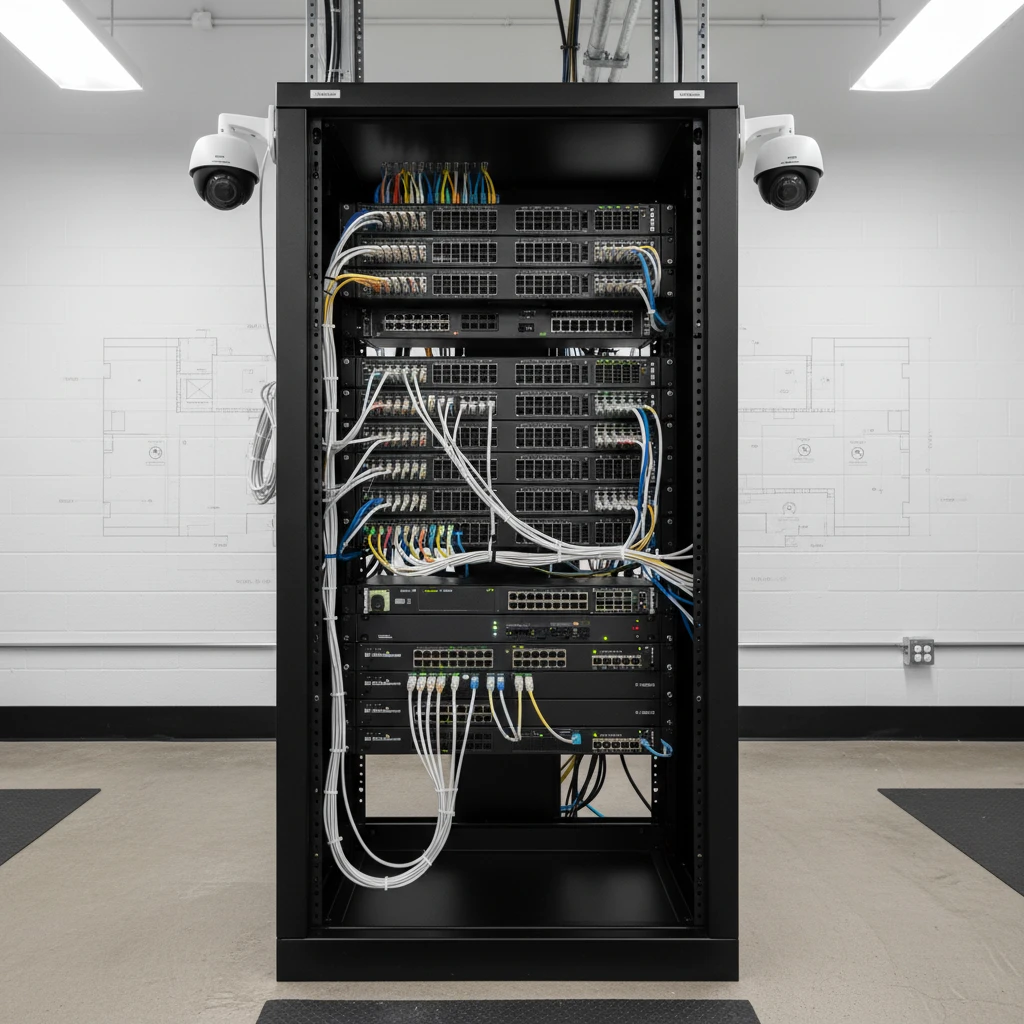
In the competitive business landscape of Mississauga, Brampton, and the broader GTA, a robust security camera system is no longer a luxury, but a necessity. However, even the most advanced cameras are only as good as the infrastructure supporting them. A poorly planned or executed cabling system can lead to frustrating downtime, reduced image quality, and a security system that’s simply not reliable when you need it most. This article delves into the often-overlooked yet crucial aspect of structured cabling for business security camera systems.
We’ll explore why proper cabling is paramount, what structured cabling entails, the key components involved, and the tangible benefits it offers to businesses seeking enhanced security coverage and scalability. Whether you’re upgrading an existing system or designing a new one for your warehouse, manufacturing facility, dealership, retail space, or office, understanding structured cabling is essential for ensuring a worthwhile security investment.
Why Proper Cabling Is the Unsung Hero of Your Business Security Camera System
Beyond Image Quality: Reliability and Uptime
While high-resolution cameras often steal the spotlight, reliable performance hinges on the cabling infrastructure. A poorly implemented cabling system can result in intermittent signal loss, corrupted video feeds, and even complete system outages. Imagine a critical security event occurring, only to discover that your cameras are offline due to a faulty cable connection. This is especially critical in high-stakes environments like warehouse security, where constant surveillance is vital to prevent theft and manage inventory. Investing in professional cabling services ensures consistent uptime, providing peace of mind that your security system is always operational. Consider the cost of a security breach versus the investment in a well-designed and installed cabling system; the latter often proves to be the more prudent choice.
Future-Proofing Your Security Investment: Scalability and Upgrades
Businesses evolve, and their security needs change accordingly. A structured cabling system provides the flexibility to easily add or relocate cameras as your business grows. Without a structured approach, adding new cameras can quickly become a logistical nightmare, involving tangled cables, overloaded switches, and potentially requiring a complete overhaul of your existing infrastructure. For businesses planning for future expansion, such as dealerships adding new service bays or manufacturing facilities increasing production lines, a scalable cabling system is crucial. Think of it as building a solid foundation for your security infrastructure, allowing you to adapt and expand without incurring significant costs or disruptions down the road. Furthermore, a well-structured system simplifies future technology upgrades, such as transitioning to higher-resolution cameras or implementing advanced analytics.
Understanding Structured Cabling for CCTV: What It Is and Why It Matters for Businesses
Defining Structured Cabling: A Foundation for Network Performance
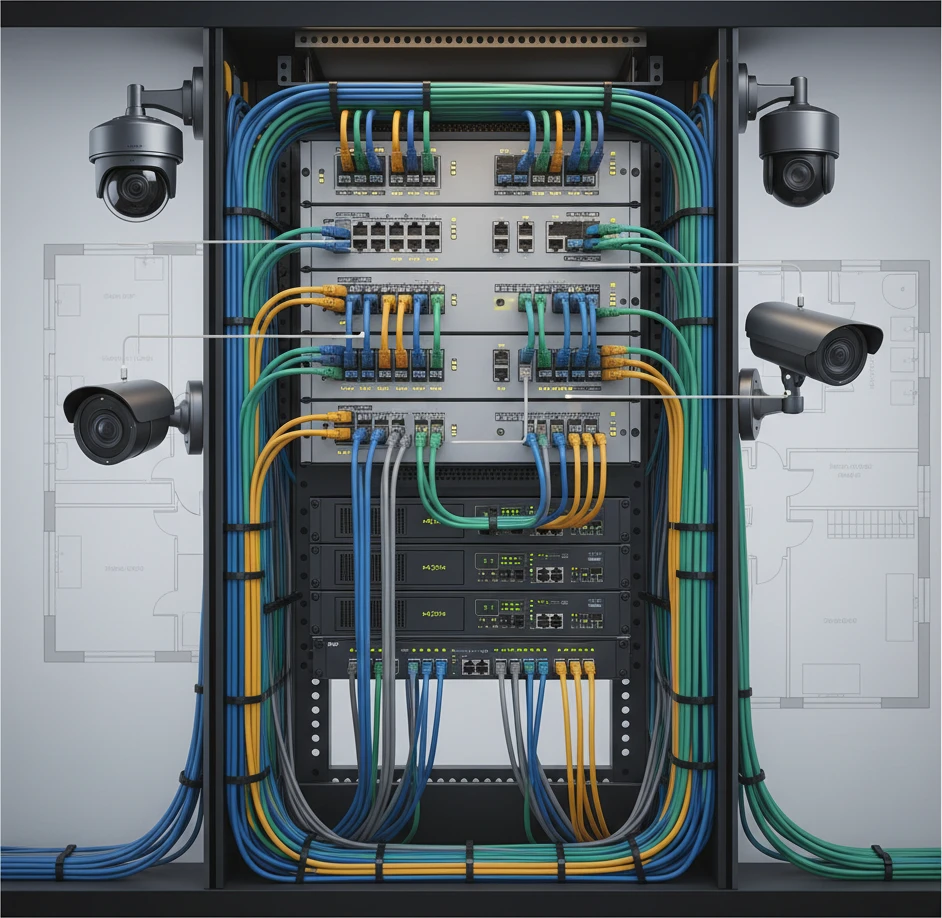
Structured cabling is more than just running wires; it’s a comprehensive approach to organizing and managing the cabling infrastructure within a building. It involves a standardized, hierarchical system of cables, connectors, patch panels, and other components, all designed to create a robust and reliable network. This standardized approach makes troubleshooting, maintenance, and upgrades significantly easier. Unlike haphazard cabling, which often leads to tangled messes and signal interference, structured cabling provides a clear, organized, and easily manageable system. A well-designed structured cabling system ensures optimal network performance, minimizing latency and maximizing bandwidth for your security cameras, leading to smoother video streaming and reliable data transmission.
The Role of PoE (Power over Ethernet) in Modern Security Camera Systems
Power over Ethernet (PoE) has revolutionized security camera installations by allowing both power and data to be transmitted over a single Ethernet cable. This eliminates the need for separate power outlets for each camera, simplifying installation and reducing costs. PoE switches provide power directly to the cameras, making the installation process cleaner and more efficient. In the context of structured cabling, PoE requires careful planning and implementation. It’s crucial to choose the right type of cable (e.g., Cat5e or Cat6) and PoE switch to ensure sufficient power delivery to all cameras, especially those with power-intensive features like infrared illumination or pan-tilt-zoom (PTZ) functionality. Using the right structured cabling infrastructure from the start is key for businesses implementing security with PoE.
The Impact on Scalability: Adding Cameras Without Major Overhauls
One of the primary advantages of structured cabling is its scalability. With a well-designed system, adding new cameras is a relatively straightforward process, often involving simply connecting the new camera to an available port on a patch panel or switch. This contrasts sharply with non-structured cabling, where adding a camera might require running new cables across ceilings and walls, potentially disrupting operations and creating unsightly cable clutter. Structured cabling provides a designated pathway for future expansion, allowing businesses to seamlessly integrate new cameras without the need for extensive rewiring or infrastructure modifications. As businesses grow and their security needs evolve, this scalability becomes increasingly valuable, protecting their initial investment and minimizing future costs. For instance, a retail store expanding its floor space can easily add cameras to cover the new areas with minimal disruption.
Key Components of a Structured Cabling System for Commercial Security
Cat5e, Cat6, and Beyond: Choosing the Right Cable for Your Needs
Selecting the appropriate cable type is fundamental to a successful structured cabling system. Cat5e (Category 5 enhanced) is a common and cost-effective option for many standard security camera installations. However, Cat6 (Category 6) offers improved performance, including higher bandwidth and reduced crosstalk, making it a better choice for high-resolution cameras or environments with significant electromagnetic interference. Cat6a (Category 6a) provides even greater performance, supporting 10 Gigabit Ethernet over longer distances. Consider the bandwidth requirements of your cameras, the distance between cameras and network switches, and the potential for future upgrades when making your cable selection. While Cat5e may suffice for basic applications, investing in Cat6 or Cat6a can provide a more future-proof and reliable solution, especially for businesses that anticipate adding higher-resolution cameras or utilizing advanced video analytics in the future. Always consult with a professional installer to determine the optimal cable type for your specific needs.
Network Switches: The Central Nervous System of Your Camera Network
Network switches act as the central hub for your security camera network, connecting all cameras and facilitating communication between them and the network video recorder (NVR). Selecting the right switch is critical for ensuring adequate bandwidth and power delivery. PoE switches, as mentioned earlier, provide power to the cameras over the Ethernet cable, simplifying installation and reducing costs. When choosing a switch, consider the number of cameras you plan to support, the bandwidth requirements of each camera, and the power budget of the switch. Overloading a switch can lead to performance issues, such as dropped frames or intermittent video loss. Managed switches offer advanced features like VLANs (Virtual LANs) and QoS (Quality of Service), allowing you to prioritize video traffic and isolate your security camera network from other network traffic, enhancing security and performance. Remote viewing is greatly improved with the right network switch.
Patch Panels and Termination Points: Organization and Maintenance
Patch panels and termination points are essential for organizing and managing the cabling infrastructure. Patch panels provide a central location to terminate all the cables from the cameras, creating a clean and organized connection point. This simplifies troubleshooting, maintenance, and upgrades. Instead of having to trace individual cables back to the switch, technicians can easily identify and manage connections at the patch panel. Proper termination is crucial for ensuring signal integrity and preventing signal loss. Use high-quality connectors and termination tools to ensure a secure and reliable connection. Labeling all cables and ports clearly is also essential for efficient management and troubleshooting. A well-organized patch panel makes it easier to identify and resolve cabling issues, reducing downtime and minimizing disruptions to your security system. Think of it as the control panel for your camera network, allowing for easy access and management of all connections.
Cable Management: Preventing Tangled Messes and Signal Degradation
Proper cable management is often overlooked, but it’s crucial for maintaining the integrity and reliability of your security camera system. Tangled and disorganized cables can lead to signal degradation, reduced airflow, and increased risk of damage. Use cable ties, conduits, and other cable management accessories to keep cables neatly organized and protected. Avoid running cables near sources of electromagnetic interference, such as power lines or fluorescent lights, as this can cause signal degradation. Labeling cables clearly is also essential for easy identification and troubleshooting. Implement a regular cable management routine to ensure that cables remain organized and in good condition. A well-managed cabling system not only looks professional but also improves performance, reduces the risk of damage, and simplifies maintenance. Consider using color-coded cables to differentiate between different camera zones or functions, further enhancing organization and ease of maintenance.
Benefits of Structured Cabling for Business Security Camera Systems in Mississauga, Brampton, and the GTA
Enhanced Reliability and Reduced Downtime for Critical Security Coverage
In the fast-paced business environments of Mississauga, Brampton, and throughout the GTA, reliable security coverage is paramount. Structured cabling minimizes downtime caused by cabling issues. A well-designed and installed system reduces the risk of signal loss, connection failures, and other problems that can compromise your security coverage. Regular maintenance and inspection of the cabling infrastructure can further enhance reliability, ensuring that your security system is always operational when you need it most. Businesses relying on constant surveillance, such as warehouses and manufacturing facilities, benefit significantly from the enhanced reliability provided by structured cabling. Reduced downtime translates to fewer security blind spots and a more secure operating environment. Furthermore, quicker troubleshooting, facilitated by organized cabling, minimizes the duration of any potential disruptions.
Improved Image Quality and Reduced Signal Interference
Structured cabling ensures optimal signal transmission, resulting in improved image quality and reduced signal interference. Proper cable selection, termination, and management minimize signal loss and crosstalk, delivering clearer and more reliable video feeds. This is particularly important for high-resolution cameras, where even minor signal degradation can significantly impact image quality. Reduced interference also minimizes the risk of false alarms and other performance issues. Businesses investing in high-quality cameras expect to receive clear and detailed video footage; structured cabling helps to ensure that these cameras perform to their full potential. In areas with high levels of electromagnetic interference, such as industrial environments, the benefits of structured cabling are even more pronounced. This improved signal quality contributes directly to mitigating liability risks.
Simplified Maintenance and Troubleshooting: Faster Issue Resolution
Structured cabling streamlines maintenance and troubleshooting, allowing for faster issue resolution and reduced downtime. The organized and labeled cabling infrastructure makes it easier to identify and resolve cabling problems. Technicians can quickly locate the source of the problem and implement the necessary repairs or replacements. This contrasts sharply with non-structured cabling, where troubleshooting can be a time-consuming and frustrating process, often involving tracing individual cables through a tangled mess. Simplified maintenance translates to lower labor costs and reduced disruptions to your business operations. Regular inspections and preventative maintenance can further enhance the reliability of the cabling system, minimizing the risk of future problems. Consider implementing a documented cabling system, which keeps information organized for faster resolution.
Scalability to Support Future Growth and Expansion of Your Security System
The GTA is a region of constant growth, and your business must be prepared to scale. Structured cabling provides the scalability to support future growth and expansion of your security system. As your business grows, you can easily add new cameras to the existing infrastructure without the need for extensive rewiring or modifications. This scalability protects your initial investment and minimizes future costs. Whether you’re expanding your office space, adding new retail locations, or increasing production capacity in your manufacturing facility, structured cabling allows you to seamlessly integrate new cameras into your security system. This flexibility is particularly valuable for businesses that anticipate significant growth in the coming years. A well-planned cabling system can accommodate future technology upgrades, such as transitioning to higher-resolution cameras or implementing advanced video analytics, ensuring that your security system remains current and effective. Professional guidance can help you plan for scalability. Designing a security system with future growth in mind will help you avoid costly overhauls.
Why Proper Cabling Is the Unsung Hero of Your Business Security Camera System
While security cameras and recording systems often take center stage in discussions about business security, proper cabling is the unsung hero that ensures these systems function optimally. Without a well-designed and implemented cabling infrastructure, even the most advanced cameras can suffer from poor image quality, unreliable performance, and limited scalability. The cabling system acts as the backbone of your security network, transmitting video signals, power, and data between cameras and recording devices. A robust and reliable cabling infrastructure is essential for maintaining continuous security coverage and protecting your business assets.
Beyond Image Quality: Reliability and Uptime
Structured cabling goes beyond just delivering clear images; it ensures reliability and uptime. A properly installed and maintained cabling system minimizes the risk of signal loss, network outages, and other issues that can compromise your security. This reliability is crucial for maintaining continuous security coverage, especially during critical times such as after-hours or weekends. With a reliable cabling infrastructure, you can have confidence that your security cameras are always recording and monitoring your premises, providing peace of mind and deterring potential threats.
Future-Proofing Your Security Investment: Scalability and Upgrades
Investing in structured cabling future-proofs your security investment. Technology evolves rapidly, and your security system should be able to adapt to new advancements. Structured cabling provides the flexibility to upgrade to newer camera technologies, such as higher-resolution cameras or advanced video analytics, without requiring a complete overhaul of your cabling infrastructure. This scalability protects your initial investment and ensures that your security system remains current and effective for years to come.
Understanding Structured Cabling for CCTV: What It Is and Why It Matters for Businesses
Structured cabling for CCTV systems is more than just running wires; it’s a comprehensive approach to designing and installing a standardized cabling infrastructure that supports your security camera network. This approach involves using high-quality cables, connectors, and other components to create a reliable and organized network that can handle the demands of modern security camera systems. For businesses in Mississauga, Brampton, and the greater Toronto area, understanding structured cabling is essential for ensuring the effectiveness and longevity of their security investments.
Defining Structured Cabling: A Foundation for Network Performance
Structured cabling is a standardized approach to cabling infrastructure that focuses on organization, efficiency, and reliability. It involves using a hierarchical design, with cables running from a central point to individual devices, such as security cameras. This design makes it easier to manage and maintain the cabling system, and it also provides better performance and scalability compared to traditional cabling methods. A structured cabling system adheres to industry standards, ensuring compatibility with various devices and technologies.
The Role of PoE (Power over Ethernet) in Modern Security Camera Systems
Power over Ethernet (PoE) plays a crucial role in modern security camera systems, allowing both power and data to be transmitted over a single Ethernet cable. This eliminates the need for separate power outlets for each camera, simplifying installation and reducing costs. Structured cabling supports PoE technology, providing a reliable and efficient way to power your security cameras. PoE also enables remote rebooting of cameras to save time and money. With PoE, you can easily manage and monitor your security camera system from a central location, making it easier to maintain and troubleshoot any issues that may arise.
The Impact on Scalability: Adding Cameras Without Major Overhauls
Scalability is a key benefit of structured cabling, allowing businesses to easily add new cameras to their security system without major overhauls. With a well-designed structured cabling infrastructure, adding new cameras is as simple as connecting them to the existing network. This eliminates the need for extensive rewiring or modifications, saving time and money. Structured cabling can handle the increasing bandwidth demands of modern security cameras, ensuring that your system can keep up with your growing needs. This scalability is essential for businesses that anticipate future growth or expansion.
Key Components of a Structured Cabling System for Commercial Security
A structured cabling system for commercial security is comprised of several key components, each playing a vital role in ensuring the overall performance and reliability of the network. These components include cables, connectors, patch panels, network switches, and cable management solutions. Choosing the right components and installing them correctly is essential for creating a robust and efficient cabling infrastructure. Understanding the function of each component will help you make informed decisions about your security cabling needs.
Cat5e, Cat6, and Beyond: Choosing the Right Cable for Your Needs
Selecting the appropriate cable type is crucial for optimal performance. Cat5e, Cat6, and Cat6a are common cable options, each offering different bandwidth and performance capabilities. Cat5e is suitable for basic security camera systems, while Cat6 and Cat6a provide higher bandwidth and better performance for more demanding applications, such as high-resolution cameras or video analytics. The best choice depends on your current and future needs. Consider factors such as the number of cameras, the resolution of the cameras, and the distance between the cameras and the recording device. If you are installing new cable, it is wise to install at least Cat6 to future-proof the system.
Network Switches: The Central Nervous System of Your Camera Network
Network switches act as the central nervous system of your camera network, directing data traffic between cameras and recording devices. The switch must be able to handle the bandwidth requirements of all the cameras connected to it, ensuring smooth video streaming and recording. Choosing the right network switch is essential for preventing bottlenecks and maintaining optimal performance. Consider features such as PoE support, port density, and network management capabilities when selecting a network switch for your security camera system.
Patch Panels and Termination Points: Organization and Maintenance
Patch panels and termination points are critical for organizing and maintaining your cabling infrastructure. Patch panels provide a central location for connecting and managing all the cables in your system. Termination points are where the cables are connected to the patch panel or other devices. Proper organization and labeling of patch panels and termination points make it easier to identify and troubleshoot cabling issues. This reduces downtime and ensures that your security system is always functioning optimally. A well-organized patch panel also simplifies future upgrades and modifications to your cabling infrastructure.
Cable Management: Preventing Tangled Messes and Signal Degradation
Effective cable management is essential for preventing tangled messes and signal degradation. Proper cable management involves using cable ties, conduits, and other accessories to organize and protect the cables in your system. This not only improves the appearance of your cabling infrastructure but also helps to prevent signal interference and damage to the cables. Organized cabling is easier to maintain and troubleshoot, reducing downtime and ensuring the reliability of your security camera system. Good cable management can also improve airflow around your equipment, helping to prevent overheating and extending the lifespan of your devices.
Why Proper Cabling Is the Unsung Hero of Your Business Security Camera System
While cameras and recording devices often take center stage, the cabling infrastructure is the backbone of any successful business security camera system. Without a robust and well-planned cabling system, even the most advanced security cameras are rendered ineffective. The cabling system is responsible for transmitting video, audio, and power between cameras, recording devices, and network switches, so its integrity is paramount.
Beyond Image Quality: Reliability and Uptime
A well-designed cabling system contributes to the overall reliability and uptime of your security system. By using high-quality cables and connectors, you can minimize the risk of signal degradation and connectivity issues. This ensures that your cameras are always online and recording, providing continuous surveillance coverage. Reliable cabling also reduces the need for frequent maintenance and repairs, saving you time and money in the long run.
Future-Proofing Your Security Investment: Scalability and Upgrades
Investing in a structured cabling system allows your security system to scale as your business grows. A properly designed cabling infrastructure can easily accommodate new cameras and other security devices without requiring a complete overhaul. This protects your initial investment and ensures that your security system can adapt to changing security needs. Future-proofing also involves selecting cables and connectors that support the latest technologies, such as 4K video and Power over Ethernet (PoE).
Understanding Structured Cabling for CCTV: What It Is and Why It Matters for Businesses
Structured cabling is a standardized approach to cabling infrastructure that provides a consistent and organized framework for connecting various devices, including security cameras, network switches, and recording devices. It involves using a hierarchical structure of cables, connectors, and patch panels to create a flexible and scalable network. Structured cabling offers numerous advantages over traditional point-to-point cabling, making it the preferred choice for modern security camera systems.
Defining Structured Cabling: A Foundation for Network Performance
Structured cabling is more than just running cables; it’s a comprehensive system. It includes horizontal cabling that runs from the work area to a telecommunications closet, backbone cabling that connects telecommunications closets, equipment rooms, and entrance facilities, and work area components, like patch cables that connect devices to outlets. This standardized approach ensures consistent performance and easier management.
The Role of PoE (Power over Ethernet) in Modern Security Camera Systems
Power over Ethernet (PoE) technology allows you to transmit both power and data over a single Ethernet cable. This eliminates the need for separate power cables for your security cameras, simplifying installation and reducing costs. PoE also provides a centralized power source for your cameras, making it easier to manage and monitor power consumption. PoE switches can provide power to your security cameras, offering flexibility in camera placement and reducing the need for electrical outlets near each camera.
The Impact on Scalability: Adding Cameras Without Major Overhauls
One of the key benefits of structured cabling is its scalability. With a well-designed structured cabling system, you can easily add new cameras or other security devices without disrupting the existing network. This is because the cabling infrastructure is designed to accommodate future expansion. The use of patch panels and modular connectors allows you to quickly connect and disconnect devices as needed, making it easy to scale your security system as your business grows. This scalability is a huge advantage for businesses that anticipate future growth or changes in their security needs.
Benefits of Structured Cabling for Business Security Camera Systems in Mississauga, Brampton, and the GTA
Structured cabling offers a wide range of benefits for business security camera systems in Mississauga, Brampton, and the GTA. These benefits include enhanced reliability, improved image quality, simplified maintenance, and scalability to support future growth. By investing in a structured cabling system, you can ensure that your security system is always functioning optimally, providing you with the peace of mind you need to protect your business.
Enhanced Reliability and Reduced Downtime for Critical Security Coverage
Structured cabling significantly enhances the reliability of your security camera system. By using high-quality cables and connectors, you can minimize the risk of signal degradation and connectivity issues. This ensures that your cameras are always online and recording, providing continuous surveillance coverage. Redundant cabling and backup power systems can further improve the reliability of your system, ensuring that it remains operational even in the event of a power outage or equipment failure.
Improved Image Quality and Reduced Signal Interference
A properly installed structured cabling system can improve the image quality of your security cameras. By using shielded cables and minimizing cable bends, you can reduce signal interference and ensure that your cameras are transmitting clear and crisp video. This is especially important for high-resolution cameras, which require a high-bandwidth connection to transmit video without loss of quality. Good cabling practices also help to prevent electromagnetic interference (EMI) and radio frequency interference (RFI), which can degrade image quality.
Simplified Maintenance and Troubleshooting: Faster Issue Resolution
Structured cabling simplifies maintenance and troubleshooting of your security camera system. With a well-organized cabling infrastructure, it is easy to identify and isolate cabling issues. Patch panels and labeled cables make it simple to trace cables and diagnose problems. This reduces downtime and allows you to quickly resolve any issues that may arise. Proper documentation of your cabling infrastructure can also help to speed up the troubleshooting process.
Scalability to Support Future Growth and Expansion of Your Security System
Structured cabling provides the scalability you need to support future growth and expansion of your security system. With a properly designed cabling infrastructure, you can easily add new cameras and other security devices without requiring a complete overhaul. This protects your initial investment and ensures that your security system can adapt to changing security needs. The use of modular components and standardized connectors makes it easy to add or remove devices as needed, allowing you to scale your security system quickly and efficiently.
Why Proper Cabling Is the Unsung Hero of Your Business Security Camera System
While the cameras themselves often take center stage, the quality and configuration of your cabling infrastructure are paramount to ensuring reliable and effective surveillance. Poor cabling can lead to signal loss, downtime, and compromised security footage. Proper cabling, on the other hand, ensures optimal performance, longevity, and scalability of your security camera system. Neglecting this critical aspect is akin to building a house on a weak foundation; it may appear functional initially, but it’s bound to encounter problems down the line.
Beyond Image Quality: Reliability and Uptime
It’s easy to focus solely on image clarity, but a high-resolution image is useless if the camera frequently disconnects or experiences downtime. Proper cabling ensures consistent uptime, which is vital for maintaining continuous surveillance and security coverage. Investing in quality cables and professional installation minimizes the risk of unexpected outages that could leave your property vulnerable.
Future-Proofing Your Security Investment: Scalability and Upgrades
Business needs evolve, and your security system should be able to adapt accordingly. Structured cabling provides a foundation for seamless scalability. Whether you’re adding more cameras, upgrading to higher resolutions, or integrating new security technologies, a well-designed cabling system ensures that your infrastructure can handle the increased demands without requiring a complete overhaul.
Understanding Structured Cabling for CCTV: What It Is and Why It Matters for Businesses
Structured cabling is a standardized approach to organizing and managing the complex network of cables that support your security camera system. It’s more than just running wires; it’s about creating a robust, reliable, and easily maintainable infrastructure that underpins your entire security apparatus.
Defining Structured Cabling: A Foundation for Network Performance
Structured cabling involves designing and installing a cabling system in a systematic and organized manner. This includes using high-quality cables, connectors, and termination points, as well as following industry standards for installation and testing. The goal is to create a cabling infrastructure that is easy to manage, troubleshoot, and upgrade. A well-designed structured cabling system is the foundation for reliable network performance and ensures that your security cameras are always online and recording.
The Role of PoE (Power over Ethernet) in Modern Security Camera Systems
Power over Ethernet (PoE) is a technology that allows Ethernet cables to carry both data and electrical power. This eliminates the need for separate power cables for security cameras, simplifying installation and reducing costs. PoE also allows you to remotely power cycle cameras, which can be useful for troubleshooting. Structured cabling is essential for PoE to function reliably. High-quality cables and connectors are required to transmit power and data over the same cable without signal degradation.
The Impact on Scalability: Adding Cameras Without Major Overhauls
One of the biggest benefits of structured cabling is its scalability. With a well-designed cabling infrastructure, you can easily add new cameras without having to run new cables for each one. This is because structured cabling uses a centralized patch panel, which allows you to easily connect and disconnect devices. This scalability can save you a significant amount of time and money in the long run, especially if you plan to expand your security camera system in the future.
Key Components of a Structured Cabling System for Commercial Security
A structured cabling system is comprised of several essential components that work together to ensure reliable data and power transmission. Understanding these components is crucial for making informed decisions about your security infrastructure.
Cat5e, Cat6, and Beyond: Choosing the Right Cable for Your Needs
Choosing the right type of cable is crucial for optimal performance. Cat5e is suitable for basic security camera systems, while Cat6 and Cat6a offer higher bandwidth and improved performance for high-resolution cameras and demanding network environments. Considerations include cable length, network speed requirements, and future bandwidth needs. It is important to consult with a cabling expert to determine the best cable type for your specific application. You can see a detailed breakdown of the different cable types and their specifications on this resource.
Network Switches: The Central Nervous System of Your Camera Network
Network switches act as the central hub for your security camera network, connecting all devices and directing data traffic. Selecting the right switch with sufficient ports, PoE capabilities, and bandwidth is essential for ensuring smooth operation and preventing bottlenecks. Managed switches offer advanced features like VLANs and Quality of Service (QoS), allowing you to prioritize traffic and enhance network security.
Patch Panels and Termination Points: Organization and Maintenance
Patch panels and termination points provide a centralized location for connecting and managing network cables. They simplify cable organization, making it easier to identify and troubleshoot issues. Properly labeled patch panels facilitate quick and efficient cable patching, reducing downtime and minimizing errors during maintenance or upgrades.
Cable Management: Preventing Tangled Messes and Signal Degradation
Proper cable management is essential for maintaining a clean, organized, and efficient cabling infrastructure. Using cable ties, trays, and conduits prevents tangled messes, protects cables from damage, and reduces the risk of signal interference. Good cable management also improves airflow, which can help to prevent overheating and extend the lifespan of your cables.
Benefits of Structured Cabling for Business Security Camera Systems in Mississauga, Brampton, and the GTA
Businesses in Mississauga, Brampton, and throughout the GTA can reap significant advantages from implementing structured cabling for their security camera systems. From enhanced reliability and image quality to simplified maintenance and scalability, the benefits are numerous.
Enhanced Reliability and Reduced Downtime for Critical Security Coverage
Structured cabling significantly enhances the reliability of your security camera system. By using high-quality cables and connectors, you can minimize the risk of signal degradation and connectivity issues. This ensures that your cameras are always online and recording, providing continuous surveillance coverage. Redundant cabling and backup power systems can further improve the reliability of your system, ensuring that it remains operational even in the event of a power outage or equipment failure.
Improved Image Quality and Reduced Signal Interference
A properly installed structured cabling system can improve the image quality of your security cameras. By using shielded cables and minimizing cable bends, you can reduce signal interference and ensure that your cameras are transmitting clear and crisp video. This is especially important for high-resolution cameras, which require a high-bandwidth connection to transmit video without loss of quality. Good cabling practices also help to prevent electromagnetic interference (EMI) and radio frequency interference (RFI), which can degrade image quality.
Simplified Maintenance and Troubleshooting: Faster Issue Resolution
Structured cabling simplifies maintenance and troubleshooting of your security camera system. With a well-organized cabling infrastructure, it is easy to identify and isolate cabling issues. Patch panels and labeled cables make it simple to trace cables and diagnose problems. This reduces downtime and allows you to quickly resolve any issues that may arise. Proper documentation of your cabling infrastructure can also help to speed up the troubleshooting process.
Scalability to Support Future Growth and Expansion of Your Security System
Structured cabling provides the scalability you need to support future growth and expansion of your security system. With a properly designed cabling infrastructure, you can easily add new cameras and other security devices without requiring a complete overhaul. This protects your initial investment and ensures that your security system can adapt to changing security needs. The use of modular components and standardized connectors makes it easy to add or remove devices as needed, allowing you to scale your security system quickly and efficiently.
Why Proper Cabling Is the Unsung Hero of Your Business Security Camera System
While security cameras themselves often take center stage, proper cabling is the crucial infrastructure that ensures optimal performance, reliability, and scalability. Think of it as the circulatory system of your security network, quietly working behind the scenes to keep everything running smoothly.
Beyond Image Quality: Reliability and Uptime
The reliability of your security camera system hinges on the robustness of its cabling. A faulty or poorly installed cable can lead to intermittent outages, corrupt data, and ultimately, a compromised security posture. Investing in quality cabling and professional installation ensures that your cameras remain online and operational when you need them most.
Future-Proofing Your Security Investment: Scalability and Upgrades
Businesses evolve, and their security needs change accordingly. Structured cabling provides the flexibility to easily expand and upgrade your security camera system without requiring a complete overhaul. This future-proofs your investment and allows you to adapt to emerging threats and technological advancements.
Understanding Structured Cabling for CCTV: What It Is and Why It Matters for Businesses
Structured cabling is a standardized approach to cabling infrastructure. Unlike point-to-point cabling, it involves a planned, organized system that supports a variety of hardware uses. For businesses deploying CCTV, understanding structured cabling is crucial for creating a reliable and scalable security system.
Defining Structured Cabling: A Foundation for Network Performance
Structured cabling involves a hierarchical design, usually including a central patch panel, horizontal cabling to individual outlets, and standardized termination points. This organized design makes for easier management, faster troubleshooting, and better overall network performance. It is the foundation upon which reliable CCTV systems are built.
The Role of PoE (Power over Ethernet) in Modern Security Camera Systems
Power over Ethernet (PoE) has revolutionized security camera installations. PoE allows both power and data to be transmitted over a single Ethernet cable, simplifying installation and reducing the need for separate power outlets for each camera. This not only saves on installation costs but also improves flexibility in camera placement.
The Impact on Scalability: Adding Cameras Without Major Overhauls
A key advantage of structured cabling for CCTV is its scalability. When it’s time to expand your surveillance coverage, a well-designed structured cabling system makes it easy to add new cameras without requiring major infrastructure changes. Pre-planned cable pathways and spare ports on your patch panel simplify the expansion process, saving you time and money.
Key Components of a Structured Cabling System for Commercial Security
A structured cabling system is comprised of several key components that work together to deliver a reliable and efficient network. Understanding these components is essential for planning and implementing an effective security camera system.
Cat5e, Cat6, and Beyond: Choosing the Right Cable for Your Needs
The type of cable you choose is critical for performance. Cat5e is a cost-effective option for basic security camera systems, while Cat6 offers higher bandwidth and better performance for high-resolution cameras. Newer standards like Cat6a and Cat8 offer even greater bandwidth and are ideal for demanding applications or future-proofing your system. Consult with a qualified cabling expert to determine the best cable for your specific needs.
Network Switches: The Central Nervous System of Your Camera Network
Network switches are the central nervous system of your camera network, routing data between cameras, recording devices, and monitoring stations. Choosing the right switch is essential for ensuring adequate bandwidth and performance. PoE switches can simplify installation by providing power to your cameras over the same cable that transmits data. Managed switches offer advanced features such as VLANs and QoS, which can improve network security and performance.
Patch Panels and Termination Points: Organization and Maintenance
Patch panels and termination points provide a centralized location for connecting and managing your cables. This organized approach simplifies troubleshooting and maintenance, allowing you to quickly identify and resolve cabling issues. Labeled patch panels make it easy to trace cables and ensure that everything is properly connected.
Cable Management: Preventing Tangled Messes and Signal Degradation
Proper cable management is essential for maintaining a clean and organized cabling infrastructure. Using cable ties, conduits, and other cable management tools helps to prevent tangled messes and reduces the risk of signal degradation. Well-organized cables are easier to maintain and troubleshoot, saving you time and money in the long run.
Benefits of Structured Cabling for Business Security Camera Systems in Mississauga, Brampton, and the GTA
Businesses in Mississauga, Brampton, and the Greater Toronto Area (GTA) can greatly benefit from implementing structured cabling for their security camera systems. From enhanced security to simplified maintenance, the advantages are compelling.
Common Cabling Mistakes That Can Compromise Your Security System (And How to Avoid Them)
Using Inferior or Uncertified Cables: Short-Circuiting Your Security
Opting for cheaper, uncertified network cables may seem like a cost-saving measure upfront, but it can quickly lead to significant problems. These cables often lack the shielding and construction quality required to reliably transmit data, particularly over longer distances. This can result in poor video quality, intermittent signal loss, and even complete system failure. For example, using unshielded twisted pair (UTP) cable in environments with electromagnetic interference (EMI) from machinery or electrical equipment can severely degrade signal quality. Always use certified cables (e.g., Cat5e, Cat6, or Cat6a) from reputable manufacturers. Verify that the cables meet industry standards like those set by the Telecommunications Industry Association (TIA). A Commercial CCTV Mississauga installation demands certified cables to minimize downtime.
Improper Cable Termination: A Recipe for Signal Loss and Downtime
Even the best cables won’t perform optimally if they’re not terminated correctly. Improper termination, such as loose connections or incorrect wiring sequences, can cause signal loss, reduced bandwidth, and network instability. A poorly crimped RJ45 connector, for instance, can introduce significant resistance, weakening the signal and potentially damaging connected equipment. To avoid this, invest in quality termination tools and ensure that technicians are properly trained in industry-standard termination techniques. Conduct thorough testing after termination to verify continuity and signal strength using a cable tester. Always double-check the wiring sequence (T568A or T568B) to ensure consistency throughout the installation. Poor termination is a common issue that leads to Commercial CCTV Brampton systems underperforming.
Ignoring Cable Management Best Practices: Creating a Maintenance Nightmare
Neglecting cable management may seem like a minor issue during installation, but it can create a major headache down the road. Tangled, disorganized cables make troubleshooting difficult, increase the risk of accidental disconnections, and impede airflow, potentially leading to overheating of network equipment. Implement a structured cabling system with proper labeling, cable trays, and conduit to keep cables organized and protected. Use cable ties or Velcro straps to bundle cables neatly. Maintain adequate spacing between cables to prevent interference. Document the cable routes and connections for future reference. A well-organized cable infrastructure simplifies maintenance and reduces downtime, keeping your business security cameras online.
Insufficient Bandwidth Planning: Bottlenecking Your Video Surveillance
Underestimating the bandwidth requirements of your security camera system is a common mistake that can lead to poor video quality and system performance. High-resolution cameras, especially those recording at high frame rates, generate significant amounts of data. If your network infrastructure doesn’t have sufficient bandwidth to handle this data flow, you’ll experience bottlenecks, resulting in choppy video, delayed playback, and even dropped connections. Before installing your system, calculate the bandwidth requirements based on the number of cameras, resolution, frame rate, and compression method. Choose network switches and cabling that can support the required bandwidth. Consider using network monitoring tools to track bandwidth usage and identify potential bottlenecks. Regular monitoring helps ensure optimal performance of your business security cameras.
The Importance of Professional Installation: Why DIY Cabling is a Risky Proposition for Commercial Security
Ensuring Compliance with Local Building Codes and Regulations
Commercial CCTV installations are often subject to local building codes and regulations, particularly concerning fire safety and electrical wiring. These codes are in place to protect people and property, and failure to comply can result in fines, project delays, or even legal action. A professional installer is familiar with these codes and regulations and can ensure that your installation meets all requirements. This includes using fire-rated cables, properly grounding equipment, and obtaining necessary permits. Trying to navigate these complexities on your own can be daunting and may lead to costly mistakes. Engaging a professional installer ensures compliance and peace of mind.
Expertise in Cable Routing and Termination: Maximizing Performance and Longevity
Professional installers possess the expertise and experience necessary to route and terminate cables in a way that maximizes performance and longevity. They understand how to avoid sources of interference, minimize cable bends, and properly support cables to prevent damage. Their expertise leads to better signal integrity and fewer points of failure. A skilled installer uses specialized tools and techniques to ensure that cables are properly terminated and tested, guaranteeing optimal performance. For example, they might use a fluke DSX-5000 cable analyzer, a professional tool, to ensure compliance. DIY installations often lack this level of precision, which can result in substandard performance and premature cable failure. Business Security Cameras: Mitigate Liability Risks and ensure your system runs correctly with professional installation.
Proper Testing and Certification: Guaranteeing System Reliability
After installation, professional installers conduct thorough testing and certification to ensure that the system is functioning properly and meets industry standards. This testing includes verifying cable continuity, signal strength, and network performance. They can also provide documentation certifying that the installation meets all applicable codes and regulations. This certification provides assurance that the system is reliable and will perform as expected. DIY installations often lack this level of testing and certification, leaving you vulnerable to potential problems down the road. Investing in professional installation provides a higher degree of confidence in the reliability of your security camera system. Look for installers offering certification according to TIA standards. Protect Your Business by prioritizing certified performance.
Power over Ethernet (PoE): Streamlining Installation and Reducing Costs for Business Security Cameras
Simplified Cabling: One Cable for Power and Data
Power over Ethernet (PoE) technology simplifies the installation of security cameras by allowing a single Ethernet cable to carry both power and data. This eliminates the need for separate power cables, reducing the amount of wiring required and making installation faster and easier. For example, in a warehouse setting, running separate power and data cables to each camera can be time-consuming and expensive. With PoE, only one cable needs to be run, simplifying the installation process and reducing labor costs. PoE significantly simplifies installation. The simplified cabling enhances the security camera’s ROI.
Centralized Power Management: Increased Control and Efficiency
PoE enables centralized power management for security cameras, providing greater control and efficiency. With PoE switches, power can be remotely monitored and controlled, allowing for easy troubleshooting and maintenance. For instance, if a camera malfunctions, power can be remotely cycled to attempt a reset without needing to physically access the camera. This centralized control improves system uptime and reduces the need for on-site maintenance. Additionally, PoE switches often support power prioritization, ensuring that critical cameras receive adequate power even during periods of high demand. PoE offers remote access and control to enhance business security. Commercial CCTV: System Design for Growing Businesses that takes advantage of POE can easily scale to meet future needs.
Reduced Installation Costs: Saving Time and Money on Electrical Work
By eliminating the need for separate power cables and outlets, PoE can significantly reduce installation costs. Electrical work can be expensive, especially in commercial buildings. PoE eliminates the need for electricians to install new power outlets for each camera, saving both time and money. For example, a multi-camera installation in a retail store can require extensive electrical work, adding significantly to the overall project cost. PoE reduces these costs, making security camera systems more affordable for businesses. Furthermore, PoE enables flexibility, since security cameras can be easily moved and reconnected without the need to re-run electrical wiring, streamlining any future renovations.
Is Your Current Security Camera Cabling System Ready for the Future? A Scalability Checklist
Assess your current infrastructure: bandwidth, capacity and condition.
Before considering expanding or upgrading your commercial security camera system, perform a thorough assessment of your current cabling infrastructure. Evaluate the bandwidth capacity of your existing cables and network switches. Are they capable of supporting the data generated by higher-resolution cameras or advanced video analytics? Inspect the physical condition of the cables for signs of damage, wear, or corrosion. Check the termination points for loose connections or improper wiring. Document your findings and identify any potential bottlenecks or weaknesses in the system. A clear understanding of the existing infrastructure is crucial for making informed decisions about future upgrades. This assessment should also include a review of any existing documentation, like as-built diagrams or cable certification reports. Failing to do so risks costly surprises down the line.
Plan for future camera expansion and technology upgrades.
Scalability should be a key consideration when designing and installing a security camera system. Anticipate future growth and plan for the addition of more cameras or the adoption of new technologies. Choose cabling and network equipment that can support the increased bandwidth and power demands of future upgrades. For example, consider using Cat6a cabling instead of Cat5e, even if it’s not immediately required. Cat6a offers higher bandwidth capacity and better performance, providing a future-proof foundation for your security system. Design your cabling infrastructure with extra capacity to accommodate future cameras or other network devices. Consider the possible integration of license plate recognition (LPR) or facial recognition technologies which increase bandwidth demands. Thinking ahead allows you to scale your system without replacing the entire cabling infrastructure.
Consider wireless options for difficult-to-cable areas.
While structured cabling is generally the preferred solution for security camera systems, there are situations where it may be impractical or cost-prohibitive to run cables. In these cases, wireless security cameras can provide a viable alternative. Wireless cameras can be used in areas where it’s difficult to access or where running cables would be too disruptive, such as historical buildings, remote locations, or areas with hazardous materials. However, it’s important to consider the limitations of wireless technology, such as potential interference, limited bandwidth, and security vulnerabilities. Implement strong encryption and authentication protocols to protect wireless camera feeds from unauthorized access. Before opting for wireless, always explore all cabling options first. Prioritize wired connections when possible for optimal reliability and performance. CCTV System Upgrades: Future-Proof Your Business Security by including wireless as a fallback option, not the primary option, in areas that are costly or problematic to cable.
Common Cabling Mistakes That Can Compromise Your Security System (And How to Avoid Them)
Using Inferior or Uncertified Cables: Short-Circuiting Your Security
One of the most common mistakes is using inferior or uncertified cables. Cheap cables may not meet the required specifications for data transmission or power delivery. This can lead to signal degradation, poor video quality, and even system failures. Always use high-quality, certified cables from reputable manufacturers. Ensure that the cables are tested and certified to meet industry standards such as TIA/EIA. Avoid using unshielded twisted pair (UTP) cables in environments with high electromagnetic interference (EMI). Shielded twisted pair (STP) cables provide better protection against EMI, ensuring a more reliable signal.
Improper Cable Termination: A Recipe for Signal Loss and Downtime
Even the best cables will perform poorly if they are not terminated properly. Improper termination can result in signal loss, intermittent connectivity, and even damage to equipment. Use the correct tools and techniques to terminate cables according to industry standards. Ensure that all connections are secure and properly seated. Avoid over-tightening or under-tightening connectors, as this can damage the cable or the equipment. Use a cable tester to verify the integrity of each connection after termination.
Ignoring Cable Management Best Practices: Creating a Maintenance Nightmare
Poor cable management can create a tangled mess that is difficult to troubleshoot and maintain. This can lead to accidental disconnections, damage to cables, and increased downtime. Implement a structured cable management system using cable trays, conduits, and labels. Organize cables neatly and securely to prevent them from becoming tangled or damaged. Label each cable clearly to identify its source and destination. This will make it easier to troubleshoot problems and perform maintenance.
Insufficient Bandwidth Planning: Bottlenecking Your Video Surveillance
Insufficient bandwidth planning is a major cause of performance issues in security camera systems. If the network does not have enough bandwidth to support the video streams from all of the cameras, it can result in slow video playback, dropped frames, and even system crashes. Before installing a security camera system, assess the bandwidth requirements of each camera. Consider the resolution, frame rate, and compression settings of the video streams. Choose network equipment that can support the combined bandwidth requirements of all of the cameras. Regularly monitor network performance to identify and address any bandwidth bottlenecks.
The Importance of Professional Installation: Why DIY Cabling is a Risky Proposition for Commercial Security
While it may be tempting to save money by installing security camera cabling yourself, this can be a risky proposition for commercial security systems. Professional installers have the knowledge, skills, and experience to ensure that the cabling is installed correctly and meets all applicable standards. A poorly installed cabling system can compromise the performance and reliability of your security cameras, leaving your business vulnerable to theft and vandalism.
Ensuring Compliance with Local Building Codes and Regulations
Professional installers are familiar with local building codes and regulations related to electrical and cabling work. They can ensure that the installation meets all applicable requirements, avoiding costly fines and delays. DIY installations may not meet these requirements, potentially leading to safety hazards and legal issues. Ensure your chosen installer pulls the proper permits.
Expertise in Cable Routing and Termination: Maximizing Performance and Longevity
Professional installers have the expertise to route cables properly, avoiding potential sources of interference and damage. They also have the skills to terminate cables correctly, ensuring optimal performance and longevity. Poor cable routing can expose cables to physical damage, while improper termination can cause signal loss and intermittent connectivity.
Proper Testing and Certification: Guaranteeing System Reliability
Professional installers use specialized equipment to test and certify the cabling after installation. This ensures that the cabling meets all applicable standards and is performing optimally. DIY installations typically lack this testing and certification, potentially leading to undetected problems that can compromise the system’s reliability. A certified cabling system provides peace of mind, knowing that your security cameras are supported by a reliable infrastructure.
Power over Ethernet (PoE): Streamlining Installation and Reducing Costs for Business Security Cameras
Power over Ethernet (PoE) is a technology that allows you to transmit power and data over the same Ethernet cable. This can greatly simplify the installation of security cameras, as it eliminates the need for separate power cables. PoE can also reduce costs by centralizing power management and reducing the amount of electrical work required.
Simplified Cabling: One Cable for Power and Data
With PoE, you only need to run one cable to each camera, simplifying the installation process and reducing cable clutter. This can be particularly beneficial in areas where it’s difficult to access power outlets or where running separate power cables would be too expensive. PoE makes it easier to install cameras in remote locations or in areas where there are no readily available power sources.
Centralized Power Management: Increased Control and Efficiency
PoE allows you to centralize power management, making it easier to monitor and control the power consumption of your security cameras. You can use a PoE switch or injector to provide power to the cameras, and you can monitor the power consumption of each camera remotely. This can help you identify and address any power-related issues quickly and efficiently.
Reduced Installation Costs: Saving Time and Money on Electrical Work
PoE can significantly reduce installation costs by eliminating the need for separate power cables and electrical outlets. This can save you time and money on electrical work, making PoE a cost-effective solution for security camera installations. PoE also reduces the risk of electrical hazards, as there are fewer power cables to worry about.
Is Your Current Security Camera Cabling System Ready for the Future? A Scalability Checklist
Assess your current infrastructure: bandwidth, capacity and condition.
Begin by evaluating the current state of your cabling infrastructure. Determine the existing bandwidth capacity and whether it meets your current needs. Check the condition of the cables for any signs of damage or wear. A clear understanding of the existing infrastructure is crucial for making informed decisions about future upgrades. This assessment should also include a review of any existing documentation, like as-built diagrams or cable certification reports. Failing to do so risks costly surprises down the line.
Plan for future camera expansion and technology upgrades.
Scalability should be a key consideration when designing and installing a security camera system. Anticipate future growth and plan for the addition of more cameras or the adoption of new technologies. Choose cabling and network equipment that can support the increased bandwidth and power demands of future upgrades. For example, consider using Cat6a cabling instead of Cat5e, even if it’s not immediately required. Cat6a offers higher bandwidth capacity and better performance, providing a future-proof foundation for your security system. Design your cabling infrastructure with extra capacity to accommodate future cameras or other network devices. Consider the possible integration of license plate recognition (LPR) or facial recognition technologies which increase bandwidth demands. Thinking ahead allows you to scale your system without replacing the entire cabling infrastructure.
Consider wireless options for difficult-to-cable areas.
While structured cabling is generally the preferred solution for security camera systems, there are situations where it may be impractical or cost-prohibitive to run cables. In these cases, wireless security cameras can provide a viable alternative. Wireless cameras can be used in areas where it’s difficult to access or where running cables would be too disruptive, such as historical buildings, remote locations, or areas with hazardous materials. However, it’s important to consider the limitations of wireless technology, such as potential interference, limited bandwidth, and security vulnerabilities. Implement strong encryption and authentication protocols to protect wireless camera feeds from unauthorized access. Before opting for wireless, always explore all cabling options first. Prioritize wired connections when possible for optimal reliability and performance. CCTV System Upgrades: Future-Proof Your Business Security by including wireless as a fallback option, not the primary option, in areas that are costly or problematic to cable.
Common Cabling Mistakes That Can Compromise Your Security System (And How to Avoid Them)
Several common cabling mistakes can undermine the performance and reliability of your security camera system. Avoiding these errors is crucial for ensuring a robust and effective surveillance solution.
Using Inferior or Uncertified Cables: Short-Circuiting Your Security
Using cheap, uncertified cables is a common mistake that can lead to signal degradation, intermittent connectivity issues, and even system failures. Always use high-quality, certified cables that meet industry standards. Look for cables that are tested and certified by reputable organizations. Although tempting, saving a few dollars on cabling can result in significantly higher costs in the long run due to troubleshooting, repairs, and replacements.
Improper Cable Termination: A Recipe for Signal Loss and Downtime
Improper cable termination is another common cause of signal loss and downtime. Ensure that all cables are terminated correctly using the appropriate tools and techniques. Follow industry best practices for cable termination to minimize signal reflection and ensure a secure connection. Double-check your work and test each connection to verify that it is working properly. Poorly terminated cables can introduce noise and interference into the system, resulting in degraded video quality and unreliable performance.
Ignoring Cable Management Best Practices: Creating a Maintenance Nightmare
Ignoring cable management best practices can lead to a tangled mess of cables that is difficult to troubleshoot and maintain. Use cable ties, labels, and other cable management tools to organize and route cables neatly. Clearly label each cable to identify its purpose and destination. This will make it easier to troubleshoot problems and perform maintenance in the future. Messy cabling not only looks unprofessional but also increases the risk of accidental damage and disconnection.
Insufficient Bandwidth Planning: Bottlenecking Your Video Surveillance
Failing to plan for sufficient bandwidth can bottleneck your video surveillance system, leading to lag, buffering, and dropped frames. Calculate the bandwidth requirements of your cameras and network devices to ensure that your cabling infrastructure can support the load. Consider the resolution, frame rate, and compression settings of your cameras when calculating bandwidth requirements. If you are planning to add more cameras in the future, factor in the increased bandwidth demands. Insufficient bandwidth can severely impact the effectiveness of your security system.
The Importance of Professional Installation: Why DIY Cabling is a Risky Proposition for Commercial Security
While DIY cabling might seem like a cost-effective option, it can be a risky proposition for commercial security camera systems. Professional installation offers several benefits that can ensure the reliability and performance of your system.
Ensuring Compliance with Local Building Codes and Regulations
Professional installers are familiar with local building codes and regulations related to electrical work and fire safety. They can ensure that your cabling installation meets all applicable requirements, avoiding costly fines and delays. They also know how to properly ground and protect cables to prevent electrical hazards. Compliance with building codes is essential for the safety of your employees and customers.
Expertise in Cable Routing and Termination: Maximizing Performance and Longevity
Professional installers have the expertise and experience to properly route and terminate cables, maximizing performance and longevity. They know how to avoid sharp bends, interference sources, and other potential problems that can degrade signal quality. They also use high-quality tools and techniques to ensure secure and reliable connections. Proper cable routing and termination are critical for the long-term performance of your security camera system.
Proper Testing and Certification: Guaranteeing System Reliability
Professional installers use specialized testing equipment to verify that all cables are properly installed and functioning correctly. They can identify and resolve any issues before they cause problems. They can also provide certification documentation to prove that the installation meets industry standards. Proper testing and certification are essential for guaranteeing the reliability of your security camera system.
Power over Ethernet (PoE): Streamlining Installation and Reducing Costs for Business Security Cameras
Power over Ethernet (PoE) is a technology that allows you to transmit both power and data over a single Ethernet cable. This can simplify installation and reduce costs for business security cameras.
Simplified Cabling: One Cable for Power and Data
With PoE, you only need to run one cable to each camera, eliminating the need for separate power cables and outlets. This can significantly simplify installation, especially in areas where power outlets are not readily available. It also reduces the amount of cabling required, making the installation neater and more organized.
Centralized Power Management: Increased Control and Efficiency
PoE allows you to centralize power management for your security cameras, providing increased control and efficiency. You can use a PoE switch or injector to power all of your cameras from a central location. This makes it easier to monitor and manage power consumption, and it also allows you to remotely reboot cameras if necessary.
Reduced Installation Costs: Saving Time and Money on Electrical Work
By eliminating the need for separate power cables and outlets, PoE can significantly reduce installation costs. You can save time and money on electrical work, and you can avoid the need to hire an electrician. This can make PoE a cost-effective solution for businesses of all sizes.
Is Your Current Security Camera Cabling System Ready for the Future? A Scalability Checklist
Before upgrading or expanding your security camera system, assess your current cabling infrastructure to ensure it can support your future needs. Here’s a scalability checklist to help you evaluate your system.
Assess your current infrastructure: bandwidth, capacity and condition.
Evaluate the bandwidth capabilities of your existing cabling infrastructure. Determine if your current cables (Cat5e, Cat6, Cat6a) can handle the bandwidth requirements of your existing cameras and any planned upgrades. Check the physical condition of your cables, connectors, and other components. Look for signs of damage, wear, or corrosion. Replace any damaged or worn components to ensure reliable performance. A clear understanding of the existing infrastructure is crucial for making informed decisions about future upgrades. This assessment should also include a review of any existing documentation, like as-built diagrams or cable certification reports. Failing to do so risks costly surprises down the line.
Plan for future camera expansion and technology upgrades.
Scalability should be a key consideration when designing and installing a security camera system. Anticipate future growth and plan for the addition of more cameras or the adoption of new technologies. Choose cabling and network equipment that can support the increased bandwidth and power demands of future upgrades. For example, consider using Cat6a cabling instead of Cat5e, even if it’s not immediately required. Cat6a offers higher bandwidth capacity and better performance, providing a future-proof foundation for your security system. Design your cabling infrastructure with extra capacity to accommodate future cameras or other network devices. Consider the possible integration of license plate recognition (LPR) or facial recognition technologies which increase bandwidth demands. Thinking ahead allows you to scale your system without replacing the entire cabling infrastructure.
Consider wireless options for difficult-to-cable areas.
While structured cabling is generally the preferred solution for security camera systems, there are situations where it may be impractical or cost-prohibitive to run cables. In these cases, wireless security cameras can provide a viable alternative. Wireless cameras can be used in areas where it’s difficult to access or where running cables would be too disruptive, such as historical buildings, remote locations, or areas with hazardous materials. However, it’s important to consider the limitations of wireless technology, such as potential interference, limited bandwidth, and security vulnerabilities. Implement strong encryption and authentication protocols to protect wireless camera feeds from unauthorized access. Before opting for wireless, always explore all cabling options first. Prioritize wired connections when possible for optimal reliability and performance. CCTV System Upgrades: Future-Proof Your Business Security by including wireless as a fallback option, not the primary option, in areas that are costly or problematic to cable.
Common Cabling Mistakes That Can Compromise Your Security System (And How to Avoid Them)
Using Inferior or Uncertified Cables: Short-Circuiting Your Security
One of the most common and detrimental mistakes is using low-quality or uncertified cables. These cables may not meet the required performance standards, leading to signal degradation, reduced image quality, and system instability. Always use cables that are certified by reputable organizations like UL or ETL. Verify that the cables meet the specifications required for your security camera system, including bandwidth, impedance, and shielding. Don’t compromise on quality to save a few dollars; investing in high-quality cables is a long-term investment in the reliability of your security system.
Improper Cable Termination: A Recipe for Signal Loss and Downtime
Even the best cables will perform poorly if they are not terminated correctly. Improper cable termination can lead to signal loss, interference, and even complete system failure. Ensure that all cable terminations are performed by trained technicians using the appropriate tools and techniques. Follow industry standards for cable stripping, connector crimping, and wire mapping. Test all cable terminations to verify proper connectivity and signal strength. Regular inspection of cable terminations can also help prevent issues that may develop over time.
Ignoring Cable Management Best Practices: Creating a Maintenance Nightmare
Poor cable management can create a tangled mess that is difficult to troubleshoot, maintain, and upgrade. Use cable ties, labels, and conduit to organize and protect your cables. Avoid running cables across walkways or in areas where they could be damaged. Clearly label all cables to identify their purpose and destination. Implement a structured cabling system with patch panels and cable management racks for easy access and maintenance. A well-organized cable infrastructure not only looks professional but also improves the overall reliability and longevity of your security system.
Insufficient Bandwidth Planning: Bottlenecking Your Video Surveillance
Failing to adequately plan for bandwidth requirements can lead to network congestion, video lag, and reduced recording quality. Calculate the bandwidth required for all cameras in your system, taking into account factors such as resolution, frame rate, and compression method. Ensure that your network infrastructure, including switches, routers, and network cables, can support the required bandwidth. Consider using VLANs to segment your security camera network from other network traffic. Regularly monitor network performance to identify and address any bandwidth bottlenecks.
The Importance of Professional Installation: Why DIY Cabling is a Risky Proposition for Commercial Security
While DIY installations may seem appealing, professional installation is critical for the optimal performance and reliability of commercial security camera systems. Professional installers bring expertise, experience, and specialized tools to ensure that the cabling infrastructure is installed correctly and meets all applicable standards.
Ensuring Compliance with Local Building Codes and Regulations
Professional installers are familiar with local building codes and regulations related to electrical wiring, fire safety, and accessibility. They ensure that the security camera cabling system is installed in compliance with all applicable codes, avoiding costly fines and potential safety hazards. This includes using the correct type of cabling such as plenum-rated cable in areas with air circulation.
Expertise in Cable Routing and Termination: Maximizing Performance and Longevity
Professional installers have the expertise to route cables in a way that minimizes interference, avoids damage, and maximizes signal strength. They use specialized tools and techniques to properly terminate cables, ensuring a secure and reliable connection. Their knowledge and experience contribute to the long-term performance and reliability of the security system. They also understand the importance of maintaining proper bend radius to prevent cable damage and signal degradation.
Proper Testing and Certification: Guaranteeing System Reliability
Professional installers use specialized testing equipment to verify that the cabling infrastructure meets all performance specifications. They conduct tests for continuity, signal strength, and interference. They also provide certification that the installation meets industry standards. This testing and certification process provides assurance that the security system will perform reliably and meet its intended purpose.
Power over Ethernet (PoE): Streamlining Installation and Reducing Costs for Business Security Cameras
Power over Ethernet (PoE) is a technology that allows you to transmit both power and data over a single Ethernet cable. This technology offers several advantages for security camera systems, including simplified cabling, centralized power management, and reduced installation costs.
Simplified Cabling: One Cable for Power and Data
With PoE, you only need to run one cable to each security camera, eliminating the need for separate power cables. This simplifies the installation process, reduces cable clutter, and makes it easier to relocate cameras if needed. PoE also simplifies the process of powering remote cameras that are far from power outlets.
Centralized Power Management: Increased Control and Efficiency
PoE allows you to centrally manage the power supply for all your security cameras. This provides greater control over power consumption, allows you to remotely reboot cameras, and simplifies backup power solutions. You can also monitor power usage and identify any potential issues before they cause system downtime. Centralized power management also allows for scheduled power cycles to optimize camera performance and reduce energy consumption during off-peak hours.
Reduced Installation Costs: Saving Time and Money on Electrical Work
By eliminating the need for separate power cables and electrical outlets, PoE can significantly reduce installation costs. You can avoid the expense of hiring an electrician to install power outlets for each camera. This can save time and money on labor costs, making PoE a cost-effective solution for large security camera deployments.
Is Your Current Security Camera Cabling System Ready for the Future? A Scalability Checklist
Assess your current infrastructure: bandwidth, capacity and condition.
To determine if your current security camera cabling system is ready for future growth, begin by assessing its current state. Evaluate the bandwidth capacity of your existing cables and network equipment. Determine if your current infrastructure can handle the increased bandwidth demands of new cameras or technologies. Inspect the condition of your cables, connectors, and other components for any signs of damage or wear. A comprehensive assessment provides a baseline for planning future upgrades.
Plan for future camera expansion and technology upgrades.
As your security needs evolve, you’ll likely need to add more cameras or upgrade to newer technologies. When planning for the future, consider the scalability of your cabling system. Choose cables and network equipment that can handle the bandwidth requirements of future cameras and technologies. Ensure that your cabling infrastructure has enough capacity to support additional cameras without compromising performance. A well-planned cabling system can accommodate future growth without requiring a complete overhaul.
Consider wireless options for difficult-to-cable areas.
In some situations, running cables to certain locations may be difficult or impractical. In these cases, consider using wireless security cameras. Wireless cameras can be a convenient option for areas where cabling is challenging, such as remote buildings, outdoor spaces, or historical structures. However, it’s important to ensure that your wireless network is secure and has enough bandwidth to support the video streams from all your wireless cameras. Deploying wireless cameras strategically can provide flexibility and coverage in areas where traditional cabling is not feasible.
Cost Considerations for Structured Cabling: Balancing Initial Investment with Long-Term Value
Initial Costs vs. Total Cost of Ownership: A Long-Term Perspective
While the upfront cost of structured cabling for your business security camera systems might seem higher than a piecemeal approach, it’s crucial to consider the total cost of ownership (TCO). This includes installation, maintenance, troubleshooting, and potential system downtime. A poorly planned cabling infrastructure can lead to frequent repairs, compatibility issues, and performance bottlenecks, ultimately costing more in the long run. Structured cabling, on the other hand, offers a reliable and scalable foundation, minimizing downtime and reducing the need for costly emergency repairs. Think of it as an investment in the future stability and efficiency of your security infrastructure. For instance, using the wrong category of cable can lead to signal degradation and require complete re-cabling in a few years. Choosing higher-quality components and professional installation from the start significantly lowers the total cost of ownership over the system’s lifespan. When planning a Commercial CCTV Mississauga installation, it’s beneficial to consider these factors to reduce liability.
Choosing the Right Cables and Components for Your Budget
Selecting the appropriate cables and components is critical for optimizing both performance and budget. While it’s tempting to cut costs by opting for cheaper materials, this can compromise the reliability and longevity of your security system. Consider factors such as cable category (Cat5e, Cat6, Cat6A), shielding (UTP, STP), and the quality of connectors and patch panels. For example, using Cat6A cable for a system that requires Power over Ethernet (PoE) can provide sufficient bandwidth and power delivery for current and future camera technologies. Investing in shielded cables is crucial in environments with high electromagnetic interference, such as manufacturing facilities. A common mistake is to use unrated or outdoor-rated cables indoors, which violates fire safety codes and can be a fire hazard. Always adhere to local regulations and building codes when selecting and installing cabling. The correct choice of cabling ensures your business security cameras function correctly.
The ROI of a Properly Installed and Maintained Cabling System
A well-designed and maintained structured cabling system delivers a significant return on investment (ROI) by enhancing security system performance, reducing downtime, and facilitating future upgrades. By providing a reliable and stable network infrastructure, structured cabling ensures that your security cameras operate optimally, capturing clear and consistent video footage. This can be critical for incident investigation and liability protection. Furthermore, a structured cabling system simplifies troubleshooting and maintenance, reducing the time and cost associated with resolving technical issues. For instance, a clearly labeled and organized cabling system makes it easier to identify and isolate faulty cables or connectors. Regularly scheduled maintenance, including cable testing and inspection, can prevent potential problems and extend the lifespan of your cabling infrastructure. A well-maintained system also supports easier CCTV system upgrades in the future.
Structured Cabling for Multi-Location Businesses: Ensuring Consistent Security Across Your Organization
Standardized Cabling Practices: Simplifying Management and Maintenance
For multi-location businesses, standardized cabling practices are essential for simplifying management, maintenance, and troubleshooting across all sites. Implementing a uniform cabling standard ensures consistency in performance, reliability, and scalability, regardless of location. This includes using the same cable types, connectors, patch panels, and labeling conventions. Standardized practices also streamline inventory management, as you can stock a single set of components for all locations. A centralized documentation system, detailing the cabling infrastructure at each site, is crucial for effective remote management and troubleshooting. By standardizing cabling practices, businesses can reduce the complexity of managing multiple security camera systems and minimize the risk of compatibility issues or performance bottlenecks. This is especially important if your business uses commercial security cameras at each location.
Remote Monitoring and Management: Centralized Control and Visibility
Structured cabling enables remote monitoring and management of your security camera systems, providing centralized control and visibility across all locations. With a robust and reliable network infrastructure, you can access live video feeds, review recorded footage, and manage camera settings remotely, from a central command center. This allows for proactive monitoring and rapid response to security incidents, regardless of where they occur. Remote management capabilities also facilitate remote troubleshooting and maintenance, reducing the need for on-site visits. Secure remote access protocols, such as VPNs and multi-factor authentication, are essential for protecting your security camera systems from unauthorized access. Investing in a network management system (NMS) can further enhance remote monitoring and management capabilities, providing real-time visibility into the health and performance of your cabling infrastructure. This approach enhances the remote viewing benefits of your security system.
Scalable Solutions for Growing Businesses: Adapting to Changing Needs
Structured cabling provides a scalable solution that can adapt to the changing needs of growing businesses. As your business expands and your security requirements evolve, you can easily add new cameras, upgrade existing equipment, and integrate new technologies without disrupting your existing infrastructure. A modular design allows for easy expansion and reconfiguration, minimizing downtime and maximizing flexibility. For instance, pre-terminated cables and patch panels can simplify the installation and removal of cameras, allowing you to quickly adapt to changing security needs. Proper planning and documentation are essential for ensuring that your cabling infrastructure can accommodate future growth. Consider reserving spare capacity in your cable pathways and patch panels to accommodate future expansion. Structured cabling is essential for building business security cameras systems that can grow with your business.
Partnering with AYS Security for Your Structured Cabling Needs in the GTA: Experience and Expertise You Can Trust
Our Comprehensive Cabling Services: Design, Installation, and Maintenance
AYS Security offers comprehensive structured cabling services tailored to meet the specific needs of businesses in the Greater Toronto Area (GTA). Our services encompass the entire cabling lifecycle, from initial design and planning to professional installation and ongoing maintenance. We work closely with our clients to understand their security requirements, budget constraints, and future growth plans. Our experienced technicians use industry-best practices and high-quality materials to ensure that your cabling infrastructure is reliable, scalable, and compliant with all relevant regulations. We also provide detailed documentation, including cable diagrams and test results, to facilitate ongoing management and troubleshooting. Our commitment to quality and customer satisfaction sets us apart as a trusted partner for all your structured cabling needs, and for businesses requiring Commercial CCTV Brampton installations.
Serving Businesses Across Mississauga, Brampton, and Beyond
We proudly serve businesses across Mississauga, Brampton, Milton, Oakville, Georgetown, Acton, and Guelph. Our local presence allows us to provide prompt and responsive service to our clients throughout the GTA. We understand the unique challenges and requirements of businesses in this region, and we are committed to providing customized solutions that meet their specific needs. Whether you’re a small retail shop or a large manufacturing facility, we have the expertise and resources to design, install, and maintain a structured cabling system that provides reliable and secure connectivity for your security camera systems. We can help businesses across various sectors secure their premises with tailored security solutions. For example, we have extensive experience in designing CCTV systems for dealerships.
Ensuring compliance and providing optimal performance for your security investment
AYS Security prioritizes compliance with all relevant industry standards and regulations, ensuring that your structured cabling system meets the highest levels of safety and performance. We use certified cables and components, and our installations are performed by trained and experienced technicians. We also conduct thorough testing and certification of all cabling installations to ensure that they meet or exceed industry standards. Our goal is to provide you with a cabling infrastructure that not only supports your current security camera systems but also provides a solid foundation for future growth and innovation. Compliance with standards like TIA-568 ensures optimal performance and long-term reliability. By partnering with AYS Security, you can rest assured that your structured cabling investment is protected.
In summary, prioritizing structured cabling delivers long-term value through reduced maintenance, improved security system performance, and enhanced scalability. Standardized practices and a reputable partner ensure a reliable and compliant security infrastructure for your business.
Cost Considerations for Structured Cabling: Balancing Initial Investment with Long-Term Value
While the initial cost of structured cabling may seem higher than traditional cabling methods, it’s important to consider the long-term value and return on investment. A properly designed and installed structured cabling system can save your business money in the long run by reducing downtime, improving performance, and simplifying maintenance.
Initial Costs vs. Total Cost of Ownership: A Long-Term Perspective
When evaluating the cost of structured cabling, it’s crucial to look beyond the initial installation expenses and consider the total cost of ownership (TCO). TCO includes factors such as maintenance, repairs, downtime, and future upgrades. Structured cabling reduces these costs through its organized design, standardized components, and future-proof scalability. A poorly designed cabling system can lead to frequent repairs, network outages, and costly upgrades, ultimately increasing the total cost of ownership.
Choosing the Right Cables and Components for Your Budget
Selecting the right cables and components for your structured cabling system is essential for balancing performance and cost. We offer a range of options to suit different budgets and requirements. Our team will work with you to identify the most cost-effective solutions that meet your specific needs without compromising on quality or reliability. We also factor in potential future bandwidth requirements to ensure that your cabling system can accommodate your growing business needs.
The ROI of a Properly Installed and Maintained Cabling System
A properly installed and maintained structured cabling system provides a significant return on investment (ROI). By improving network performance, reducing downtime, and simplifying maintenance, structured cabling can help your business save money and increase productivity. The improved reliability and scalability of structured cabling can also support future growth and innovation. We can help you quantify the potential ROI of a structured cabling system for your business.
Structured Cabling for Multi-Location Businesses: Ensuring Consistent Security Across Your Organization
For businesses with multiple locations, structured cabling provides a standardized and consistent approach to security infrastructure. This simplifies management, maintenance, and upgrades across all locations, ensuring that your security systems are operating at peak performance.
Standardized Cabling Practices: Simplifying Management and Maintenance
Standardizing cabling practices across all locations allows for easier management and maintenance. When all locations use the same types of cables, connectors, and installation methods, it simplifies troubleshooting, repairs, and upgrades. This also reduces the need for specialized training and equipment, lowering overall costs. AYS Security can help you develop and implement standardized cabling practices for your multi-location business.
Remote Monitoring and Management: Centralized Control and Visibility
With remote monitoring and management capabilities, you can gain centralized control and visibility over your structured cabling system across all locations. This allows you to proactively identify and resolve potential issues before they impact your security systems. Remote monitoring can also help you track performance metrics, identify trends, and optimize your cabling infrastructure for maximum efficiency. We offer remote monitoring and management services to help you maintain the health and performance of your structured cabling system.
Scalable Solutions for Growing Businesses: Adapting to Changing Needs
Structured cabling provides a scalable solution that can adapt to the changing needs of your growing business. As your business expands and adds new locations, you can easily integrate them into your existing structured cabling infrastructure. This ensures consistent performance and security across all locations, without requiring costly and disruptive upgrades. We can design a structured cabling system that can scale with your business and accommodate future growth.
Partnering with AYS Security for Your Structured Cabling Needs in the GTA: Experience and Expertise You Can Trust
When it comes to structured cabling for your security camera systems, you need a partner you can trust. AYS Security has years of experience in designing, installing, and maintaining structured cabling systems for businesses throughout the GTA. Our team of certified technicians is committed to providing you with the highest quality service and support.
Our Comprehensive Cabling Services: Design, Installation, and Maintenance
We offer a comprehensive range of structured cabling services to meet your specific needs. Our services include: Consulting and Design, Professional Installation, and ongoing Maintenance and Support. We work closely with you to understand your requirements and develop a customized solution that meets your budget and performance goals. Our team is experienced in working with all types of cables and components, and we use industry-leading tools and techniques to ensure a reliable and secure installation.
Serving Businesses Across Mississauga, Brampton, and Beyond
We proudly serve businesses across Mississauga, Brampton, Milton, Oakville, Georgetown, Acton, and Guelph. Our local presence allows us to provide prompt and responsive service to our clients throughout the GTA. We understand the unique challenges and requirements of businesses in this region, and we are committed to providing customized solutions that meet their specific needs. Whether you’re a small retail shop or a large manufacturing facility, we have the expertise and resources to design, install, and maintain a structured cabling system that provides reliable and secure connectivity for your security camera systems. We can help businesses across various sectors secure their premises with tailored security solutions. For example, we have extensive experience in designing CCTV systems for dealerships.
Ensuring compliance and providing optimal performance for your security investment
AYS Security prioritizes compliance with all relevant industry standards and regulations, ensuring that your structured cabling system meets the highest levels of safety and performance. We use certified cables and components, and our installations are performed by trained and experienced technicians. We also conduct thorough testing and certification of all cabling installations to ensure that they meet or exceed industry standards. Our goal is to provide you with a cabling infrastructure that not only supports your current security camera systems but also provides a solid foundation for future growth and innovation. Compliance with standards like TIA-568 ensures optimal performance and long-term reliability. By partnering with AYS Security, you can rest assured that your structured cabling investment is protected.
Cost Considerations for Structured Cabling: Balancing Initial Investment with Long-Term Value
Initial Costs vs. Total Cost of Ownership: A Long-Term Perspective
When evaluating structured cabling options, it’s crucial to consider the total cost of ownership (TCO) rather than focusing solely on initial installation costs. While a cheaper solution may seem appealing upfront, it can lead to higher expenses in the long run due to increased maintenance, downtime, and potential compatibility issues. A properly designed and installed cabling system, although potentially more expensive initially, will provide superior performance, reliability, and longevity, ultimately reducing your TCO.
Choosing the Right Cables and Components for Your Budget
Selecting the appropriate cables and components is essential for balancing budget constraints with performance requirements. Our team can help you navigate the different options available, such as Cat5e, Cat6, Cat6A, and fiber optic cables, and recommend the best solution for your specific needs and budget. We will take into account factors such as bandwidth requirements, transmission distance, and environmental conditions to ensure optimal performance and reliability without overspending.
The ROI of a Properly Installed and Maintained Cabling System
Investing in a professionally installed and maintained structured cabling system offers a significant return on investment (ROI). A reliable cabling infrastructure ensures seamless operation of your security camera systems, minimizing downtime and potential security breaches. Additionally, a well-organized cabling system simplifies troubleshooting and maintenance, reducing labor costs and improving overall efficiency. By choosing AYS Security, you can be confident that your cabling investment will provide long-term value and contribute to the success of your business.
Structured Cabling for Multi-Location Businesses: Ensuring Consistent Security Across Your Organization
Standardized Cabling Practices: Simplifying Management and Maintenance
For businesses with multiple locations, standardized cabling practices are essential for simplifying management and maintenance. By implementing a consistent cabling infrastructure across all sites, you can streamline troubleshooting, reduce training costs, and ensure consistent performance and reliability. AYS Security can help you develop and implement standardized cabling practices that meet your specific needs and ensure seamless operation across your organization. These standardized practices can also help with faster security camera installations and upgrades.
Remote Monitoring and Management: Centralized Control and Visibility
Remote monitoring and management tools provide centralized control and visibility over your cabling infrastructure, enabling you to proactively identify and resolve potential issues before they impact your security camera systems. AYS Security can integrate remote monitoring and management solutions into your cabling system, allowing you to monitor network performance, identify cable faults, and remotely troubleshoot issues from a central location. This proactive approach minimizes downtime and ensures continuous operation of your security systems.
Scalable Solutions for Growing Businesses: Adapting to Changing Needs
As your business grows, your cabling infrastructure needs to adapt to changing requirements. AYS Security offers scalable structured cabling solutions that can easily accommodate future expansion and technological advancements. We can design your cabling system to support increased bandwidth demands, new devices, and emerging technologies, ensuring that your security camera systems remain effective and reliable as your business evolves. We can also design CCTV systems for warehouses to cover growing facilities.
Partnering with AYS Security for Your Structured Cabling Needs in the GTA: Experience and Expertise You Can Trust
Our Comprehensive Cabling Services: Design, Installation, and Maintenance
We offer a comprehensive range of structured cabling services to meet your specific needs. Our services include: Consulting and Design, Professional Installation, and ongoing Maintenance and Support. We work closely with you to understand your requirements and develop a customized solution that meets your budget and performance goals. Our team is experienced in working with all types of cables and components, and we use industry-leading tools and techniques to ensure a reliable and secure installation.
Serving Businesses Across Mississauga, Brampton, and Beyond
We proudly serve businesses across Mississauga, Brampton, Milton, Oakville, Georgetown, Acton, and Guelph. Our local presence allows us to provide prompt and responsive service to our clients throughout the GTA. We understand the unique challenges and requirements of businesses in this region, and we are committed to providing customized solutions that meet their specific needs. Whether you’re a small retail shop or a large manufacturing facility, we have the expertise and resources to design, install, and maintain a structured cabling system that provides reliable and secure connectivity for your security camera systems. We can help businesses across various sectors secure their premises with tailored security solutions. For example, we have extensive experience in designing CCTV systems for dealerships.
Ensuring compliance and providing optimal performance for your security investment
AYS Security prioritizes compliance with all relevant industry standards and regulations, ensuring that your structured cabling system meets the highest levels of safety and performance. We use certified cables and components, and our installations are performed by trained and experienced technicians. We also conduct thorough testing and certification of all cabling installations to ensure that they meet or exceed industry standards. Our goal is to provide you with a cabling infrastructure that not only supports your current security camera systems but also provides a solid foundation for future growth and innovation. Compliance with standards like TIA-568 ensures optimal performance and long-term reliability. By partnering with AYS Security, you can rest assured that your structured cabling investment is protected.
Cost Considerations for Structured Cabling: Balancing Initial Investment with Long-Term Value
When considering a structured cabling system for your security camera infrastructure, it’s important to weigh the initial investment against the long-term value. While it may be tempting to cut costs upfront, choosing lower-quality components or an inexperienced installer can lead to higher expenses down the road.
Initial Costs vs. Total Cost of Ownership: A Long-Term Perspective
Focusing solely on initial costs can be a shortsighted approach. A more comprehensive analysis considers the total cost of ownership (TCO), which includes not only the initial investment but also the ongoing maintenance, repairs, and potential downtime associated with a poorly designed or installed cabling system. Investing in high-quality cables and components, along with professional installation, can significantly reduce TCO over the lifespan of the system.
Choosing the Right Cables and Components for Your Budget
We work with you to select the optimal cables and components that balance performance, reliability, and budget. We offer a range of options to suit different needs and budgets, from Cat5e and Cat6 to fiber optic cabling. Our team can help you understand the pros and cons of each option and select the best solution for your specific application. We prioritize quality and durability to ensure that your cabling system provides long-lasting performance and minimizes the need for costly repairs or replacements.
The ROI of a Properly Installed and Maintained Cabling System
A properly installed and maintained structured cabling system offers a significant return on investment (ROI). By providing a reliable and secure foundation for your security camera infrastructure, it helps to minimize downtime, improve performance, and reduce the risk of security breaches. A well-designed system can also support future growth and innovation, allowing you to adapt to changing needs and take advantage of new technologies. The ROI extends beyond just the technical aspects; it also includes the peace of mind that comes with knowing your security systems are operating at their best.
Structured Cabling for Multi-Location Businesses: Ensuring Consistent Security Across Your Organization
For businesses with multiple locations, a standardized structured cabling approach is essential for ensuring consistent security and simplifying management. AYS Security has the expertise to design and implement a uniform cabling system across all of your sites, providing centralized control and visibility.
Standardized Cabling Practices: Simplifying Management and Maintenance
Implementing standardized cabling practices across all locations simplifies management and maintenance. It allows for consistent documentation, easier troubleshooting, and reduced training requirements for IT staff. Standardized cabling also makes it easier to scale your security infrastructure as your business grows. By using the same cables, components, and installation techniques across all sites, you can ensure that your security systems operate consistently and reliably.
Remote Monitoring and Management: Centralized Control and Visibility
AYS Security offers remote monitoring and management solutions that provide centralized control and visibility over your structured cabling infrastructure. Our monitoring tools can detect potential issues before they cause problems, allowing for proactive maintenance and minimizing downtime. Remote management capabilities allow us to remotely diagnose and resolve issues, reducing the need for on-site visits and saving you time and money. This centralized approach is especially beneficial for multi-location businesses, as it provides a single point of control for all of your cabling infrastructure.
Scalable Solutions for Growing Businesses: Adapting to Changing Needs
Our structured cabling solutions are designed to be scalable, allowing you to easily adapt to changing business needs. Whether you’re adding new cameras, expanding your network, or upgrading your technology, our cabling systems can accommodate your growing requirements. We use modular components and flexible designs that can be easily reconfigured or expanded to meet your evolving needs. This scalability ensures that your cabling infrastructure remains a valuable asset for years to come.
Partnering with AYS Security for Your Structured Cabling Needs in the GTA: Experience and Expertise You Can Trust
When it comes to structured cabling for your security camera systems, choosing the right partner is crucial. AYS Security brings years of experience and a proven track record of success to every project. We are committed to providing our clients with the highest level of service and support.
Cost Considerations for Structured Cabling: Balancing Initial Investment with Long-Term Value
While the initial cost of a structured cabling system may seem significant, it’s important to consider the long-term value and benefits it provides. A well-designed and installed cabling system can reduce downtime, improve performance, and lower maintenance costs over time. By investing in quality cables and components, you can avoid the headaches and expenses associated with inferior cabling systems.
Initial Costs vs. Total Cost of Ownership: A Long-Term Perspective
Focusing solely on initial costs can be a mistake when it comes to structured cabling. A cheaper cabling system may seem attractive upfront, but it can lead to higher costs in the long run due to performance issues, frequent repairs, and eventual replacement. A properly installed and maintained structured cabling system, on the other hand, offers a lower total cost of ownership over its lifespan. It improves network performance, reduces downtime, and simplifies maintenance, all of which contribute to cost savings.
Choosing the Right Cables and Components for Your Budget
AYS Security works with you to select the right cables and components for your budget without compromising on quality or performance. We offer a range of options to suit different needs and budgets, ensuring that you get the best value for your investment. We prioritize quality and reliability to ensure that your cabling system provides optimal performance and longevity. Our team will advise you on selecting appropriate Cat5e, Cat6, or fiber optic cables, connectors, and other components based on your specific requirements and budget constraints.
The ROI of a Properly Installed and Maintained Cabling System
A properly installed and maintained cabling system offers a significant return on investment (ROI). It improves network performance, reduces downtime, and simplifies maintenance, all of which contribute to cost savings. It also enhances the reliability and security of your surveillance system, protecting your property and assets. By investing in a quality structured cabling system, you can improve your business’s bottom line and gain a competitive advantage.
Our Comprehensive Cabling Services: Design, Installation, and Maintenance
AYS Security offers a full suite of structured cabling services, including design, installation, and maintenance. Our experienced technicians will work with you to design a custom cabling system that meets your specific needs and requirements. We use industry-best practices to ensure that your cabling system is installed correctly and performs optimally. We also offer ongoing maintenance and support to keep your cabling system running smoothly.
Serving Businesses Across Mississauga, Brampton, and Beyond
AYS Security proudly serves businesses across Mississauga, Brampton, and the entire Greater Toronto Area. We have a team of experienced technicians who are familiar with the unique challenges of cabling in the GTA. Whether you’re a small business or a large corporation, we can provide you with the structured cabling solutions you need to protect your property and assets.
Ensuring compliance and providing optimal performance for your security investment
We ensure that all our cabling installations meet industry standards and local regulations. This compliance guarantees that your cabling system will function effectively and reliably, maximizing the value of your security camera system investment. Our meticulous approach to installation ensures optimal performance and minimizes the risk of future problems, protecting your investment and giving you peace of mind.